Ecology Corner April 2026 – A Mailbox Garden
How many Native Plants are Enough?
If you are trying to increase native plants on your property, you might answer that there are never enough. However, listening to a seminar last week, I heard a great line to answer the question. How many native plants are enough: More than you had last year!
That is a pretty easy goal for most of us, and even a small patch of natives makes a difference for our native pollinators, and a mailbox garden is a good place to start. Remember that pollinators include bees and wasps in addition to butterflies and moths, so it is important to carefully watch the height on your plants to protect your mail carrier from stinging insects.
We have a couple of beautiful native grasses that are usually less than three feet tall and would be good planted to the sides and behind the mailbox pole: Little Bluestem (Schizachyrium scoparium) and Pink Muhly Grass (Muhlenbergia capillaris). Little Bluestem has a blue tinge as it is growing during the summer and then has a redder hue into the fall. It stands tall all winter for year around interest. Pink Muhly Grass looks like a round-leaf rush while it grows all summer and then has beautiful pink-hued seed heads in the fall. Grasses serve as host plants for pollinators including several skipper butterflies, so they play an important role.
Near the front of the mailbox, look for shorter plants like Butterfly Weed (Asclepias tuberosa), Creeping Phlox (Phlox stolonifera), or even Plantain-leaved Pussytoes (Antennaria plantaginifolia), which are important pollinator plants. Butterfly Weed is a host for Monarchs, so they might get eaten once the butterflies find them, but they will sprout new leaves and you will support an important butterfly. Creeping Phlox, a groundcover, is native to western Virginia, but here it provides an early source of nectar. Plantain-leaved Pussytoes is another groundcover with an adorable little fuzzy bloom, and it is also a butterfly host plant.
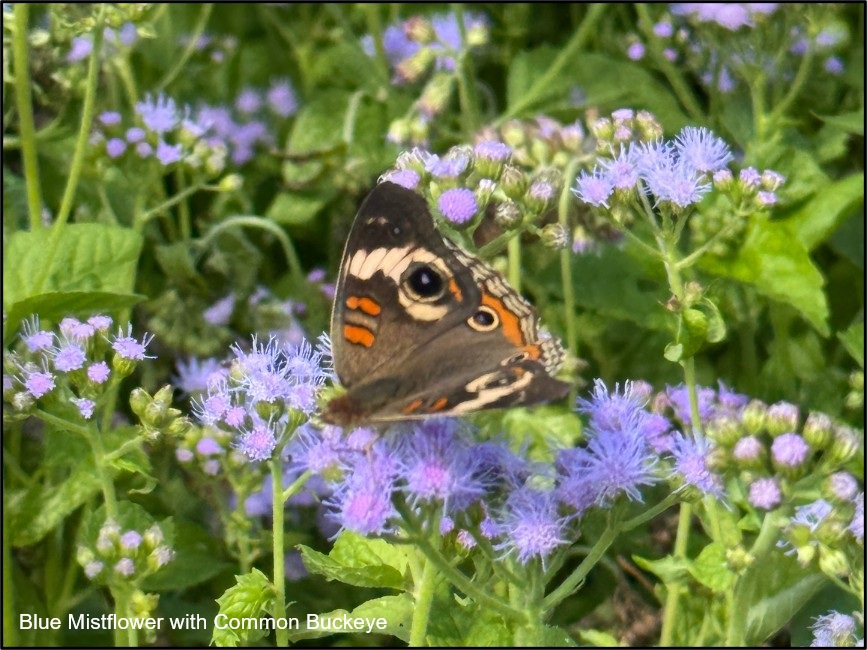
To fill out your mailbox garden, Whorled Coreopsis (Coreopsis verticillata), Orange Coneflower (Rudbeckia fulgida), or Blue Mistflower (Conoclinium coelestinum) are all good for the back of the mailbox area. Whorled Coreopsis grows in a clump, but can self-seed, while Orange Coneflower and Blue Mistflower are a bit more unruly and happily self seed.
There are many choices for mailbox gardens, but this will get most people started. If this is something you want to try this year, now is the time to remove any turf around the mailbox. You can also put down a layer of cardboard and a thick layer of mulch, which should kill off any remaining grasses or weeds. Around the first of May, plant the plants you have selected and enjoy your new mailbox garden.