
Peonies for Mothers’ Day
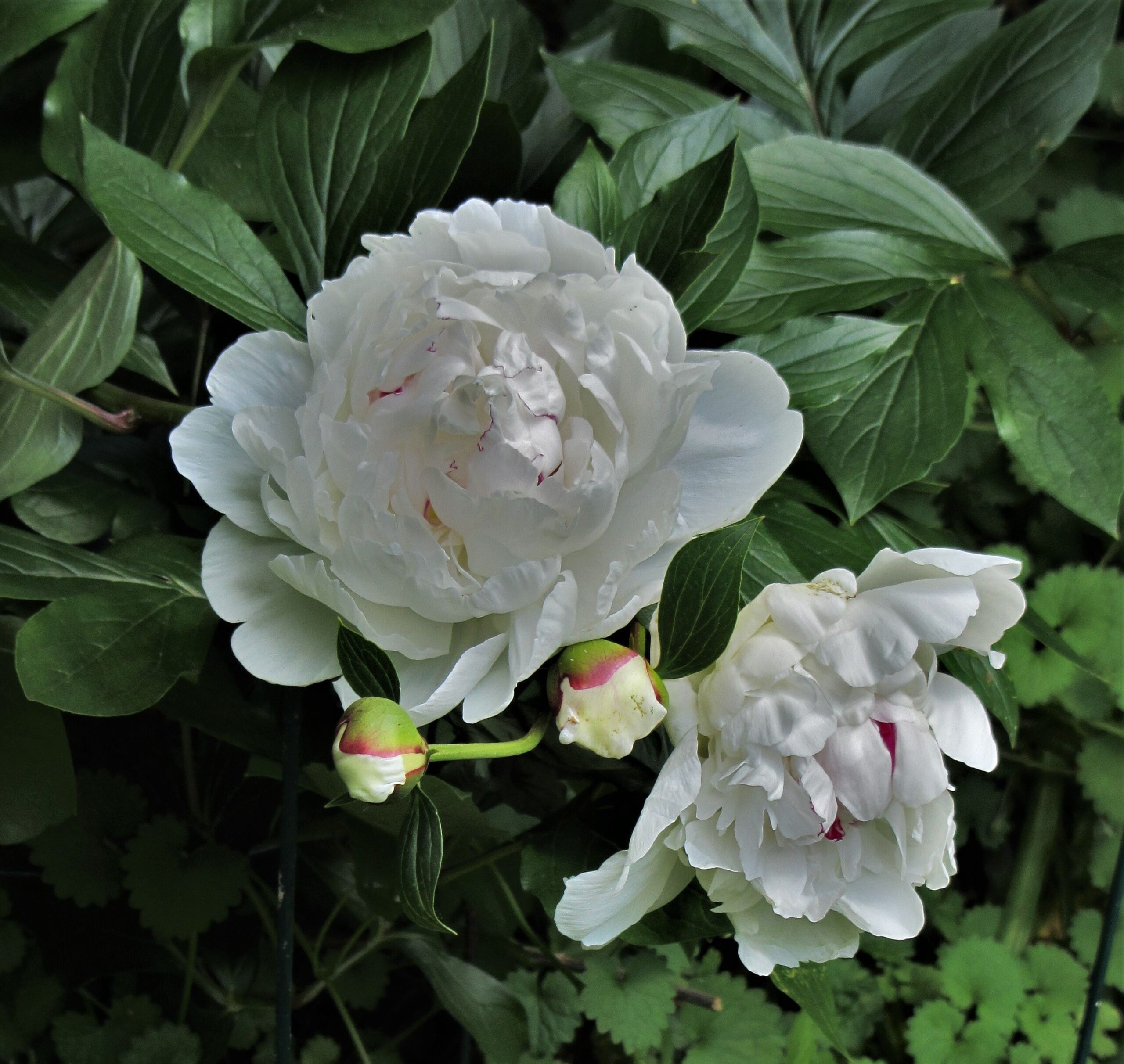
Flowers for Mothers’ Day
We traditionally honor our mothers, grandmothers, and the other important women in our lives with a gift of beautiful flowers at Mothers’ Day each May. Some may favor an orchid or rose corsage, while others present a bouquet of freshly cut flowers. And while flowers always make a lovely gift, the life of cut flowers is all too brief.
A Gift That Gives Joy Again and Again
One year, when my daughter was still young, my family asked me what sort of gift I would like to receive for Mothers’ Day. I wanted a climbing rose shrub to grow beside our front porch. Our yard at that time was perfect for growing roses and there were no deer in our neighborhood sneaking into the yard at night to eat the rose buds. I reasoned that while a bouquet of roses lasts for a few days, a rose bush would ensure I had beautiful roses every May for decades to come. My Mothers’ Day gift would bring me joy and happy memories year after year.
In those days, I favored the English Shrub rose hybrids developed by David Austin Roses because they are fragrant, beautifully tinted, and very diseases resistant. We took a family trip to our local garden center and chose a beautiful potted rose in full bloom. I chose red roses because in our family, wearing a red rose on Mother’s Day meant your mother was still living. A white rose on your lapel meant your mother had passed on. Everyone was happy with the rose shrub, and no one was left sneezing from a vase of fresh flowers indoors.
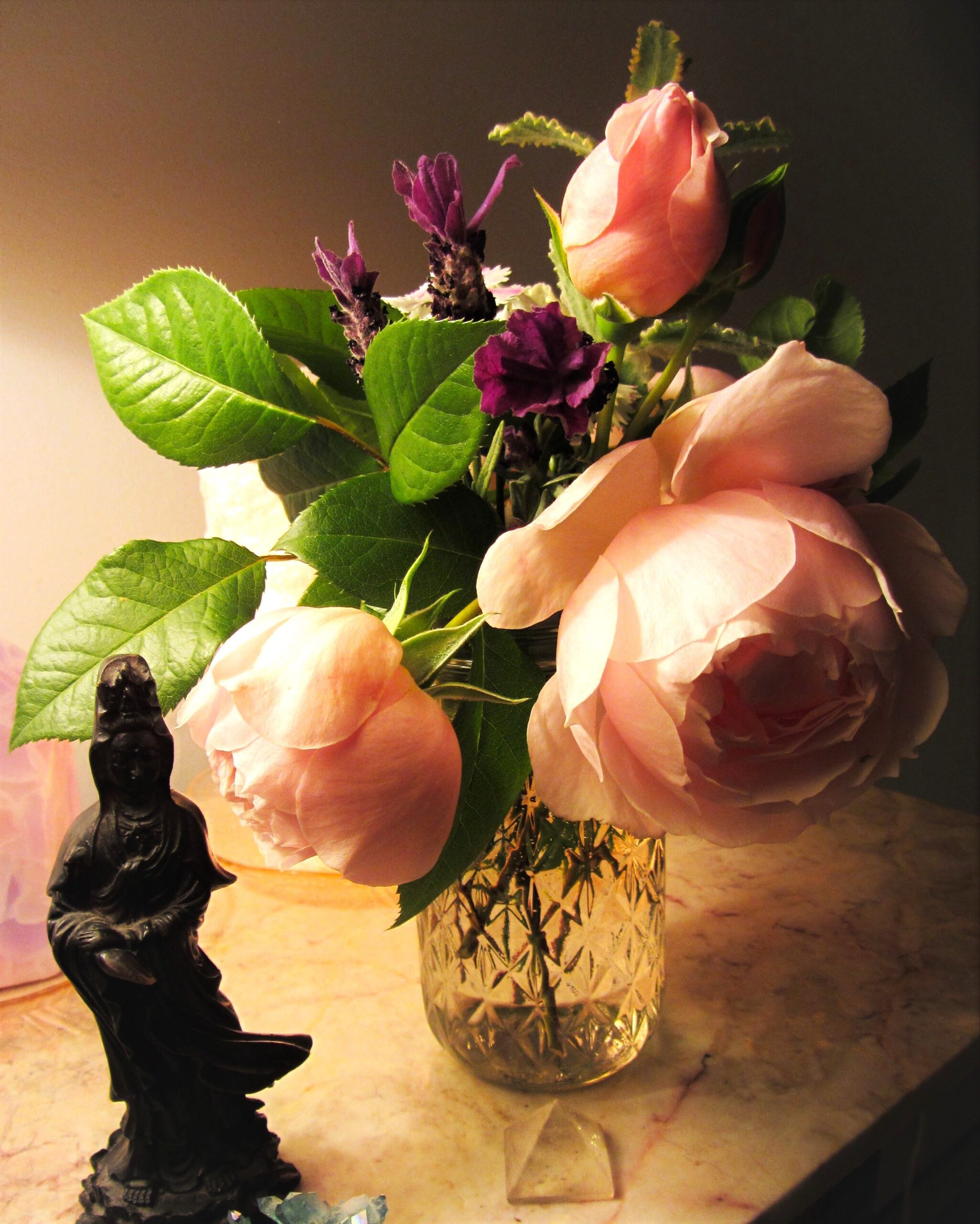
Rosa ‘The Generous Gardener’ in a vase with Spanish lavender.
I still adore roses and would fill my garden with them, if I could. But moving to Williamsburg taught me, among other things, that roses are simply deer candy. Of the many English shrub roses I planted in this yard in our early days here only a tall climber, Rosa ‘The Generous Gardener,’ has survived by growing mostly out of reach of the deer.

Peonies: The “Deer-proof” Alternative to Roses
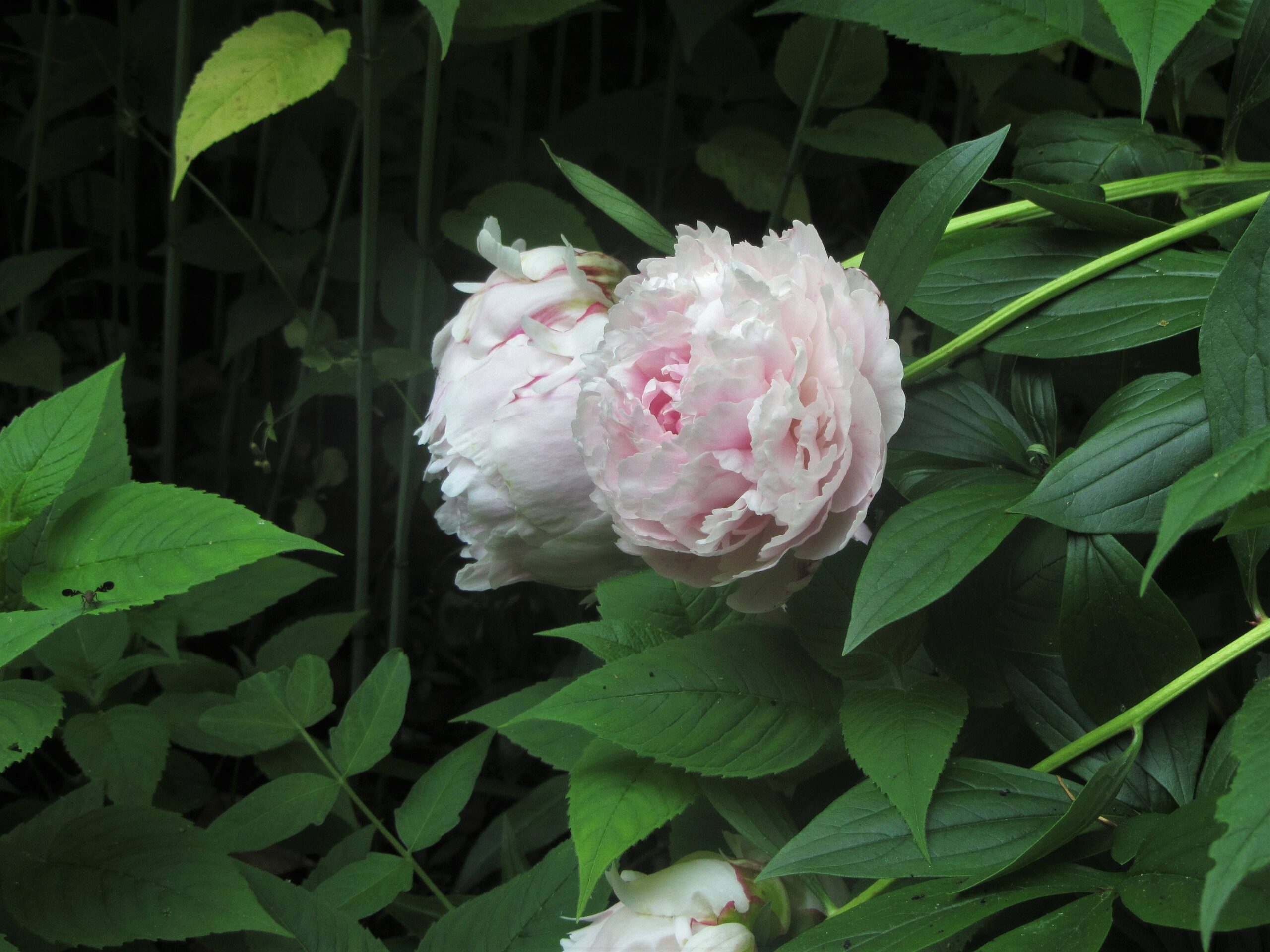
Herbaceous, hybrid peonies also bloom during the first week or two of May with large, fragrant, colorful flowers. Double peonies resemble old fashioned double roses and bloom in similar colors. They thrive in our area, are very easy to grow, and grazing deer leave ours alone. A blooming peony plant would make a lovely gift for Mothers’ Day.
Paeonia: A Mythical ‘Cult Flower’
Like daffodils, roses and irises, peonies are also a ‘cult’ flower, steeped in myth and tradition, with a long history of cultivation and hybridization. Peonies are a symbol of femininity and honor; wealth and high social standing; and refinement. This makes them an especially appropriate gift on Mothers’ Day. Peonies are favored in Chinese and Japanese art above all other flowers, even the lotus. Stylized peonies frequently appear on antique Asian ceramics and textiles.
Paeonia’s long history of cultivation reaches back in recorded history for more than two millennia. Legend tells us that Paeonia were named for Paeon, a student of the Greek god of medicine and healing, Asclepius. After the Greek god Pluto was gravely injured in a battle with Heracles, he came to Mount Olympus in search of Asclepius to heal him. Asclepius couldn’t be found, so the goddess Leto, mother of Apollo, gave a flower to Paeon who then used juice from the flower to heal Pluto. When Asclepias returned and heard the story, he became so jealous of his student Paeon that he killed him. Zeus later found Paeon’s body and transformed him into a flower, the Paeonia, which then grew on Mount Olympus and was used ever after for healing.
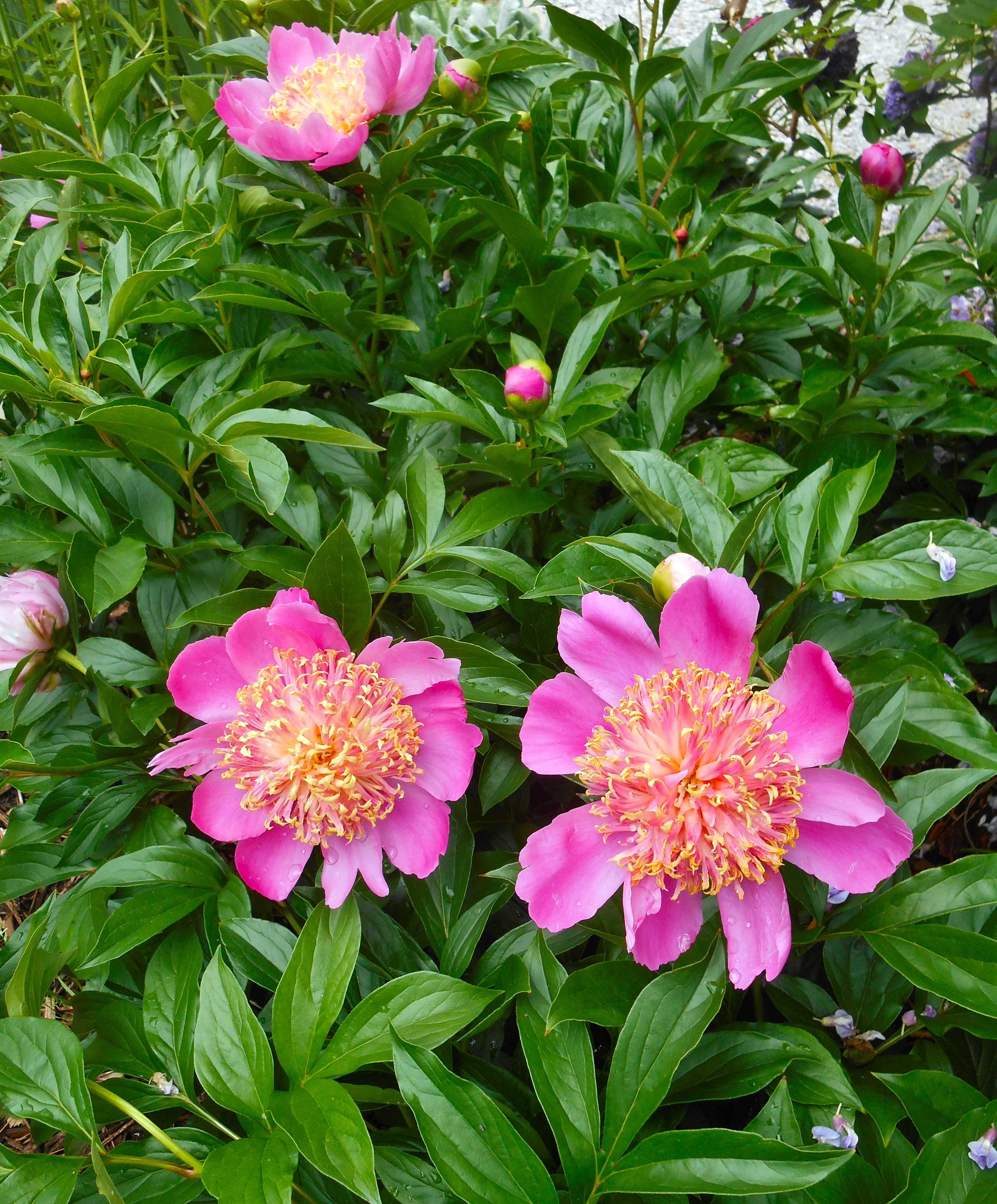

Long Historical Roots
Botanists have traced early Paeonia plants more than 60 million years back in the fossil record to the Cretaceous period, when flowering plants first appeared. Paeonia, the only genus in the Paeoniaceae family, further developed and diversified during the Pleistocene epoch. Most of the 30 known contemporary species of the Paeonia genus are found across Europe, North Africa, and Asia. There are two species native to western North America that aren’t in commercial cultivation. Most of the commercially available peony hybrids available in garden centers descend from just a few species, primarily P. lactiflora.
Peony flowers were well known to early human civilizations around the Mediterranean Sea, in Eastern Europe, China, Japan, and other parts of Asia. They often grew in isolated areas in woodland glades or in thickets, or sometimes in open fields. Peonies were slow growing, long lived, stress tolerant plants. While they don’t spread promiscuously, they persist and tend to recover from environmental stress and physical damage. It isn’t unusual for modern peony plants to persist in the same garden over many decades.
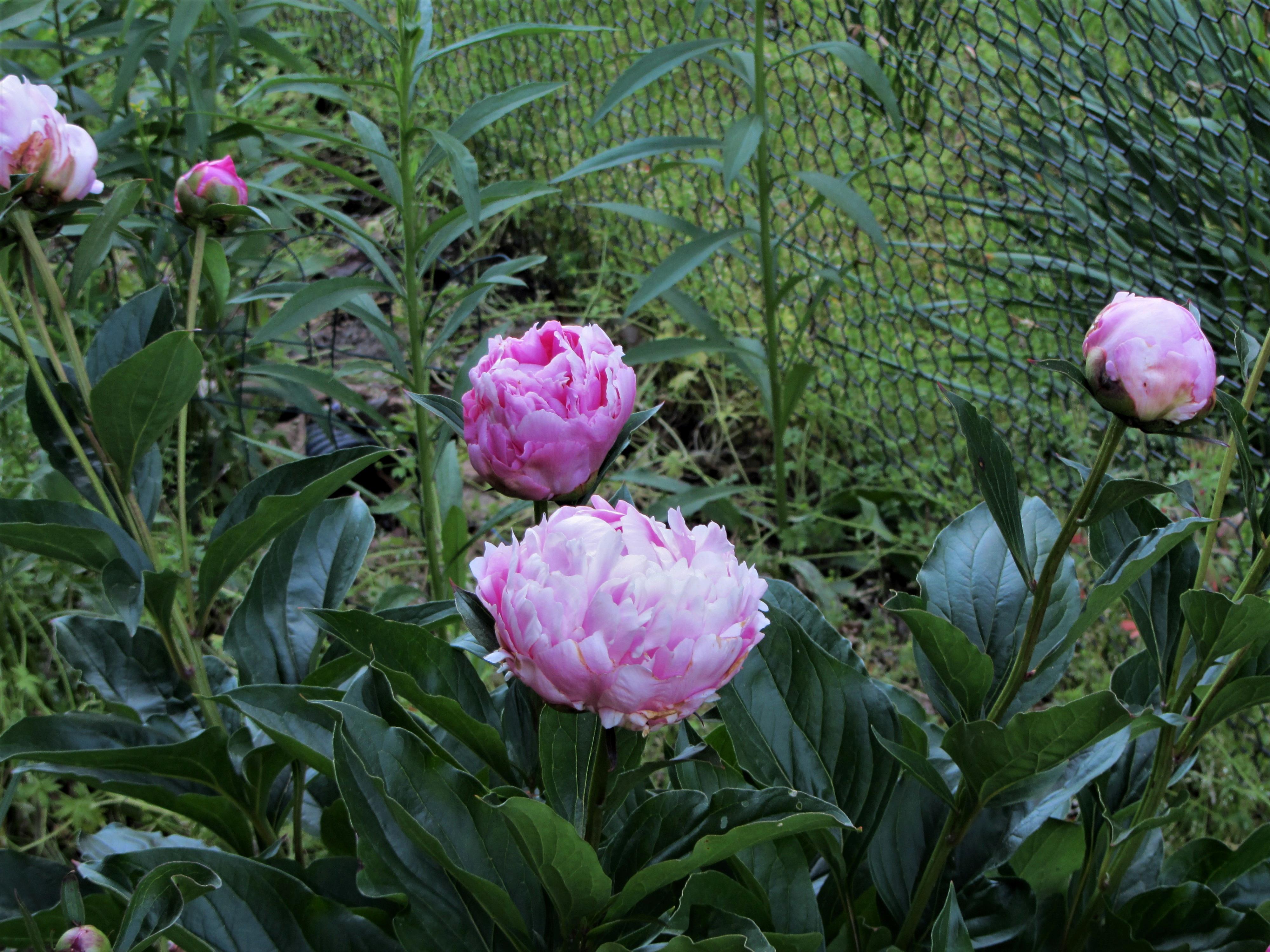
Medicinal and Ornamental Treasures
Early records indicate that the roots of some peony species had many medicinal uses in several ancient medical traditions across both Europe and Asia. Extracts were made from the peony’s dried roots to treat a wide variety of conditions from neurological disorders to jaundice.
However, peonies were cultivated primarily as ornamental plants in the gardens of aristocrats and royalty. Asian aristocrats even designed entire gardens around their peonies. The tree peony, P x suffruticosa, which is a woody shrub, was cultivated only by Chinese, and later Japanese, aristocrats. Horticulturalists hybridized more than 100 varieties of tree peonies by the Song Dynasty, around 960-1279 CE, but commoners were prohibited by law from growing them.
Scarlet and white double P. officinalis, the common peony, which is native to Southern Europe and Western Asia, came into cultivation in England during the mid-16th century. Colonists brought plants to Williamsburg during the Colonial period. The roots of this peony were considered medicinal in Europe and in colonial America.
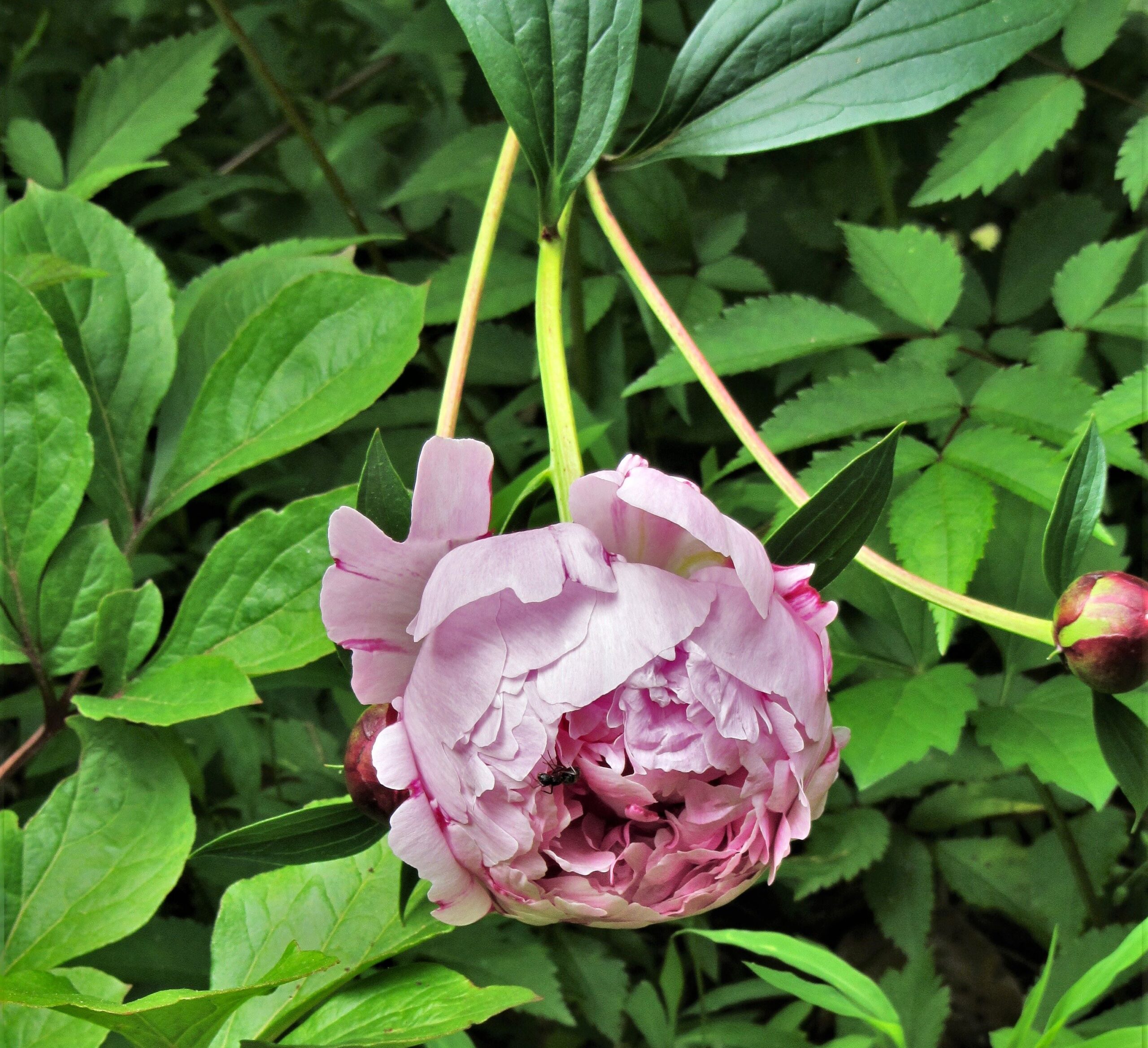
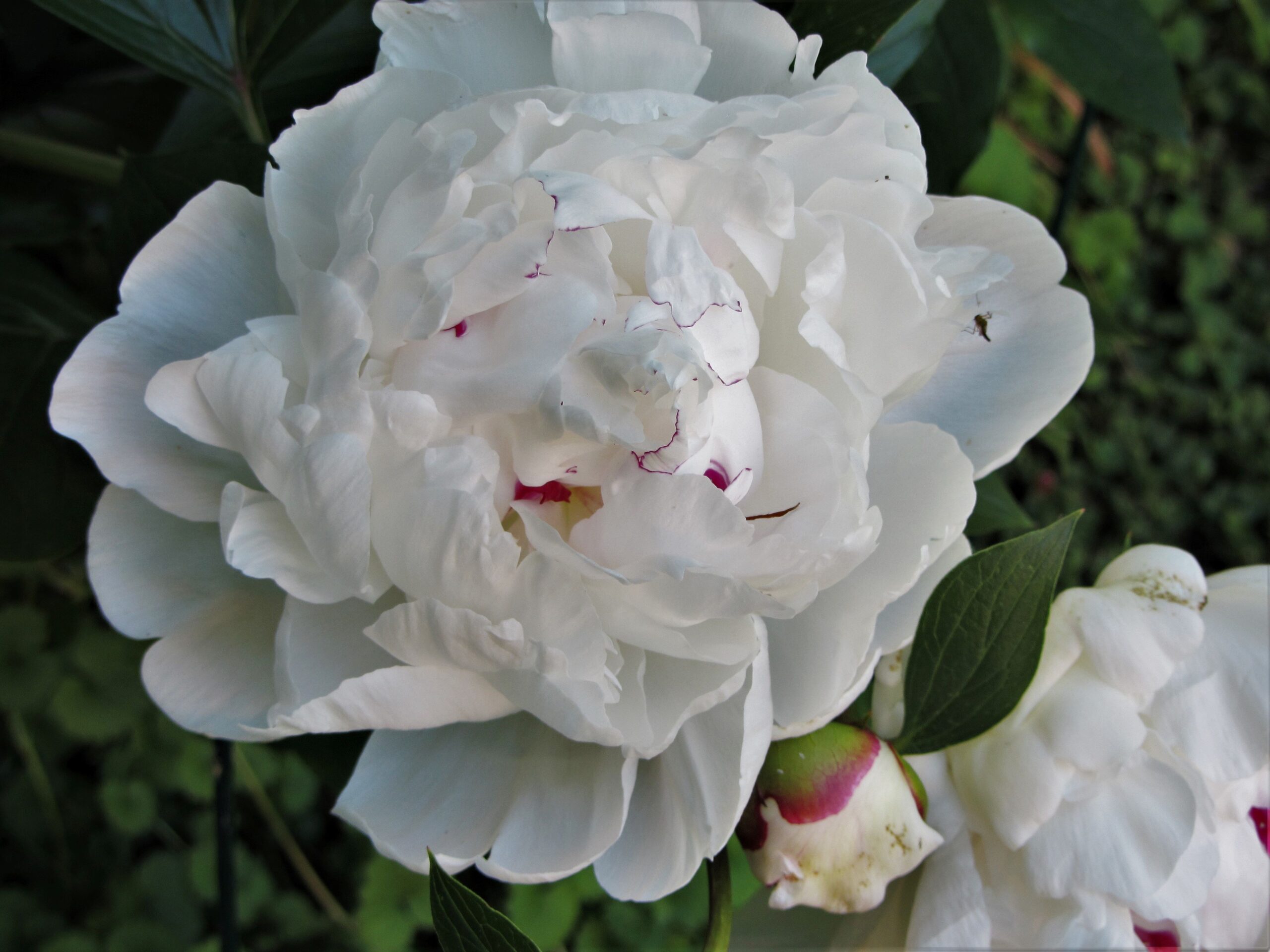
It is common to find ants on peony buds and on the flowers as they open.
Modern Peony Hybrids
Asian ornamental, herbaceous peonies were first grown and hybridized in France in the late 18th century. Working mostly with P. officinalis, P. lactiflora, and P. wittmanniana, peony enthusiasts also imported hybrid plants from China. This work forms the basis of the ornamental hybrids available to us today. There is a wide range of flower colors and forms, but most named cultivars have primarily white, pink, scarlet, purple, or yellow flowers. American growers began importing hybrid ornamental peony plants by the late 19th century to sell as garden plants and to raise commercially for the cut flower market.
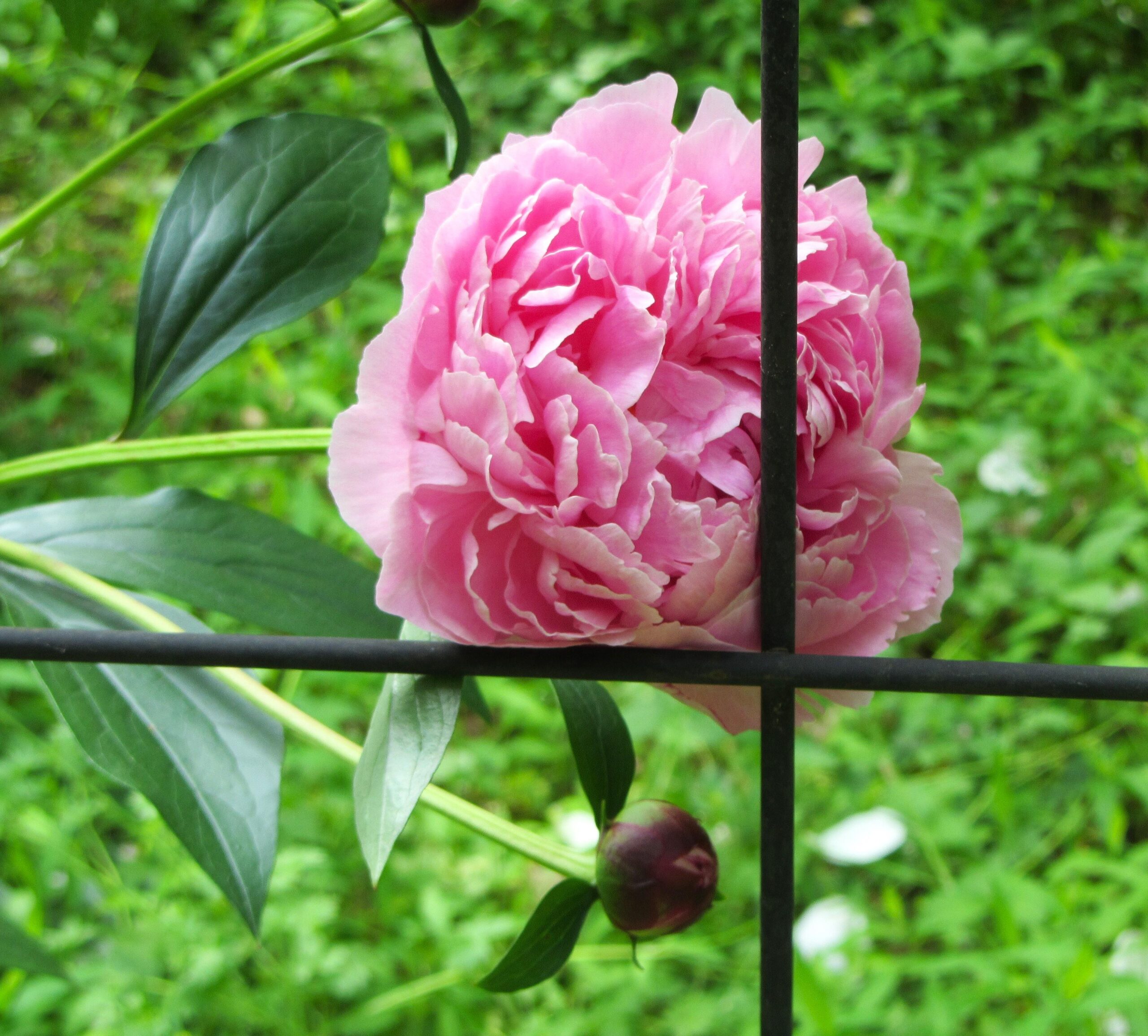
Cultivating Modern Peonies
Peony plants make a good Mothers’ Day gift because they are beautiful, undemanding and easy to grow. Hybrid peonies bloom best with at least six hours of direct sun each day but can survive with as little as two to three hours of direct sun when grown in bright shade. In our climate, they perform best with morning sun and some afternoon shade. They are hardy in Zones 3-8b and grow best in rich, slightly acidic (<6 pH) soil. But peonies do need winter cold to set the next season’s buds. Don’t mulch them heavily over winter, if at all, and look for varieties that perform well with our warmer winters.
Choose a permanent planting spot where the plant will have good air circulation and plenty of room to grow, an open space about 2.5’-3’ square. While some people use peonies as foundation plants, leave 3’ between the foundation and the new plant, and avoid planting on the north side of the structure. Peonies can also be grown in large containers. Choose a container at least 24” wide and 18” deep and use a good quality potting mix with excellent drainage.
How to Plant a Peony
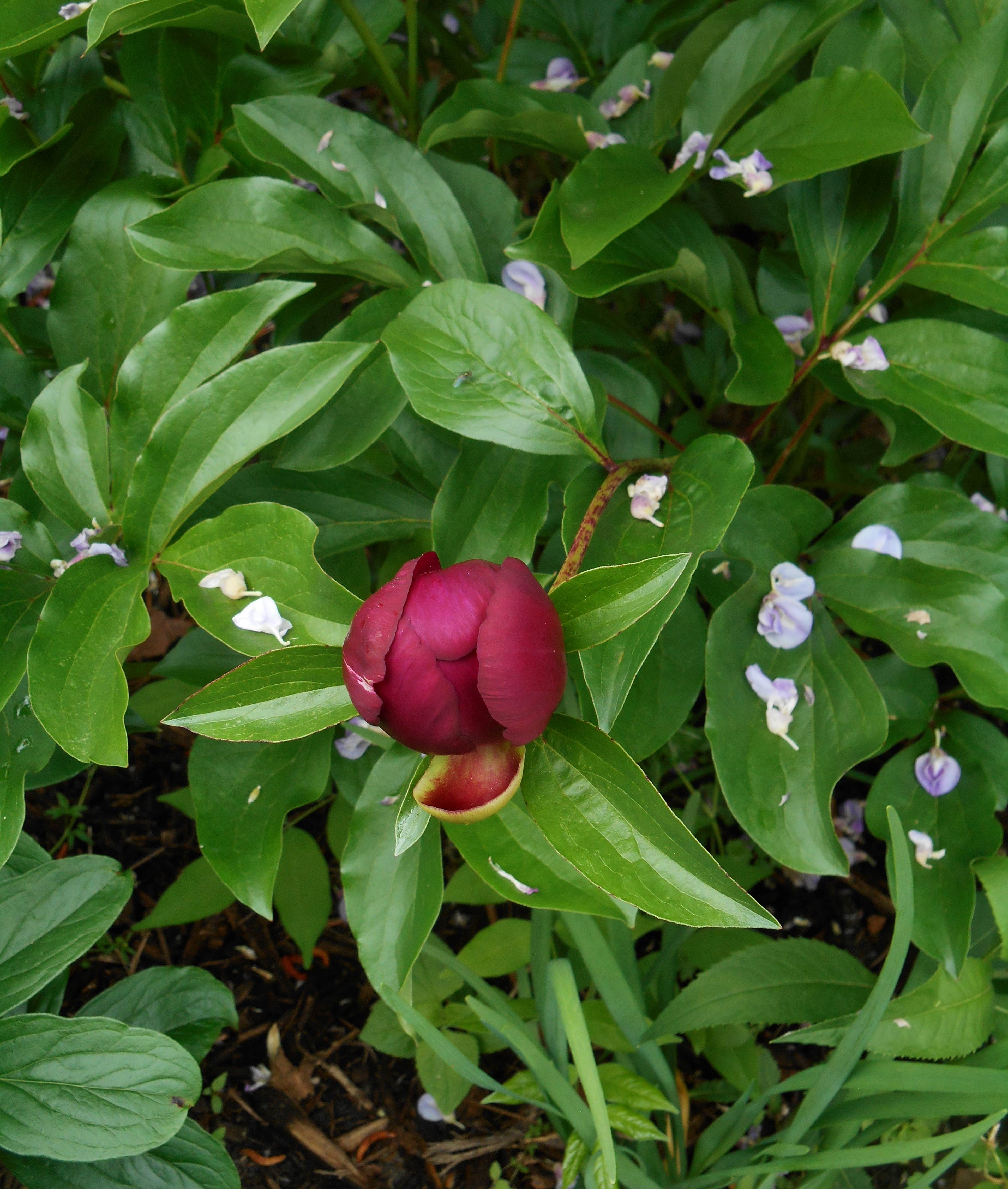
Dig a planting hole to the depth of the potted plant and about twice as wide. Don’t plant the root ball any deeper than it is already growing in its container. Plant a division at the same depth it was previously growing. If planting a bare root plant in early spring, place the buds of the crown no more than 1” deep in the planting hole and spread the roots evenly across a mound of soil enriched with compost. Back fill the planting hole with the native soil, enriched with compost. Some growers suggest adding bone meal or a balanced, organic fertilizer to the back-fill soil along with the compost. Water the plant in well, gently pressing the soil to eliminate air pockets, and top off the new planting with an inch or two of bark mulch, chopped leaves, or pine tags.
Peony Care through the Season
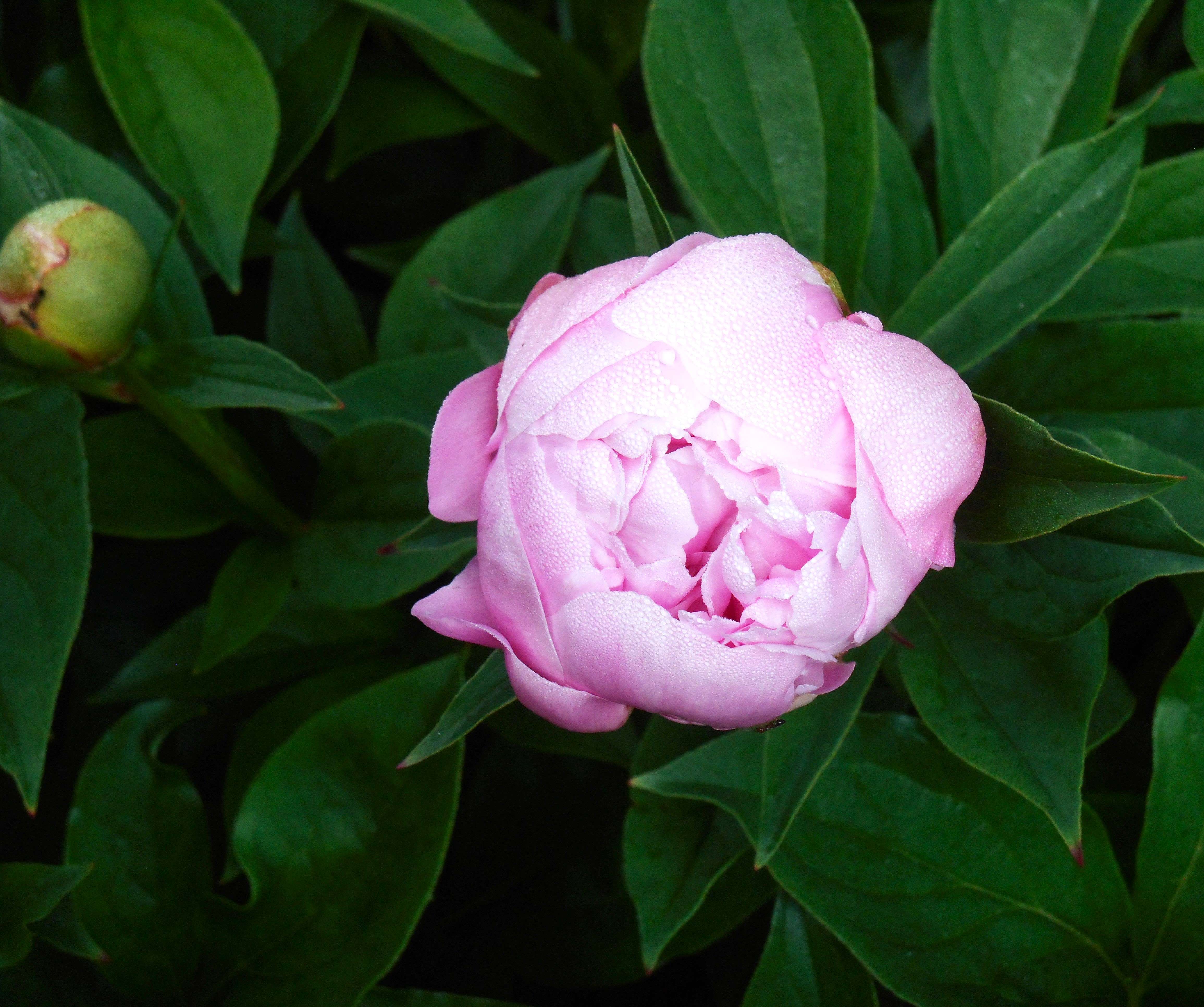
Once the peony’s flowers fade, cut off the flower if you wish, but leave most of the stem and its leaves to produce food during the remainder of the season. Most flowers will form seeds if left to wither on the plant. Peony foliage makes a beautiful back drop for other garden plants through from when it appears in the spring, through the summer and until it turns color and fades in late fall. Remove the leaves in early winter after they have died back completely. New growth will appear as the daffodils bloom the following spring.
Peony flowers are quite large and heavy and will last longer if either each flowering stem is staked, or if a wire loop support or other woody support is installed around each plant as it begins to grow in the spring. Heavy rain will knock over flowering stems when they are in full bloom. Feed plants in the spring with a fresh layer of compost and organic mulch. Established peonies grown in the ground don’t usually need routine irrigation, unless there is unusually hot and dry weather in the summer. Container grown peonies will need more regular watering and feeding.
Peonies and Wildlife
Fully double peony flowers aren’t particularly helpful to pollinators, but there are many single and partly double varieties on the market that will attract pollinating insects. Ants are particularly attracted to peony buds. If you can see the flower’s stamens then they are pollinator friendly. The fern leaf P. tenuifolia has an open, usually scarlet flower with many visible golden stamens. Its finely divided leaves are particularly beautiful. A peony’s large leaves provide shade, shelter, and room to forage for birds and other small animals, but don’t host insect larvae. In fact, there are few predators or pests that disturb peonies.
Other Good Floral Choices for Mothers’ Day
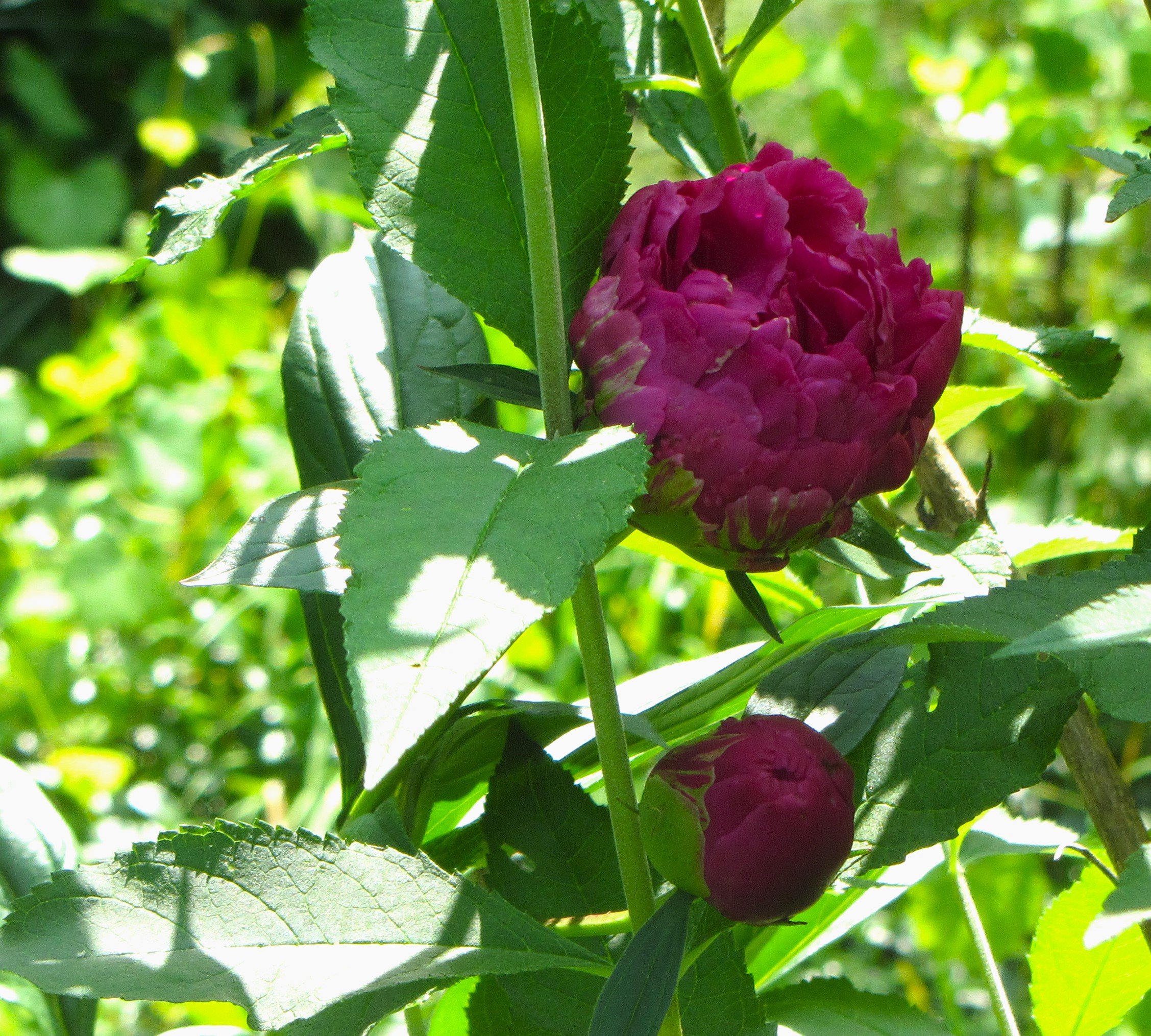
Peonies make a beautiful, living Mothers’ Day gift, but consider other (deer resistant) possibilities for the beloved mothers and grandmothers in your life. Irises come in many colors and forms, bloom in early May, and are stocked in local garden centers. Siberian Irises may be a little easier to grow, particularly in partial shade. All types of Irises are very long-lived, like peonies.
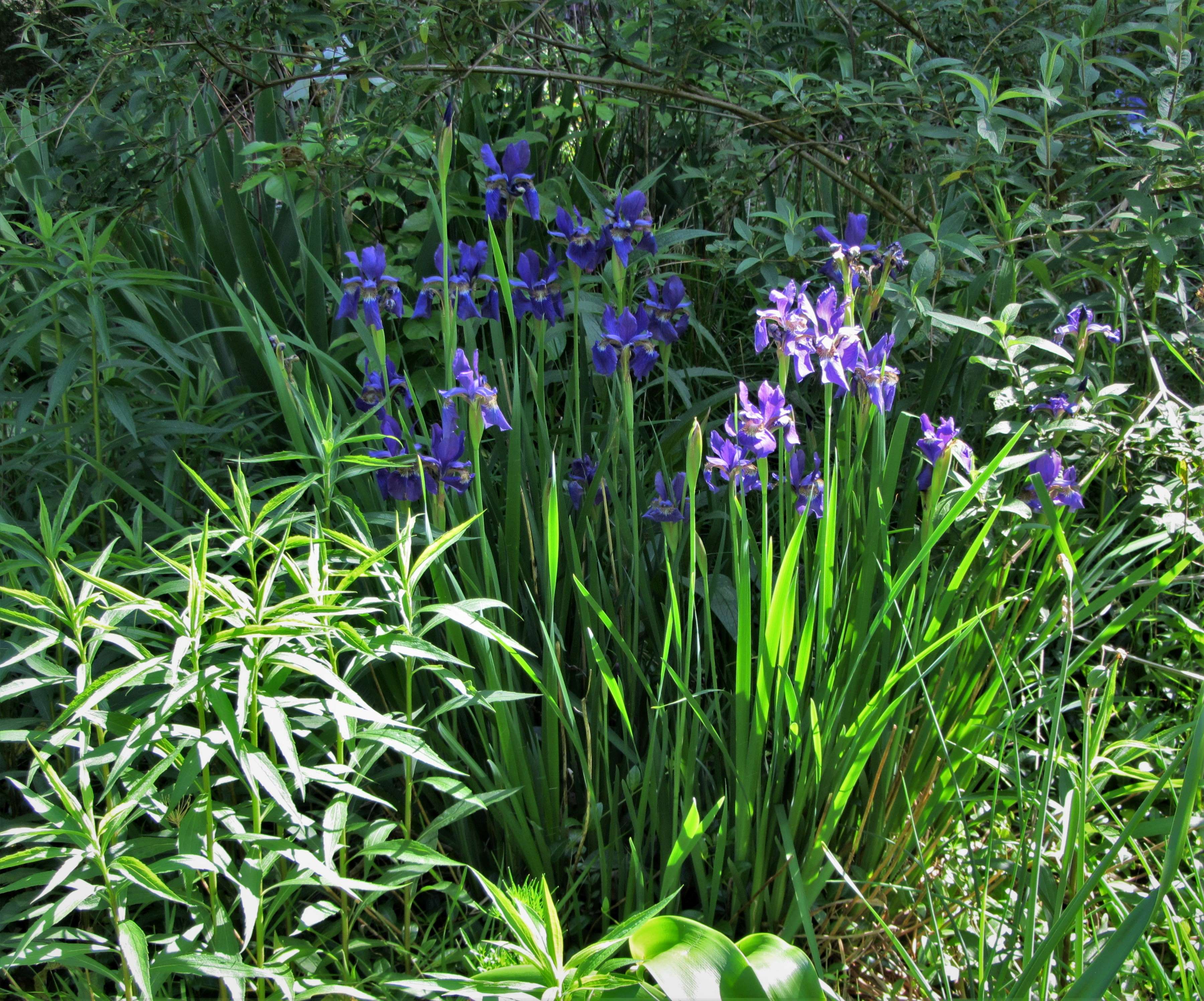
Siberian Irises are easy to grow, even in part shade.
Perennial Salvias bloom for most of the summer, attract many types of pollinators, and are easy to care for. Hardy Lantana will bloom from early summer until frost with little or no care, and they come in a range of orange, red, pink, white, and yellow color combinations. And although a potted Clematis vine will need a trellis, it will grow happily in a container on a patio or deck for many years, blooming with showy flowers over a long season each summer.
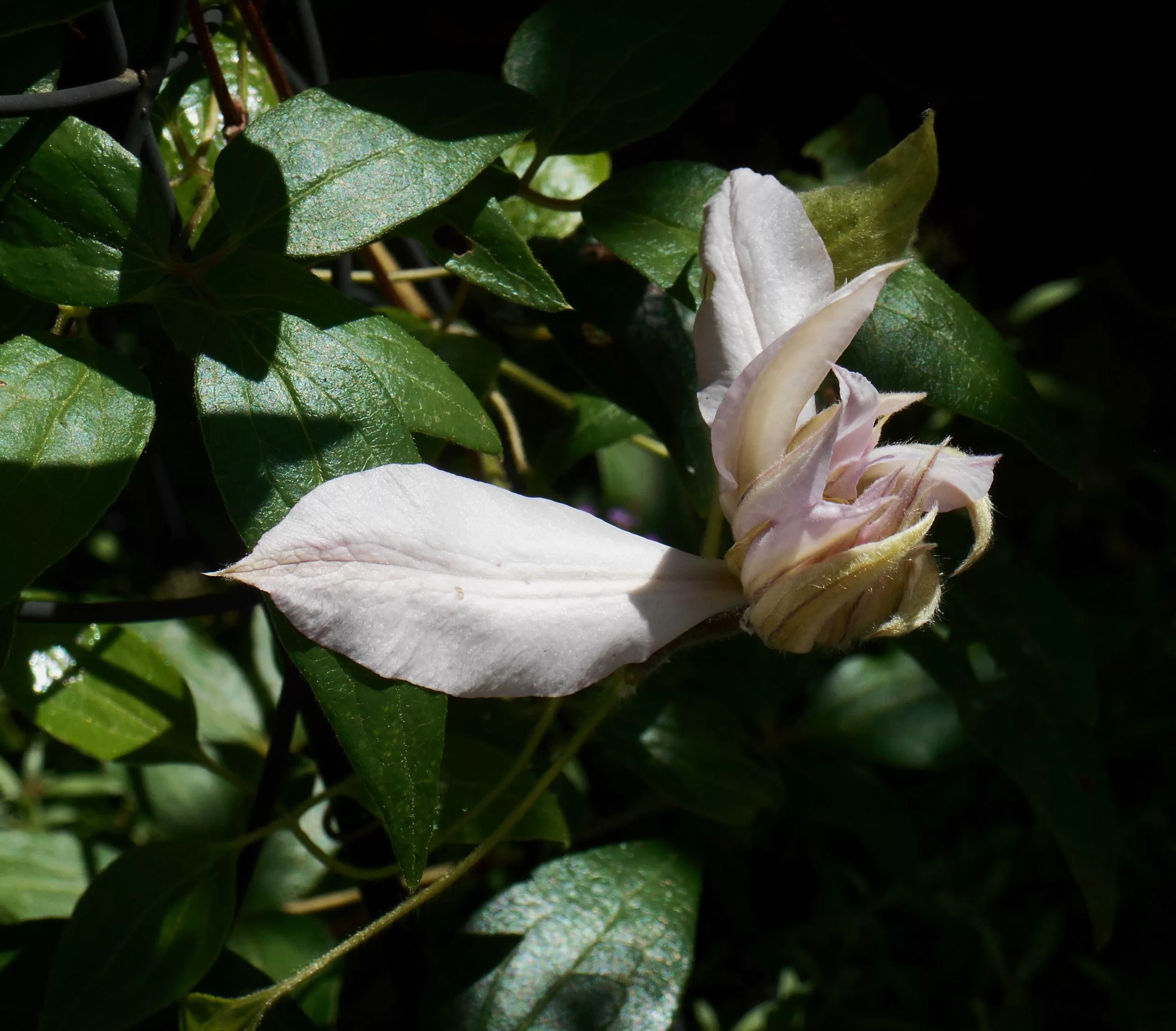
Hybrid Clematis
There is no shortage of great choices for living floral gifts in early May, and most are grown here in the United States. While taxes, tariffs, and delivery fees may be added to the cost of cut flowers, containerized plants may be more affordable, especially when purchased locally. And part of the fun of the gift may be in taking Mom along to choose her gift at her favorite nursery, making good memories to cherish each time her flowers bloom over the years ahead.
All photos by E. L. McCoy
For More Information:
Cox, Jeff and Marilyn Cox. The Perennial Garden: Color Harmonies through the Seasons. Rodale Press. 1985.
Dutton, Joan Parry and Marion Ruff Sheehan. Plants of Colonial Williamsburg: How to Identify 200 of Colonial America’s Flowers. The Colonial Williamsburg Foundation. 1979.
Kingsbury, Noel. Garden Flora- The Natural and Cultural History of Plants in Your Garden. Timber Press, Inc. 2016.
Kingsbury, Noel and Charlotte Day. The Story of Flowers and How They Changed the Way We Live. Laurence King Publishing. 2023.