The Fragrant Gardenia
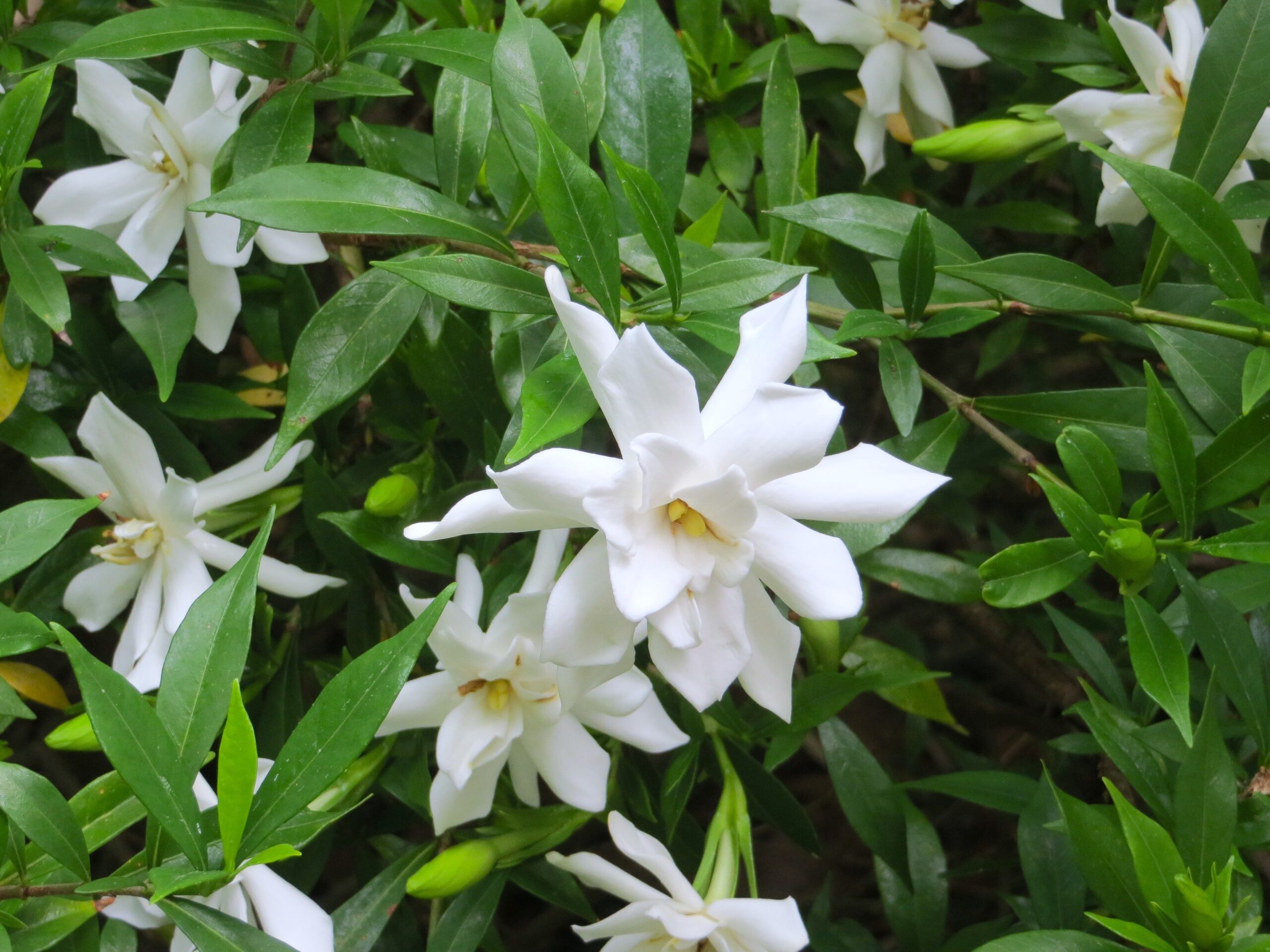
Fragrant Gardenia Flowers
Fragrance often announces the shift in our seasons, alerting us to look more carefully for what has changed since the day before. In June, a languid sweetness in the air calls our attention to the first flowers opening on the Gardenia shrub, a fixture in many Southeastern gardens, including residential gardens in coastal Virginia.
Pristine, white and elegant, Gardenia flowers tend to fade all too quickly. Their beauty is ephemeral as they fade first to beige a few days after opening, and then to brown. Rain speeds this process, and the blooming shrub can begin to look a bit shabby if one doesn’t pluck off those faded flowers every few days. Deadheading spent flowers also encourages more buds to develop, prolonging the season of bloom deep into summer. But the flowers’ sweet fragrance remains, even as their color fades, reminding one of a memory, or a wish, or a summer long ago…
An Elegant Shrub for All Seasons
Gardenia’s shiny, evergreen leaves give this shrub presence throughout the year, even in the coldest months of winter. It is a beautiful addition to a garden landscape, growing in dappled sunlight or partial shade in USDA Zones 7-11. Gardenias thrive in our humid summers, blooming from early summer through early fall. Like autumn and winter blooming evergreen Camellias, Gardenia shrubs don’t require full sun to bloom prolifically. They prefer moist, organically rich acidic soil with a pH below 6. Provide shelter from the afternoon sun and from strong wind, both of which can damage this shrub.
Asian Origins
Gardenias aren’t native to North America, preferring the more tropical conditions of the Pacific islands, Australia, southern Asia, and parts of southern Africa. They are native along river banks in Southern China, Taiwan, Vietnam, and Japan. There are more than 120 species of Gardenia, a genus belonging to a division of the coffee, or Rubiaceae family. The flowering Gardenia found most often in American gardens is G. jasminoides. This species was known previously as G. augusta, G. florida, and as G. grandiflora.
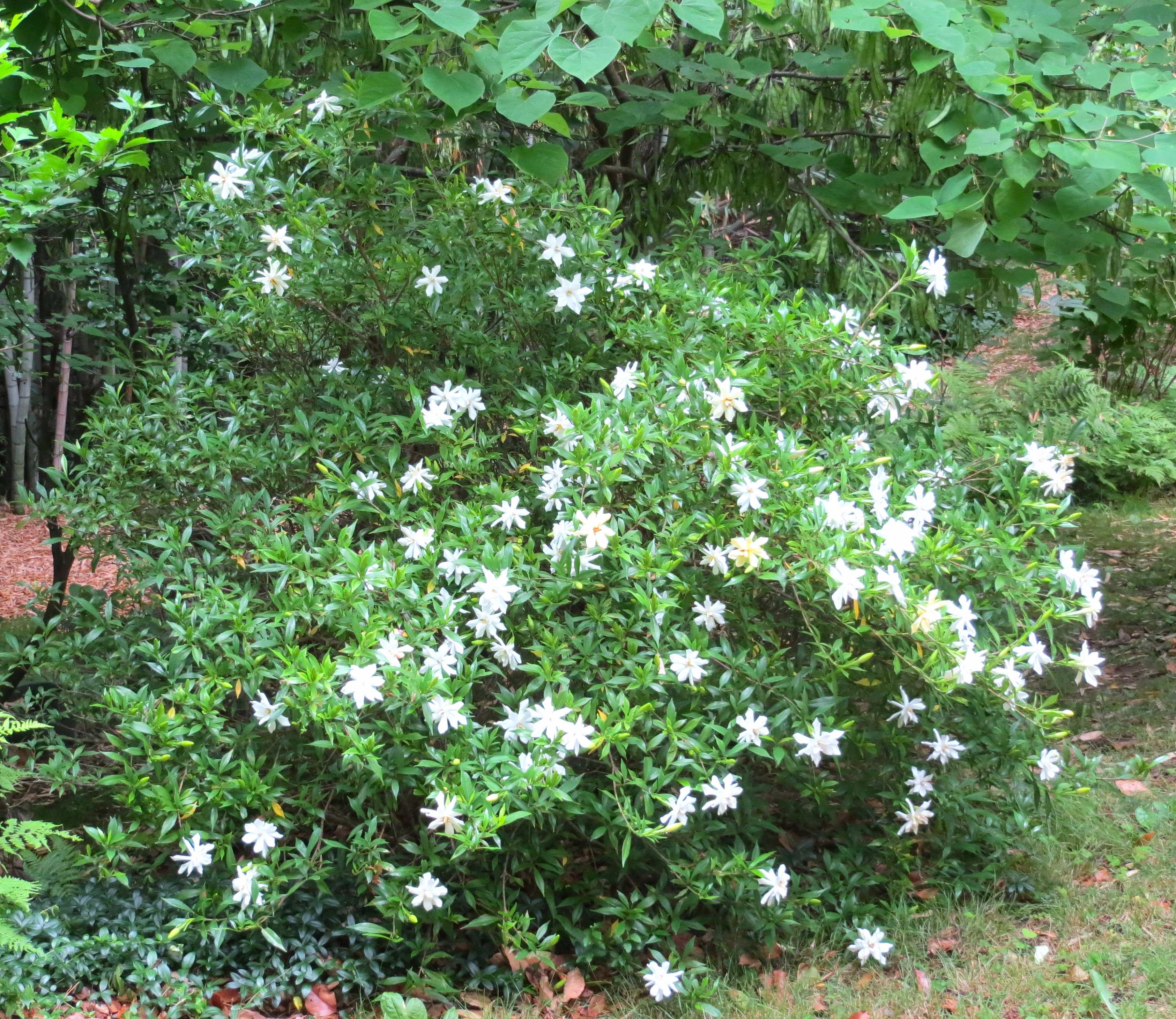
A Gardenia shrub purchased several years ago at a local grocery store blooms in the author’s back garden.
Growing Gardenias
Recognize Gardenias by their dark, glossy green elliptical leaves which grow opposite one another on the stem and are held in whorls near the end of each stem as they grow. Gardenia shrubs are rounded and symmetrical. Most cultivars will grow to 8” tall and wide, but respond well to pruning in early spring, which stimulates new growth.
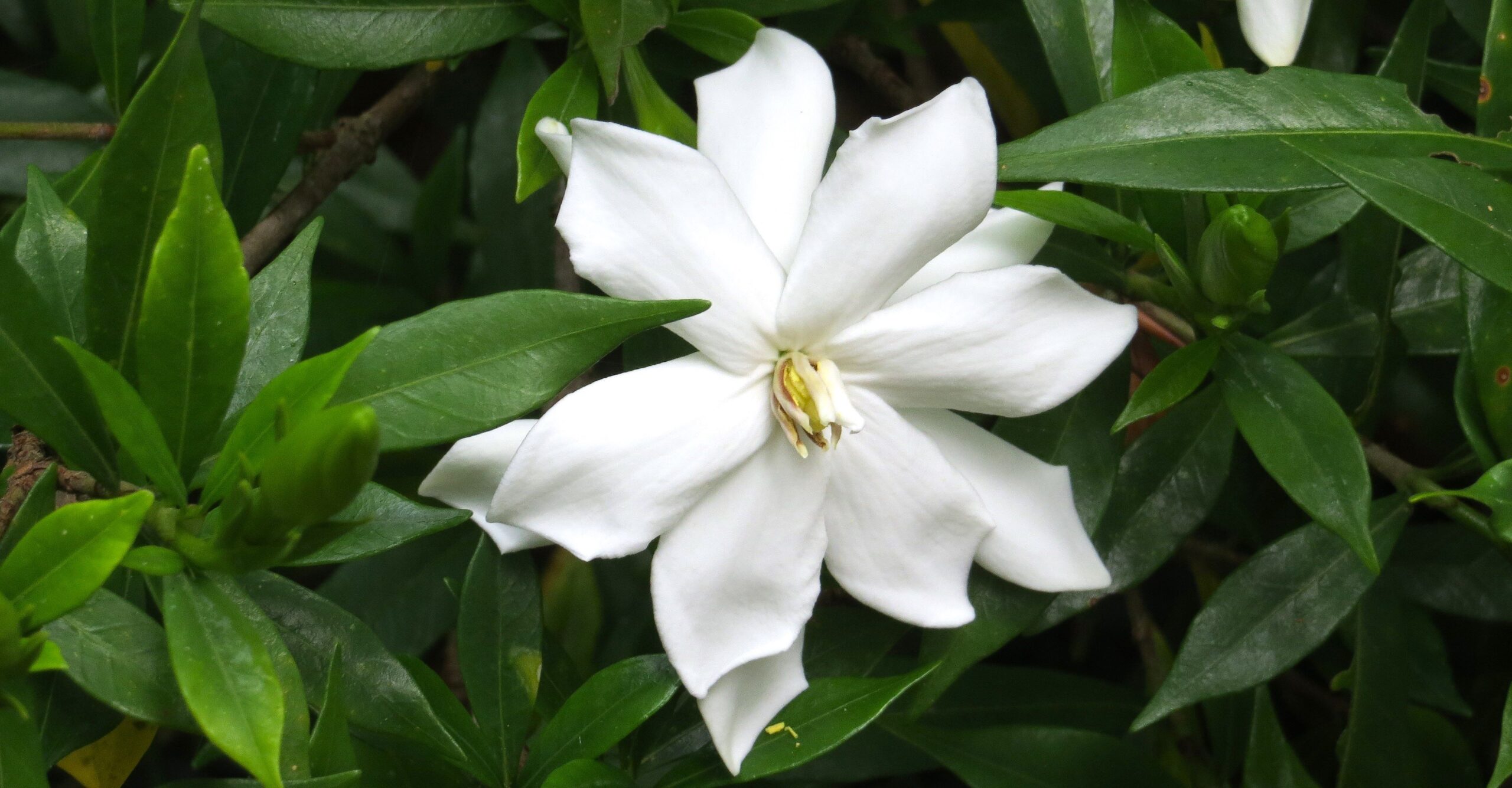
Gardenias bloom on new wood with 2”-3” single or double radial white flowers. There are a few cultivars with golden yellow flowers. Flowers are waxy, substantial, and very showy.
Propagate Gardenias by layering stems in summer or by taking cuttings from non-flowering stems in early summer. Keep the stem cuttings in high humidity as they root in moist soil-less, sterile potting mix. It takes six to eight weeks for a stem to root.
Gardenia leaves will sometimes turn yellow, a condition known as chlorosis. This happens when the soil isn’t acidic enough for them to absorb the iron, nitrogen, and other nutrients they need. If this happens, use mulch or soil amendments to lower the pH of the soil around the shrub. When fertilizer seems necessary, choose one formulated for plants that prefer acidic soil. Some gardeners regularly feed their Gardenia shrubs with used coffee grounds, mixing the grounds in with the mulch around the shrub.
Gardenia shrubs require excellent drainage and good air circulation. Problems like powdery mildew, sooty mold, and root rot may develop if the shrubs grow in waterlogged soil or don’t have good air movement around them.
A Gift of Gardenias
Small Gardenia shrubs may be offered at the grocery or big-box store along with other potted flowering plants. They make excellent gifts. Some may wonder what to do with these beautiful, fragrant little plants.
Gardenia shrubs may be grown in containers, indoors or out, particularly if the native soil isn’t acidic, the climate is too cold for them, or if there isn’t a good place to plant them out. Gradually increase the size of the container by an inch or two when re-potting the plant, as needed, using commercial potting mix. Combine the potting soil with some finely ground bark, orchid mix, or aged compost that contains bark for drainage and to increase nutrition for the shrub. Keep the shrub growing in bright light and high humidity when it is indoors. It may not bloom again if it doesn’t get sufficient light, but direct afternoon sun through a window can scorch the plant. Ensure the plant has good drainage, as root rot may develop if the pot is left sitting in a water-filled tray.
These same instructions will apply to other potted flowering shrubs often given as gifts, like Azaleas, Hydrangeas, and Camellias, because these shrubs also grow well in bright shade and prefer moist, acidic soil. Norfolk Island pines, popular at Christmas, respond well to this care, too, and will grow as potted indoor plants for many years.
How to Plant a Gardenia
In the Williamsburg area, our winters are now warm enough for Gardenias to grow happily outside year-round, although Gardenias kept in pots outside may be killed by a prolonged stretch of unusually cold weather. It may be wise to move them into a frost-free area during the coldest weeks of winter. Yet it is fine to plant them in the ground in a sheltered spot where they will get full morning sun, or dappled sun, for at least 6 hours each day. Mulch potted plants with bark mulch or pea gravel, and mulch shrubs planted in the ground with pine tags, chopped leaves, wood chips, or ground bark mulch. Keep the mulch a few inches away from the main trunk, or stem, to prevent rot and to discourage rodents.
Shrubs should always be planted at exactly the same level they are currently growing. Don’t dig an overly deep hole that will allow the crown of the shrub to sink below grade, as this will likely kill the shrub. Shrubs grown in containers should also be re-potted so their crown remains at the same level as before.
The History of Gardenias in the United States
Gardenias look and smell exotic, and they previously were associated with the deep South and Gulf Coast states here in the United States. The Gardenia was first introduced to North America in Charleston, South Carolina during the 1750s by Scottish born physician, botanist and zoologist, Alexander Garden, for whom the plant was named in 1762. Garden traded native American plants with his horticultural contacts in Europe, and they sent the first Gardenia shrub to him after it arrived in Europe, from China, by way of South Africa. Gardenia may also be known as cape jasmine or cape jessamine since it was successfully grown near the Cape of Good Hope before it was introduced in Europe and America.
Dr. Garden had many gardening friends and shared his plants, and knowledge of how to grow them, widely. He was very curious and educated himself about a wide variety of plants, corresponding with leading horticulturalists in both Europe and the American colonies. Gardenia culture was introduced to North America through his circle of friends. But Dr. Gardener’s properties and extensive gardens were confiscated at the end of the Revolutionary War, as he was a known British sympathizer. He left North America to return home in the early 1780s.
The Uses and Benefits of Gardenia Shrubs
Even though the Gardenia isn’t a native shrub, it still functions well in our local ecosystems, performing many ecological services while demanding few ‘in-puts’ from the gardener. Its flowers attract and feed a wide variety of pollinators, and its ripe fruits feed birds in late summer and fall. This leafy evergreen shrub filters the air and sequesters carbon dioxide year round. Its dense root system holds the soil against erosion, and helps process storm run-off from the soil back into the atmosphere. A Gardenia also provides dense shelter for a wide variety of small animals and safe nesting and resting spots for song birds. Shrubs may require irrigation as they establish and afterwards during severe drought. They don’t require the extensive use of chemical pesticides or fertilizers.
Gardenias are popular wherever they can grow, providing fragrant blossoms for men’s boutonnieres and flowers for Hawaiian leis. They are popular stems in cut flower arrangements and prove to be easy flowering shrubs for formal garden designs. Their strong fragrance makes Gardenias especially popular in gardens designed for children, for the elderly, or for enjoyment after dark. Dye can be extracted from their fruit, and the fruits are used in traditional Chinese medicine. Although Gardenia leaves, flowers, and fruits can be mildly poisonous if eaten, this chemistry also serves to protect them from grazing deer and other herbivores that might visit our yards.
Plant Gardenias with confidence that they will prosper and bloom in your garden for many years to come.
Photos by E. L. McCoy