Finding Success with Maidenhair Ferns
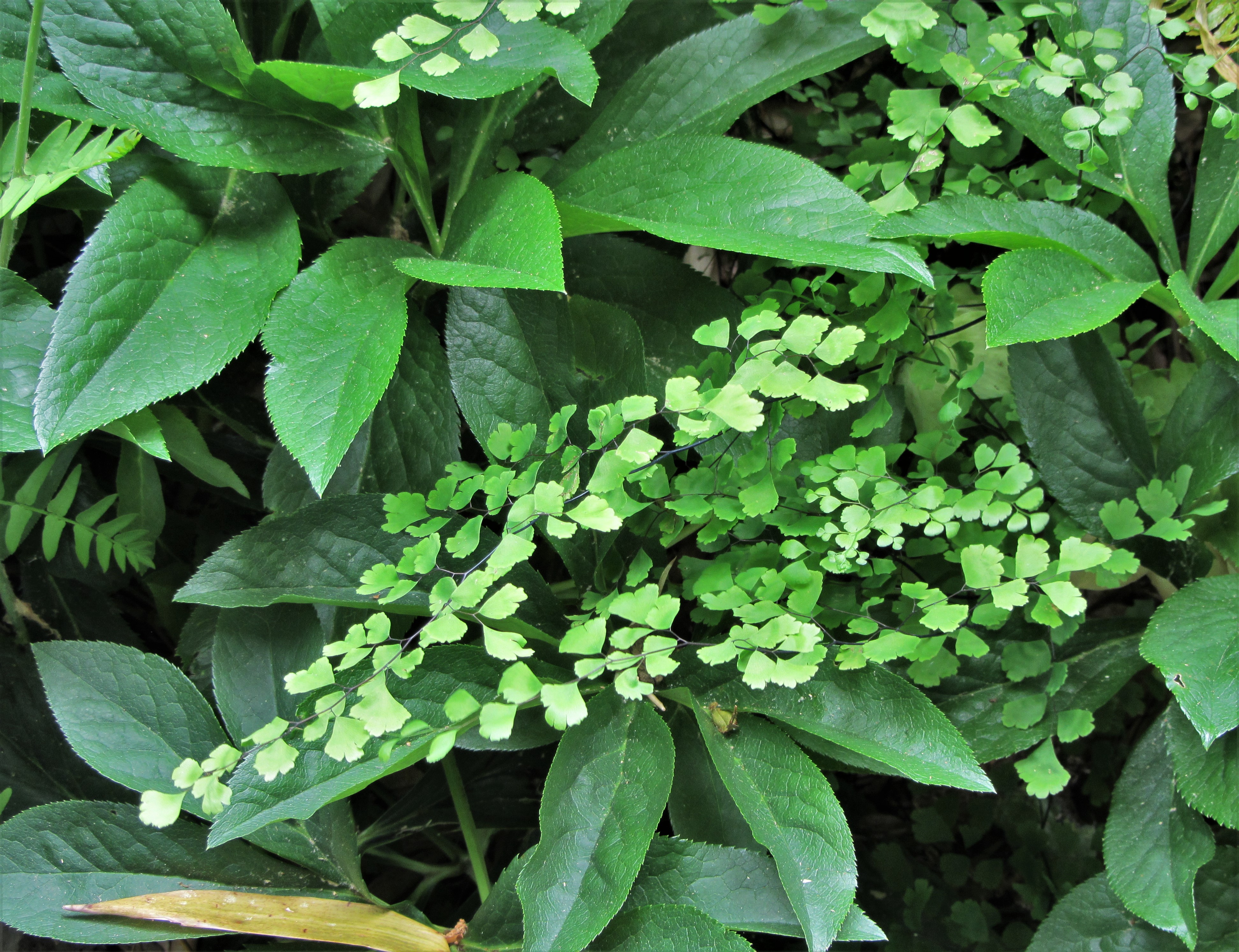
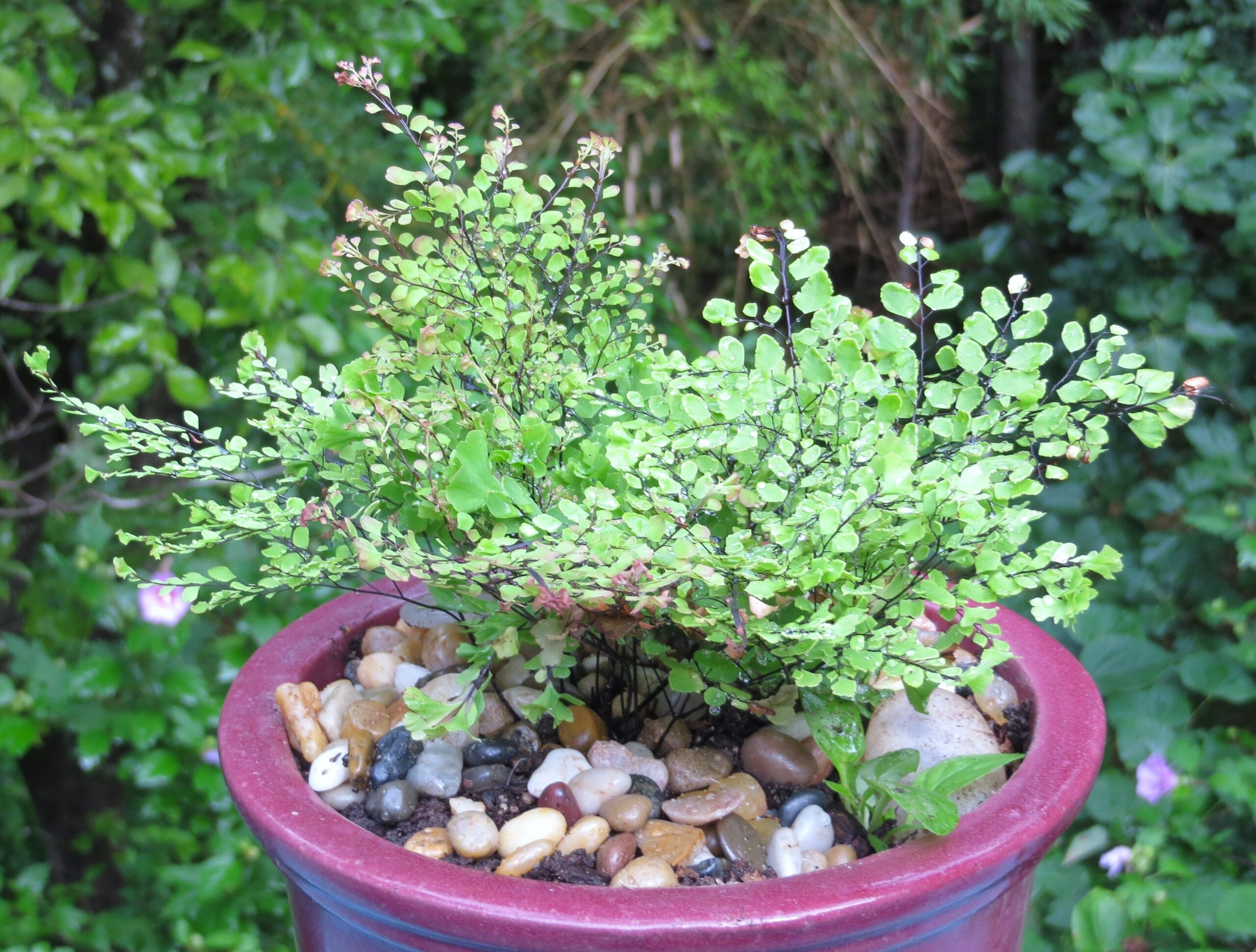
Adiantum x. marisii grows through the leaves of a Helleborus. This is the first maidenhair fern I planted in my home garden.
Maidenhair ferns look so delicate and fragile I avoided planting them for the first thirty-odd years of my gardening adventures. I had no confidence in keeping them alive through a Virginia summer because I expected them to be fussy, requiring far more skillful care than I could offer.
Native Northern Maidenhair Ferns
When I first toured the Williamsburg Botanical Garden as a newly minted Master Gardener intern in April of 2018, our guide, Dr. Donna Ware, pointed out a patch of our indigenous native Adiantum pedatum, northern maidenhair fern, growing happily at the base of a tulip tree near her Calcareous Ravine Garden. She had planted them in this area because maidenhair ferns commonly grow near limestone rock formations in the wild. Her raised bed of disjunct calcareous plants was bordered with chunks of limestone. Though she chose to display the maidenhair ferns in this area, they were planted in the garden’s naturally acidic soil under a canopy of pine and deciduous hardwood trees and mulched with forest duff.
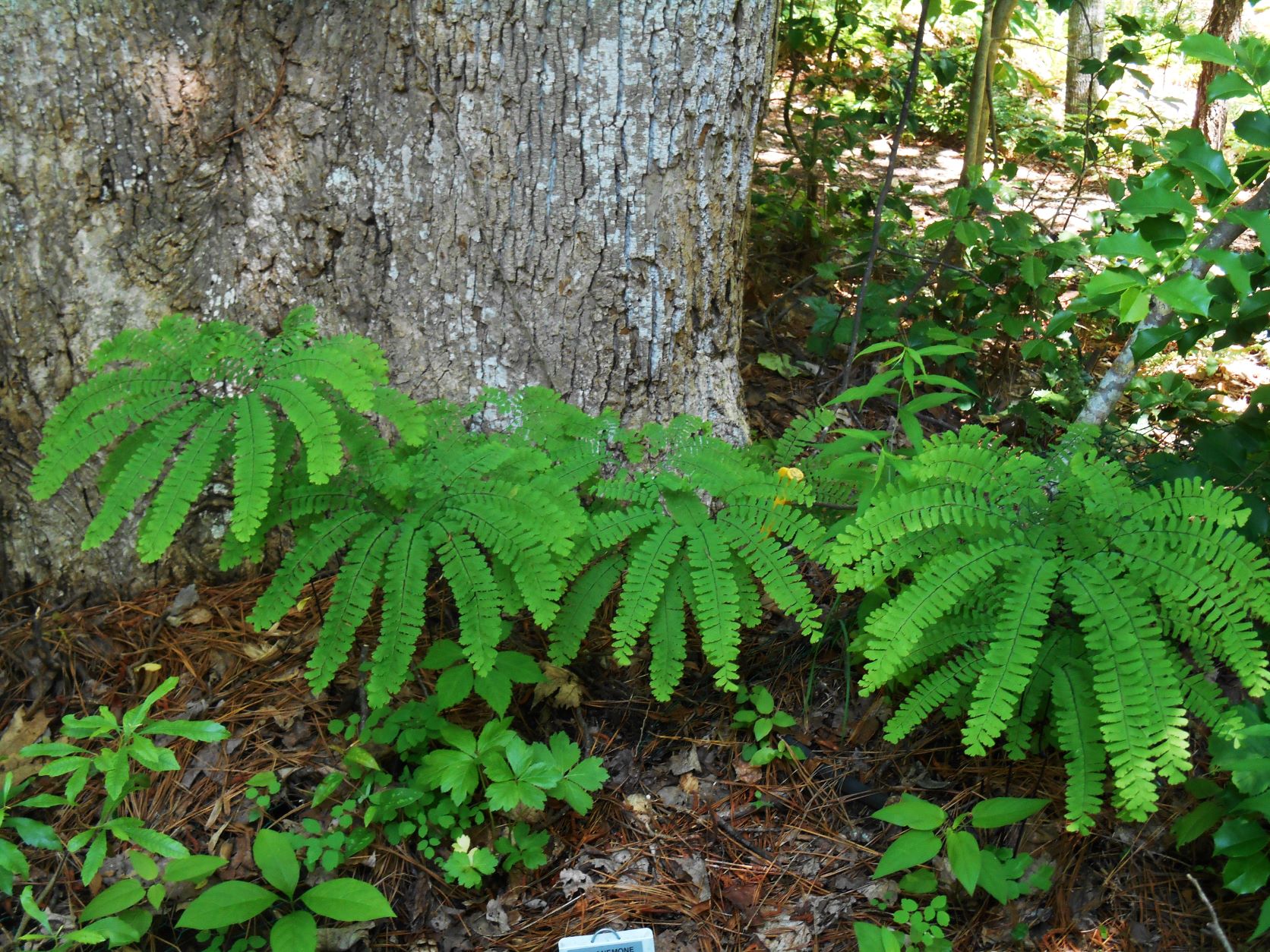
Northern maidenhair ferns, Adiantum pedatum, grow as ‘shoes and socks’ ground cover at the base of a tulip tree in the Williamsburg Botanical Garden and Freedom Park Arboretum.
As I settled into my work as a garden volunteer, and later as a garden steward with my own plantings to tend, I often visited and admired the beautiful clump of maidenhair ferns. It seemed they grew effortlessly, with no special care, and with surprising vigor. This species is so common across eastern North America that its original name was Adiantum americanum; yet the species is also common in parts of Asia. Its species name, pedatum, refers to its fronds’ resemblance to a bird’s foot.
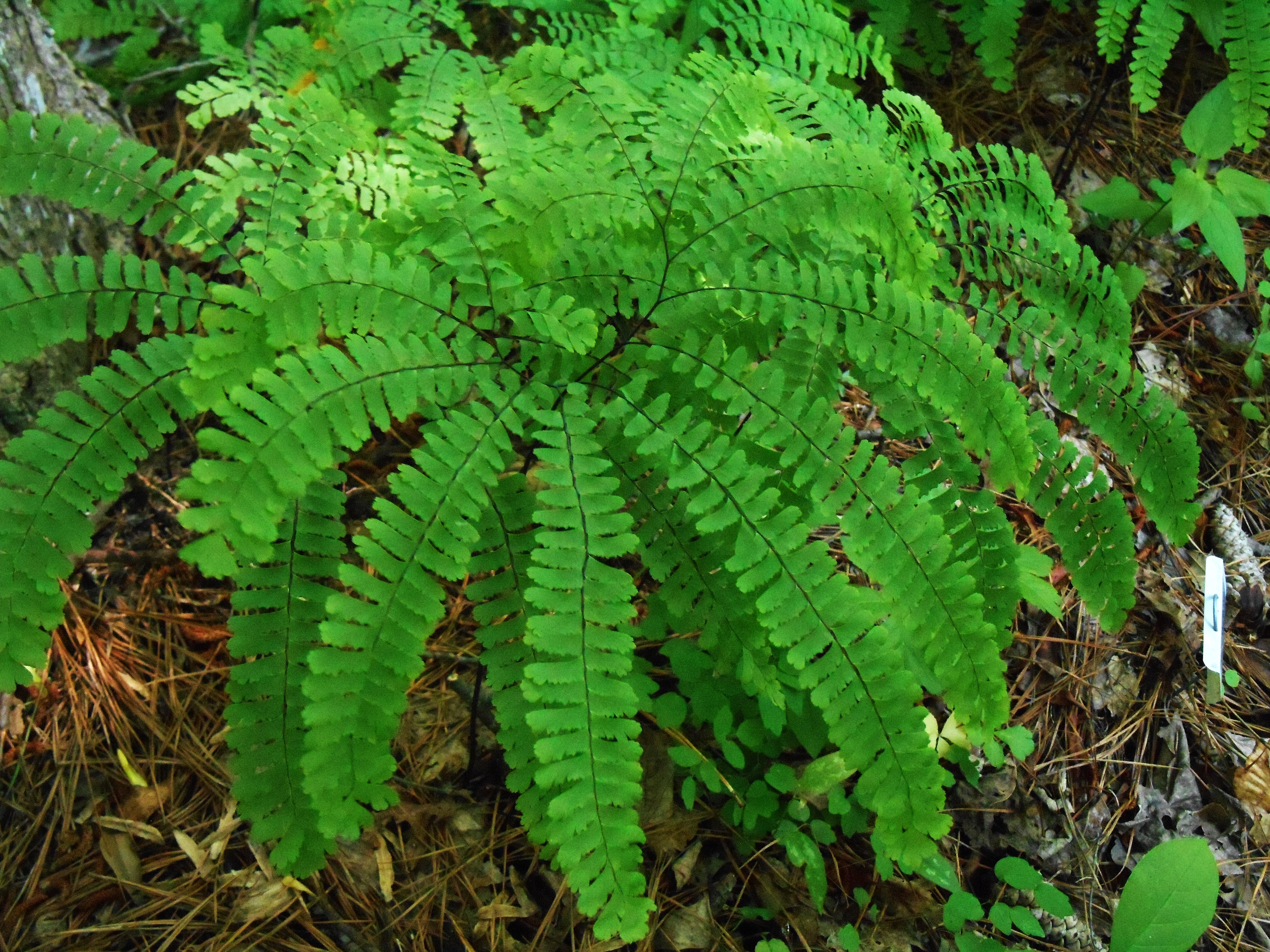
Adiantum pedatum, the common Northern maidenhair fern is indigenous to James City County, Virginia.
Native Plant Rescue
Dr. Ware, a research professor emeritus at William and Mary, and her team had spent the previous 15 years visiting sites in our county slated for clearing prior to construction and rescued many indigenous native plants to replant at the botanical garden. Many species of native ferns growing in the garden, including these common northern maidenhair ferns, were among their rescues. Dr. Ware soon became a treasured mentor as I learned about the various native trees and perennials growing in the areas of the WBG she planted and tended. She demonstrated that properly sited native plants don’t need a lot of specialized care and that they are extremely resilient, despite a fragile appearance.
Native Southern Maidenhair and Its Hybrid
Native maidenhair ferns weren’t commonly stocked at local garden centers, which may be why I hadn’t tried growing them. But while watching that patch of ferns at the botanical garden thrive, I grew more curious about our native Adiantum species and those non-native species that are hardy in our area. I found a hybrid, Mairis’s maidenhair fern, Adiantum x mairisii, and planted it on the edge of an established fern and perennial bed in my own garden. It grew beautifully for several years until larger plants nearby gave it too much shade and it suffered during a summer drought. This fern is a natural hybrid between our native southern maidenhair fern and either the African evergreen A. aethiopicum or the tropical American A. raddianum, which are native further south in Zones 9-10.
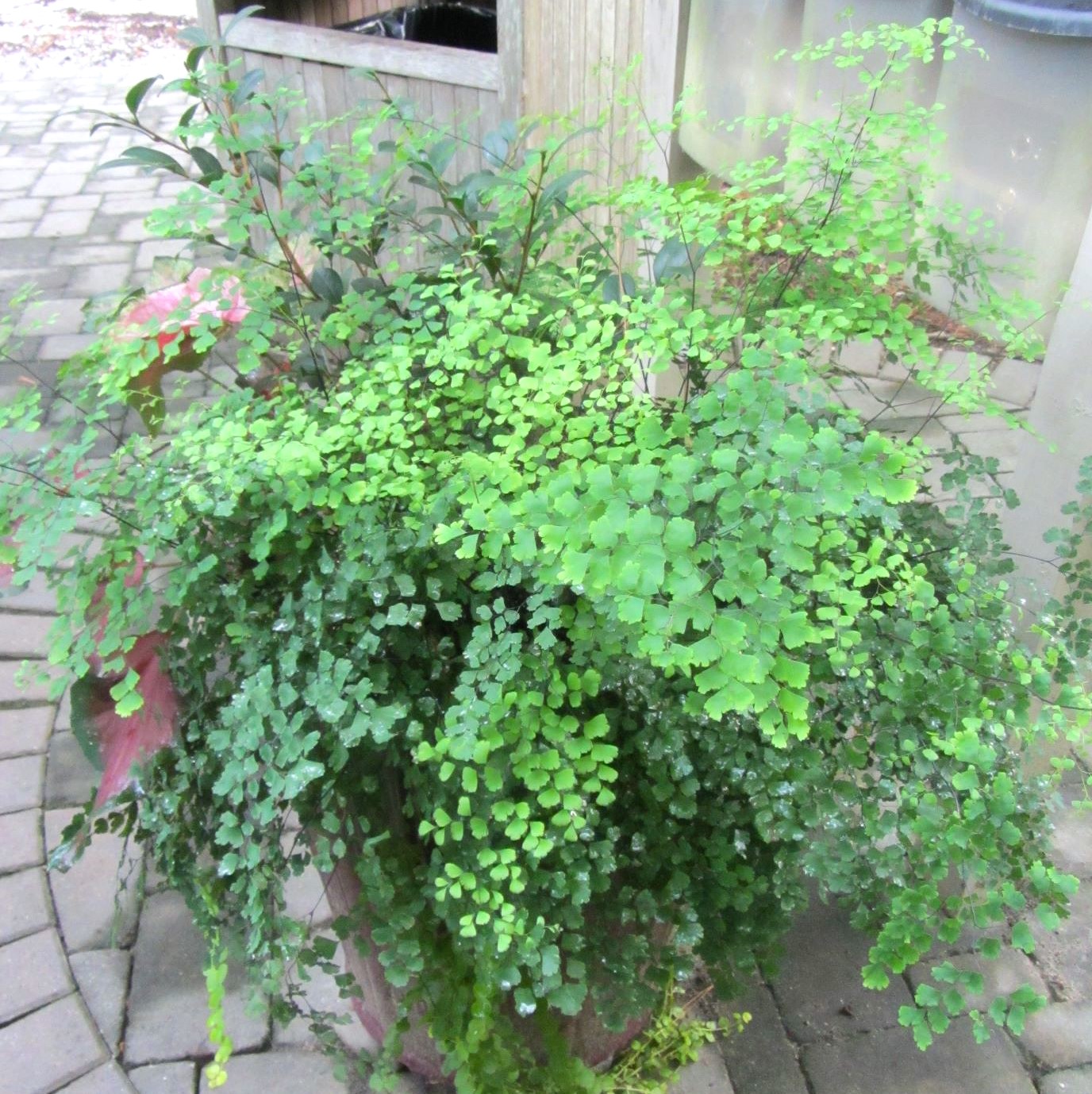
Deciduous ferns, like this southern maidenhair fern, A. capillus-veneris, will die back to the soil after frost and remain dormant until early spring. Here it grows near the entrance to the Williamsburg Botanical Garden and Freedom Park Arboretum.
When I refreshed a container planting for the botanical garden the following year, I took a chance and planted a native southern maidenhair fern, A. capillus-veneris, under a small shrub as a ‘spiller’ plant. There were no others already growing at the botanical garden, so I was happy to add another native species to the inventory. Southern maidenhair is not indigenous to eastern Virginia and our county, preferring the terrain of southwestern Virginia and the Appalachian Mountains. I determined that if it didn’t grow well in our coastal climate, I could simply replace it with something else.
The southern maidenhair fern was delicately beautiful all season, growing larger and lusher by the week. It looked extremely happy in its bright spot near the front gate. By January all of its fronds had faded in the cold, and I cut them away, leaving an empty spot in the container where the fern had grown. But there were a variety of spring flowering bulbs in the pot which grew into the empty space by late February, and soon new fronds of the Adiantum emerged around them. The southern maidenhair fern grew back even larger and more vigorous than it had grown the previous year. It was tough and tenacious and still growing strong when I finished my work at the garden in late 2022.
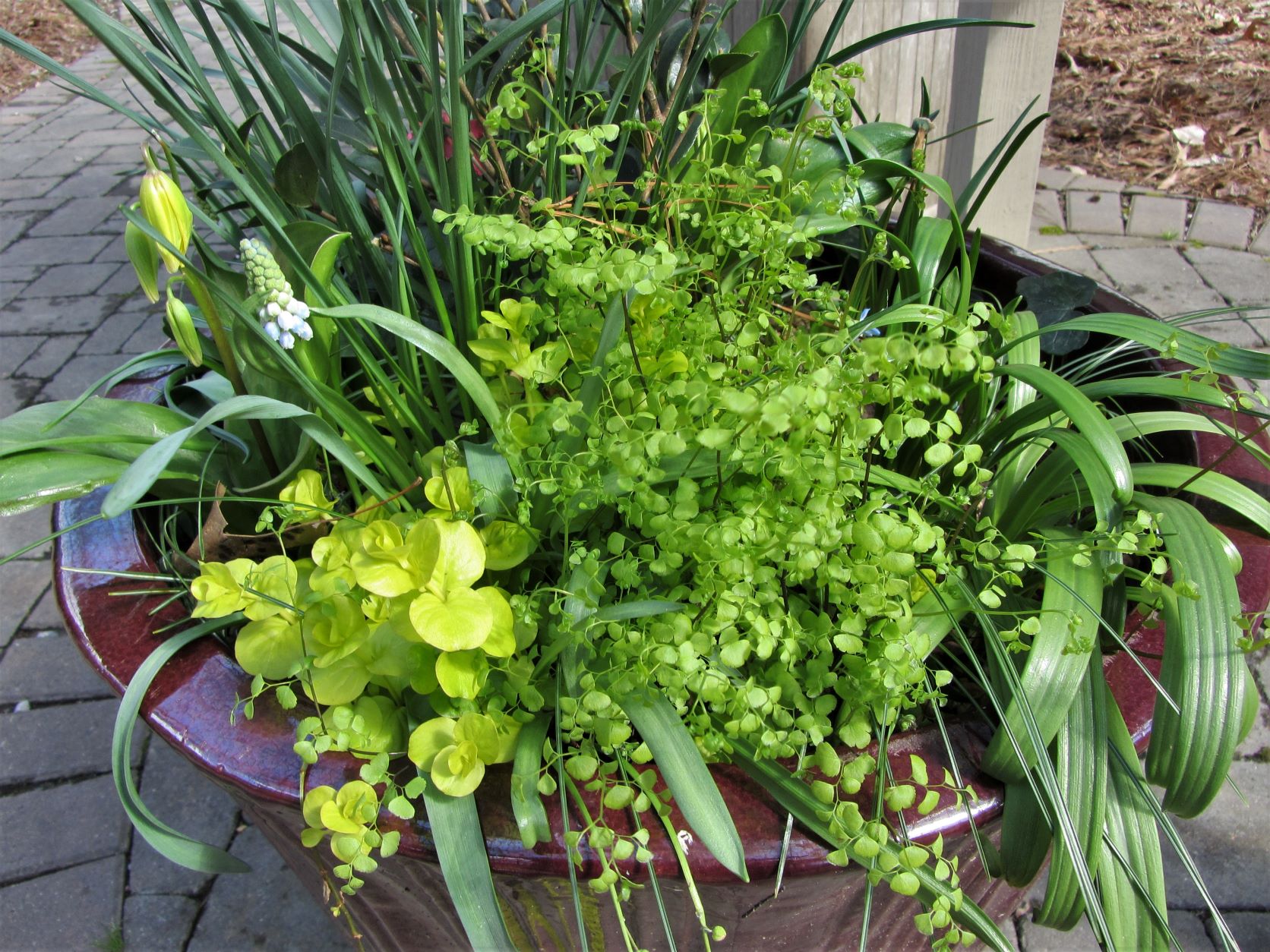
Hardy southern maidenhair fern emerges in late March, growing around spring blooming bulbs.
Recognizing Adiantum Species
Recognize maidenhair fern species by their tiny wing, fan, or wedge-shaped, toothed pinnae, the smallest leaflets held on the tiny branches of each compound leaf, or frond. These little pinnae cling tenaciously to a wiry black, purplish, or brown rachis. The architectural network of very thin, dark stems holding tiny leaves gives the maidenhair its delicate appearance. Water droplets bead up and are repelled by the epidermis of each leaf, earning this fern its name, Adiantum, from the Greek adiontos, which means ‘unwetted.’ There are more than 250 different species of Adiantum world-wide, many of them in North, Central, and South America and the Caribbean Islands, along with a variety of hybrids. Many tropical species available commercially come from Australia, the Pacific islands, and tropical Africa. While most are deciduous, a few tropical species are evergreen.
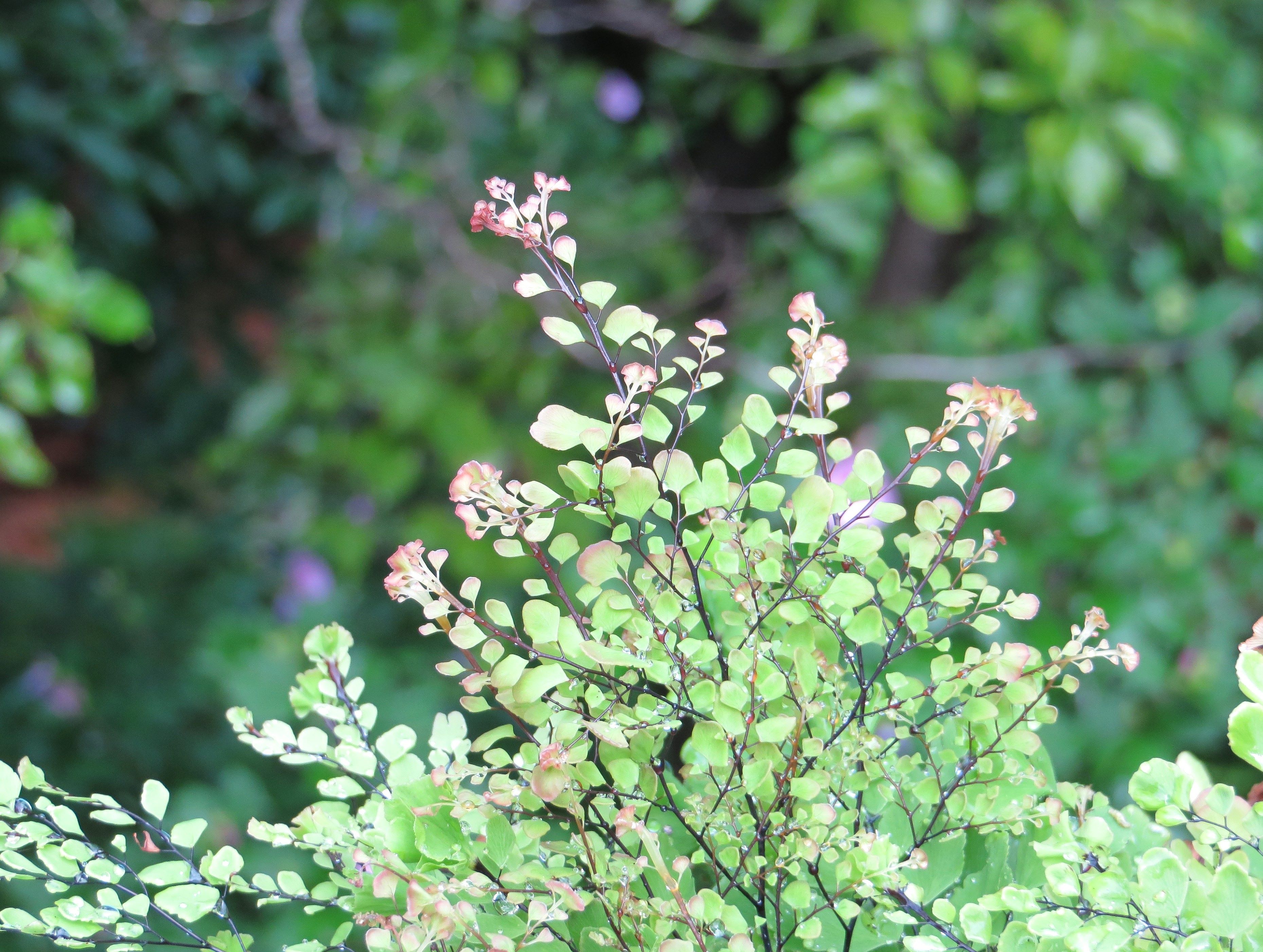
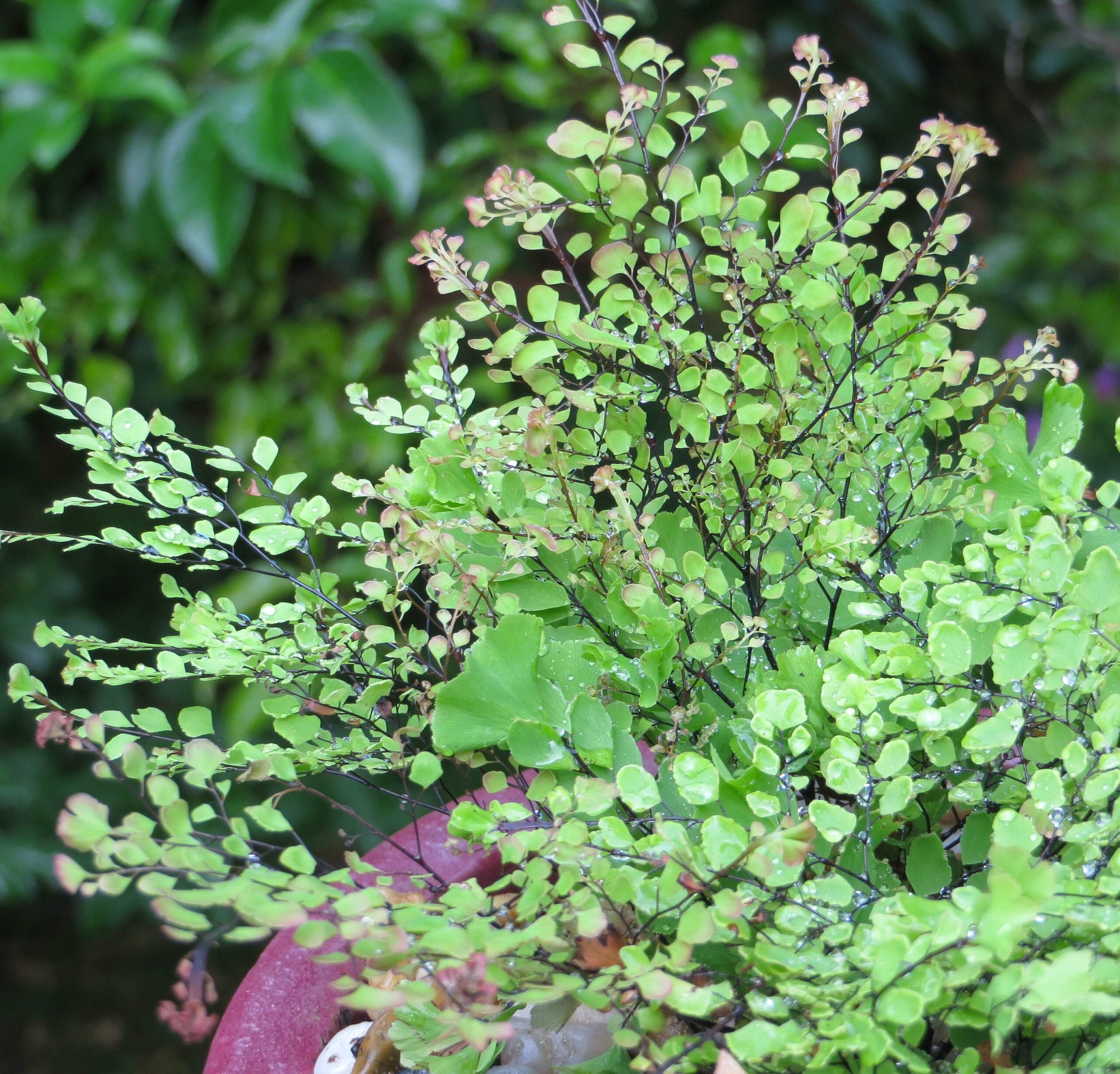
A. tenerum ‘Peacock’, the brittle maidenhair fern, is native along the Gulf Coast, in Mexico, Central and South America, and the Caribbean Islands. Each frond is topped with a fancy crest and new growth emerges rosy pink.
The Art and Science of Cultivating Adiantums
Maidenhair ferns grow best in bright shade, consistently moist soil, and high humidity. They like neutral to slightly ‘sweet’ soil with a pH around 6 to 8, although they will grow in more acidic soil that is high in organic matter. Although some maidenhair ferns, like our native A. pedatum, are hardy to Zone 3, those maidenhair species native to tropical or subtropical regions are tender. Some of the prettiest maidenhair ferns sold at nurseries or greenhouses as house plants are hardy only to Zones 8, 9 or 10. Those considered hardy to Zone 8 may still need some protection in our area from unusually cold weather, and benefit from shelter indoors during January through mid-March when grown in a container.
Adiantum species and hybrids grow in ever-expanding patches of fronds because they grow from a network of underground stems, or rhizomes. Their rhizomes and roots are just as dark and wiry as the plants’ stipe and rachis, their above ground stems. The rhizomes reach out for new territory to colonize as the fern matures. Even though the plant doesn’t grow a lot taller, year after year, it will grow wider. Its croziers emerge directly from the rhizomes, up through the soil, in a little colony of delicate fiddleheads.
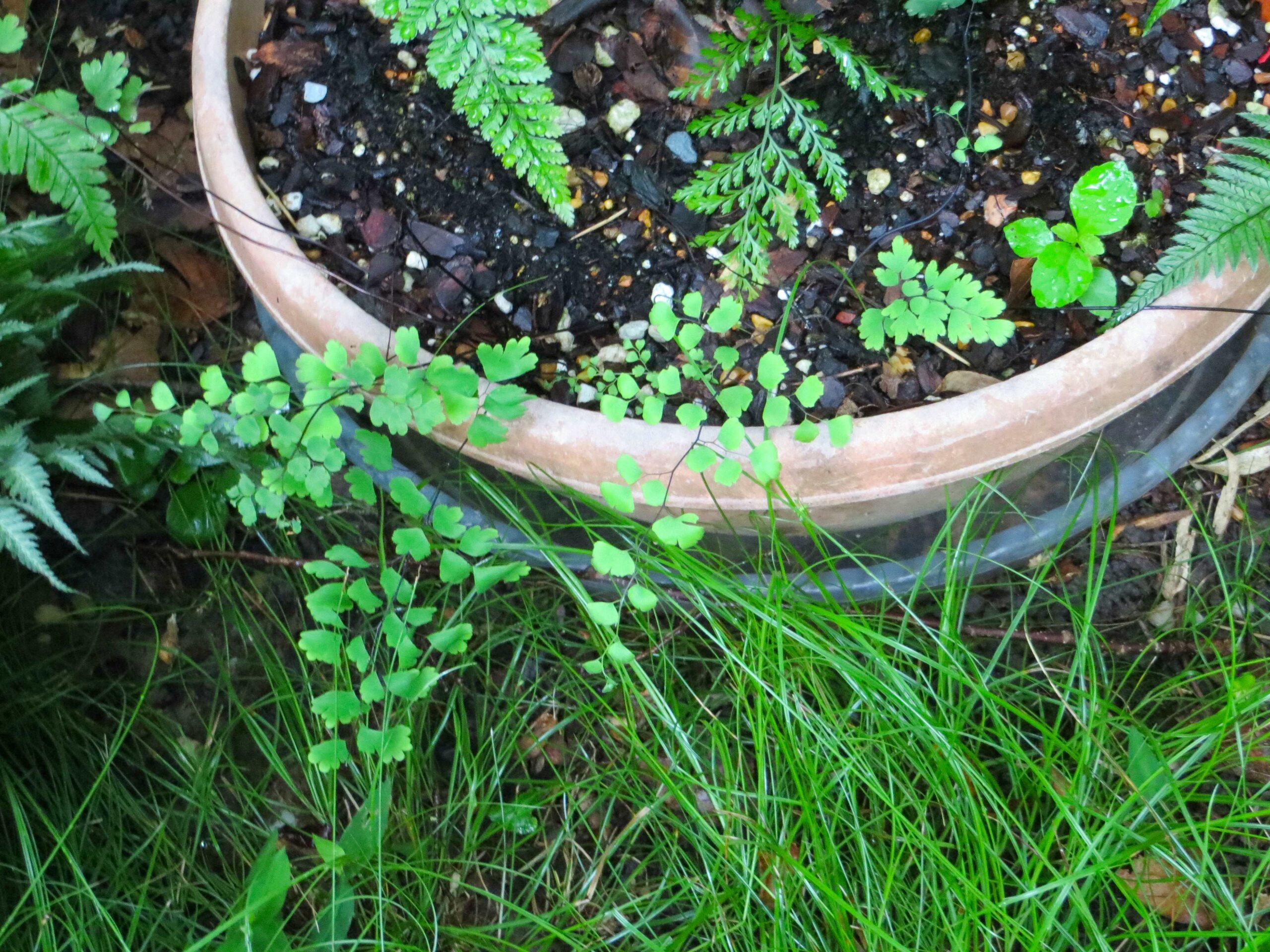
A small division of Adiantum x. marisii came loose while repotting the parent plant this spring. Here it is rooting into a new container planting along with other ferns and perennials. A division needs to include a piece of rhizome with leaves and roots attached.
Propagating Maidenhair Ferns
This growth habit makes maidenhair ferns, named for their cascading fronds and wiry, hair-like dark stems, easy to propagate through division. A gardener can slice a section of the rhizome from the edge of the plant and replant it elsewhere, so long as that division of the rhizome has roots and one or more fronds growing from it.
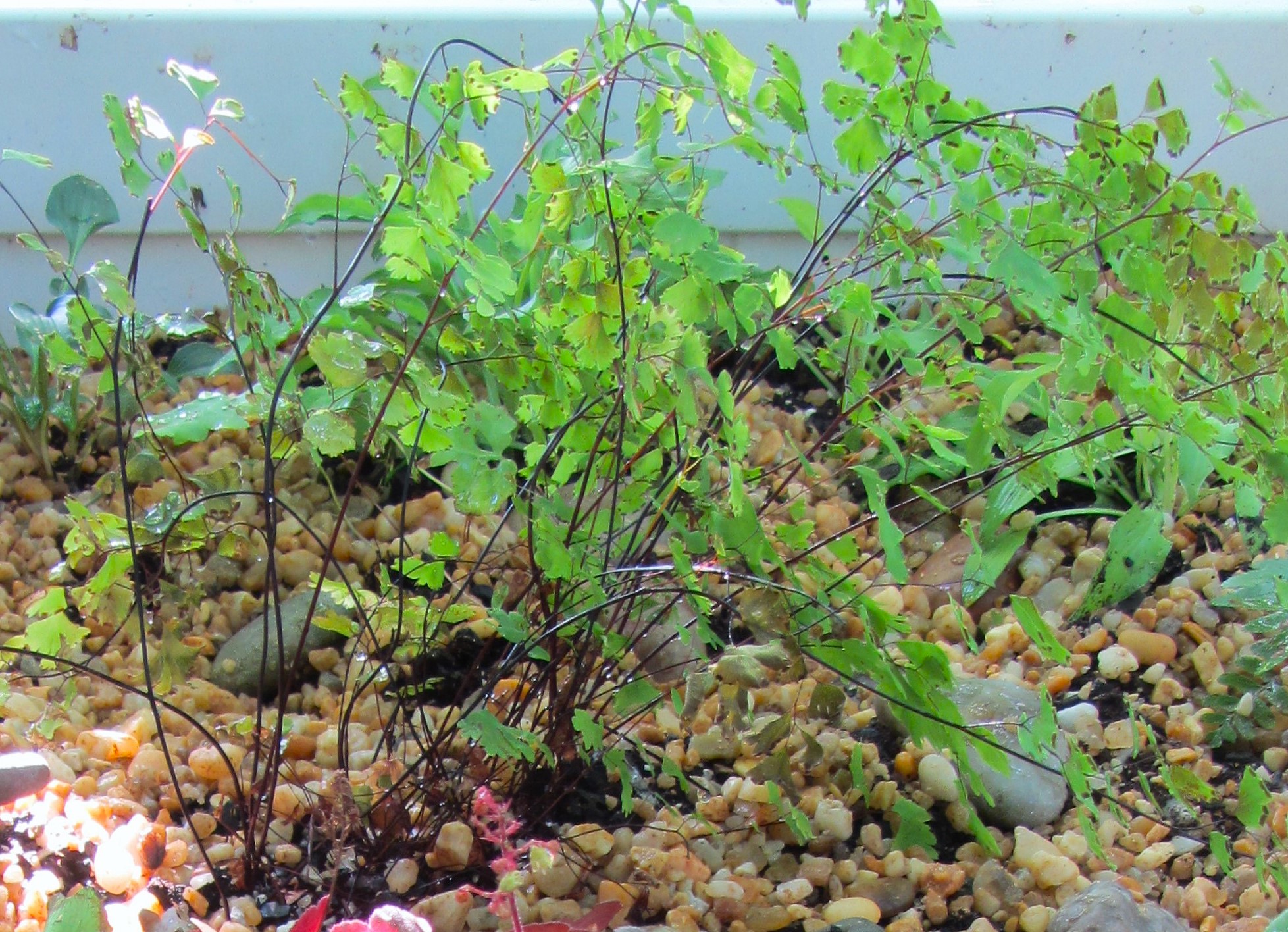
Notice the dark sporangia developing along the edge of each pinnae of this newly planted mairis’s maidenhair fern. Pea gravel mulch keeps the foliage clean during heavy rain, protects the plants’ roots from heat and cold, and helps preserve moisture in the planting. It can also help improve the pH of acidic soils for maidenhair ferns. Photo taken at the Williamsburg Botanical Garden and Freedom Park Arboretum in July 2020.
Maidenhair ferns grow easily from spores, but this is a longer and more complex process. The spores develop in long, thin, sporangia that grow along the outer lower edges of the pinnae. Sometimes the edges of the pinnae appear to wrap over the sporangia to protect them. As the spores ripen, one can harvest the frond, or even just a few pinnae from the frond. Place these leaves in an envelope to catch the spores as they ripen and are released from the sporangia. Find instructions for growing ferns from spores here.
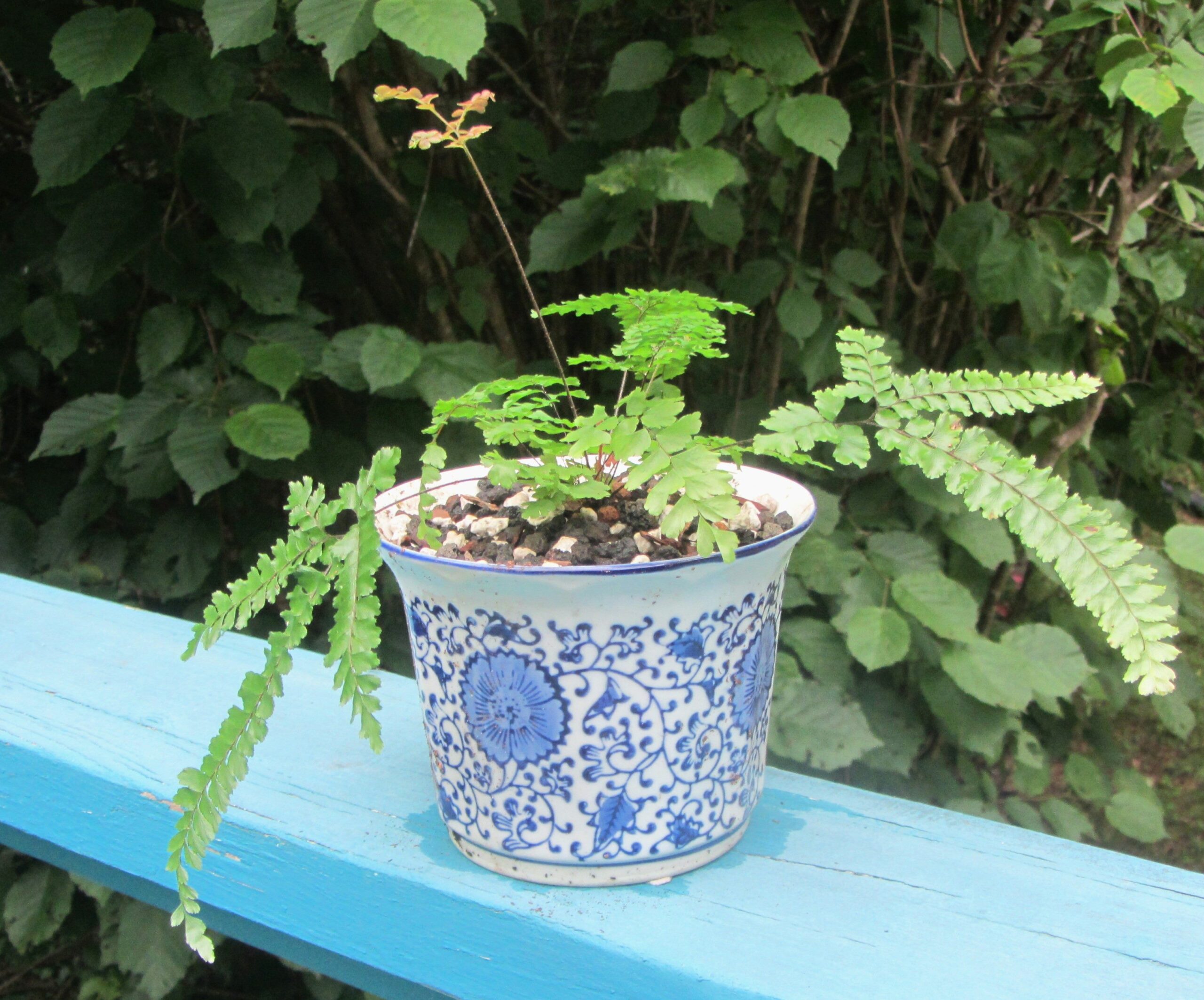
This young rosy maidenhair fern, A. hispidulum, grew from spores that I collected from the frond of a fern I purchased. July 2024
Rosy Maidenhair
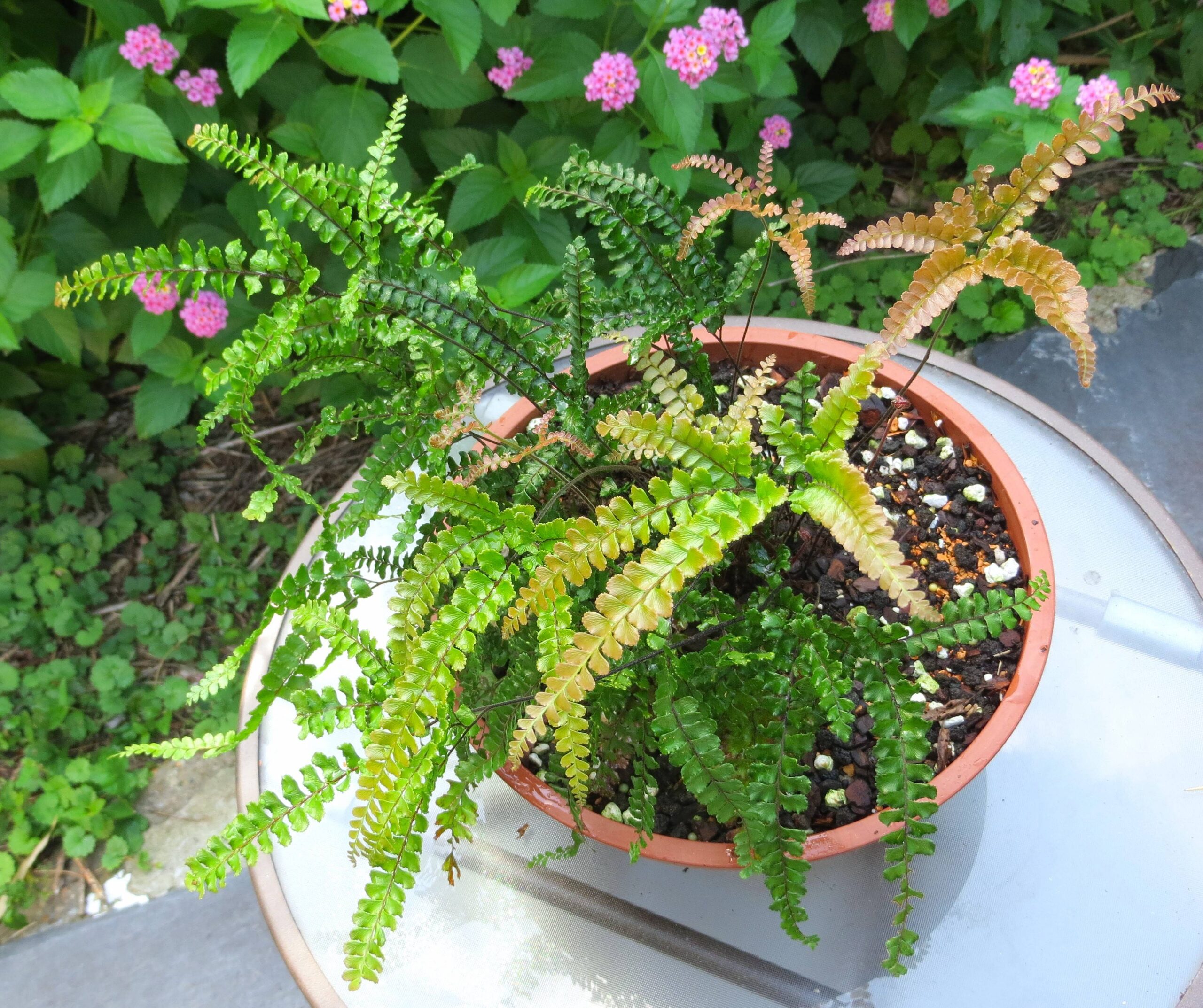
I purchased a pretty rosy maidenhair fern in a tiny pot intended for use in a terrarium or dish garden. Its fronds were held in a finger formation similar to our native A. pedatum, but it looked more delicate, and its new fronds emerged in a lovely shade of coppery pink. Since it was sold as a houseplant, I assumed that it likely wasn’t hardy in our area. I planted it in a shallow container under a large cane Begonia and left it outside in a shady spot all summer, where it thrived. And I admired it enough that I harvested a frond to gather its spores for propagation. Both fern and Begonia spent the winter in a frost-free, bright garage.
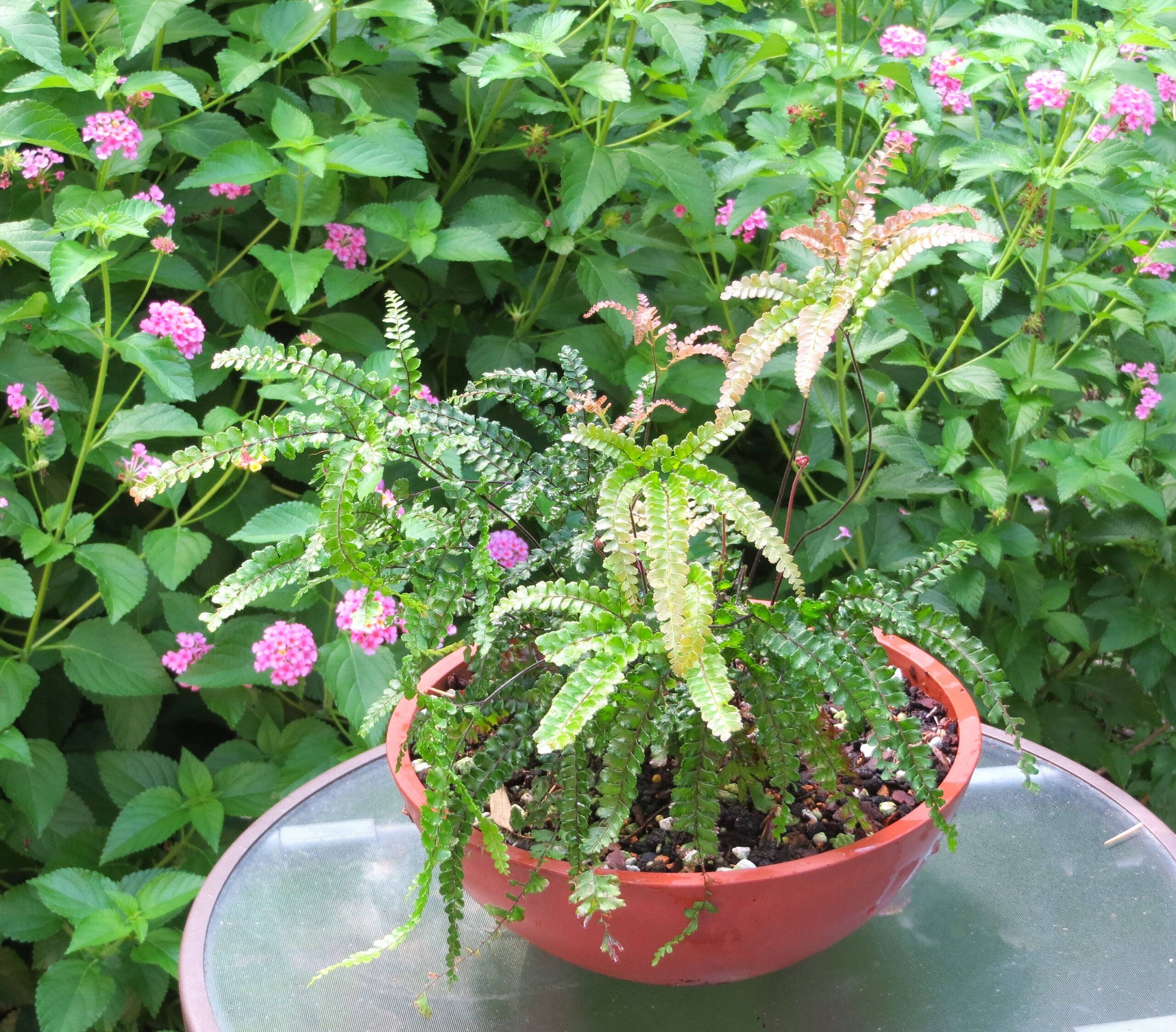
The young rosy maidenhair continues to expand after a year of growth. This is the same plant shown in the previous photo. Notice how glossy green its fronds become as they mature. This fern spent the winter in our living room, and gets morning sun in its new summer location outdoors.
Eventually, I identified this maidenhair as A. hispidulum or rosy maidenhair, a species native to Australia and New Zealand along with parts of southern Asia. It is hardy in Zones 8-10 and so might survive a mild Williamsburg winter with some protection. Its spores grew, and the resulting plant is larger and more vigorous than the original I purchased.
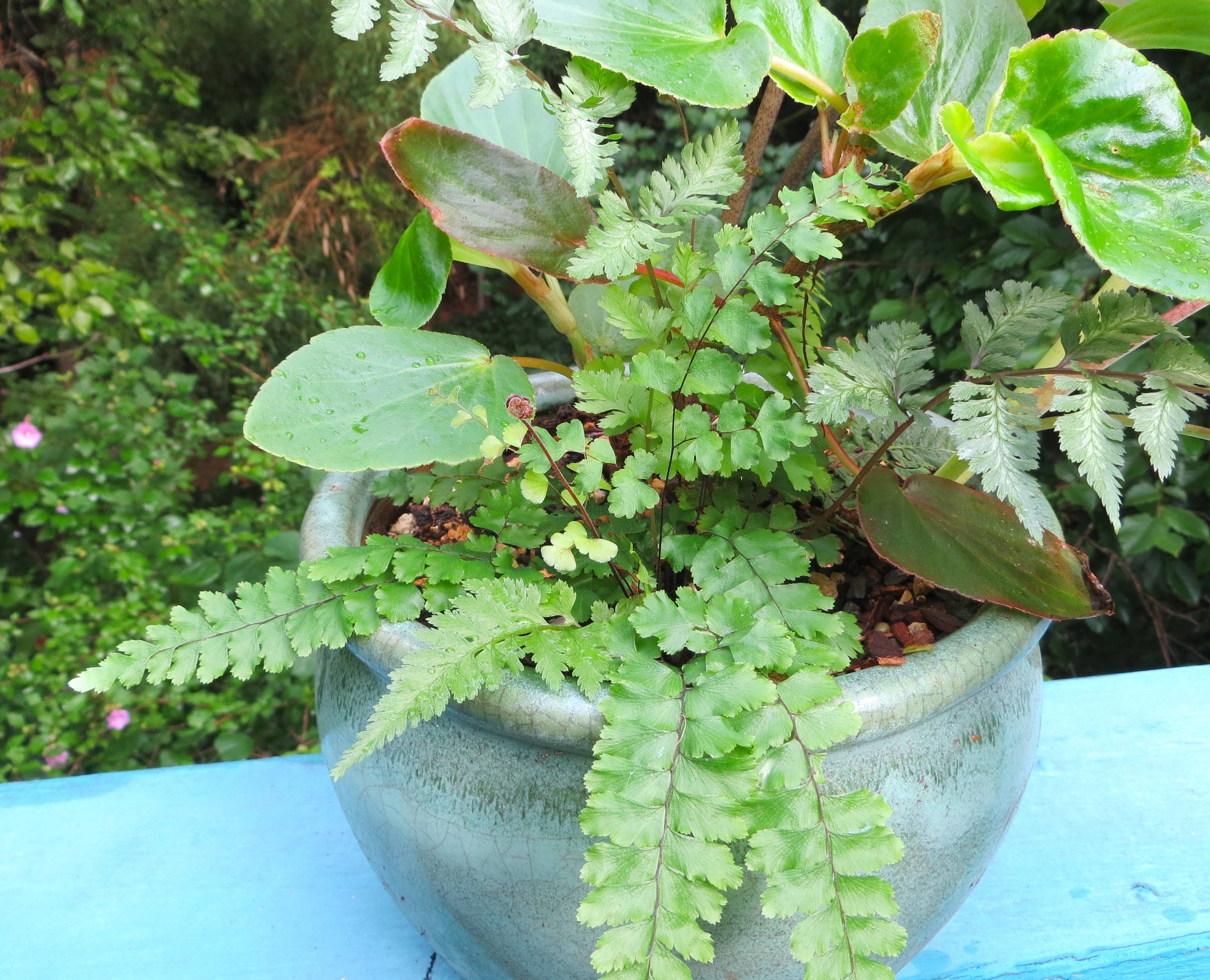
The young maidenhair fern in this pot and the Japanese painted fern both are sporelings that I’m growing on until they are larger, alongside a Begonia cutting. The shape of its pinnae and dark, wiry rachis identify the fern as an Adiantum, and I hope it may prove to be another rosy maidenhair fern.
Tropical or Hardy?
Tiny ‘terrarium’ or houseplants frequently have little or no labeling; perhaps a common name, but no real information to help the adventurous gardener. Sometimes I can track down a species or hybrid name along with region of origin and hardiness zones. But maidenhair leaves are distinctive enough that one can at least identify their genus. With so many species, distributed worldwide, it requires a bit of detective work to identify them further. That is why I treat most mystery maidenhair ferns as tender houseplants and provide winter accommodation indoors.
Learning by Trial and Error
Last summer, I was delighted to find our native southern maidenhair and the hybrid Mairis’s maidenhair fern available in quantity at a local nursery that sells hardy ferns alongside other perennials. I bought several to use in containers, expecting them to grow, over winter, and be ready to plant out in the garden this spring. I brought a couple of them into the garage in November, and to be safe, assembled the remaining containers in a sheltered spot on the patio where I could watch over them through the winter. Of those on the patio, only one survived to sprout new fronds this spring. It appeared to be the hybrid, A. mairisii, which is hardy in Zones 6-9. A. capillus-veneris is listed as hardy to Zone 6-9 in some resources and to Zone 7-9 in others. Both should have survived to sprout new growth this spring.
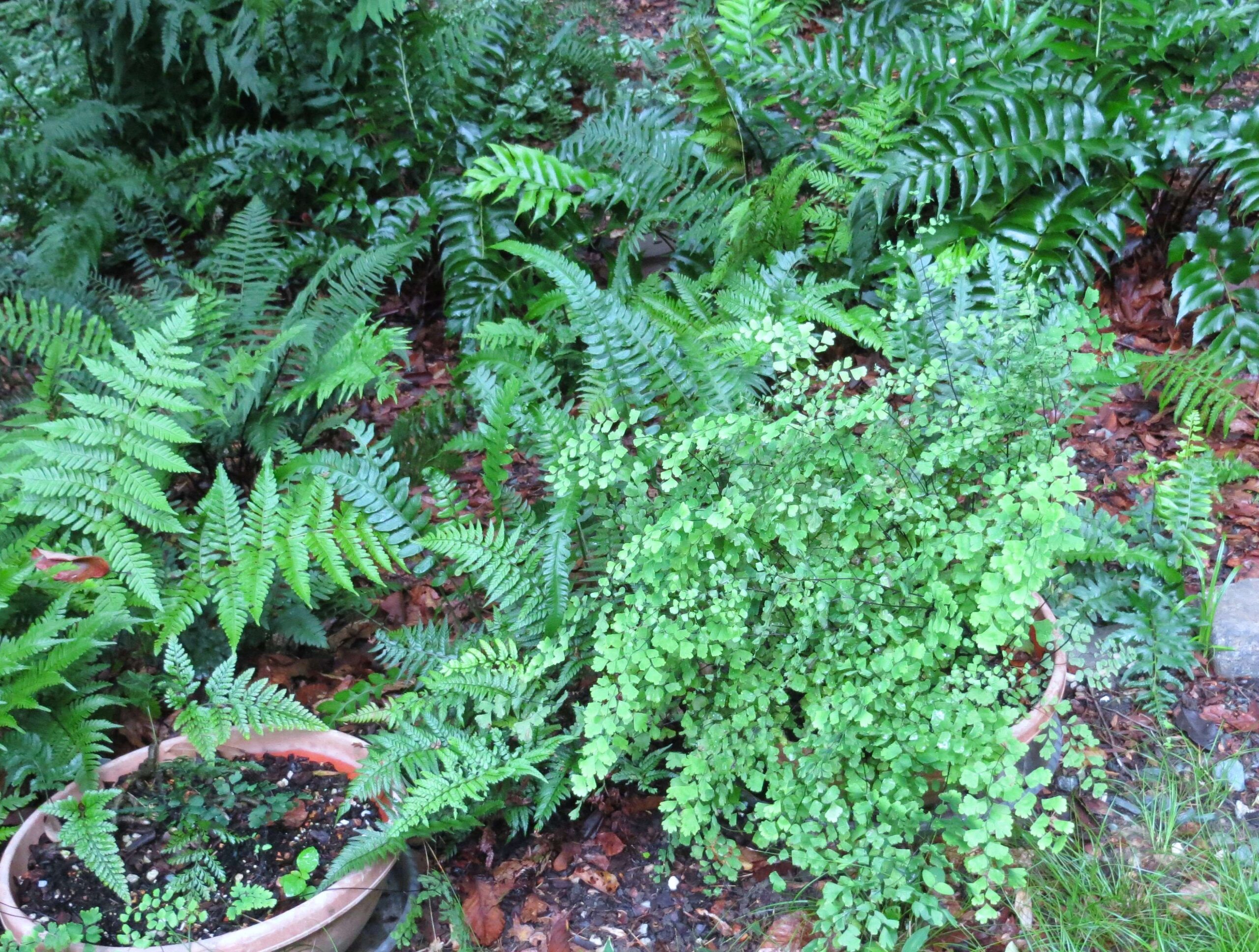
Mairis’s maidenhair fern grows in a container, bottom right, and was the only one of its cohort to survive last winter on our patio. I intend to plant it into the ground in September so it can continue to grow and expand.
The only way to really understand a plant and its needs is to grow it. And preferably, grow several individuals of the same species in various situations. You learn both when it thrives and when it fails. One may learn more about a plant from figuring out why it died or failed to thrive than one learns from its success.
Consider the Variables
Gardeners learn that the many variables of light, temperature, moisture, humidity, soil texture and pH, nutrition, competition with other nearby plants, and predators all influence how well a plant grows. Add to that the size, material, and amount of drainage available in the various containers where they grow. If a plant dies, the best one can do is to locate another and try again. Poor drainage and wet soil will kill the fine roots of maidenhair fern as too much direct sun will scorch its leaves, particularly later in the day.
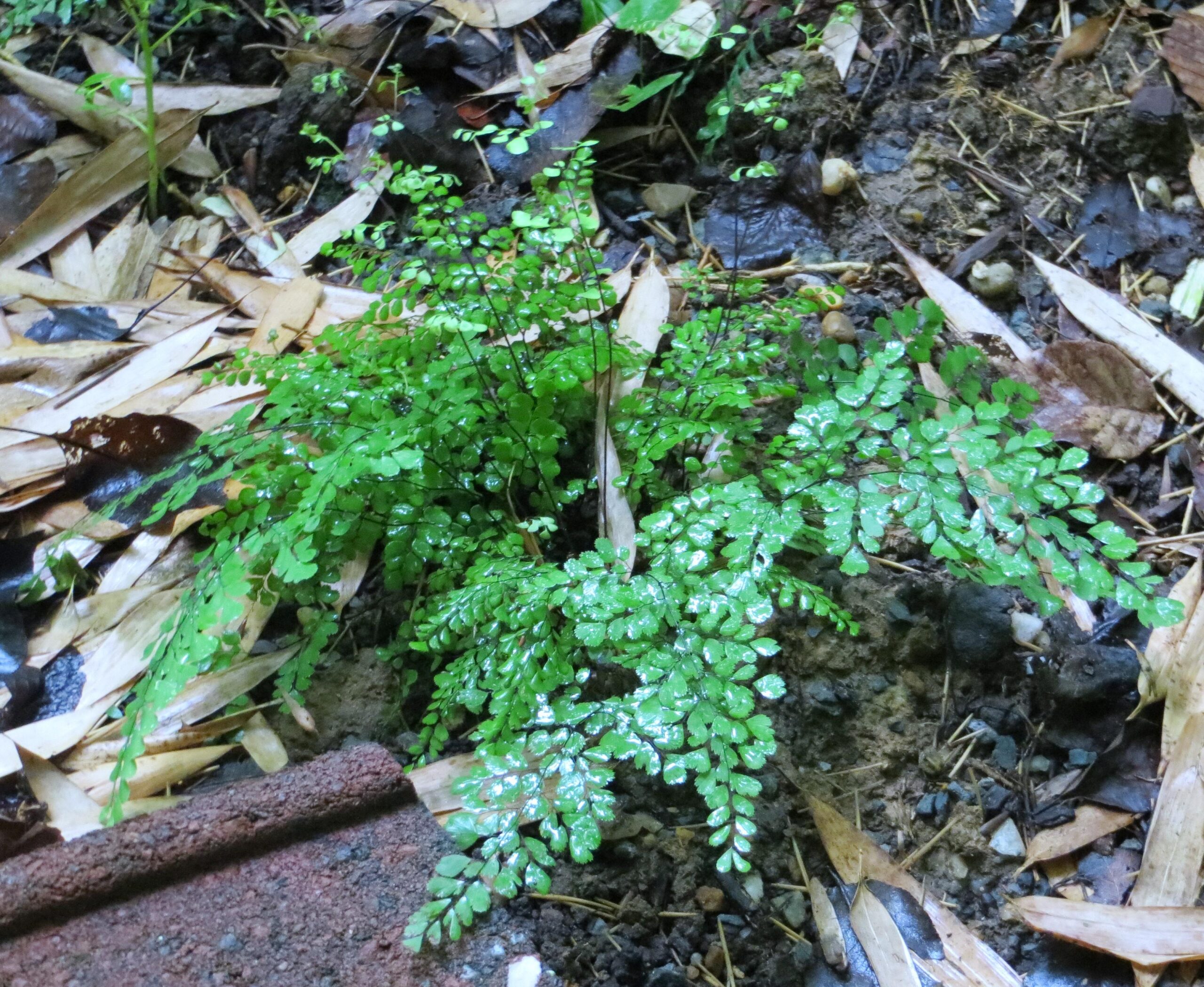
Himalayan maidenhair fern, A.venustum, is a new addition to our garden this spring. I hope it will help hold this steep slope against erosion as it takes hold and spreads. It should spread to around 3′ wide in five years.
Himalayan Maidenhair Fern
When I read an English gardener’s praise for the Himalayan maidenhair fern, A. venustum, as one of the hardiest and best ferns he has ever grown, I wanted to try it to see whether it would overwinter better than our native southern maidenhair. From a distance, they look much the same, but the Himalayan maidenhair is hardy in Zones 5-9 and can spread to a patch 3’ wide in five years. Although native in Asia, it is a common ground cover in shady British and European gardens. This is a great plant to grow under flowering trees and shrubs and is reputed to be somewhat drought tolerant once established.
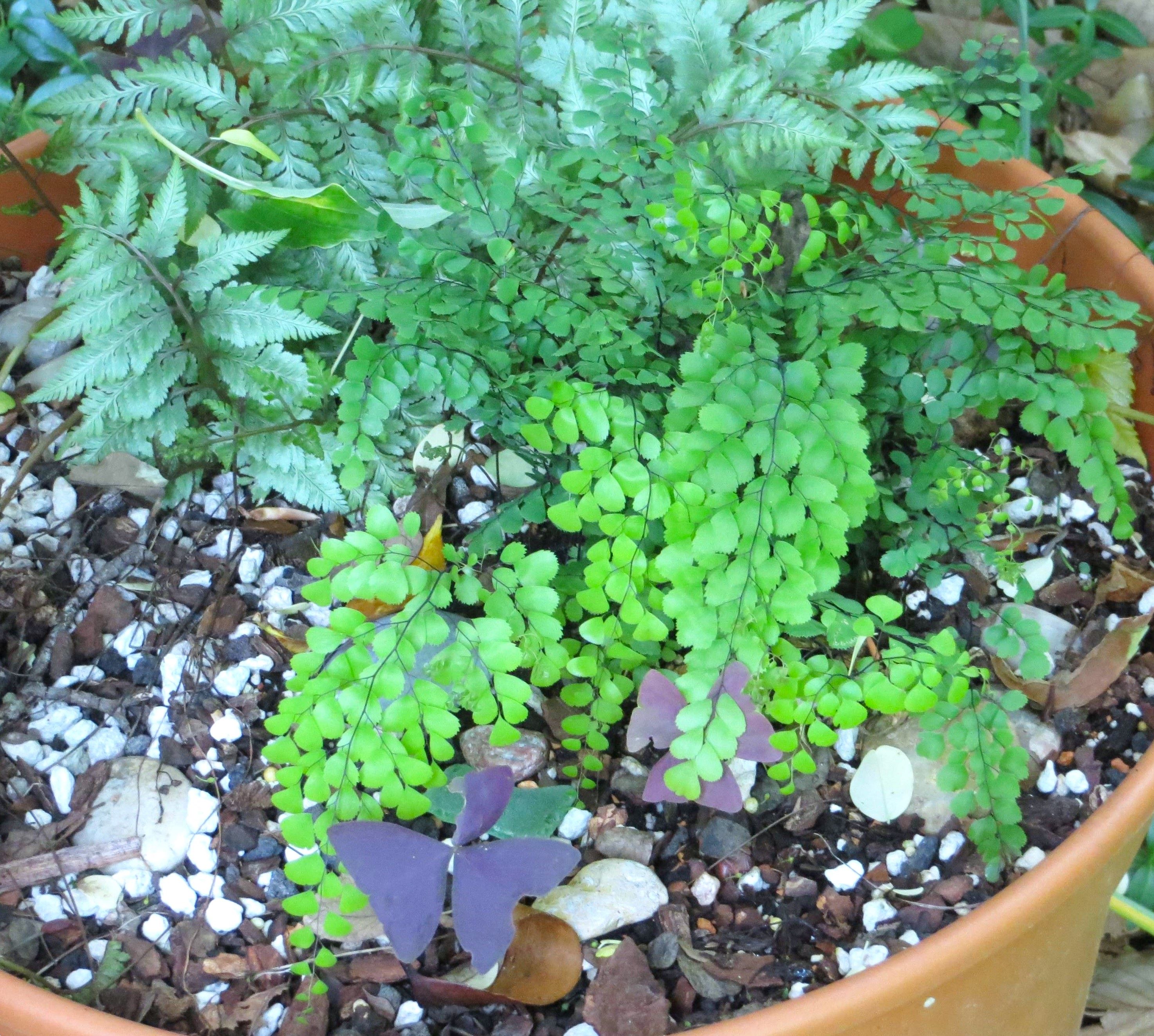
The third Himalayan maidenhair fern I received settles into an open spot in this established container garden. This photo was taken just a few days after I planted it in late spring.
The Himalayan maidenhair is rarely offered in the retail garden centers in our area, but I located a nursery in Washington, near Seattle, that offered it at a reasonable price. I ordered three and am giving them a try this summer with two planted in the ground in a very shady area and one in a large container where it will get a bit more sun.
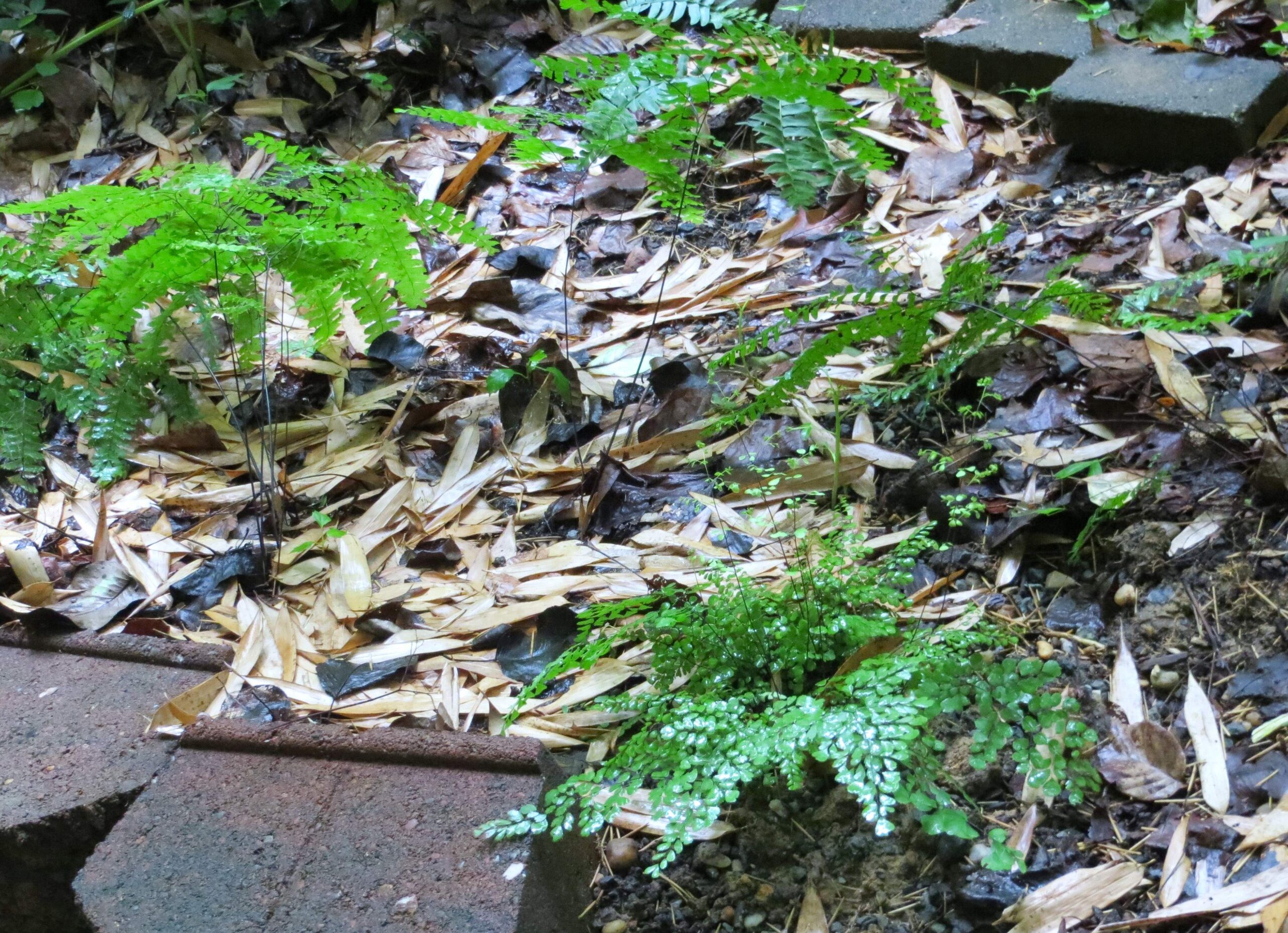
Himalayan maiden hair fern is planted just below our indigenous northern maidenhair fern, which has been growing in this area for two years now. The ferns grow in deep shade on the steep slope of a ravine.
Ancient Common Origins
Gardeners should remember that when ancient plants like maidenhair ferns first appeared in the fossil record, land masses were distributed differently than they are today. The genus first shows up in the fossil record around 110 to 150 million years ago when North America was still connected to Eurasia in the supercontinent known as Laurasia. That is why North American Adiantum species so closely resemble those found in Europe and Asia. Though we may think of different species as native to different countries today, the fact is they share a common origin and have changed little over the millennia as Earth’s continents have shifted to their current positions.
Peacock maidenhair fern is indigenous to tropical North, Central, and South America.
Fancy Fronds Nursery, a specialty fern grower where I located the Himalayan maidenhair, also offers the tender but colorful brittle maidenhair, or A. tenerum ‘Peacock,’ native to tropical regions of the Americas. Each frond ends in a frilly crest. This is a highly ornamental maidenhair fern to feature in a pretty container. It can be grown as a houseplant if there is enough humidity to keep it happy. It will thrive in our Williamsburg summers but will likely need to come indoors by mid-November and live inside until April.
Western Maidenhair Fern
A close relative of the East Coast native A. pedatum is the very cold hardy western maidenhair fern, A. aleuticum. It thrives in moist to occasionally wet soil and is hardy in Zones 3-8. It was once grouped within the A. pedatum species, then later listed as a subspecies of it. Finally, it was determined to be a separate species entirely and named A. aleuticum, the five-fingered fern . Botanists noticed that while A. pedantum resembles a bird’s foot, A. aleuticum looks more like an open human hand waving in the breeze. They are often found growing on moist, rocky slopes in western parts of North America and they grow to around 2 ½” tall.
According to the Plant Delights Nursery website, A. aleuticum will grow in the Eastern US provided its needs are met. The dwarf variety they offer will grow in Zones 3a-8b, so it should perform well in the Williamsburg area so long as it has shade and consistently moist soil. Like other maidenhair ferns, A. aleuticum appreciates a bit of morning sun and bright shade for the rest of the day. The website describes disjunct populations of this species growing wild in West Virginia, Pennsylvania, and Wisconsin.
A Western Maidenhair Hybrid
Tracy’s maidenhair fern, A. x tracyi, is an evergreen natural hybrid between A. aleuticum and the California maidenhair fern, A. jordanii. It grows into a lacy, 2′ tall mound in moist shade. It is said to be hardy to Zone 8 with a minimum winter temperature of around 10F. This fern has not yet become popular on the East Coast, but it can be ordered from growers on the West Coast.
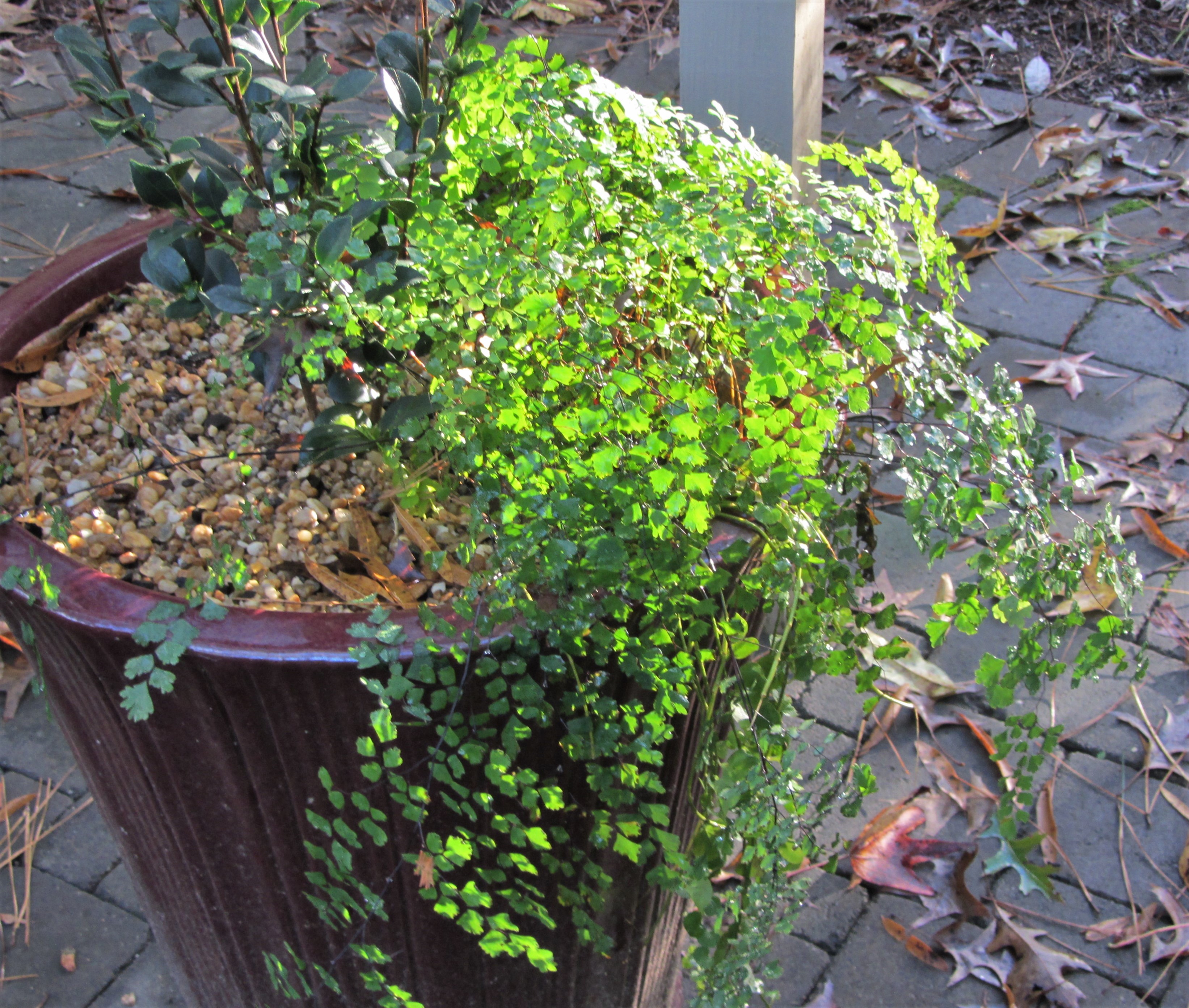
Cascading maidenhair ferns, like our southern maidenhair, prefer to grow on rocky slopes. Plant them along the top of a rock wall, in a tall container, or in a hanging basket to show them off to best advantage. Always grow maidenhair ferns in shade where they get only morning sun.
Right Plant, Right Place
Many maidenhair fern species seem to grow well on moist, rocky slopes. Their roots don’t require deep soil, and they cling well to steep slopes where they have excellent drainage. Cascading varieties, like southern maidenhair, are also stunning growing in a coir or moss lined hanging basket or tucked into a tall container that allows them to gracefully cascade over the edge.
Those of us with very acidic soil may find it easiest to grow maidenhair ferns in good, balanced potting soil. There are also ways to raise the pH of native soil by amending it with dolomitic lime, adding calcium to the soil, using crushed shell or stone mulches, and by planting roots near concrete pavers. Often, plants may be a bit more tolerant of acidic soil than their press suggests, too.
There is Always More to Learn…
Now that I have grown several species of maidenhair fern with some success, I enjoy them enormously and am open to trying additional varieties, like the western five-fingered fern, that I once considered difficult to grow in coastal Virginia. I’m also experimenting with growing maidenhair ferns in a variety of different ways.
I waited for months this spring to find any sign of life before officially declaring last summer’s maidenhair ferns dead and replacing them in their containers with some hybrid Aspleniums. Were the containers too small to protect the plants through our unusually cold winter? Was the soil too wet and lacking sufficient drainage all winter? Or were there some other problems that I haven’t yet considered? Their demise may remain a mystery. But losing them has also become a learning experience because I’ve been inspired to dig a little deeper and learn more about this beautiful genus of ferns. Sometimes a bit of failure leads to new opportunities for success.
All Photos by E. L. McCoy
Resources
Hallowell, Barbara and Anne C. Hallowell. Fern Finder: A Guide to Native Ferns of Central and Northeastern United States and Eastern Canada. Nature Study Guild Publishers. 2001.
Hamilton, Helen. Ferns & Mosses of Virginia’s Coastal Plain. Owen Printing Company. Petersburg, Virginia. 2017.
Hoshizaki, Barbara Joe and Robbin C. Moran. Fern Growers Manual Revised Edition. Timber Press. 2001.
Mickel, John T. Ferns for American Gardens. Timber Press. 2003
Olsen, Sue. The Encyclopedia of Garden Ferns. Timber Press. 2007.
Rickard, Martin. Ferns for a Cool Temperate Climate. The Crowood Press. 2021.
Steffen, Richie and Sue Olsen. The Plant Lover’s Guide to Ferns. Timber Press. 2015.
Specialty Fern Growers:
Fancy Fronds Nursery located in Gold Bar, Washington
Forest Lane Botanicals located near Williamsburg, VA
Plant Delights Nursery located near Raleigh, North Carolina