Eliminate Stilt Grass Now
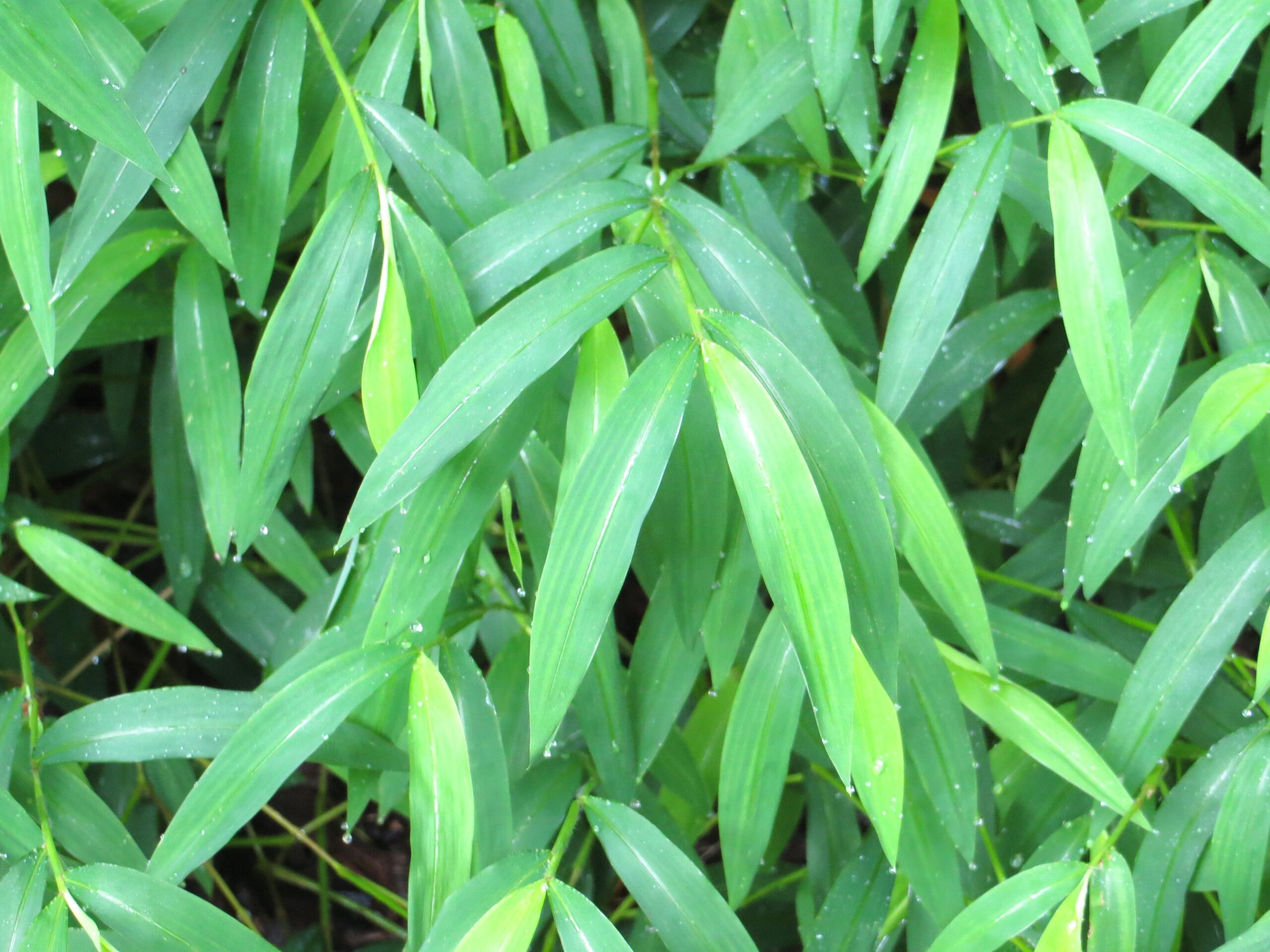
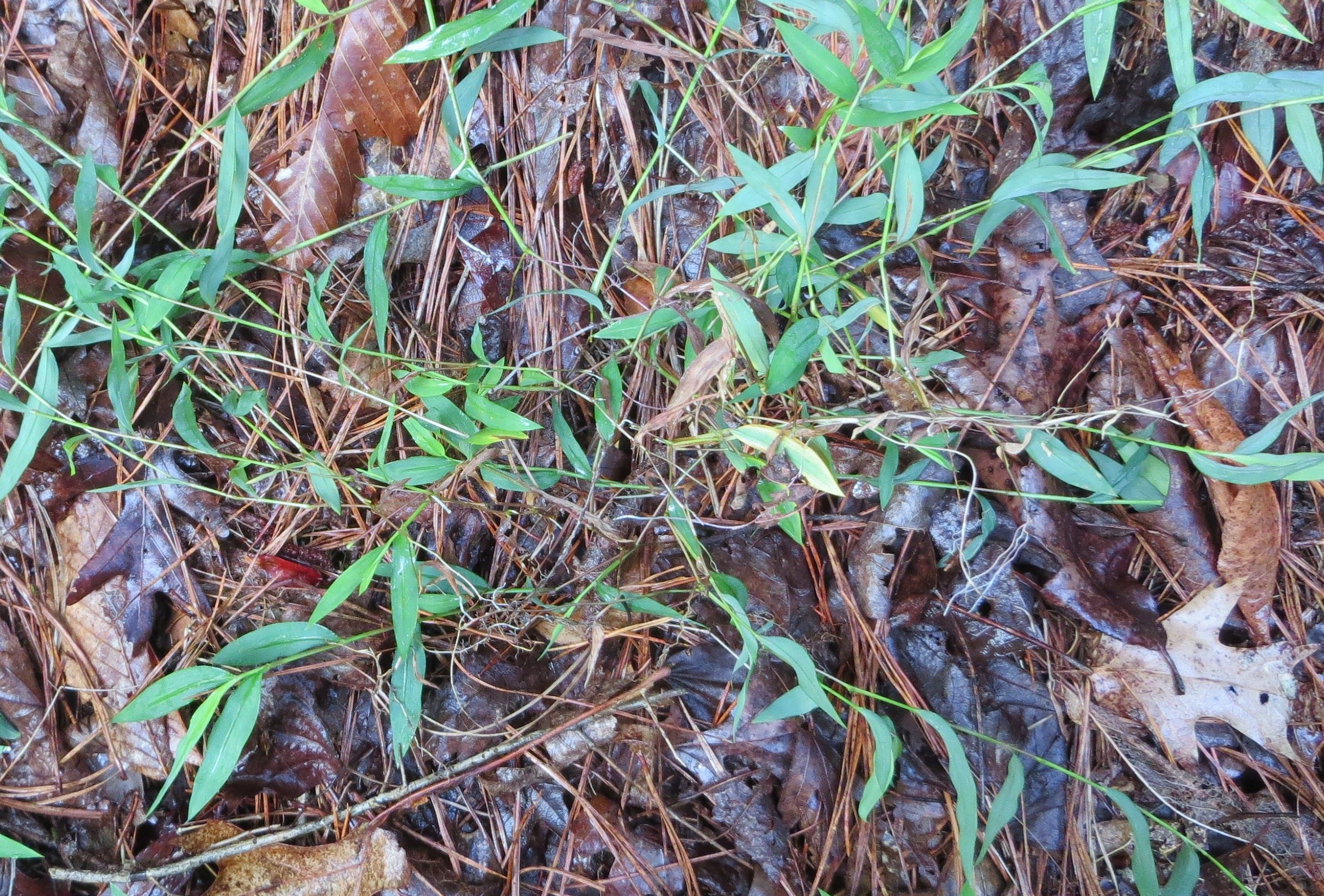
Asian stilt grass, Microstegium vimineum is a graceful, but highly invasive grass. Notice its narrow stems and the lighter stripe towards the center of each leaf.
A Window of Opportunity
Your window to destroy any Japanese stilt grass on your property closes when its seeds emerge in late August through October. This tenacious, invasive grass has all the adaptations it needs to gobble up real estate in private yards, public spaces, and in woodlands across America. But your swift action now, before this year’s seeds ripen, can help stop its spread.
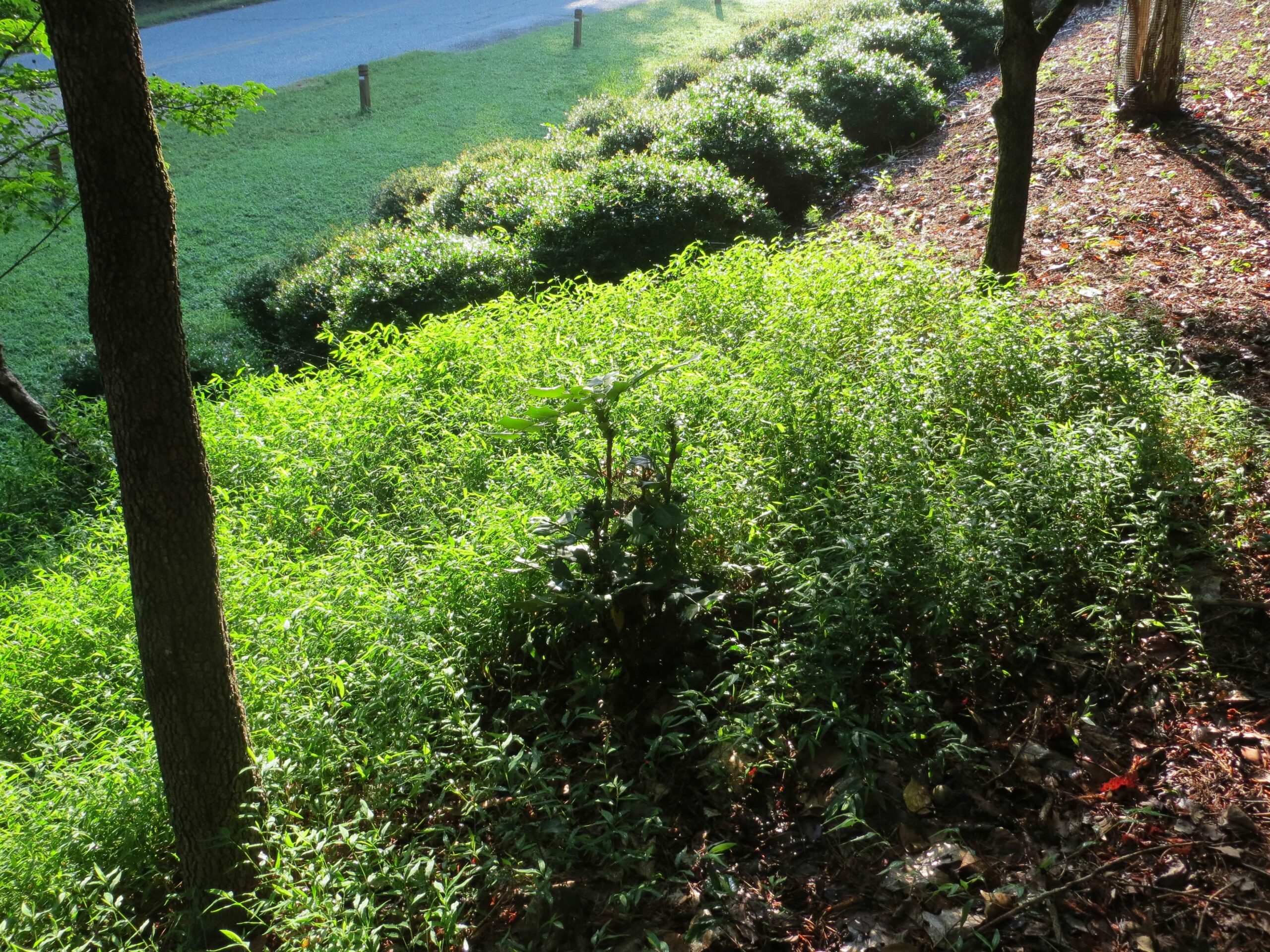
Invasive stilt grass has colonized a mulched area at the Kingspoint neighborhood entrance.
Japanese stilt grass, Microstegium vimineum, is an annual that will die back with the first heavy frost. Its root system won’t survive winter, but its countless seeds will. Every stem of this sprawling invader germinated from a tiny seed last spring. Ungerminated seeds can survive in the soil for three to four years. And the tiny seeds can travel on the air, in storm water run-off, on a tire, a shoe, or an animal’s foot. Eliminating stilt grass will continue to be an ongoing effort in our area.
An Accidental Introduction
This species of Microstegium is native in Asia from Pakistan to Japan. In Asia, it was considered a good packing material for porcelain exports because once it is pulled, cut, or dies after frost it retains its basic shape and form rather than wilting away. You may have seen it still draped over other plants in early winter after a heavy frost killed it.
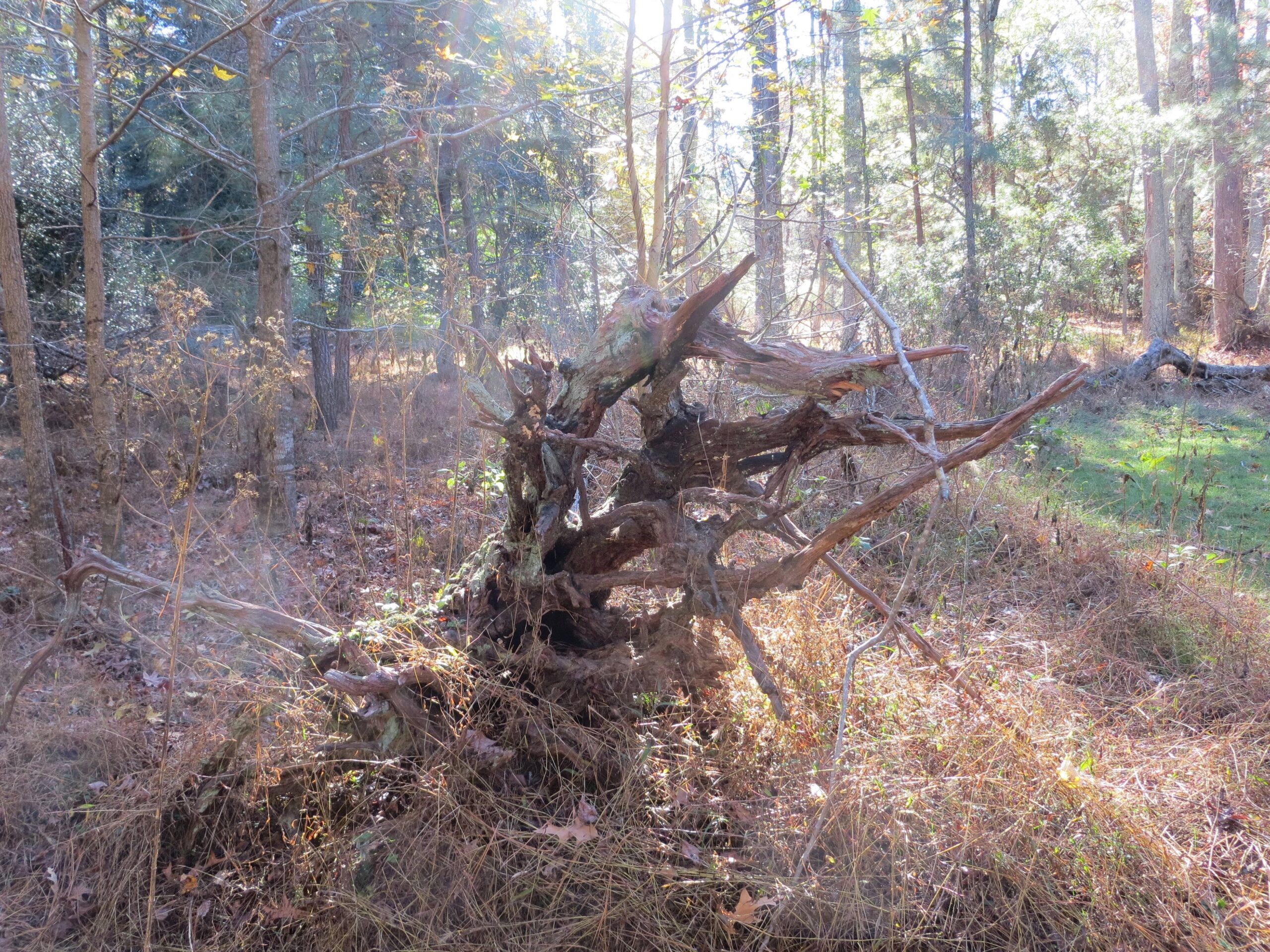
Stilt grass thrived around this stump on Jamestown Island all summer, but has been killed by frost by late November. The dried stilt grass is easy to pull up and is what the Chinese used for packing material in the early 20th century.
This grass was used as packing material to cushion a shipment of porcelain shipped from China to Tennessee around 1919. The plants used as packing had seeds still attached, and those seeds found an opportunity to germinate when the packing material was discarded. This plant was not deliberately introduced to the United States for horticulture.
How to Recognize Stilt Grass
Stilt grass, also known as Nepal Microstegium, bamboo grass, and flexible sesagrass, has spread to 26 eastern and central states in the US. It creates problems for gardeners, wildlife, businesses, and foresters wherever it grows because it quickly shades out and chokes out other plants. This grass has long, wiry, jointed stems and short, broad blade-shaped leaves. In fact, its species name, vimineum, means ‘long slender shoots.’ It can root wherever a joint in its stem touches the soil. Stilt grass can climb to 3’ or taller, supported on other plants, and a single plant can spread to between 1’ and 2’ wide. Each plant produces about 1000 seeds in late summer.
Notice the very slender, short roots on this recently pulled stilt grass plant. Its small roots make it very easy to simply pull up each plant.
Adaptable Microstegium
Asian stilt grass prefers moist soils but is drought tolerant, growing on a variety of soil types in full sun to partial shade. It prefers acidic to neutral soil and can germinate in the tiniest crack or opening, including on top of mulch and on the forest floor. It begins to appear by late March, but seeds continue to germinate throughout the spring and summer. It grows very quickly. Deer and other herbivores won’t graze it, so there are no natural controls to its growth and spread. Since deer won’t eat this aggressive grass, which often covers large swaths of uncultivated land, there is more pressure on other landscape and native plants from grazing deer and other wildlife searching for food.
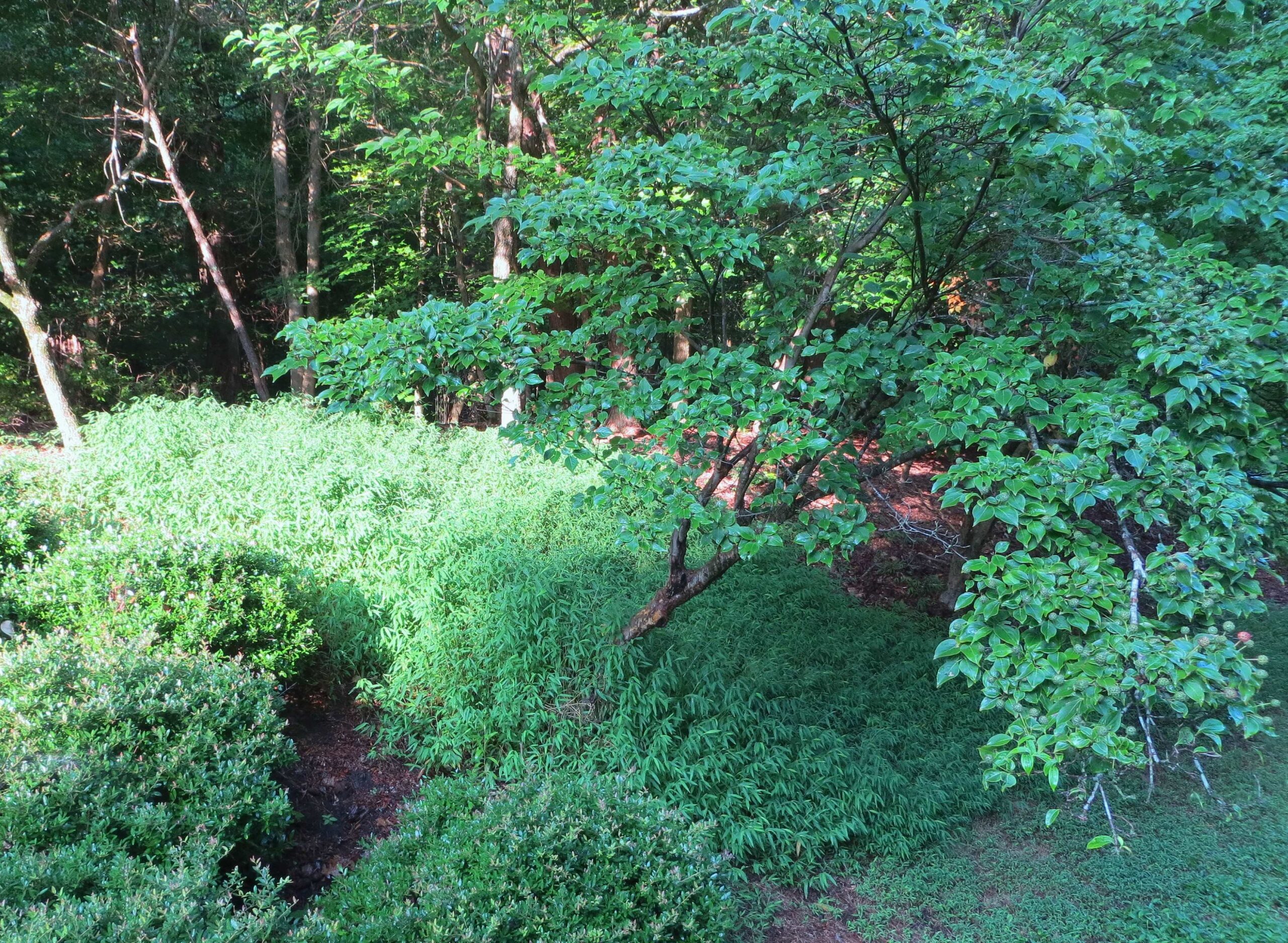
Stilt grass often colonizes sloping land that is difficult to mow. Its seeds root as easily in mulch as they do in bare ground. One of its few ecological benefits is that it can hold ground against erosion.
The Few Ecological Benefits of Stilt Grass
Stilt grass has three main ecological benefits. Like all plants, it filters the air, removing carbon and releasing oxygen and water vapor. But its tiny root system doesn’t sequester much carbon underground, and its stems and leaves decompose within a few months. Stilt grass will, however, quickly grow into a dense ground cover to protect the soil and slow erosion. It is commonly found around ditches and on steep banks where no one routinely mows the grass. Finally, stilt grass provides cover and habitat for a variety of insects and small mammals, like mice or voles, and for small reptiles like lizards, turtles, or snakes. Its ecological benefits are generally outweighed by the benefits of keeping this grass from going to seed.
This is self-fertile grass, or is wind pollinated, so it doesn’t benefit pollinators. It is important to eliminate stilt grass before the 2”-3” long green racemes which hold its seeds appear because the seeds are already forming when you first see them.
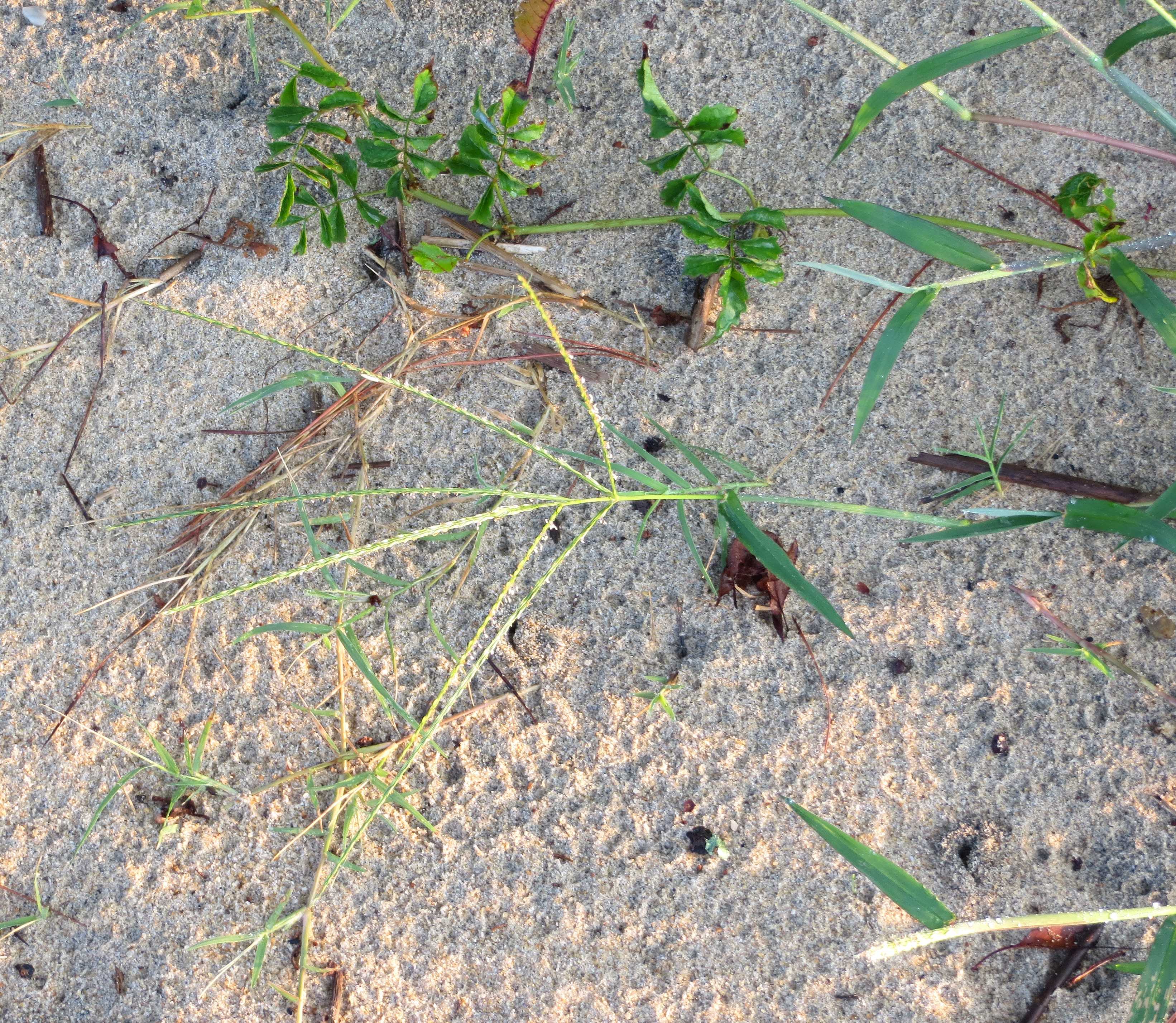
The seed bearing racemes of crabgrass are very similar to those on stilt grass. Those on crabgrass just grow a bit larger. Control both of these invasive grasses by removing or mowing the plants before seeds appear.
How to Eliminate Stilt Grass
There are three main ways to eliminate stilt grass:
If stilt grass is growing among other desirable plants, then simply pull it out by hand. Because it is shallow rooted it is very easy and satisfying to pull using a slow, steady upwards pressure. Grasp the plant as close to the ground as possible to remove the greatest amount of the plant possible. Since this plant sends out roots from every joint, a single plant may have multiple rooted stems growing around the central root system.
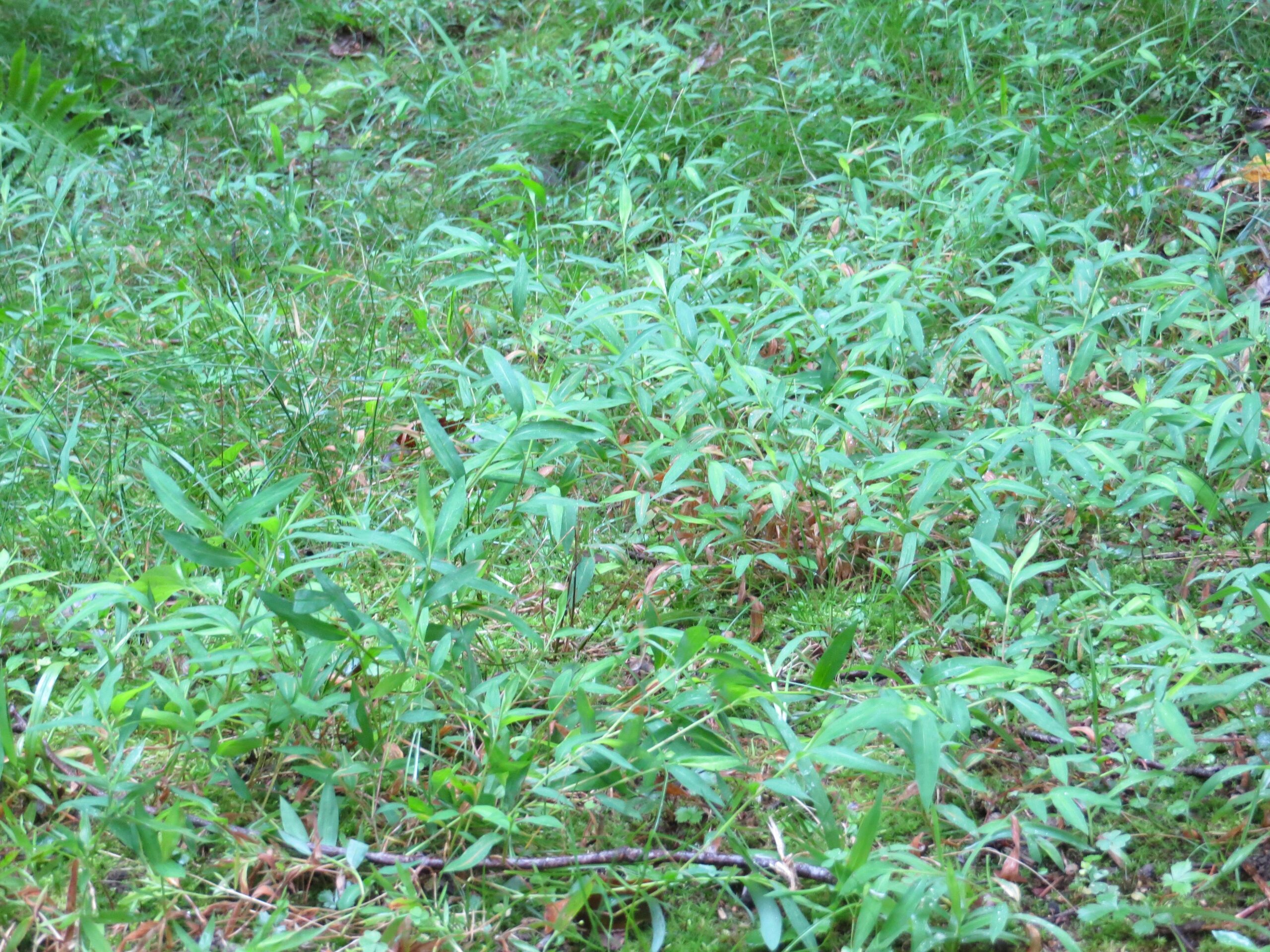
Stilt grass germinates in moss, shading it out. It is easy to pull, but requires frequent maintenance, every few weeks, so long as viable seeds remain in the soil.
You can usually make quick work of even a wide, dense patch of stilt grass by working patiently and systematically to remove each large plant. Doing this regularly throughout the growing season keeps stilt grass from taking over landscaped areas. If the stilt grass has visible inflorescences, or seed heads, bag it and throw it away in the garbage. Only compost the plants if you are certain they are free of seeds.
If stilt grass isn’t growing among other desirable plants, then use a string trimmer or lawn mower to cut it back as close to the ground as possible. Even if it regrows, the goal is to prevent it from setting seeds and this method can prevent it from reseeding itself. According to JCCW Master Gardener Dave Kleppinger, stilt grass is effectively controlled by regular lawn cutting because regular cutting prevents stilt grass from ever producing seeds. The first heavy frost will kill all of the current season’s stilt grass.
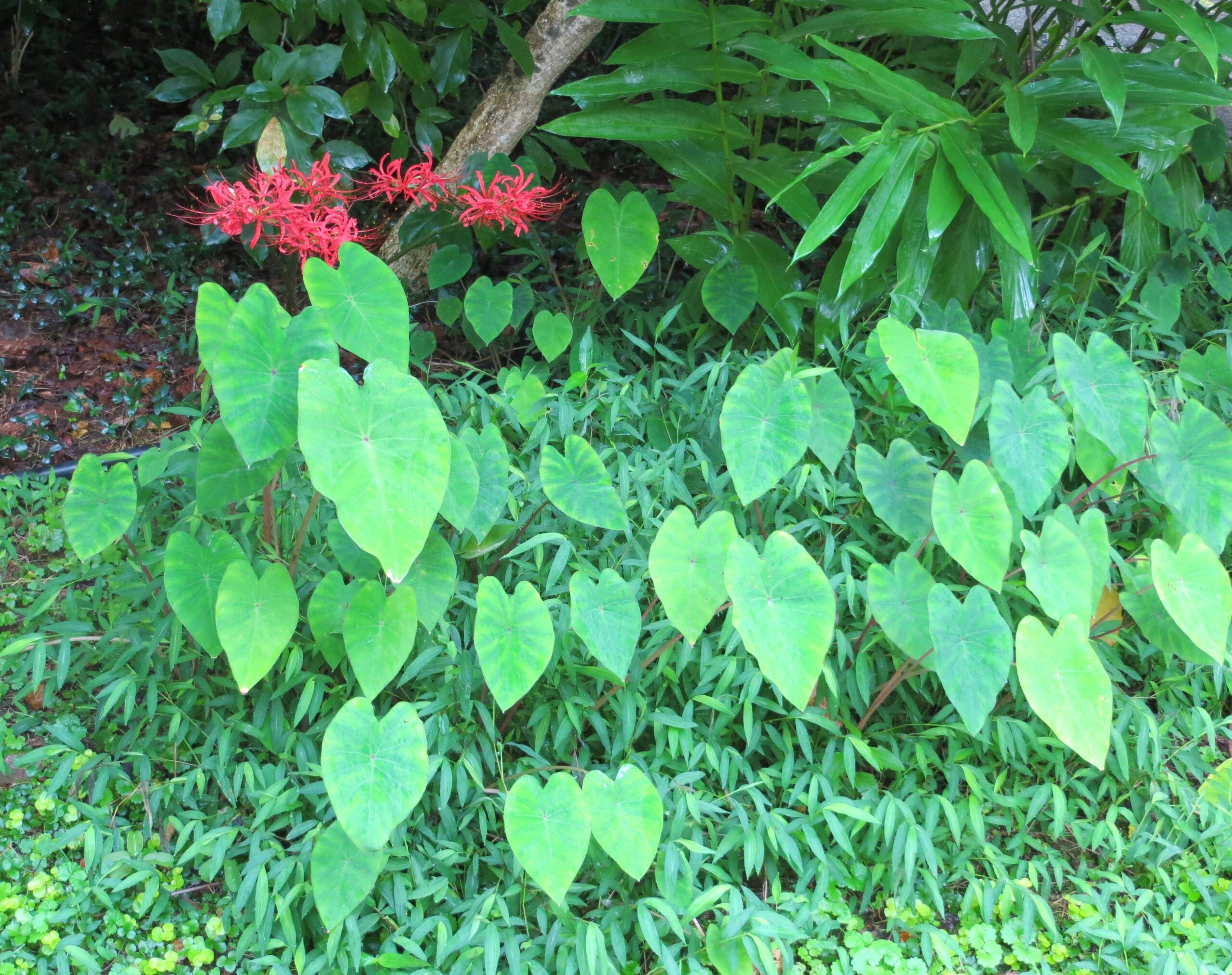
Pull stilt grass by hand when it grows around other desirable plants. You will need to do this repeatedly throughout the season until it is finally eliminated.
The third method is to use various per-emergent and post-emergent chemical controls. Using herbicides introduces those poisons into the environment where they can remain in the soil or get into the water supply and will certainly affect a variety of animal life. I don’t personally recommend herbicides when another, non-chemical method works. Virginia Turf provides this information on how to control Japanese stilt grass chemically.
Another approach is herbicidal strength vinegar, or acetic acid (10%-20% concentration), which kills plants non-selectively by breaking down their cell membranes. This is much stronger than cooking vinegar and must be used with caution. A number of non-chemical, organic weed control products include vinegar as their active ingredient and typically are sprayed on to weeds, particularly those growing in gravel, concrete, and other areas where pulling them or mowing them is difficult.
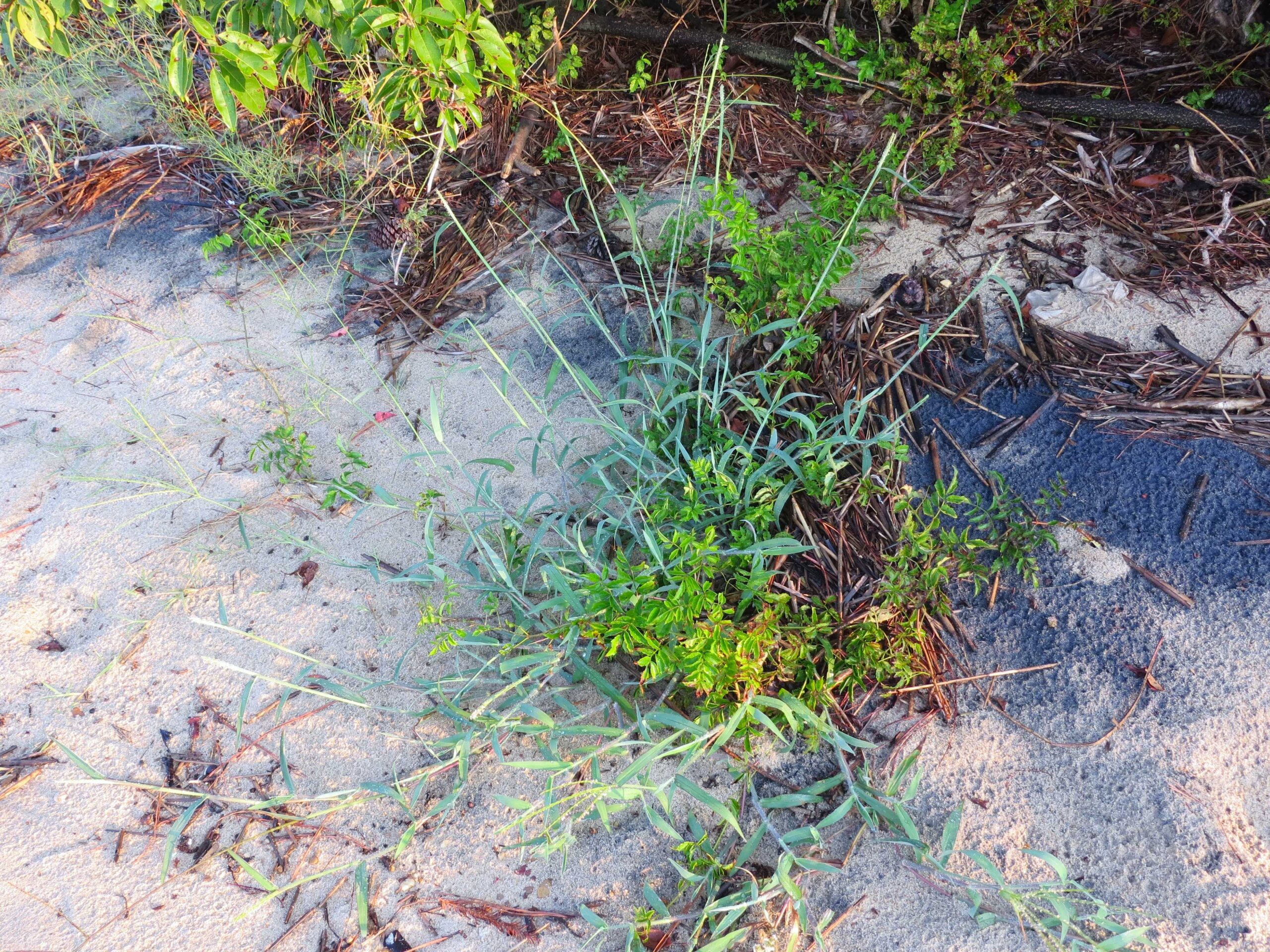
Crabgrass looks like and grows like stilt grass. Both are invasive. Study the subtle details of the plant’s stems and leaves to tell them apart. This is crabgrass that has taken root on a beach beside the James River.
Stilt Grass or Something Else?
Crabgrass, Digitaria sanguinalis, is a similar annual invasive grass native to Eurasia which now grows across the mainland United States. It is also a sprawling multi-stemmed plant capable of rooting at each stem node, and it produces thousands of seeds each summer on similar racemes that can grow to 8” long. It produces seeds earlier in the season than stilt grass, and these seeds are edible and nutritious for both wildlife and humans. Crabgrass can grow to 3’ tall and wide. Like stilt grass, crabgrass is one of several invasive grasses that will invade lawns, garden beds, and wild areas and so should be prevented from producing seeds each summer. Others include goosegrass, poa annua, and dallisgrass.
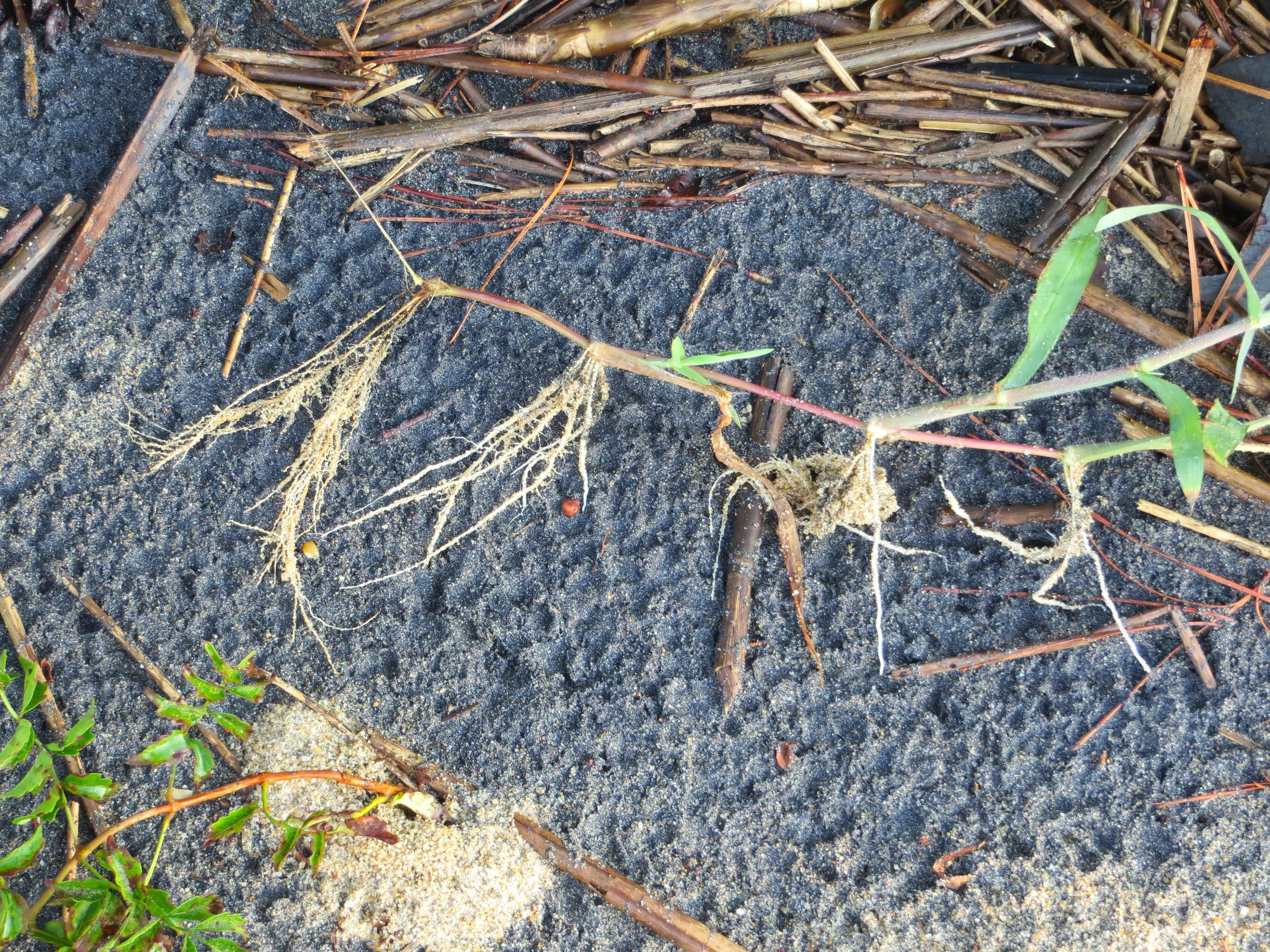
Crabgrass also roots whenever a node along its stem touches the soil. Crabgrass has deeper, tougher roots than stilt grass and is harder to pull by hand.
You Take Action Now to Stop the Spread of Invasive Stilt Grass
According to Dave Kleppinger, “It is important for people to positively identify stilt grass which is in a league of its own when it comes to rapid invasiveness.” Asian stilt grass is a more graceful grass than crabgrass and other invasive grasses, with tapered leaves that have a lighter stripe down the center of most leaves and looks somewhat like young bamboo. Stilt grass leaves appear alternately on the stem and almost always point down towards the ground, while the blades of most other grasses point upwards towards the sky.
Asian stilt grass is an aggressive, fast-growing invasive plant which quickly becomes weedy and provides very few ecological services. It has no benefit for people or wildlife. Please help stop the spread of this grass by eliminating it from your property before it sets seeds this summer. And the time to do that in the Williamsburg area is now.
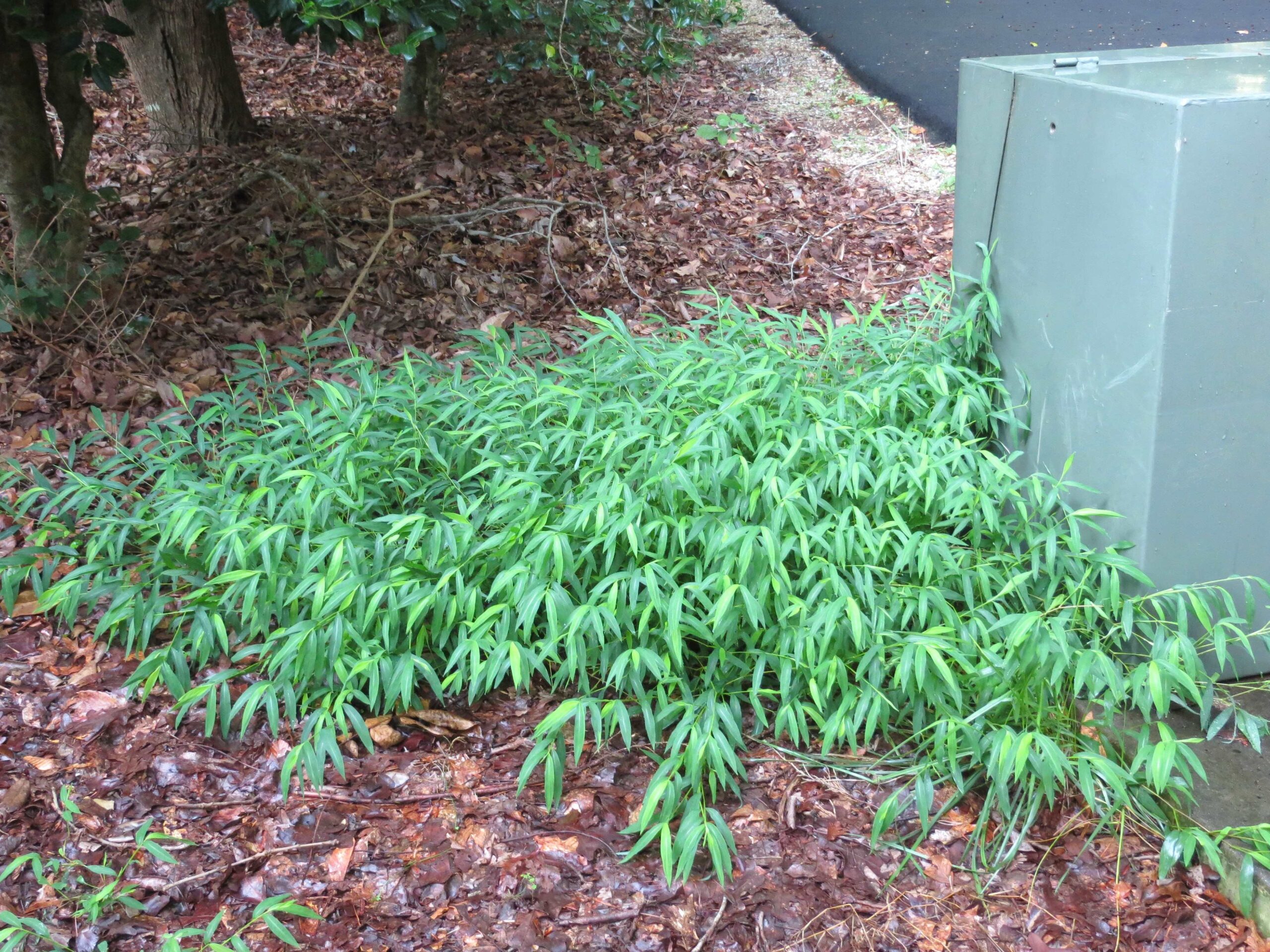
Get rid of those ugly patches of stilt grass now, before it seeds appear.
All Photos by E. L. McCoy 2024-2025