How Do You Bathe in a Forest?
The Williamsburg Botanical Garden and Freedom Park Arboretum April 2022
What is Forest Bathing?
Have you ever wondered about the practice of forest bathing? It is one of several recent eco-prescriptions to help us heal what ails us and adapt to the stresses of contemporary life. Many therapists and physicians are sending their patients outdoors to enjoy the benefits of unplugged time in nature, away from screens, pings, and climate-controlled spaces lit with fluorescent tubes and LEDs. Ecotherapy has proven highly successful for millions of people.
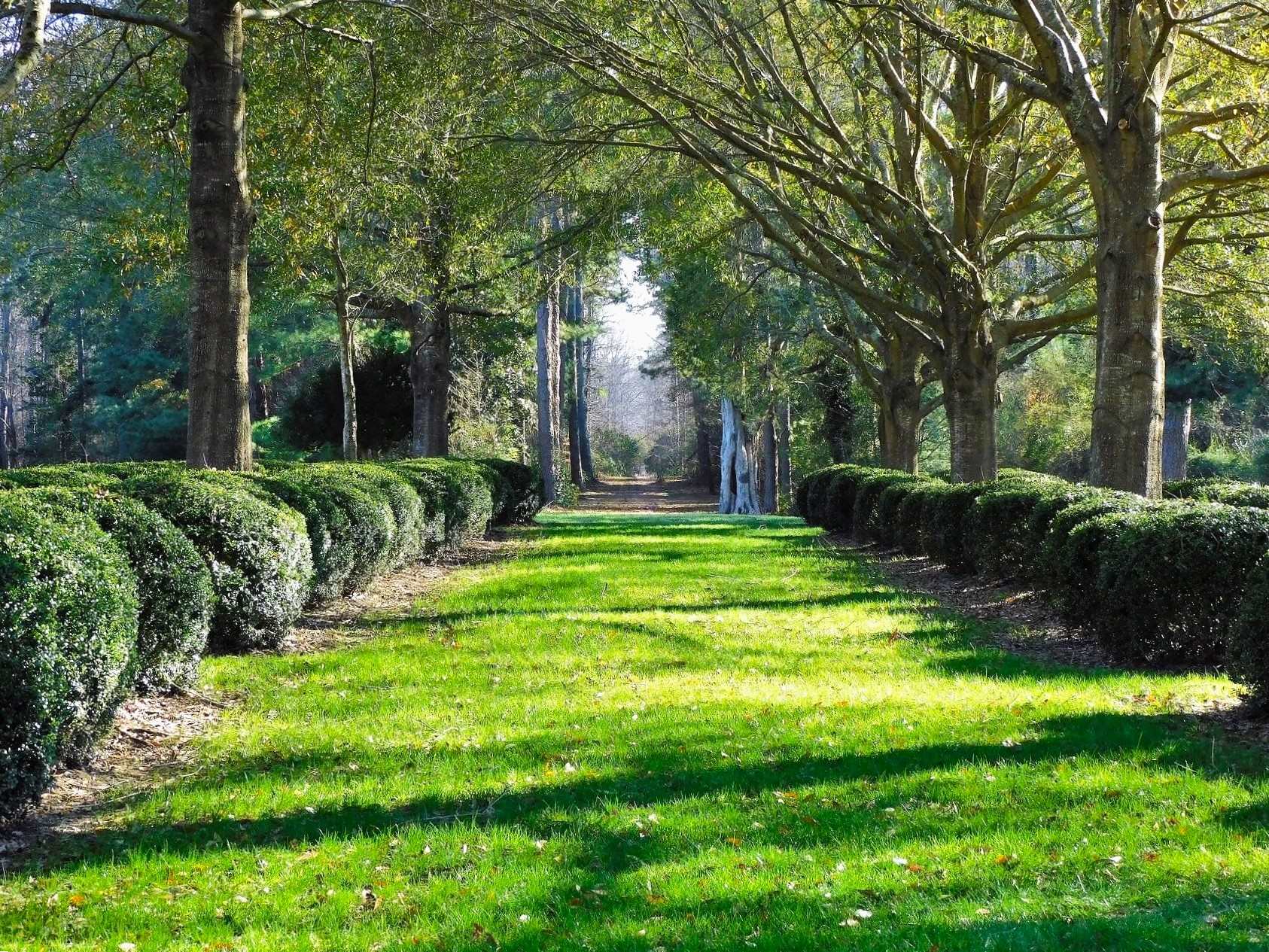
Rockefeller Vista looking into the woodlands from Bassett Hall; Shurcliff Cedar is on the right at the edge of the woodlands, just past the boxwoods, in February 2020. Photo courtesy of Rick Brown.
Biophilia
Medical professionals prescribe a variety of activities, from simple gardening to camping trips and outdoor group therapy sessions. The therapeutic value of these activities can be summed up with the term biophilia, which is defined as our innate need to connect with nature. As human beings, we are a part of nature, not above it or apart from it. And so we often feel happiest when we are able to connect with nature in some way that interests us and touches us deeply. Our perception of beauty heals us. Our fascination with wildlife and natural settings relaxes and uplifts us.
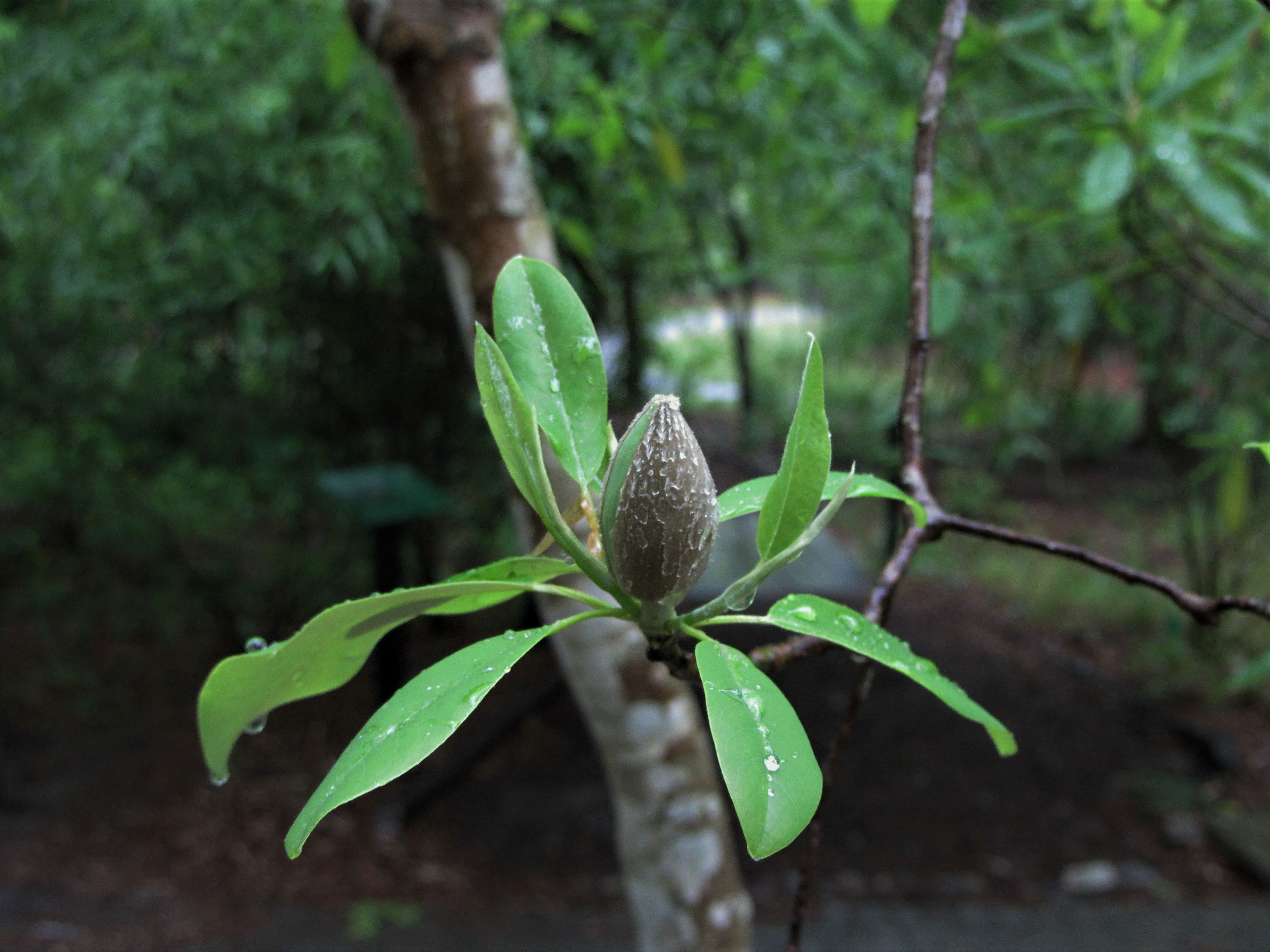
Sweetbay Magnolia virginiana prepares to bloom at the Williamsburg Botanical Garden and freedom Park Arboretum in May of 2020.
A History of Forest Bathing
The practice of forest bathing, popularized in Japan in the early 1980s, is one of the simplest, most versatile, and yet most comprehensive eco-prescriptions. Now an international phenomenon, its roots run deep in Japanese culture and spiritual practice.
The Japanese people have a deep, spiritual relationship to nature. Their indigenous Shinto religious practices, based on cultivating relationships with the Kami, or spirits of their land, are still practiced throughout Japan. Interactions with nature remain an important component of modern Japanese culture. Landscape features such as mountains, forests, rivers, lakes, and the sea are holy places for interacting with the Kami. Shinto practices teach the Japanese people to seek balance and harmony in all they do.

Loblolly pine, Pinus taeda, reaches out across the hardened shoreline of Powhatan Creek. September 2025
Buddhism, another important religious influence on Japanese culture, also emphasizes balance. Interactions with nature, such as meditating in a forest, on a mountainside, or in a garden, remain important practices. Japanese Buddhist temples and monasteries are commonly located in these places, as they have been for more than 1000 years.
The former Director of the Japanese Ministry of Agriculture, Forestry and Fisheries, Tomohide Akiyama, introduced Shinrin-Yoku, or forest bathing, to the Japanese public in 1982. He recognized that spending time in Japan’s national forests could help the people feeling extreme stress in the face or work demands and rapidly changing technology. But his new program had a dual purpose. In addition to helping improve the health and happiness of the nation’s people, he also wanted to protect Japan’s ancient forests by bringing people out of the cities to visit them.
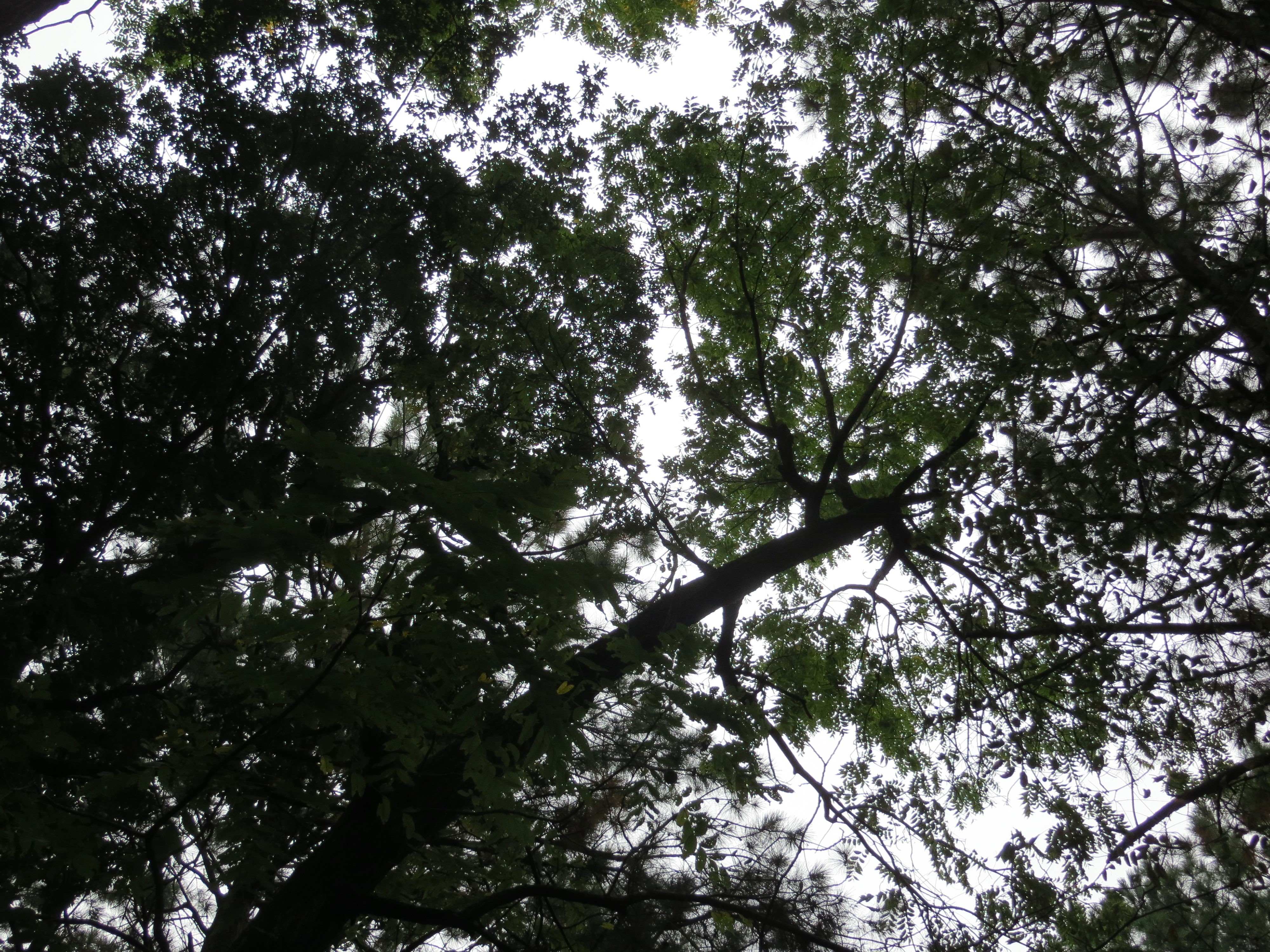
Formal Shinrin-Yoku Practice
Shinrin-Yoku is a formalized process in Japan, involving specially trained guides, dedicated trails and support facilities within the national forests, and paid leave from work to participate in Shinrin-Yoku retreats. Its popularity continues to increase because of its effectiveness at helping Japan’s work force mitigate stress, depression, and other health challenges. The national forests, and their surrounding communities, have also benefited from increased visitation. But forest bathing has become an international practice over the past 40 years. Spending time relaxing in a forest resonates with people world-wide. Learning about the many health benefits of forest bathing has encouraged this specific practice to spread to many countries beyond Japan, including here to the United States.
Forest bathing is new in name only. Most indigenous cultures have ancient traditions of spending time in forests and other natural settings. Shinrin-Yoku is a modernized version of ancient Japanese cultural practices related to reverence for, and time spent in its ancient forests. But this practice is nearly universal, with variations found within the indigenous culture wherever forests have covered large parts of the land.
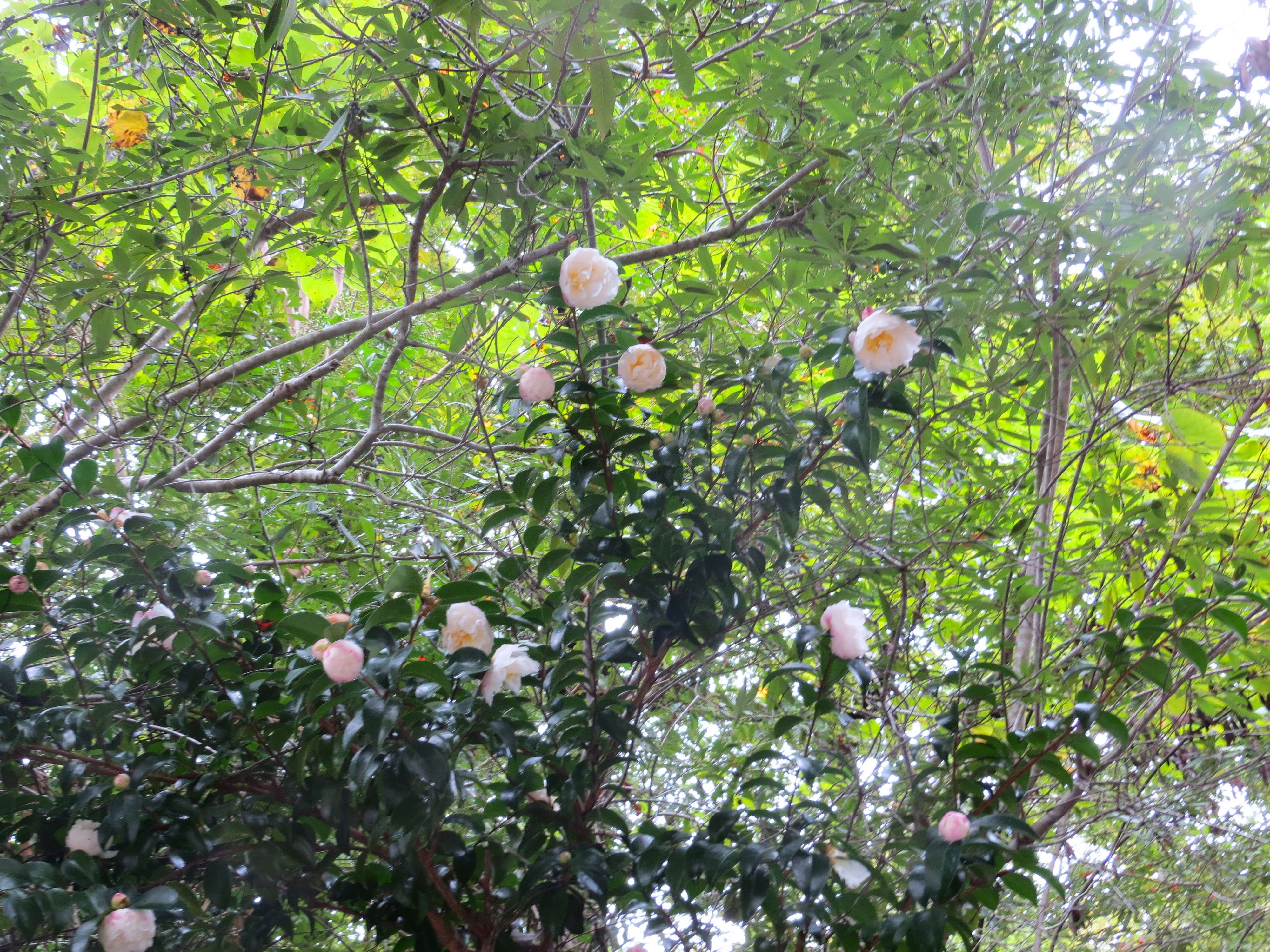
Asian Camellia sasanqua blooms in early fall under a canopy of southern waxmyrtle. Camellias are an important feature of the forests used in Japan for forest bathing. Tea is made from the leaves of certain types of Camellia. September 2025
The Benefits of Forest Bathing
The benefits of forest bathing fall into five main categories:
- Improving physical and mental health by lowering stress levels and blood pressure
- The biochemical health benefits of breathing phytoncides, chemical substances produced by trees and other plants
- Deepening social and emotional connections while forest bathing in small groups
- Improving our connections with nature, including increased eco-consciousness
- Increasing overall physical exercise from getting outside and walking
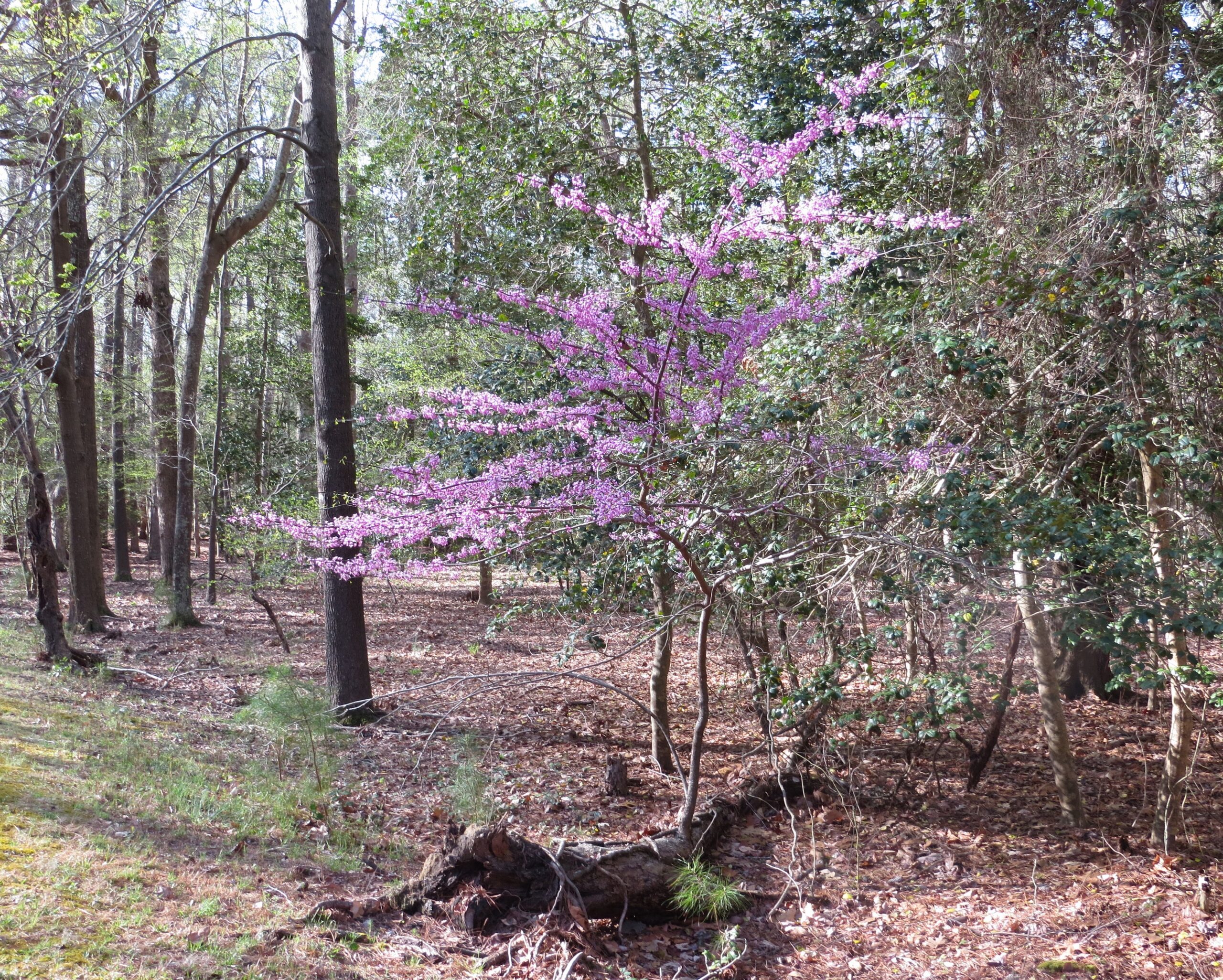
An Eastern redbud, Cercis canadensis, along the Colonial Parkway fell some years ago, but a surviving branch is growing into a new tree. Spring 2025
Cross-Cultural Commonality
Traditional Native American cultures exhibit many similarities in their practices and beliefs related to relying on forests for their well-being, as do indigenous South Americans, and the native Celtic people of England, Wales, Ireland, and Brittany. But as forests worldwide are lost to development, agriculture, fires and other natural disasters, and to disease, it is ever more important to protect and appreciate those forests that are left.
Trees have been considered a commodity in recent years with the trees cut for building materials and to clear land for agriculture. Forest bathing leads us to understand that trees are vital for our own health, happiness, and quality of life. Our actions to plant and care for trees, and to protect forests, is in appreciation for the life-giving benefits of trees and their importance to our entire ecosystem.
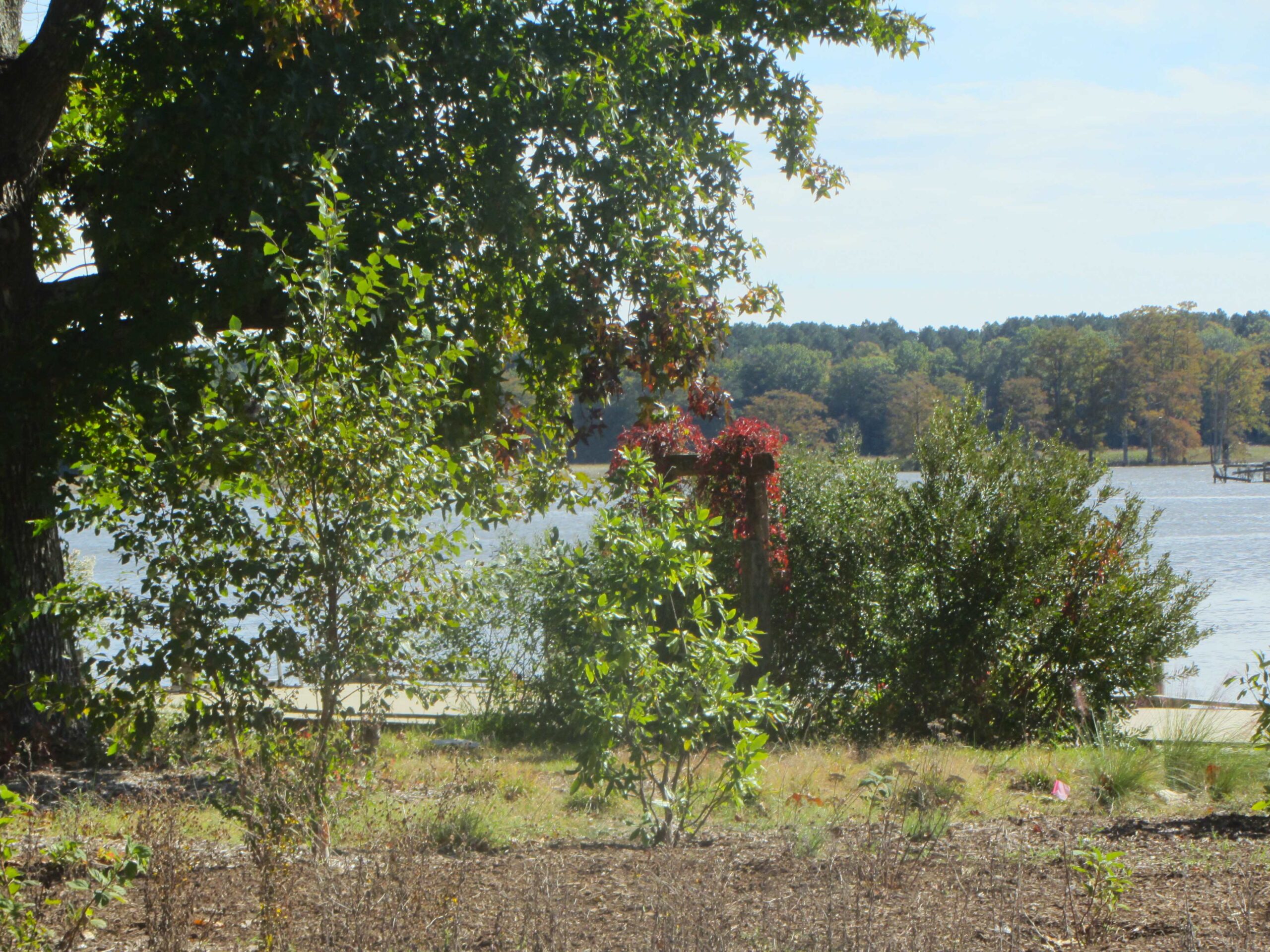
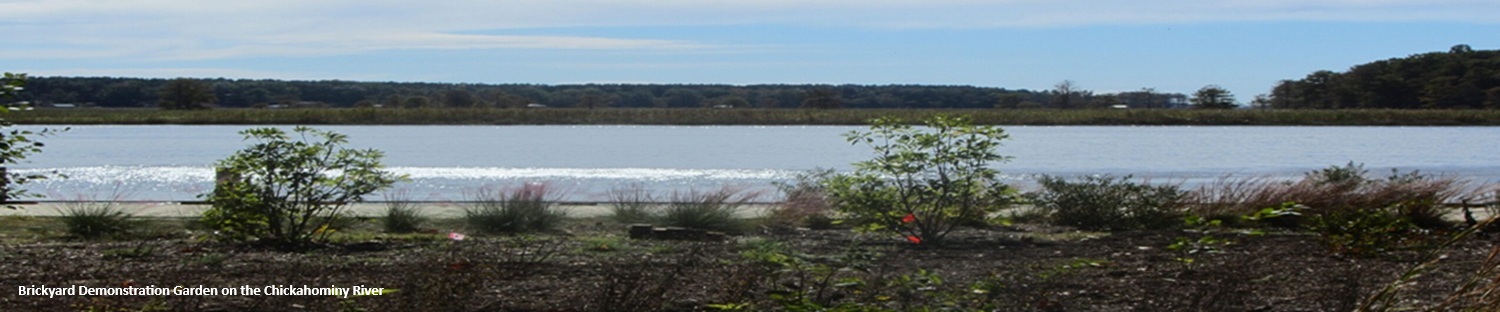
Young trees are planted beneath mature ones as a new garden is developed on the banks of the Chickahominy River, at Brickyard Landing Park. August 2024.
Intent is the Key
Forest bathing is as much about one’s intent and approach as it is about the size or the type of forest one visits. While the Japanese practice initially developed around visiting that nation’s national forests for extended experiences, urban forest bathing also developed early on in Japan to meet the needs of those who wanted to experience the benefits of forest bathing closer to home. Solo visitors to city parks and gardens also found ways to benefit from time spent around trees. Healing phytoncides are more concentrated in dense stands of tall trees. But all of the benefits of forest bathing can be appreciated in smaller spaces, so long as we approach the experience with the correct intent.
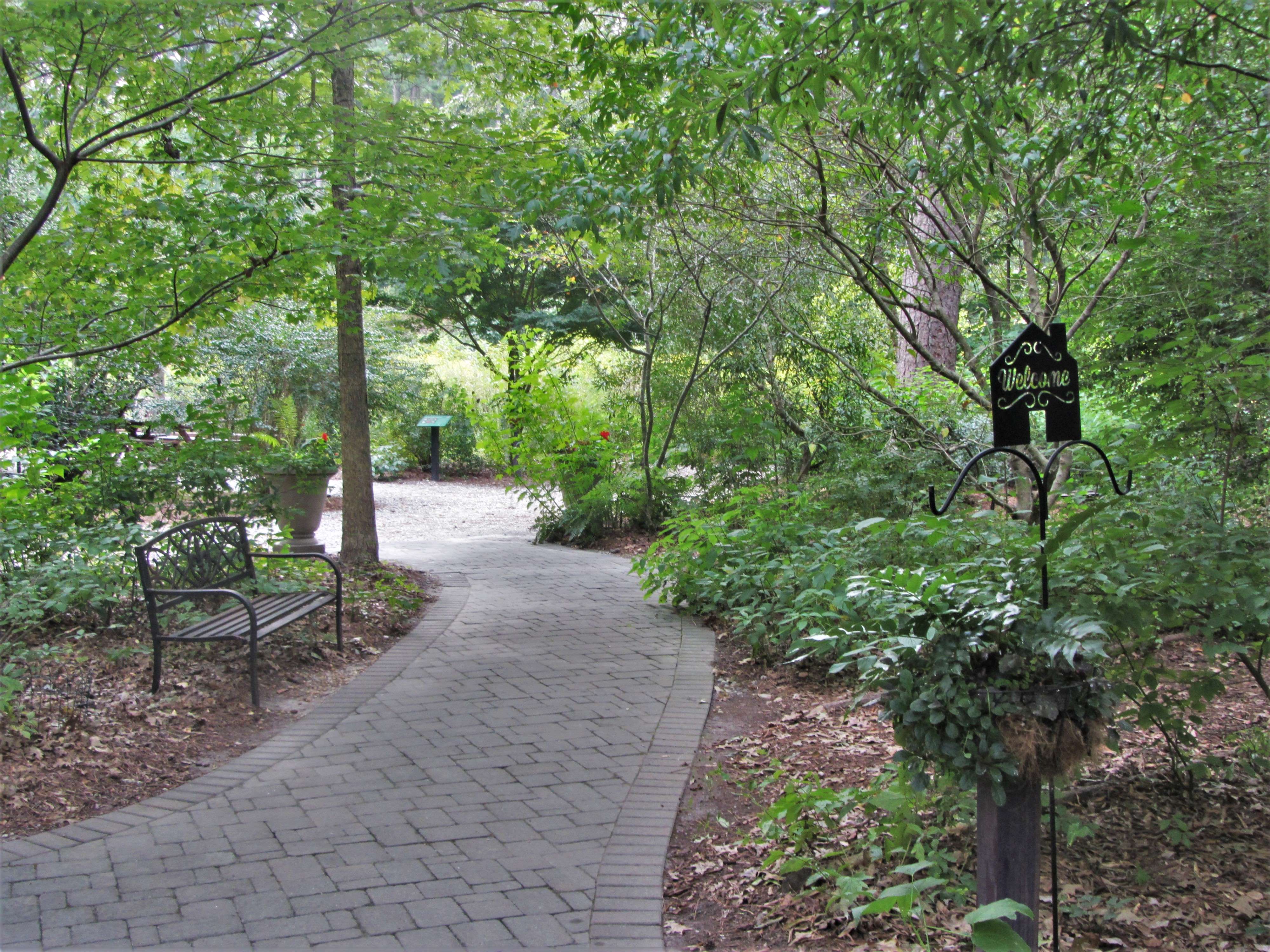
The Williamsburg Botanical Garden and Freedom Park Arboretum offers a quiet, local place for forest bathing, particularly for anyone who needs a wheelchair or other aids. September 2021.
The Biochemistry of Forest Bathing
All trees produce protective chemicals known as phytoncides, those biologically active phytochemicals that plants produce to protect themselves from bacteria, fungi, and predators. The term was coined by Soviet biochemist Boris P. Tokinin in 1928. He discovered that while some of these chemicals remain within the tissues of a plant, others become aerosolized and so are known as volatile phytoncides. The air within a forest or garden contains these airborne, antimicrobial substances that we consume with every breath.
Have you ever noticed the distinctive fragrance of pine, cypress, cedar, Eucalyptus, juniper, and oak trees? While all trees contain some phytoncides, trees, and other plants with fragrant leaves provide the most volatile phytoncides. Terpenes are a type of phytoncide, and we can detect them for their piney or citrus fragrance. Terpenes, found in botanical essential oils, are especially important for stimulating our immune system. One of the many benefits of spending time around trees is the opportunity to breathe in these fragrant, healing volatile compounds that are produced by many trees, and by other plants like rosemary and lavender.
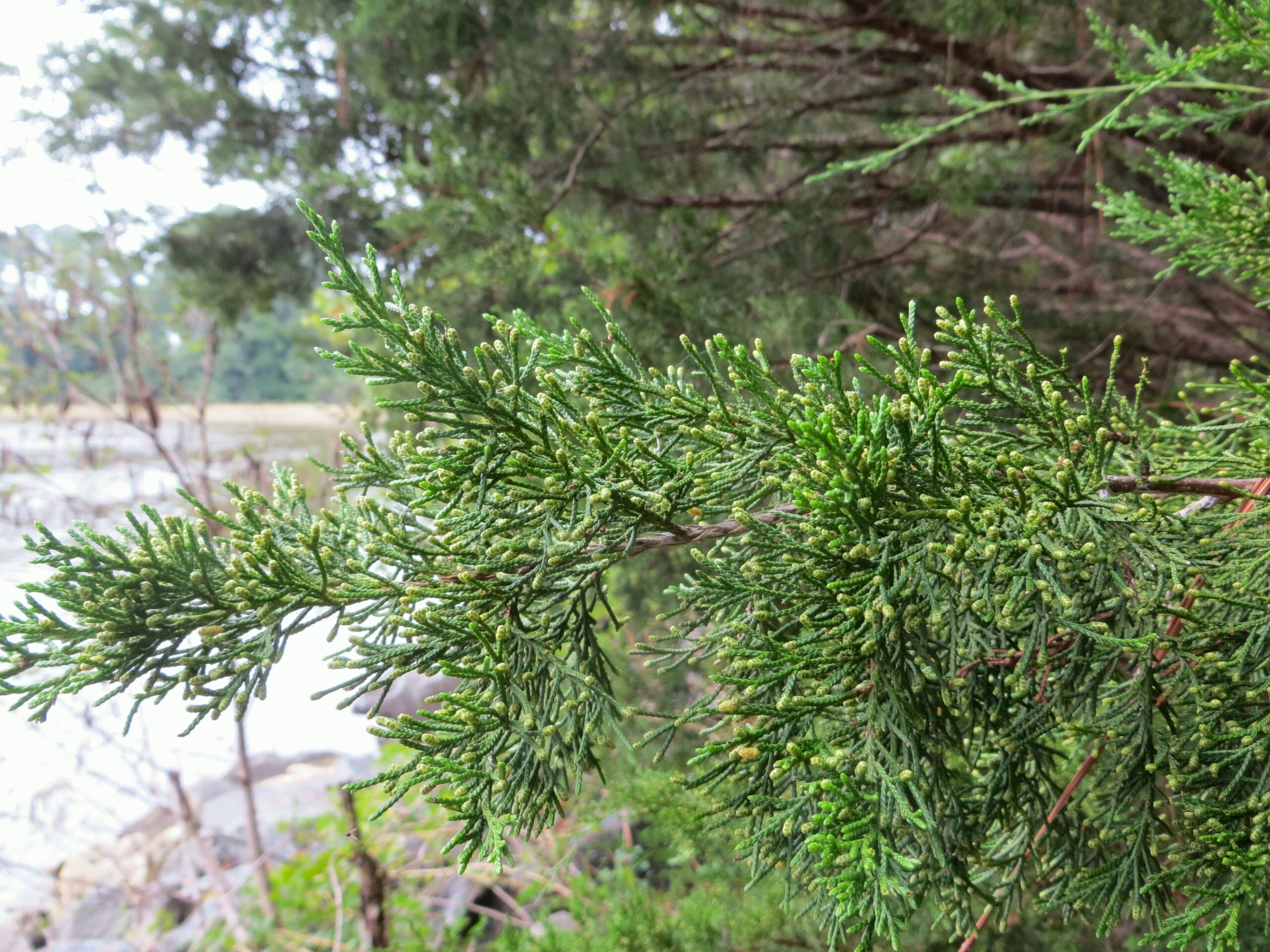
Eastern red cedar, Juniperus virginiana, is rich in fragrant terpenes. September 2025
The trees produce these compounds to protect themselves from insect and bacterial attacks. But when we breathe these compounds, they strengthen our own immune system as we relax and enjoy their fragrance. Inhaling healing phytoncides is an additional benefit to inhaling the filtered and cleansed, oxygen-rich air produced by the natural respiration of all plants.
Finding Our Way to the Forest
Choosing to spend time in proximity to trees and other phytoncide rich plants is the first step towards forest bathing, whether we are walking in a forest, sitting on a park bench, or relaxing on our own porch or patio. We benefit from every breath we take. We should breathe deeply, slowly, and with awareness of the healing air filling our lungs. If you have ever had martial arts training, or taken a yoga or Pilates class, you have learned the importance of taking deep, cleansing breaths. These disciplines teach breathing practices to fill the body with oxygen and expel impurities, and these same breathing techniques increase the benefits we receive from forest bathing.
But to enjoy the full range of benefits, we need to spend time among the trees with intentionality and the ‘soft focus’ possible only when we relax. Relaxation and paying attention to the details of the natural world around us help us feel more connected. Some people take a folding chair or stool with them so they can relax longer amidst the trees.
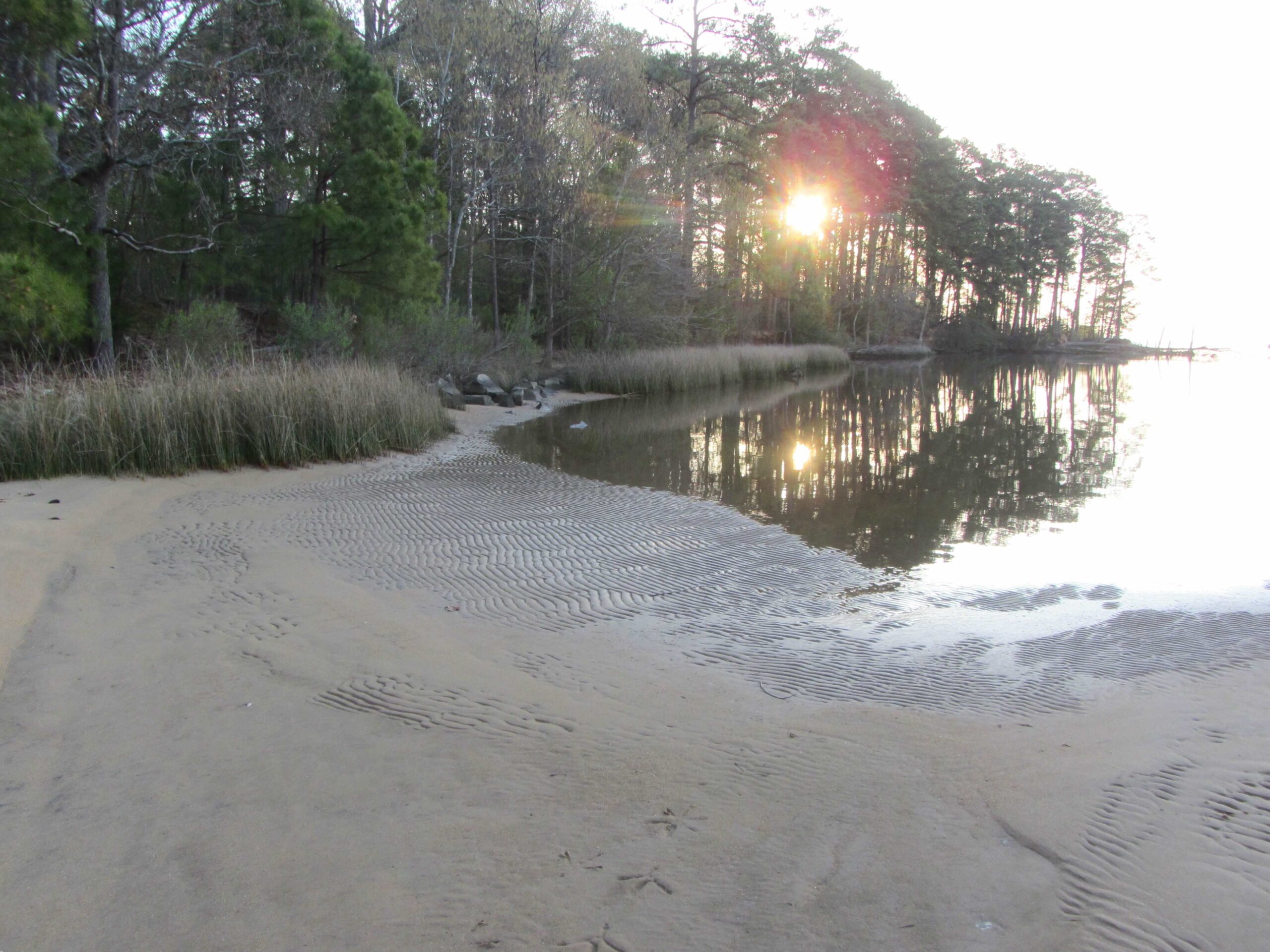
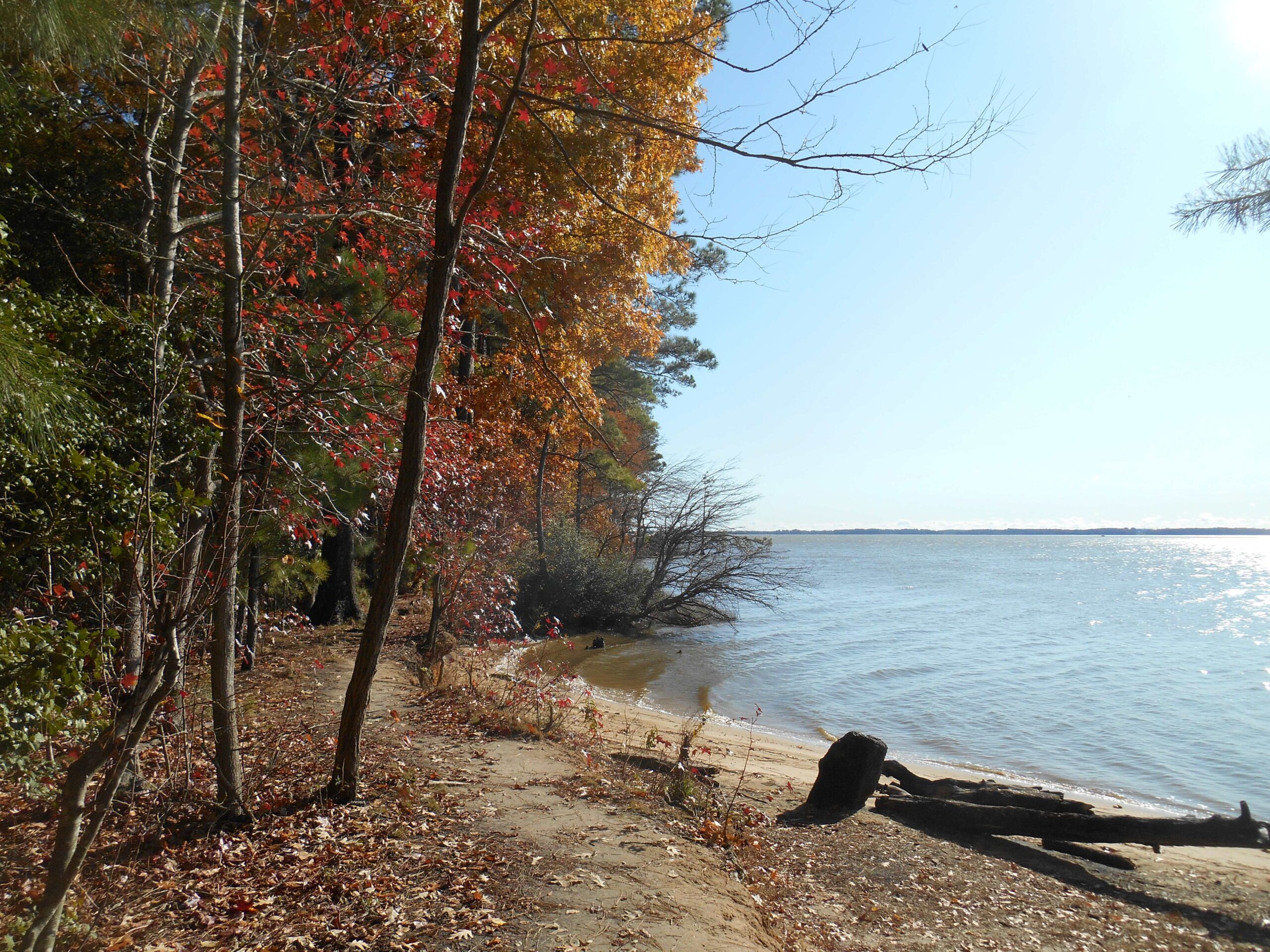
A James River beach at sunrise, March 2024. Nearby water makes a forest bathing experience even more effective. Look for areas near lakes, rivers, ponds, or the seashore where beneficial trees are growing. Native pines, cedars, bald cypress grow along this beach.
How Long Does it Take to Benefit?
Forest bathing guides recommend setting aside from two to six hours for a typical forest bathing experience. Camping outside can extend the experience. But if we have only our lunch break or an hour or two between work and dinner, we can benefit from shorter periods of immersion in the experience. Neuroscientists have found that simply sitting among green plants gives us many benefits. The wavelengths of light reflected by plants help our brains to relax and de-stress.
There are many excellent books, many written by certified forest bathing guides, to explain this practice in more depth and to outline a series of ‘invitations’ for activities to enhance the forest bathing experience. If this practice feels right for you, then you will find a few of these books to help you delve deeper, listed at the end of the article.
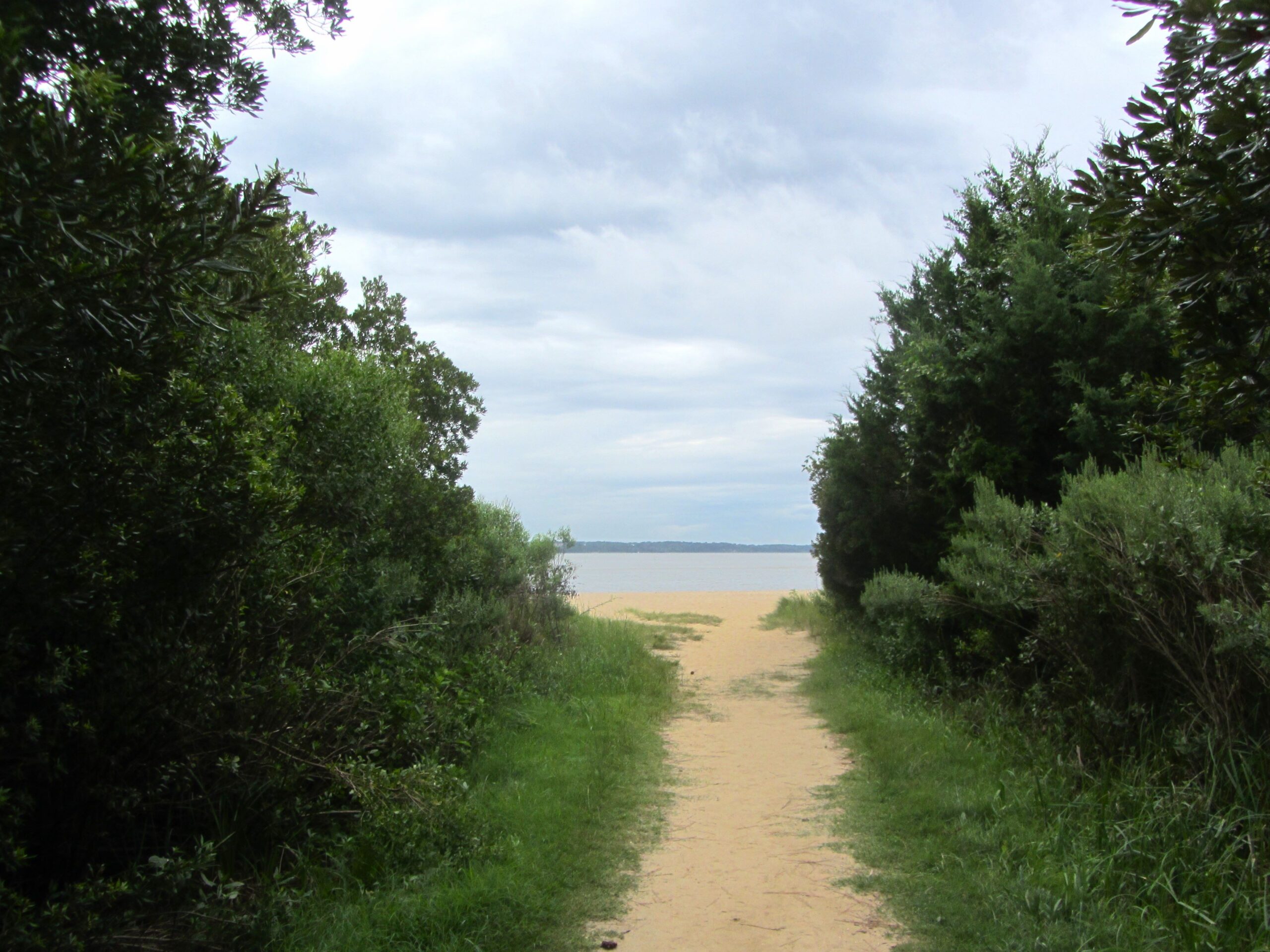
A path leads to a James River beach near College Creek. August 2024.
But here is a brief outline of ‘Do’s’ and ‘Don’ts’ to help you get started.
Do:
Do set aside some period of time dedicated to forest bathing, when you won’t be distracted, rushed, or called away to another activity. Plan on spending anywhere from 20 minutes to a few hours engaged in forest bathing.
Do practice silence while forest bathing, concentrating on what you hear, what you see, what you feel, and what you can smell while in the forest. Seek out sensory input by touching leaves, bark, stones, soil, etc. to enjoy their distinct textures. Sit quietly and listen to the birds, squirrels, and other animals moving around you. Watch the sky and the changing light. Notice the details of plants growing nearby. Limit conversation with any companions to sharing observations of what you are each experiencing.
Do walk slowly and quietly; pause to sit or stand still and observe from time to time.
Do remain focused on your environment. Gently return your attention to the path and the trees if you find yourself thinking about other things.
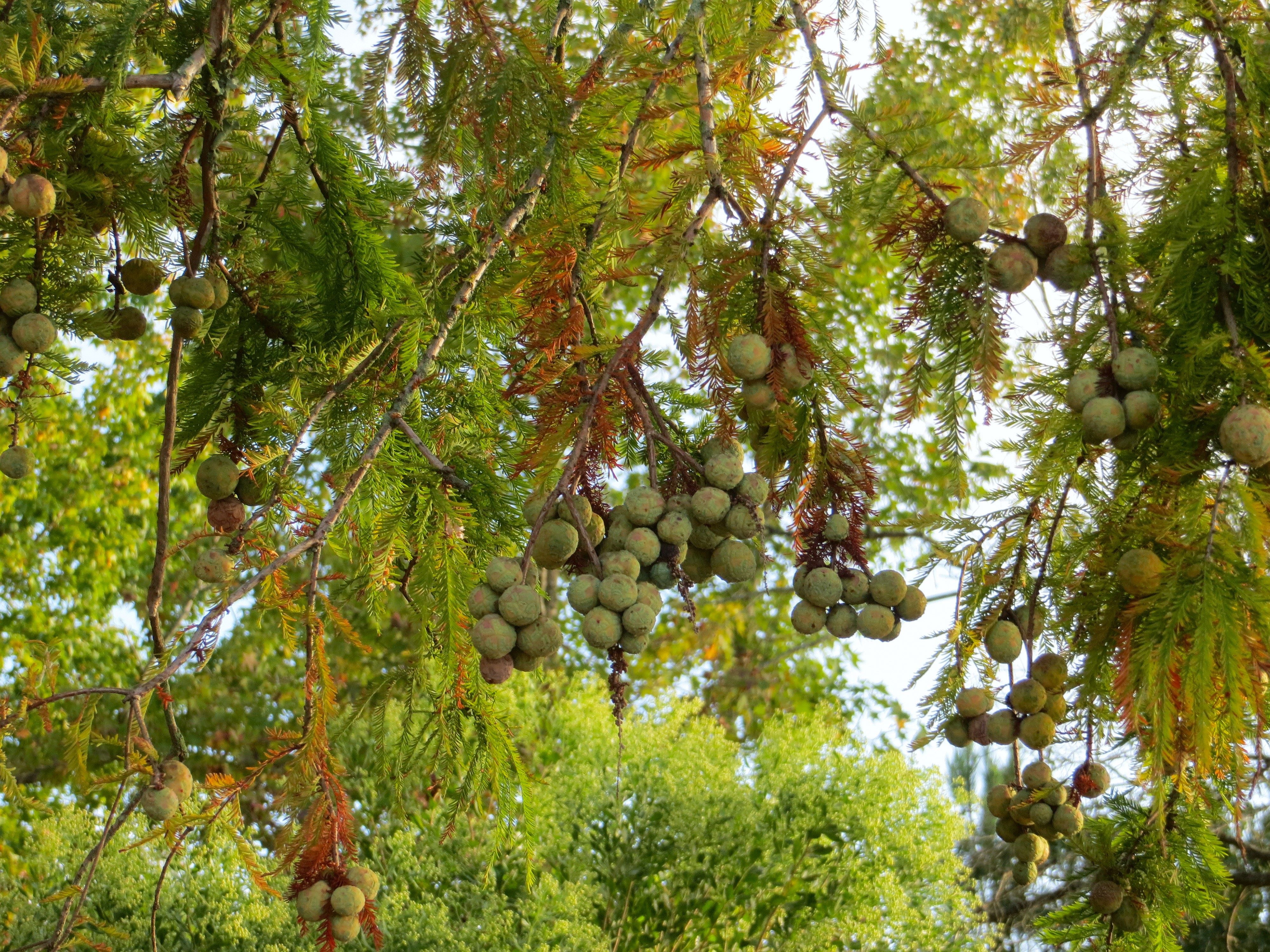
Seed bearing cones ripen on a bald cypress tree. September 2025
Do sketch or paint while forest bathing or take photos or videos to record things you observe.
Do feel gratitude for the opportunity to experience forest bathing, for the place you are visiting, and for the plants and animals you encounter. Gratitude opens your heart to fully enjoy the benefits of the experience.
Do cultivate ‘beginner’s mind,’ where you remain open to what you experience without set expectations. Even if you know a lot about trees and local animals already, maintain curiosity about what you find and what you experience. Rather than trying to recall the specific name for each tree, try to learn something new about it through close observation of its details.
Do dress comfortably in layers, wear good walking shoes, and use insect repellents and sunscreen so you can be comfortable outside for as long as you want to remain there.
Do bring a light pack with water, a snack, a hat or jacket, a phone, and a simple first aid kit if you are going to a park. Bring a whistle if you are going to a state or national park where you might need to summon assistance.
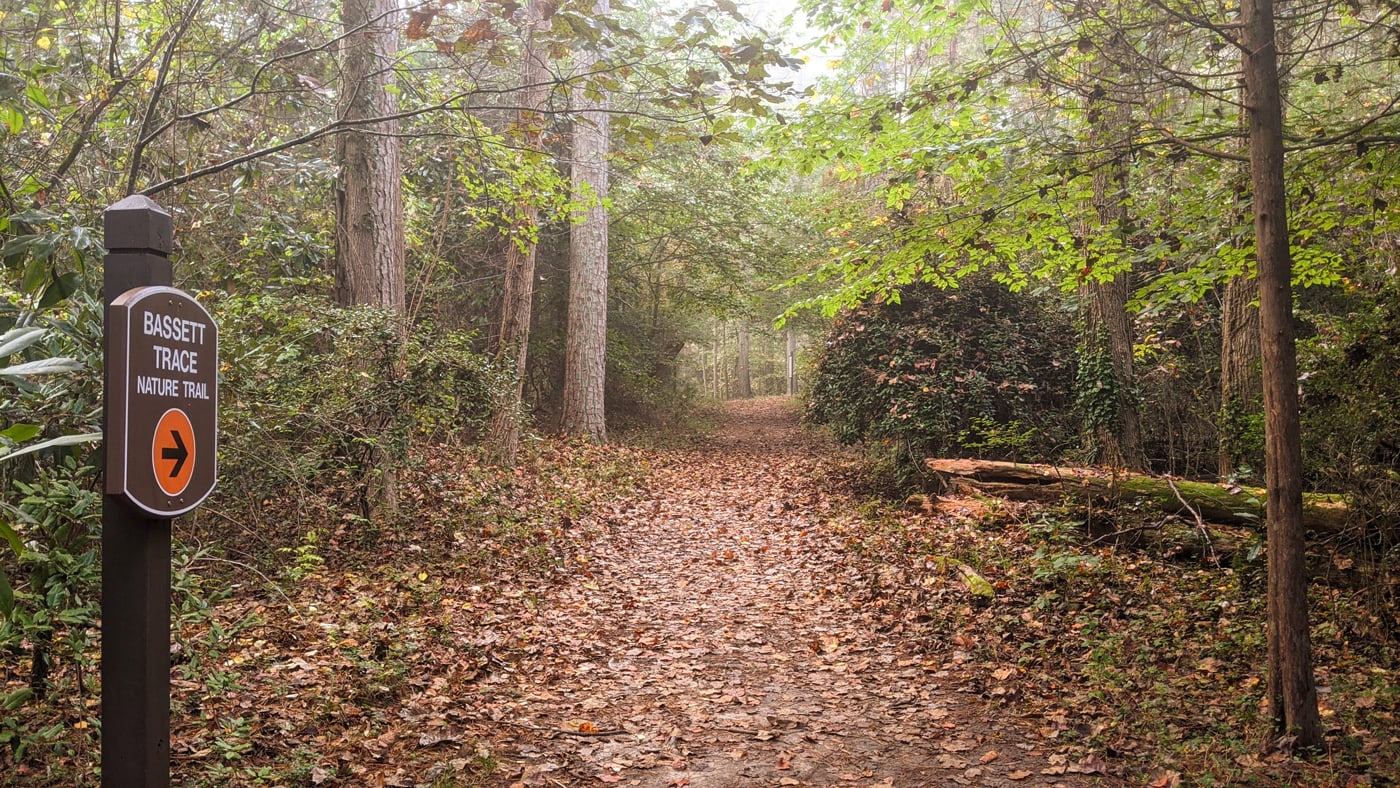
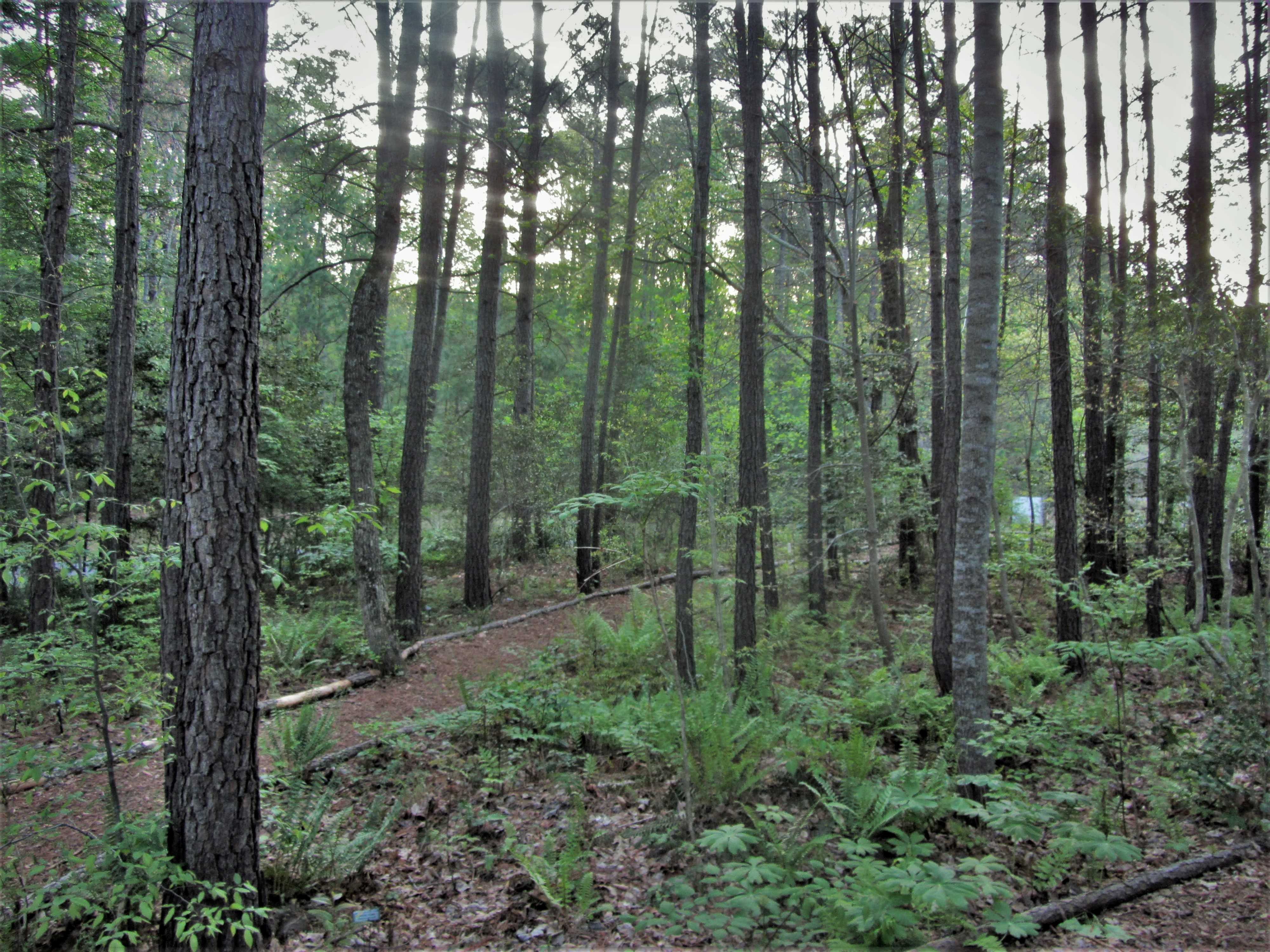
Bassett Trace, September 2021. Photo courtesy of Rick Brown.
Do some basic research in advance before visiting a new park so you know what amenities to expect. Look for one with well-marked trails and terrain you can enjoy safely. Know in advance what hours you can visit and whether or not there will be staff should you need assistance. Download a map if you are going to walk on unfamiliar trails or in an unfamiliar park.
Do let someone know where you are going and when you should return if you are going to a larger park alone.
Do pay attention to who and what is around you. Listen to your intuition if something makes you uncomfortable.
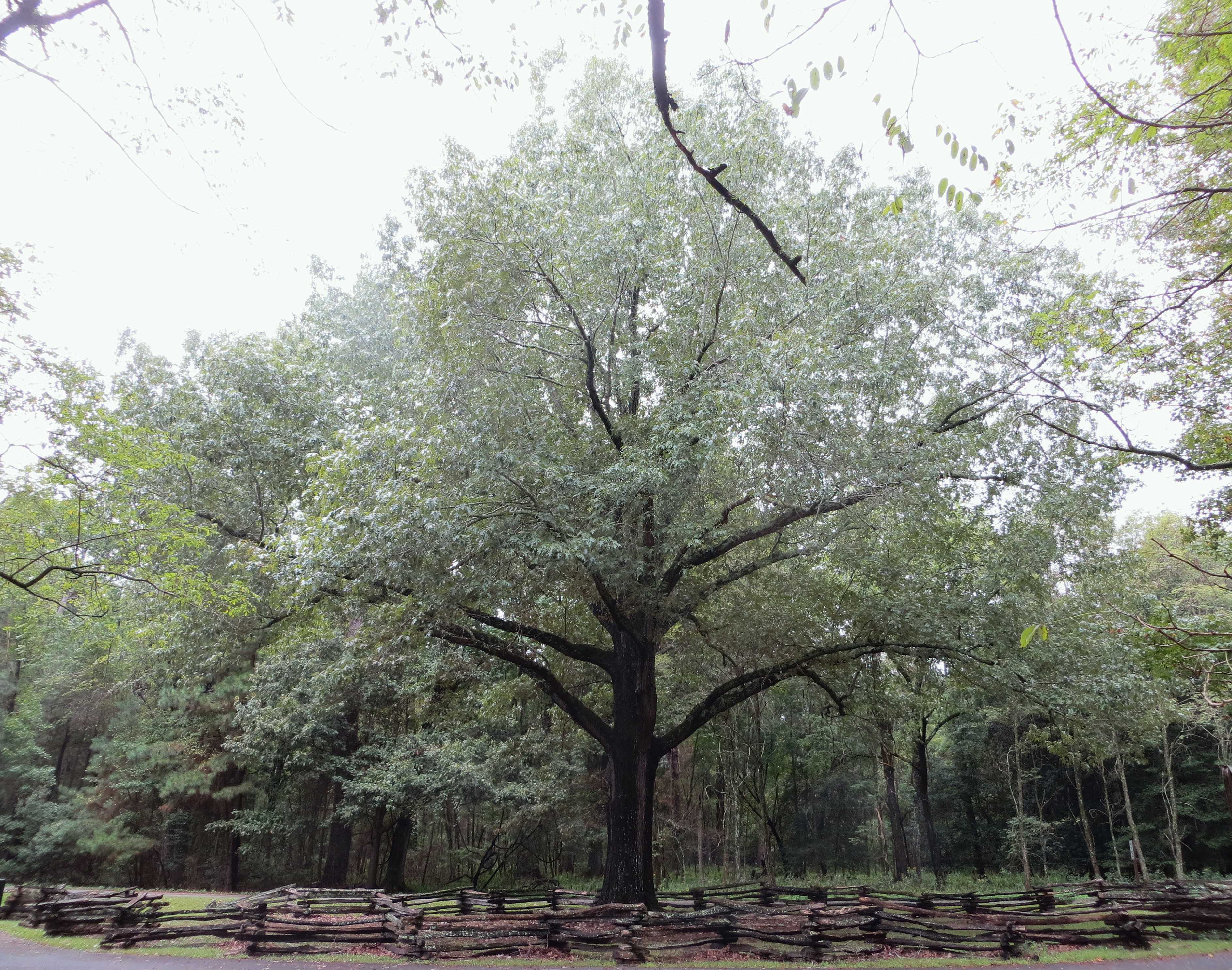
An ancient oak tree grows on Jamestown Island near Black Point. This is a very remote area. Let someone know where you are if you come alone. September 2025.
Don’t
Don’t rush, don’t strain, don’t overdo or try to make this an athletic exercise. Slow down and enjoy your time outdoors. There is no specified distance you need to cover.
Don’t give in to temptation to begin scrolling on your phone, respond to texts, etc. Remain focused on the forest bathing experience.
Don’t stray off the trail in an unfamiliar park.
Don’t taste or eat anything you can’t positively identify, and don’t drink from springs or streams unless you know they are safe for drinking, or you have a filtration straw with you.
Don’t leave anything behind. Pack out everything you bring into the forest. Minimize your personal impact on the environment by showing respect for the plants and animals you find there.
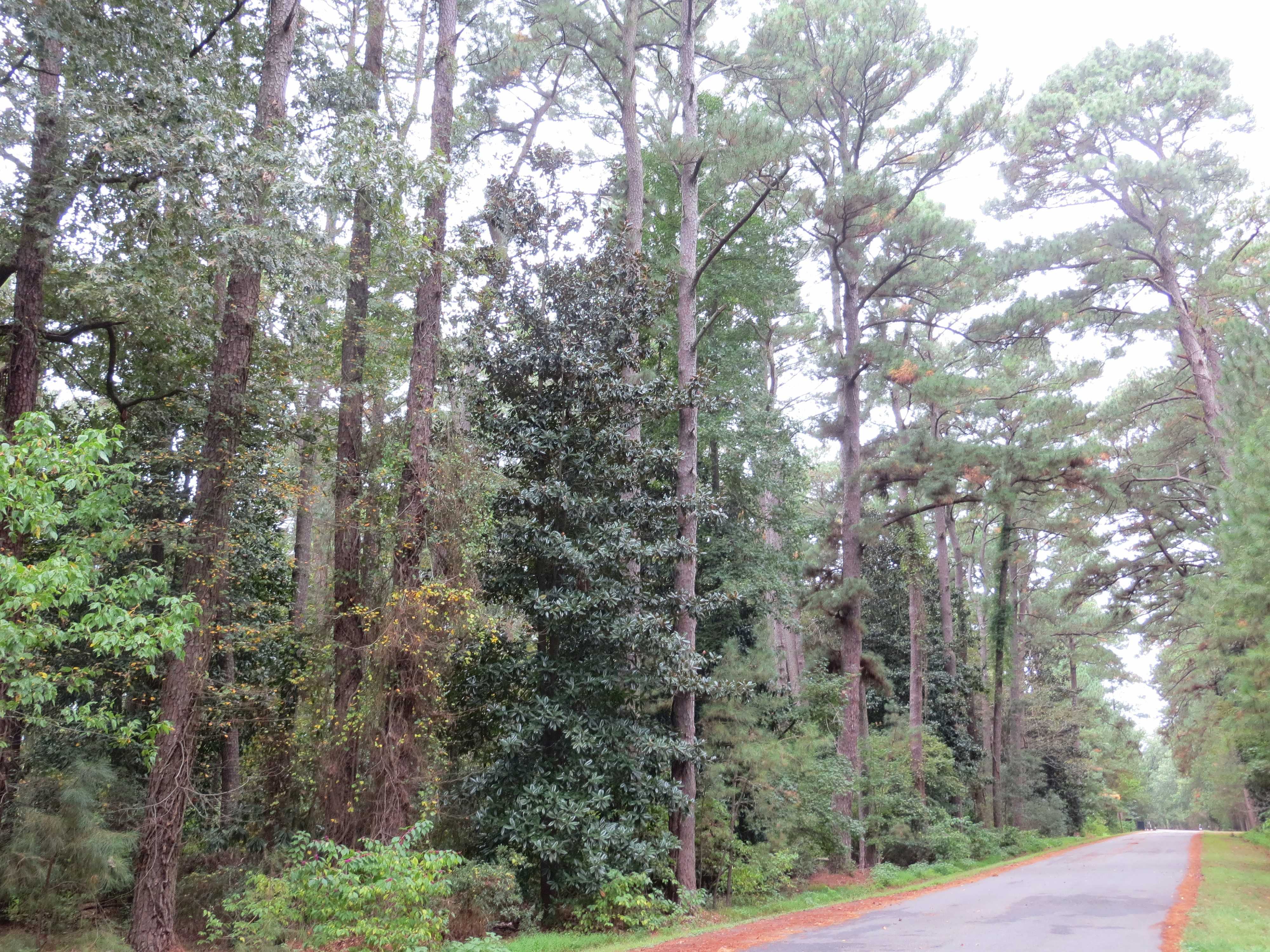
There are many safe, tree lined paved areas to walk along the Colonial Parkway. This is part of the Loop Drive on Jamestown Island, where you will enjoy a wide variety of tree species, ferns, and wildflowers.
Where to Go to Forest Bathe in Our Area
There are a variety of local, state, and national parks in our area where we can enjoy a great forest bathing experience. The Historic Colonial Parkway offers a variety of beaches, the Loop Drive on Jamestown Island where there is little traffic, and wide shoulders along the Parkway itself. There are parking lots around the visitor center where you can walk on pavement and in safety. Visit various local parks to determine where you are most comfortable. York River State Park offers a variety of trails and good support facilities. Freedom Park, in James City County, offers well maintained wooded walking trails and is only one of several county parks where you can forest bathe.
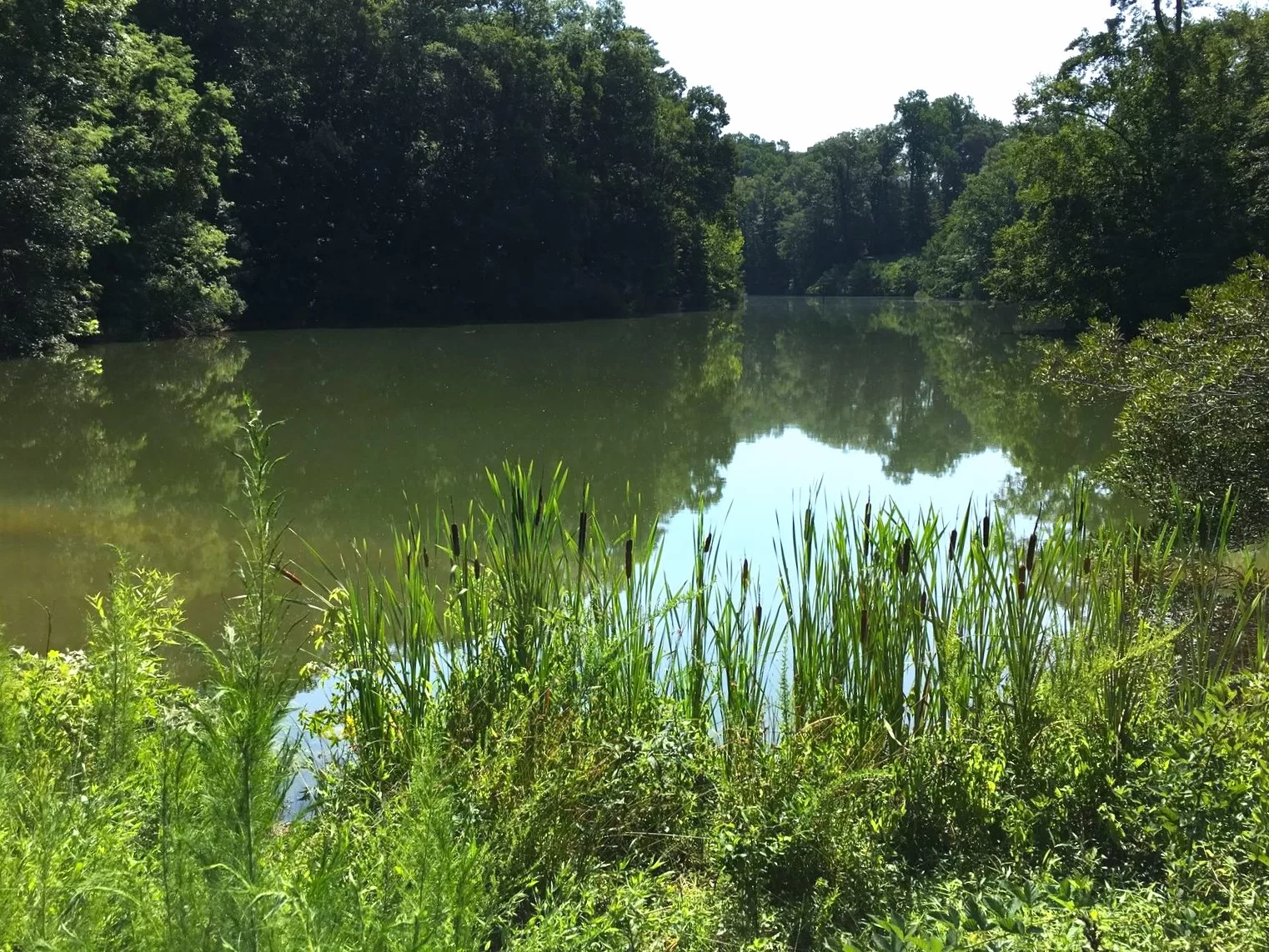
The pond on Bassett Trace, location of a former boathouse. Photo courtesy of Rick Brown, July 2019.
In addition, there is the Bassett Trace Nature Trail in Colonial Williamsburg and the Virginia Capital Trail near Route 5. Your own neighborhood may be a good place to walk and enjoy the trees growing along the street.
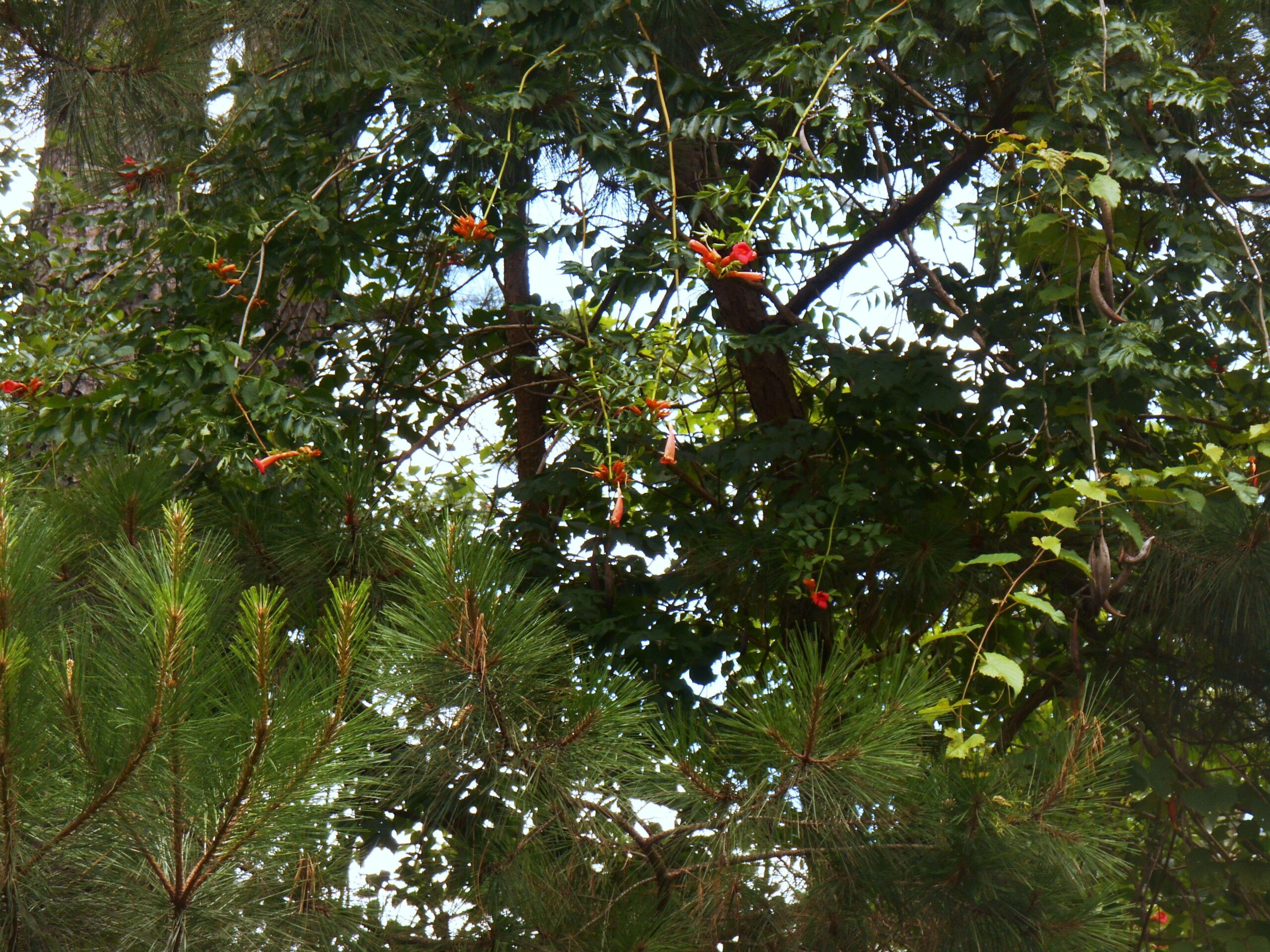
A trumpet vine and a grape vine grow through a loblolly pine tree. July 2015
The Best Native Trees for Forest Bathing
While all types of trees, shrubs, and herbaceous plants help us to relax and soak in their beauty, certain trees in our area have more volatile terpenes and other phytoncides than others. When choosing a place to forest bathe, look for locations where these types of trees can be found: all types of oaks, Virginia red cedar, Atlantic white cedar, American Beech, wax myrtles, hollies, bald cypress, hazelnut, pines, junipers, and Magnolia trees.
Look for areas where there are several layers of plant life, including a tall canopy layer which will hold the air closer to the ground. The tree canopies keeps the terpene rich air enclosed longer, so you can benefit before the air full of volatile essential oils escapes into the sky. Researchers have found that the air has the highest density of phytoncides in late summer, but forest bathing can continue into the winter in our area, since most of these trees are evergreens.
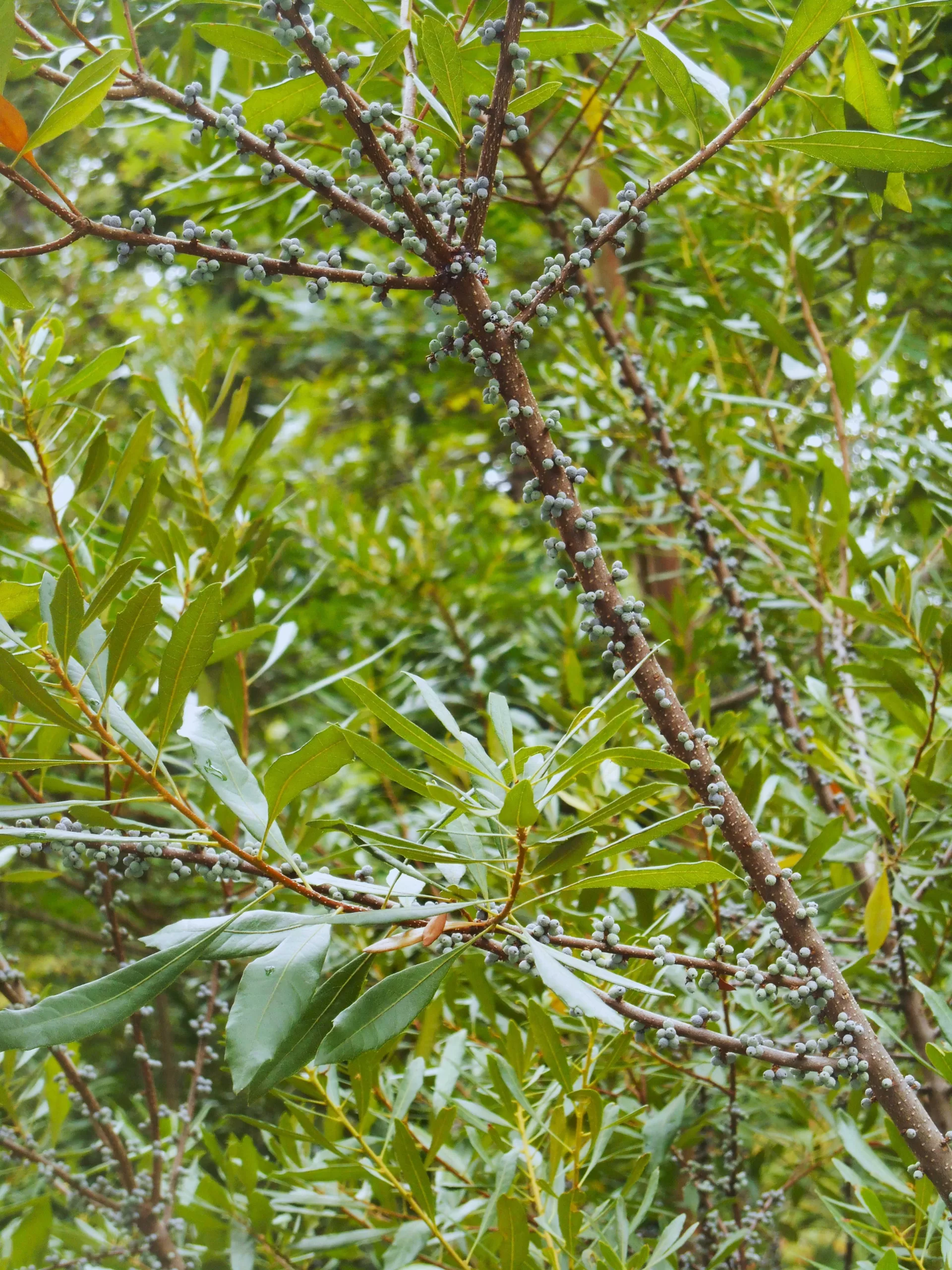
Fragrant southern wax myrtle, Myrica cerifera, is full of healing, essential oils. September 2015
Forest Bathing at Home
You can forest bathe in your own yard or on your own patio or balcony. Plant a few of the trees listed above around your sitting area. Most have a dwarf form that can be grown in containers. The Japanese art of bonsai is a way to bring the benefits of trees into small spaces. The term bonsai simply means a tree grown in a container and prevented from reaching its full, normal size. You can grow these, and other flowering trees or shrubs, like Camellias, to create your own miniature forest. Although Camellia shrubs aren’t native in our area, they are rich in phytoncides. Many of us enjoy Camellia leaves brewed into tea.
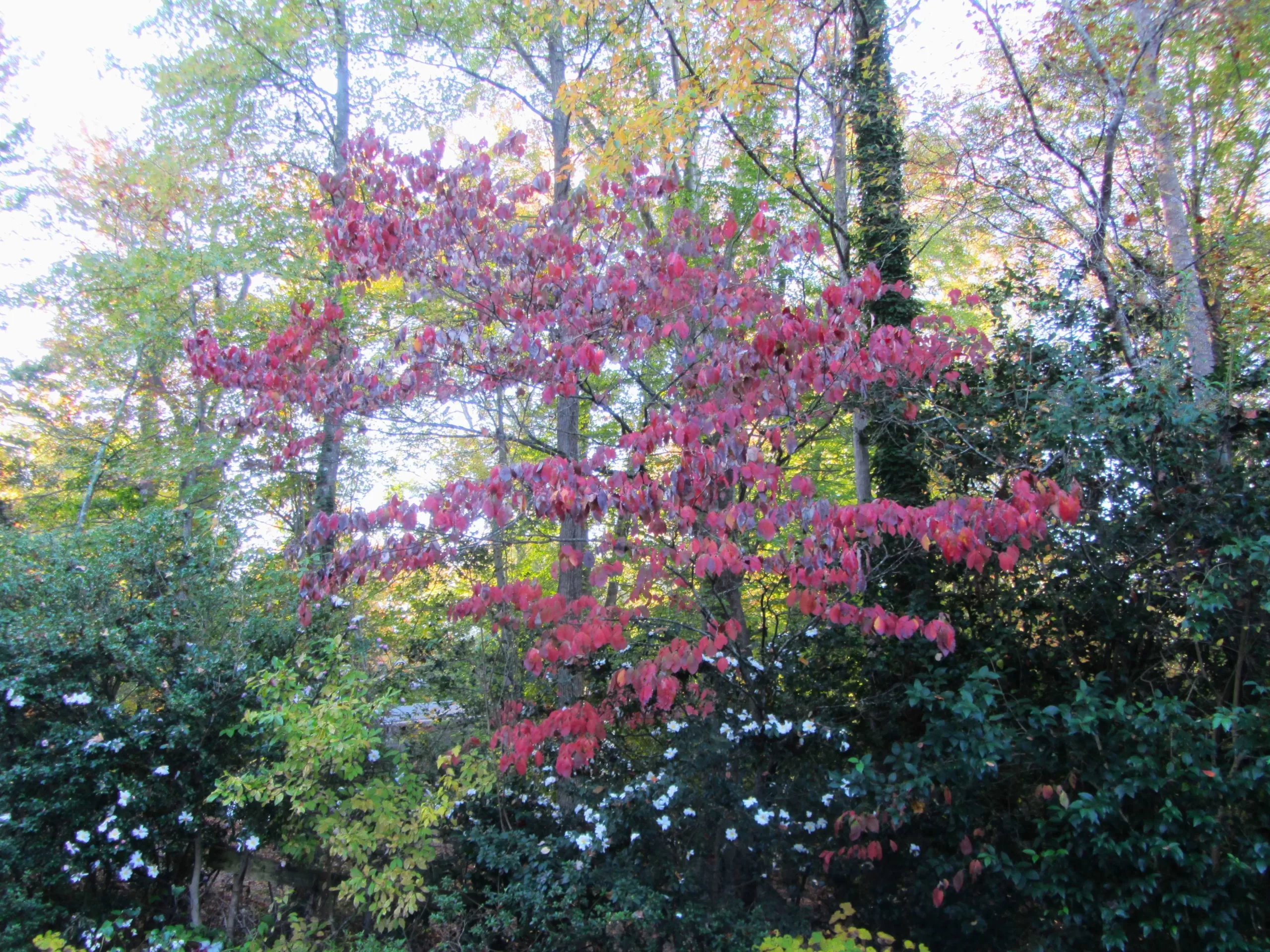
Shade loving Camellias grow best as understory shrubs beneath established trees. C. japonicas in this hedge will bloom in winter, after these C. sansanquas finish their annual show. November 2022.
Most evergreen herbs also release volatile essential oils into the air. Grow a variety of herbs around your sitting area to enjoy their healing benefits. In general, plants with fragrant foliage contain healing terpenes.
There are a number of other evergreen tree and shrubs native to China and Japan that are rich in phytoncides. Cryptomeria japonica, Japanese cedar, is the national tree of Japan. There are a number of Cryoptomeria cultivars of different sizes to consider. There are also several beautiful types of pine, including Podocarpus macrophyllus, the Buddhist pine. Chamaecyparis, false-cypress, includes a species found in North America, the Atlantic white cedar, C. thyoides, and also species found in Eastern Asia. Hinoki cypress is a beloved Asian shrub in this group.
These trees grow wild in the national forests where forest bathing practices originated. Some of these species will grow in gardens in our climate, although others prefer cooler weather. Check the growing zone for each non-native shrub you want to purchase for your personal healing garden.
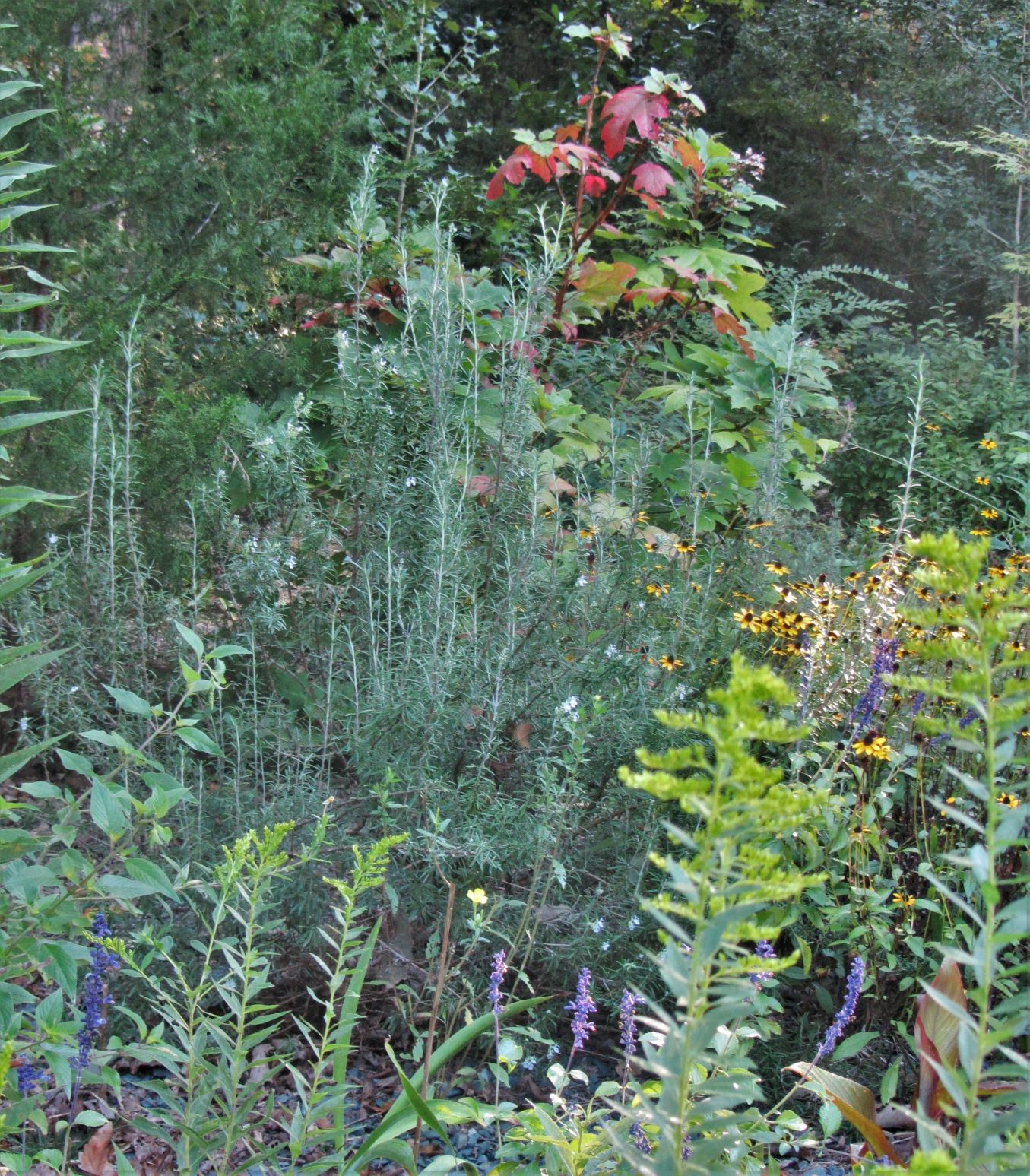
Rosemary is an evergreen, woody shrub that blooms in winter. Some varieties of rosemary may grow to 6′ tall if not regularly trimmed.
Forest Bathing for the Physically Disabled
Forest bathing is especially important for those who are healing from illness, injury, or who are dealing with stressful times in their lives. Many area parks are designed to welcome wheelchairs and scooters. Plan carefully and do a little research ahead when exploring new parks with someone who is disabled, to make sure that there are paths designed for those using wheelchairs or other aids. For those who can’t get out to visit a park, even seeing trees through a window helps speed healing, according to clinical studies. A potted tree can be brought to grow in the area where they spend the most time. Nursing facilities and hospitals often cultivate small gardens or patios with potted plants for patients and their families.
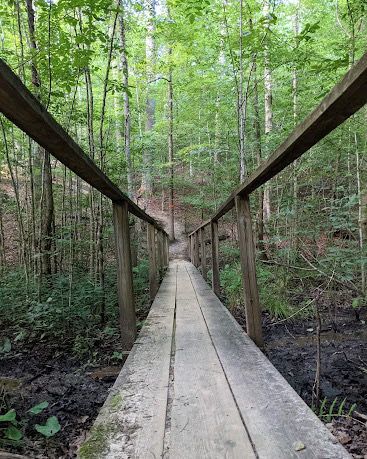
Bridge # 2 – Bassett Trace August 2025. Photo courtesy of Rick Brown.
Trees Connect Us to the Greater Whole
The World Tree, Yggdrasil in the old Norse language, connected heaven to earth. Its roots grew deeply into the earth and its branches reached up into heaven. It was the axis mundi of our world, connecting our mortal world to both the underworld and to the heavens. A world tree is a cross cultural symbol, found in various forms across most ancient cultures. The ‘Tree of Life,’ used in study of the Cabala, has its roots in the Greek philosophy of Pythagoras and Plato, and perhaps even earlier in ancient Egypt. A tree is a useful metaphor for understanding our place in the world and our relationship to it.
People have sought wisdom in and under trees for millennia. The trees we bring indoors each December are reminders of the Yggdrasil. We adorn them with starry lights and build small villages at their base. We gather round them for cheer in comfort during the darkest days of the year. Living evergreen trees, their stems kept in water, still release their essential oils into the air of our homes even after they have been cut from their roots.
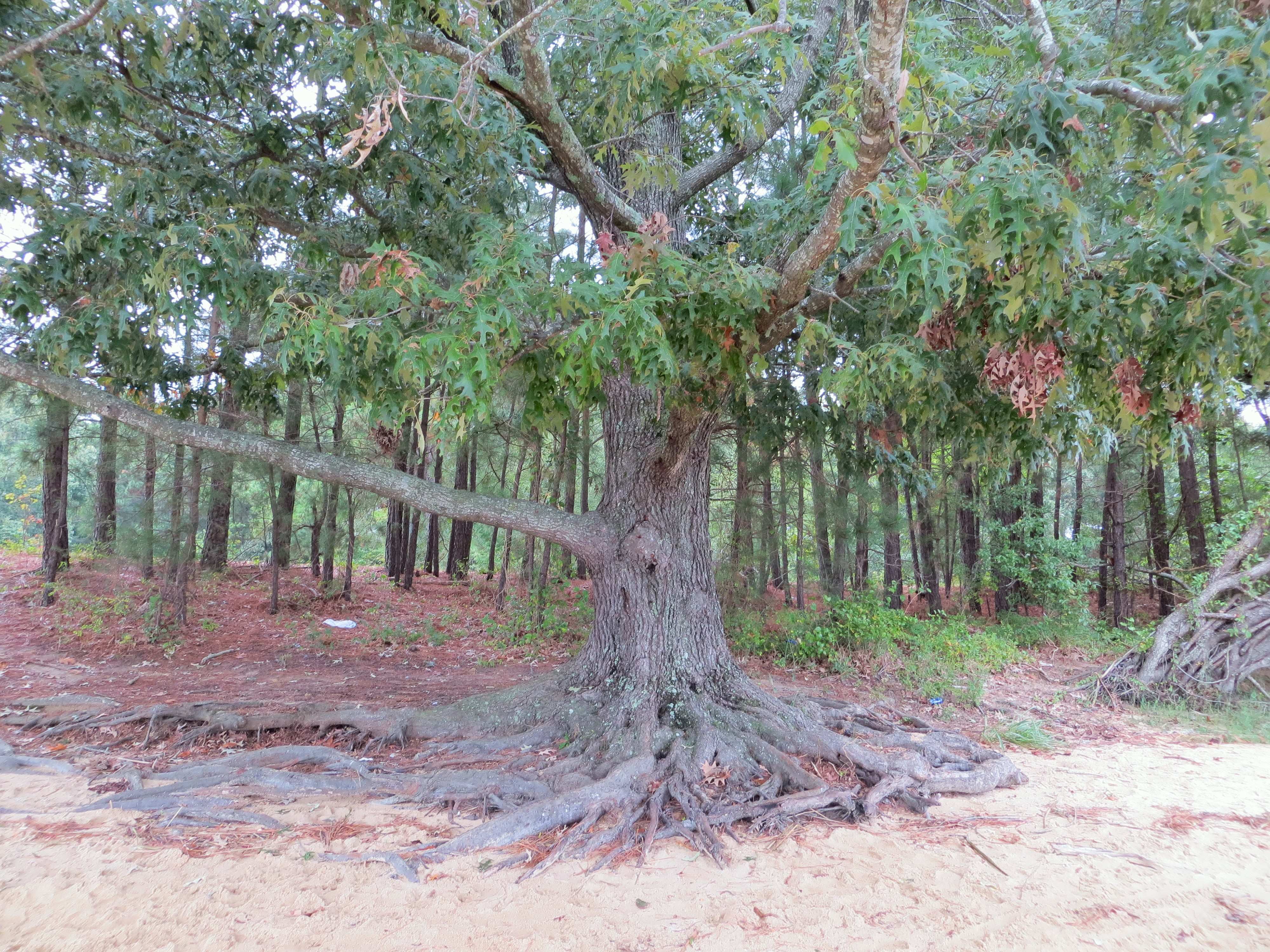
A cherrybark oak, Quercus pagoda, can thrive on the beach even with its roots flooding at high tide. Its mate beside it lives on, though it fell over years ago. Notice the roots still flowing down into the soil to the right of this photo. September 2025, on the bank of the James River.
The World Tree is such a powerful and universal symbol because we see its reflection all around us in living trees that also connect the mineral based earth, the soil around their roots, with the airy heavens. Trees actively transport water, food, and gasses up and down their vascular system every moment of their lives. They soak up water from the soil, releasing it into the sky even as they produce the oxygen we require for life and the phytoncides that heal us. The absorb gasses, like carbon dioxide and nitrogen from the air, and store those elements in their own flesh from root tip to bud. Trees give to their environments constantly. They replenish the soil where they grow with their own leaves. Their roots crack up the rocks below them and transform them into new soil as they mine them for minerals needed for their own growth.
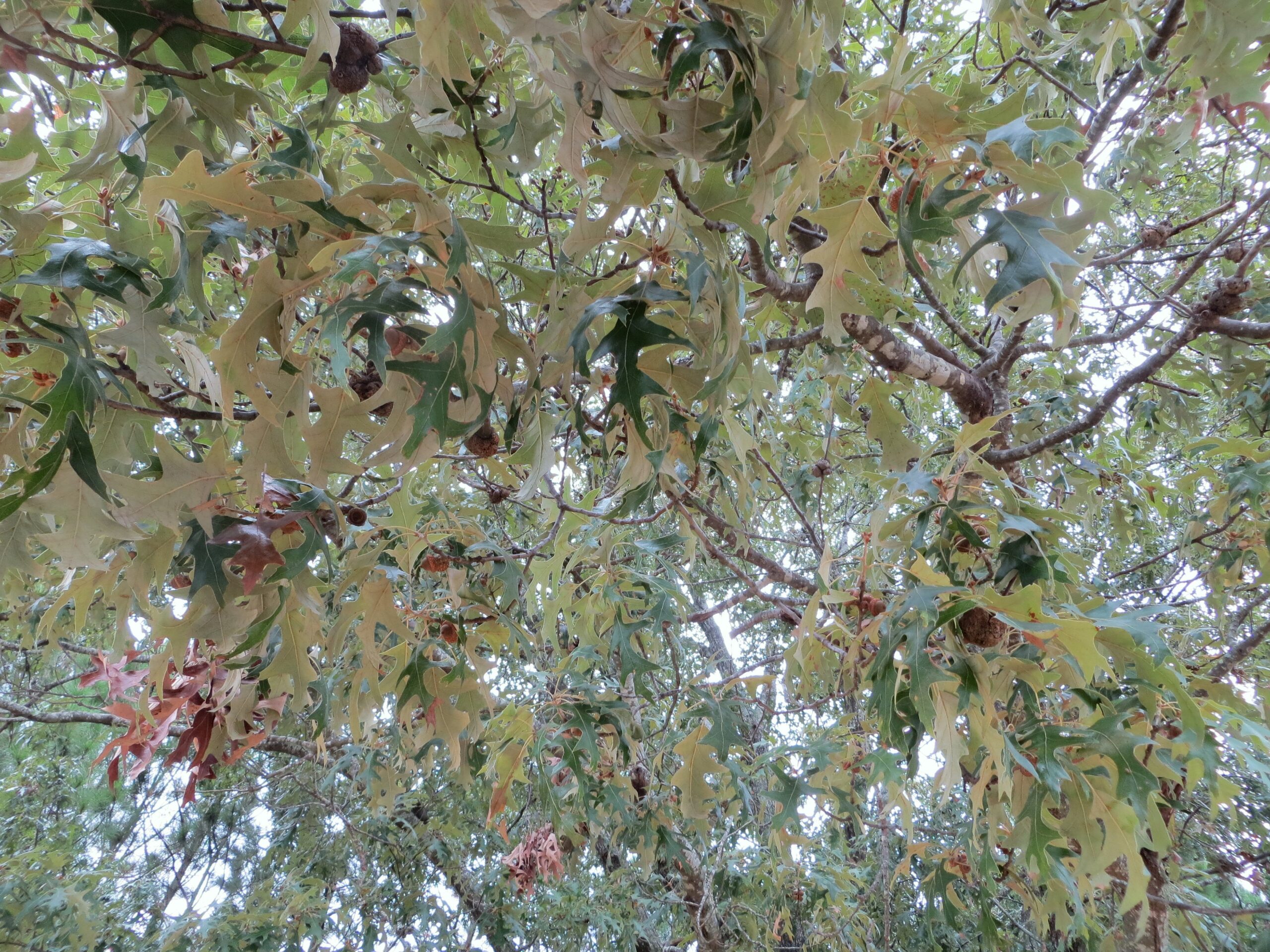
The cherrybark oak’s canopy is filled with ripening acorns.
Trees also anchor whole communities of living creatures. The ecosystem of an oak tree includes hundreds of different types of insects, many different birds and small mammals, and it can feed a deer with its acorns as easily as it feeds a caterpillar with its leaves. Vines climb its trunk and mistletoe grows in its highest branches. The soil around it grows rich with fungi, insects, and other invertebrates. And then we come and sit in its shade, admiring its beauty, and breathing in its moist, fresh air and healing phytoncides.
Trees make our lives richer in countless ways. When we return to the forest with an open heart and open mind, the trees can also help us ameliorate the stress of our modern lives. They can help us achieve balance as we serve as the axis mundi of our own ecosystem, connecting all of the people, responsibilities, and bits and pieces of our lives into a thriving, unified whole.
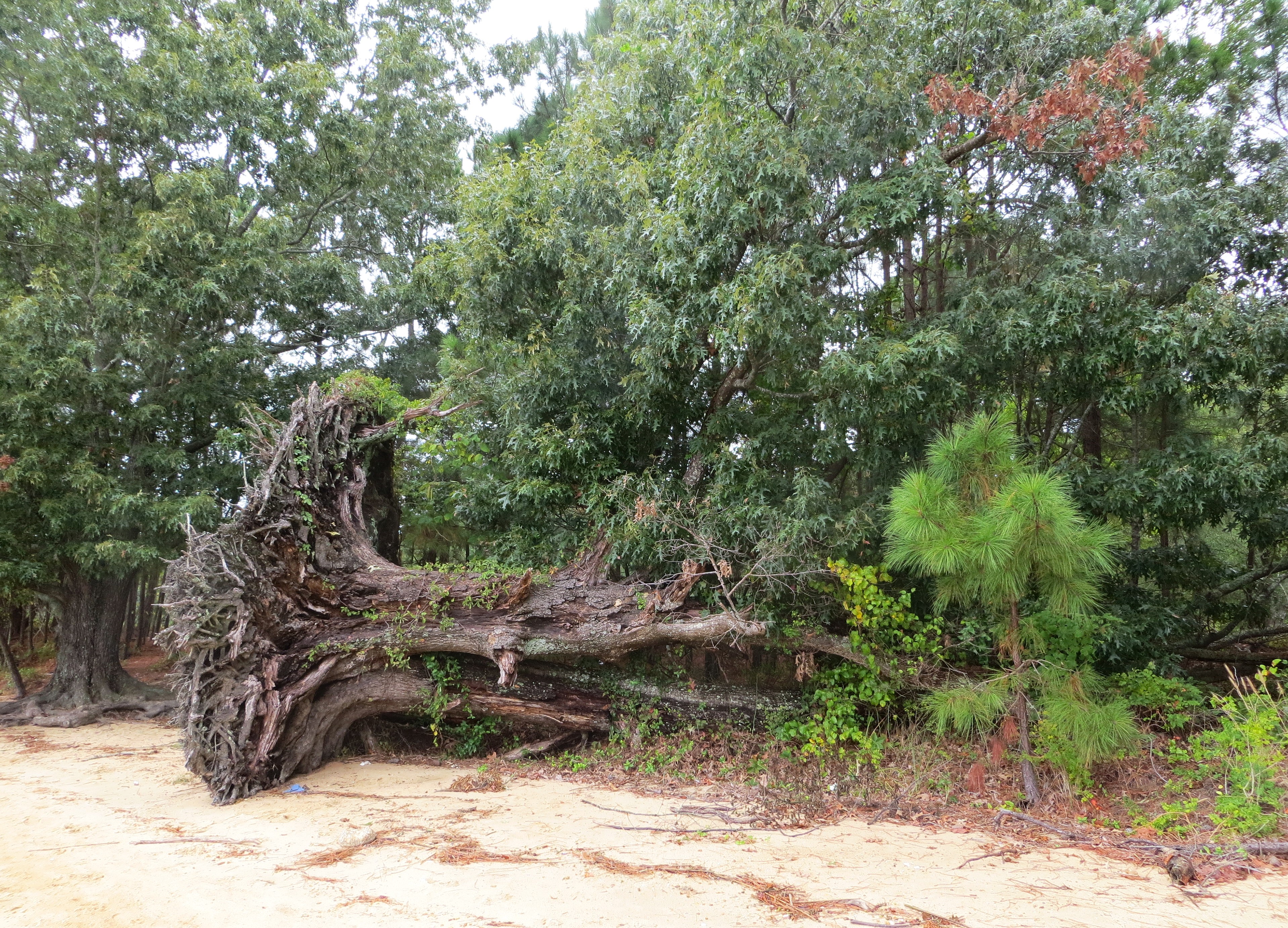
The fallen cherrybark oak lives on, its branches now growing as new trunks and generating branches of their own. It continues to provide for its forest community, and will continue, for decades to come.
For More Information:
___ What Tree Is That? A guide to the more common trees found in North America. The Arbor Day Foundation. 2022.
Arvay, Clemens G., Marc Bekoff Ph.D., Victoria Goodrich Graham (Translator). The Biophilia Effect: A Scientific and Spiritual Exploration of the Healing Bond Between Humans and Nature. Sounds True. February 2018.
Beresford-Kroeger, Diana. The Global Forest: Forty Ways Trees Can Save Us. Penguin Books. May 2010.
Bloom, Jessi and Shawn Lineham. Creating Sanctuary: Sacred Garden Spaces, Plant-Based Medicine, and Daily Practices to Achieve Happiness and Well-Being. Timber Press. November 2018.
Clifford, M. Amos. Your Guide to Forest Bathing (Expanded Edition): Experience the Healing Power of Nature. Red Wheel. August 2021.
Delorie, Oliver Luke.
Miyazaki, Yoshifumi.
Oder, Tom. “Shinrin-Yoku: A Deep Dive Into Forest Bathing.” Tree Hugger. https://www.treehugger.com/shinrin-yoku-forest-bathing-books-4861941. Revised August 24, 2024. Accessed 10.1.2025.
O’Driscoll, Dana. Land Healing: Physical, Metaphysical, and Ritual Practices for Healing the Earth. RedFeather. March 2024.
Ohlsen, Erik. The Regenerative Landscaper: Design and Build Landscapes That Repair the Environment. Synergetic Press. August 2023.
StarBasil. “Phytoncides: The Science Behind Forest Bathing Benefits.” https://forestbathingcentral.com/phytoncides/. Forest Bathing Central. December 8, 2020, accessed 9.16.2025.
Williams, Florence.
“Forest Bathing in Japan (Shinrin-yoku)” Travel Japan. https://www.japan.travel/en/guide/forest-bathing/. Accessed 10.1.2025.
All photos by E. L. McCoy, unless otherwise attributed