Our Planetary Garden
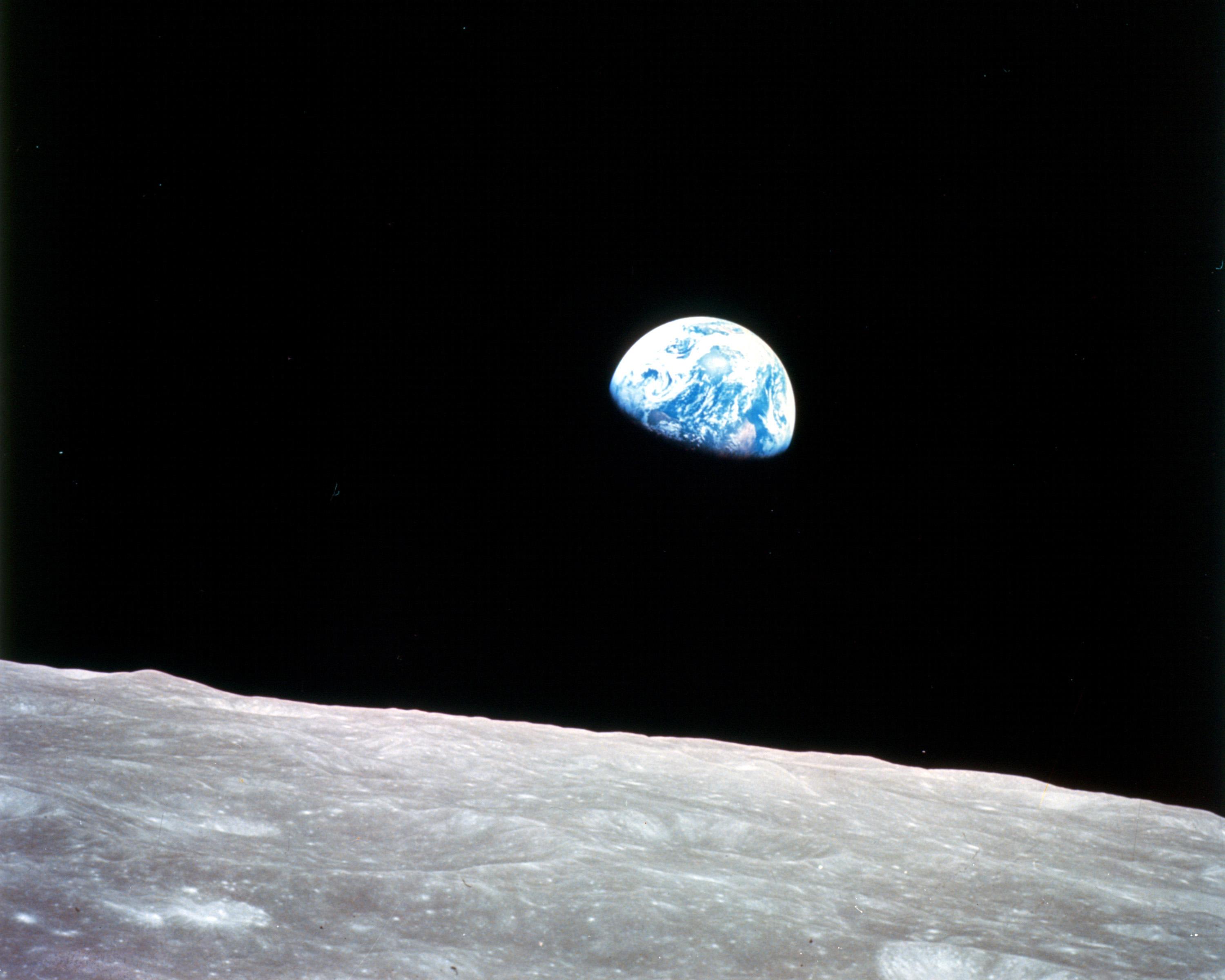
Earthrise, December 1968 from Apollo 8. “The vast loneliness is awe-inspiring, and it makes you realize just what you have back there on Earth,” said Command Module Pilot Jim Lovell. Image Credit: Nasa
A New View of our Earth
American soldiers and scientists working at White Sands Missile Range in New Mexico took the first images of Earth from space in late October of 1946 when they attached a 35-millimeter movie camera to a confiscated German V-2 missile they were testing. The missile reached an altitude of 65 miles, just above the limit of ‘outer space,’ before crashing back to earth with the film protected in a steel container.
Subsequent missile tests yielded images from higher and higher altitudes, until American Astronaut John Glenn became the first human to take a color photo of our planet with a hand-held camera during his February 1962 Friendship 7 mission. He orbited the Earth three times and captured the brilliant horizon of Earth against the deep blackness of space.
But it was another six and a half years before the crew of Apollo 8 took their iconic “Earthrise” photo of our blue planet while orbiting the moon on Christmas Eve, 1968. You have likely seen this photo, taken nearly 60 years ago, which reveals the beauty of fragility of our home planet as seen from the depths of space, and that forever changed how we see our Earth.
Life Without Boundaries
Just as the photo of one beautiful Earth, without national boundaries, changed how we think about international politics, it has also helped us to better understand the unity of our ecosystem. Nature doesn’t know walls, boundaries, or borders. Winds, ocean currents, and storm systems constantly roam across our planet, continually mixing the Earths waters and soils. Ocean currents carry seeds, sediments, sea creatures, and bits of aquatic plant life from island to island and continent to continent. Storm winds carry pollen, seeds and spores from place to place, even transporting dust clouds from Africa to the Americas. Butterflies, birds, and fish carry seeds and pollen with them on their endless journeys.
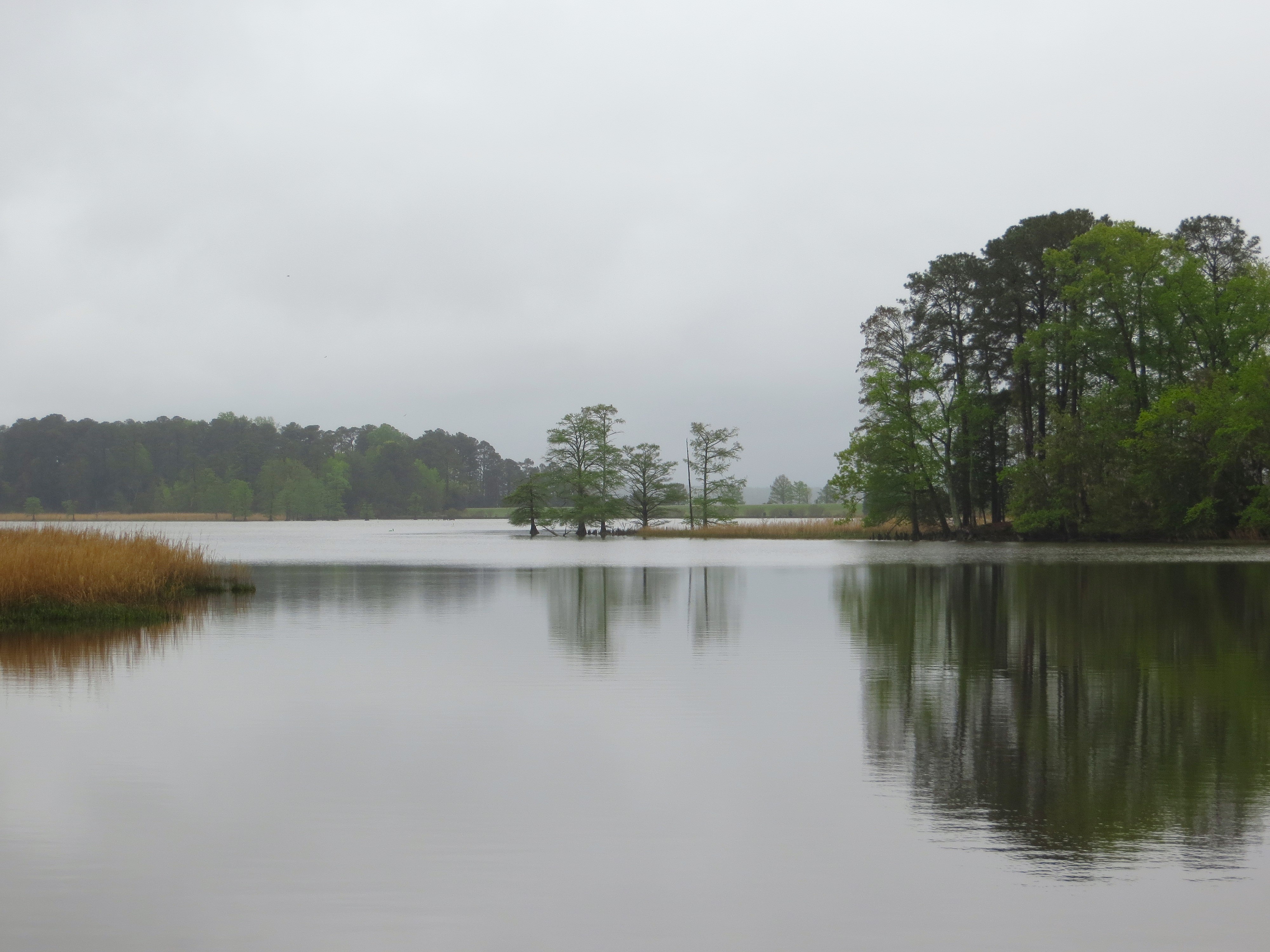
Powhatan Creek
All of Earth’s plant, animal, fungal and microbial life exists within Earth’s biosphere, a relatively narrow zone of life-supporting atmosphere which extends from the ocean’s depths to an altitude of less than 7 miles above the planet’s surface in the troposphere, where it is too cold for plants and the air becomes ‘too thin’ to breathe because it lacks sufficient oxygen. This is the fragile home of all life on Earth.
One Planetary Garden
All people, no matter where they live on Earth, enjoy and help to tend this one ‘Planetary Garden,’ an important theme in the life and work of the great French gardener, botanist, landscape designer, and entomologist Gilles Clément. There is a single finite garden within our finite life-supporting ecosystem of land, ocean, and sky that surrounds the rocky core of our planet. However we humans try to divide and claim pieces and slices of the Earth, the biosphere is a continuous, seamless expanse where plants and animals live and share the available resources.
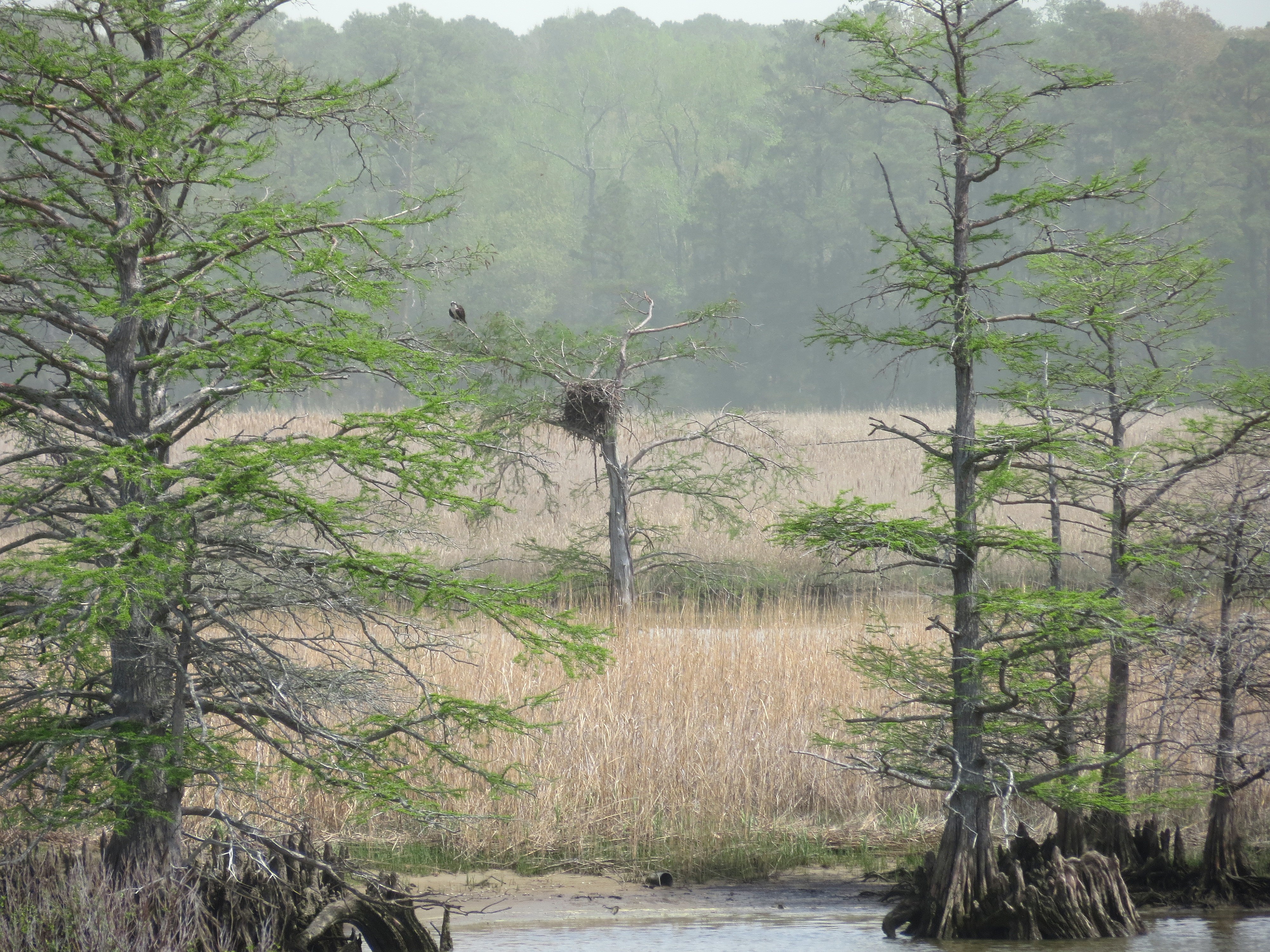
Osprey eagles nest in bald cypress trees growing in Powhatan Creek.
Horticultural Pioneer Gilles Clément
Clément was a young man, in his 20s, when he first saw the photo of Earth taken by the Apollo 8 astronauts, showing Earth rising in the black sky above the moon’s horizon. And this photo shaped his own approach to making gardens. He was interested in how nature itself fills empty spaces, waste spaces, damaged and abandoned land with new plants and animal life. He purchased some abandoned farmland in a French valley near Creuse, south of Paris, to build his own home and garden, La Vallée, observing the species that appeared as the garden developed, and how ‘volunteer’ wildflowers and trees interacted with the plant species he planted.
Clément explains it well in a February 2021 article about his concept of the Planetary Garden for The Architectural Review:
“Nature is not at the service of man: we exist within her, submerged in her, intimately associated with her. The ‘planetary garden’ is a means of considering ecology as the integration of humanity – the gardeners – into its smallest spaces. Its guiding philosophy is based on the principle of the ‘garden in motion:’ do the most for, the minimum against. The ultimate goal of the planetary garden is to exploit diversity without destroying it, perpetuating the ‘planetary machine’ and ensuring the existence of the garden – and hence the gardener.“
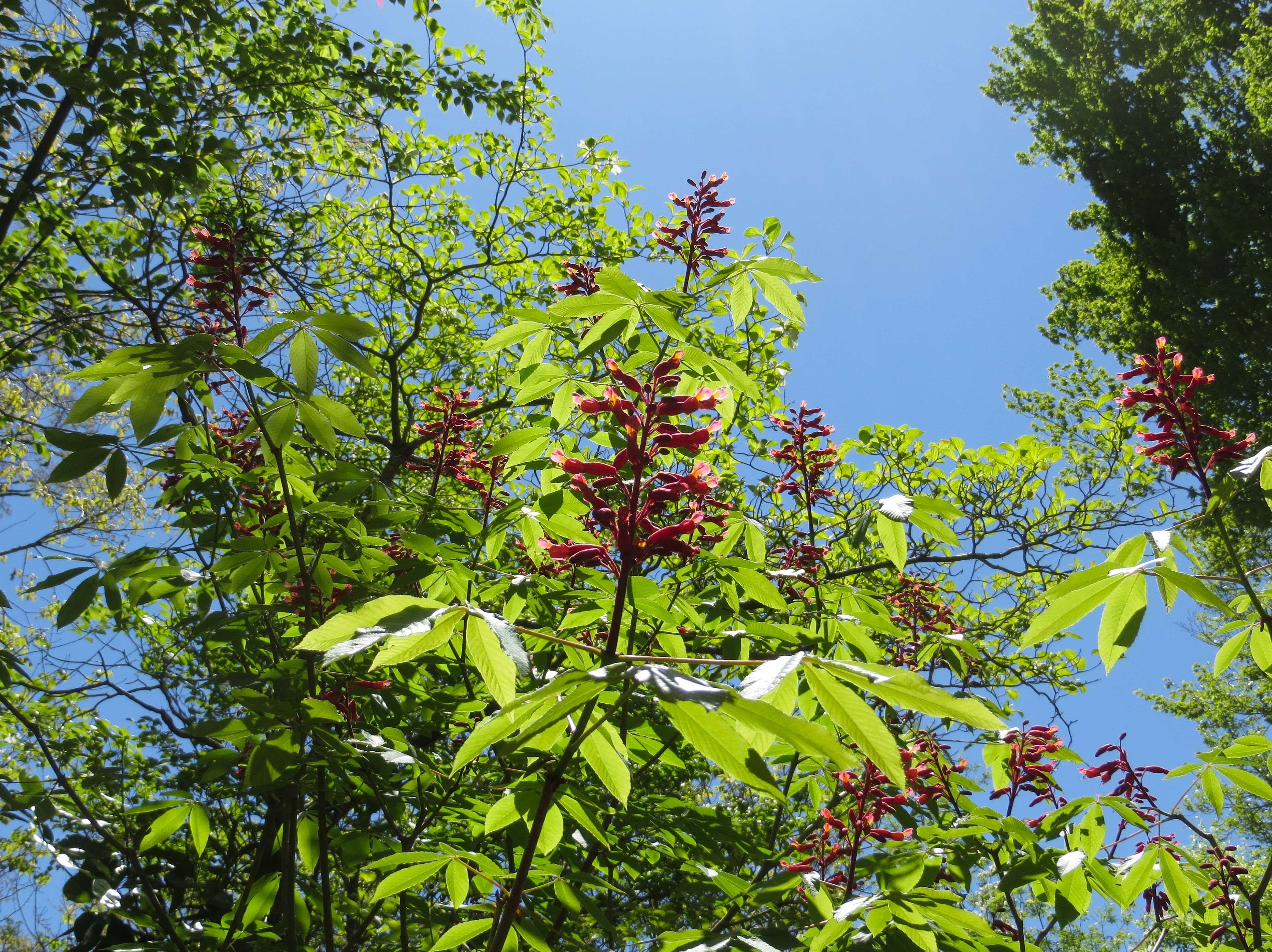
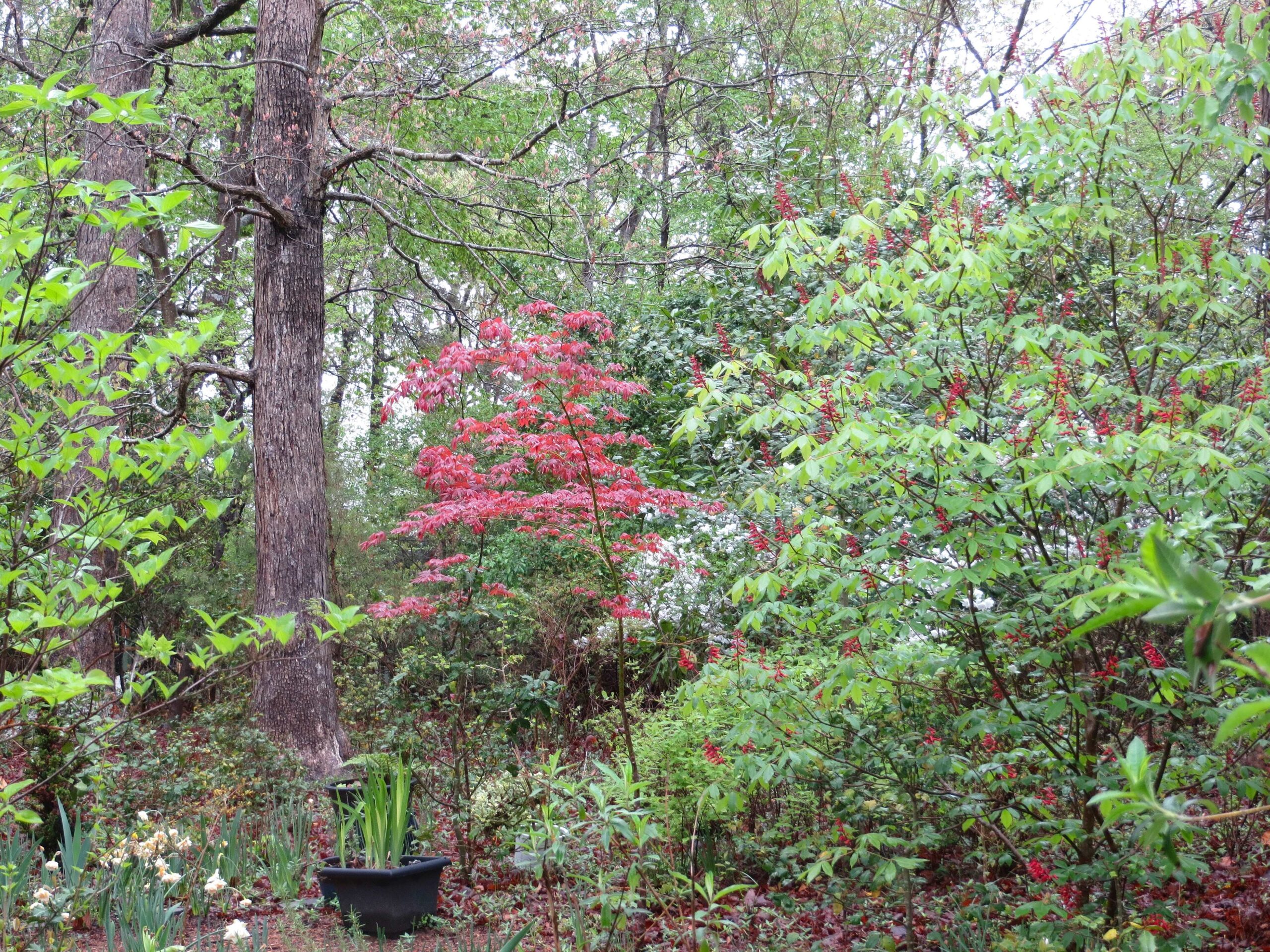
Scarlet buckeye trees need a warmer climate than Williamsburg enjoyed during the Colonial era. They have naturalized northwards in recent years, blooming in time to feed the earliest hummingbirds each spring. The several trees in our yard are all volunteers, likely planted by squirrels hiding nuts in autumn.
The Garden in Motion
Have you noticed that while some plants remain where you plant them, expanding a bit over time but behaving respectfully towards their neighbors, other plants quickly wander about and colonize parts unknown? Whether by stolon, stem, or rhizome, seed or spore, some plants find every opportunity to replicate themselves and crop up in unexpected places. Spring is prime time for finding these little horticultural surprises.
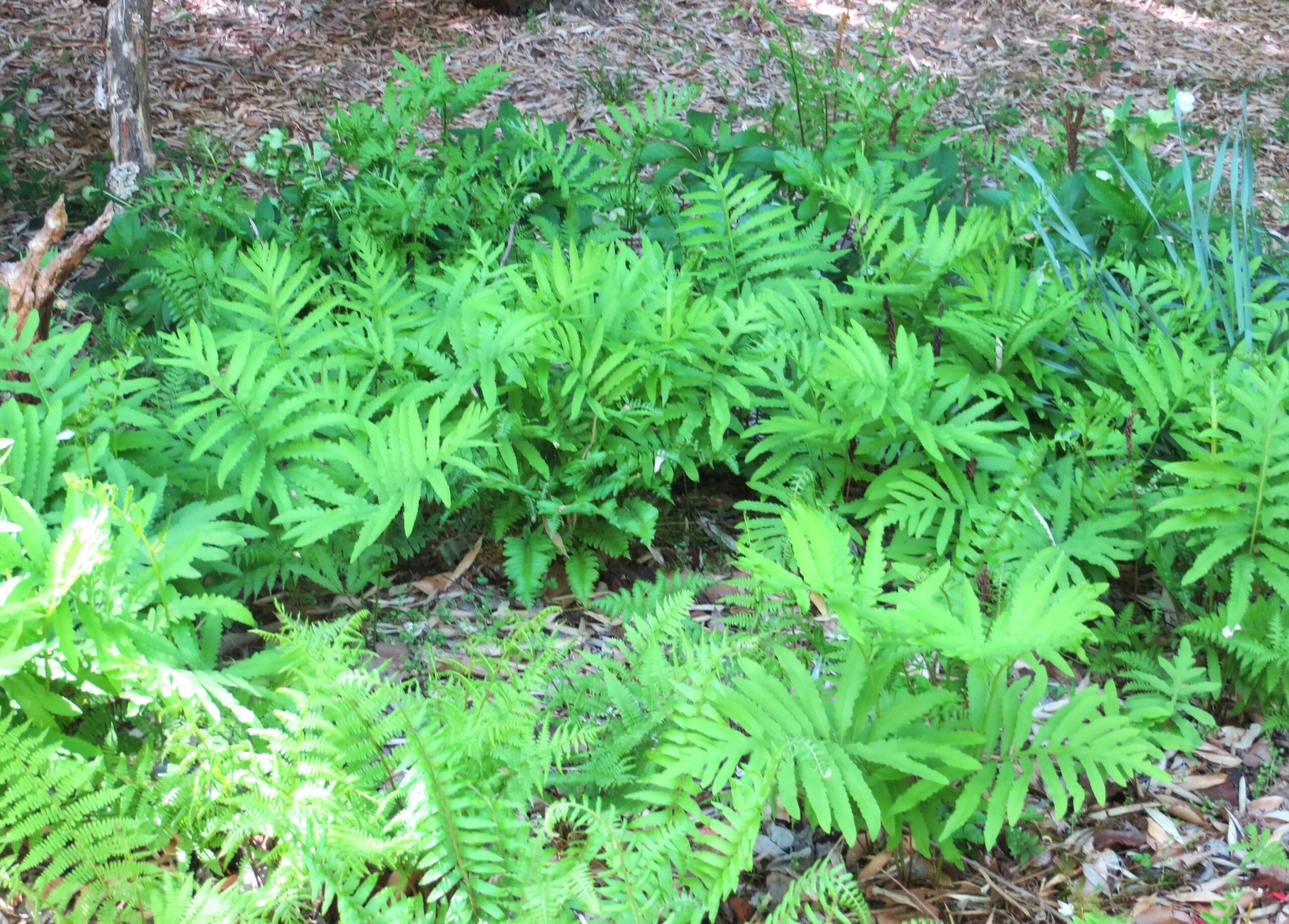
A variety of native ferns, including sensitive fern, Onoclea sensibilis, and Christmas fern, Polystichum acrostichoides, colonize this slope.
I’ve found several sporeling Japanese painted ferns emerging along the edges of paths and even in the lawn this spring. One leaf is poking out of the mossy side of a ‘step’ in an uphill path. A tiny Dryopteris sporeling has unfolded three fronds through the moss under a large fig tree. I watch for these fern babies, as I also watch for hellebore seedlings growing where they might be mown down in a few weeks, and I transplant them to safer spaces.
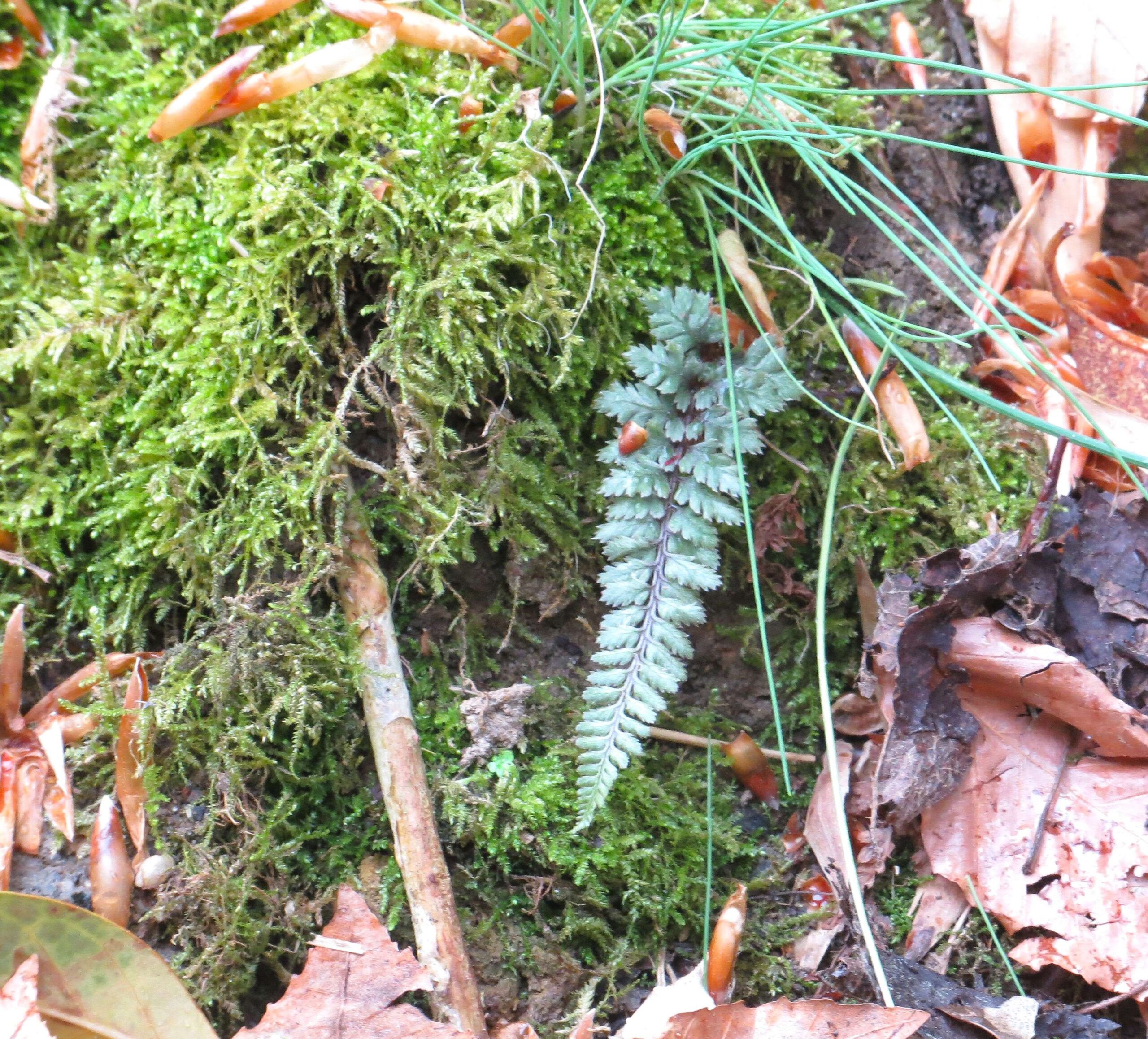
A sporeling Japanese painted fern emerges in a path.
Common Origins
There is no difference in how well these Asian fern species grow in our garden when compared to native species like Christmas ferns, or marsh ferns, which also volunteer wherever their spores find a moist spot to grow. In fact, Japanese painted ferns, Athyrium niponicum, will hybridize with our native Athyrium filix-femina, resulting in the beautiful silvery hybrid A. ‘Ghost.’
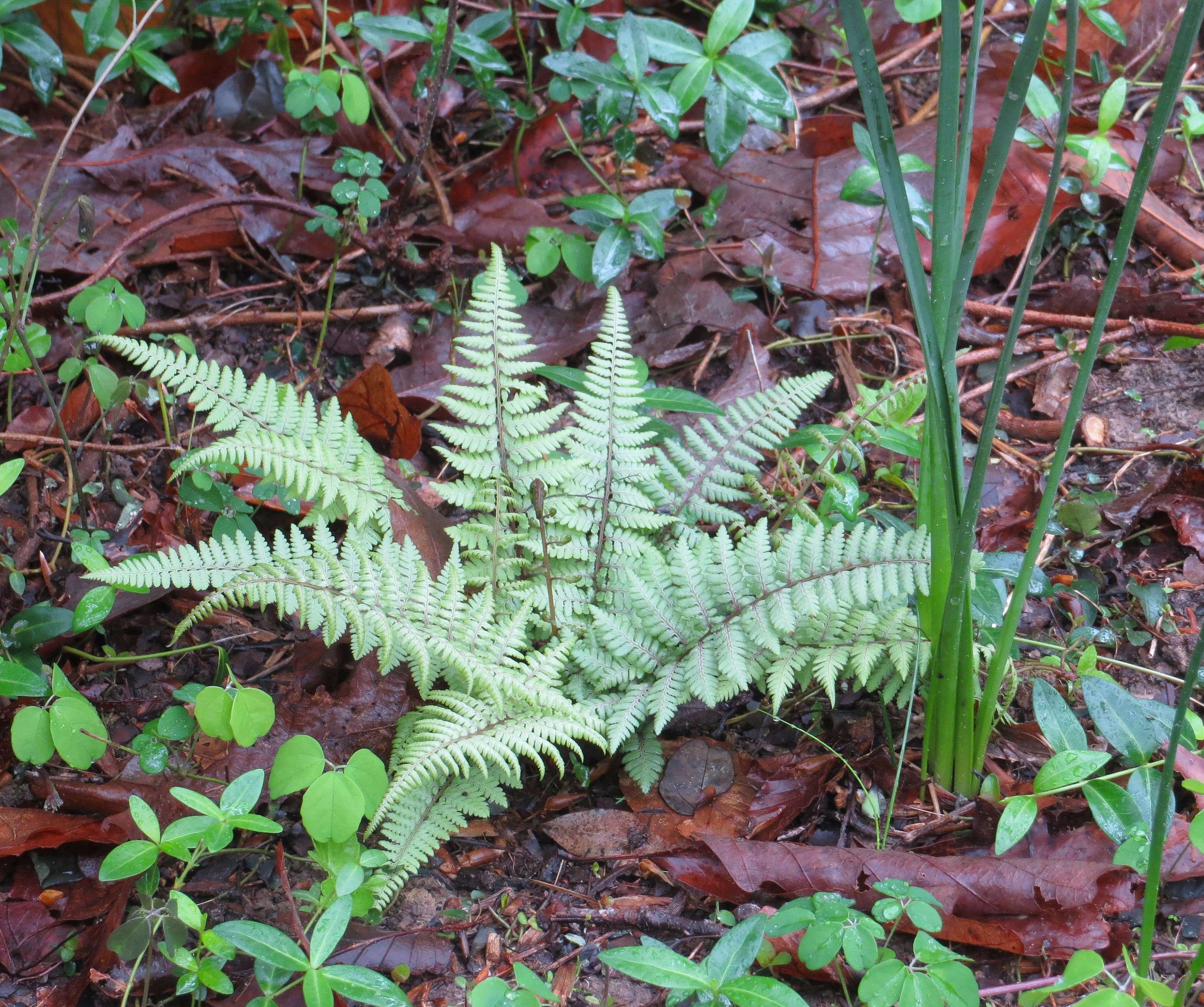
Athyrium ‘Ghost’ is a hybrid between native A. filix-femina and the Japanese painted fern, A. niponicum.
Popular Asian ferns fill the same niches in our gardens as European, South American, or native North American ferns. A fern species will thrive on a variety of continents so long as the plant’s needs are met. Geologists and botanists tell us that closely related plants within the same genus may have first appeared on Earth when distant continents were once joined, and so they share common ancestors. This is true for countless plant species across many genera of woody and herbaceous plants.
Nature’s Generosity
The garden is endlessly generous when allowed to follow its own course. I found five native dogwood tree seedlings growing in a container on the front porch last summer. At the end of the season, I knocked them out of the container and potted up each one separately in a gallon sized pot of its own. They have grown on all winter, developing good roots, and I replanted two of them into part of the fern garden in early April. Red maple seeds rain down in every gust of wind this week, promising seedlings in the coming months. And as I weed and prune in preparation for the new season’s growth I keep coming across seedlings of beech, oak, and hickory. Those are among the climax species of trees in our area. Squirrels and birds plant their seeds each fall while gathering and storing food away for the winter.
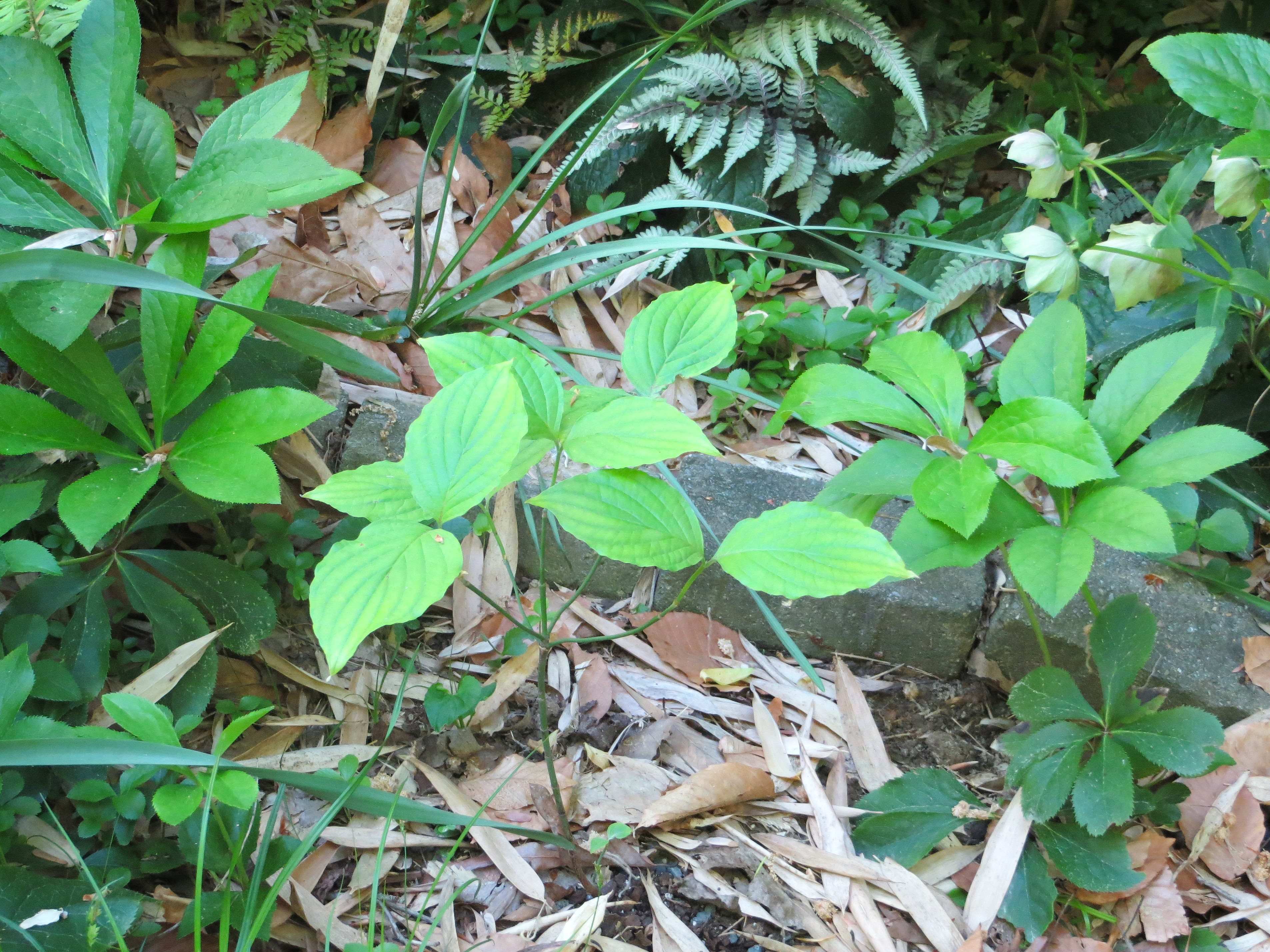
A seedling dogwood tree will grow at the base of this fern garden. Numerous seedlings of Helleborus hybrids grow under the ferns.
And other seedlings appear, too: a tiny Japanese maple, Acer palmatum, offspring of a lovely tree planted here by a previous gardener; a native persimmon, Diospyros virginiana , likely related to my neighbor’s persimmon tree up the street; numerous gumball trees, Liquidambar styraciflua; and a healthy crop of the Asian tree of heaven, Ailanthus altissima . Every seedling invites a thoughtful decision. Is this a desirable tree in this space? Can it grow where it sprouted? Should I protect it, move it, or destroy it? As gardeners, conscious and creative, it is our prerogative to choose what grows in the spaces we tend, and how our plant communities develop.
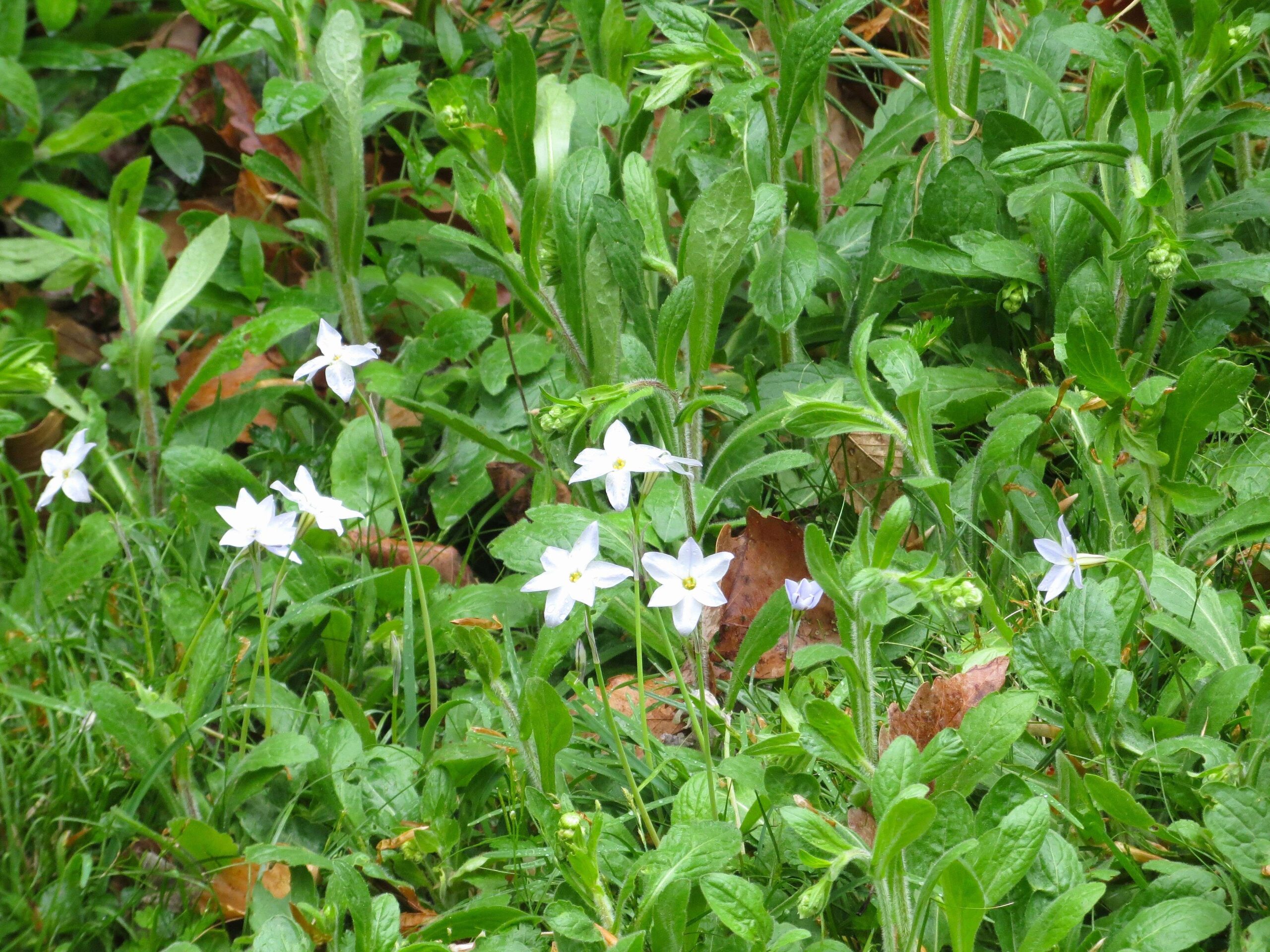
Naturalized Ipheion uniflorum, a South American native which grows from bulbs, emerges in our front lawn alongside native fleabane, Erigeron pulchelllus. The fleabane is pretty in bloom, but spreads itself so much it has nearly taken over the grass and now emerges in several containers. It is beloved by pollinators. This is one of those native wildflowers I pulled as a ‘weed’ when we first came to this garden.
Welcome, Not Welcomed
Of course, there are always plants on our ‘not welcomed’ list appearing along with desirable plants. The weedy tree of heaven, which smells of peanut butter, is one I always remove. Some plants, even desirable natives like Physostegia virginiana or Solidago, soon overwhelm us with their vigorous abundance within a limited garden space. I’m already cutting out vines from shrubs and trees and digging up dandelions from herb containers this spring. We always have too many of certain perennials, like Rudbeckia laciniata, which will grow to 7′ tall. It is gorgeous in August when covered in golden flowers, but I don’t need an entire bed of them.
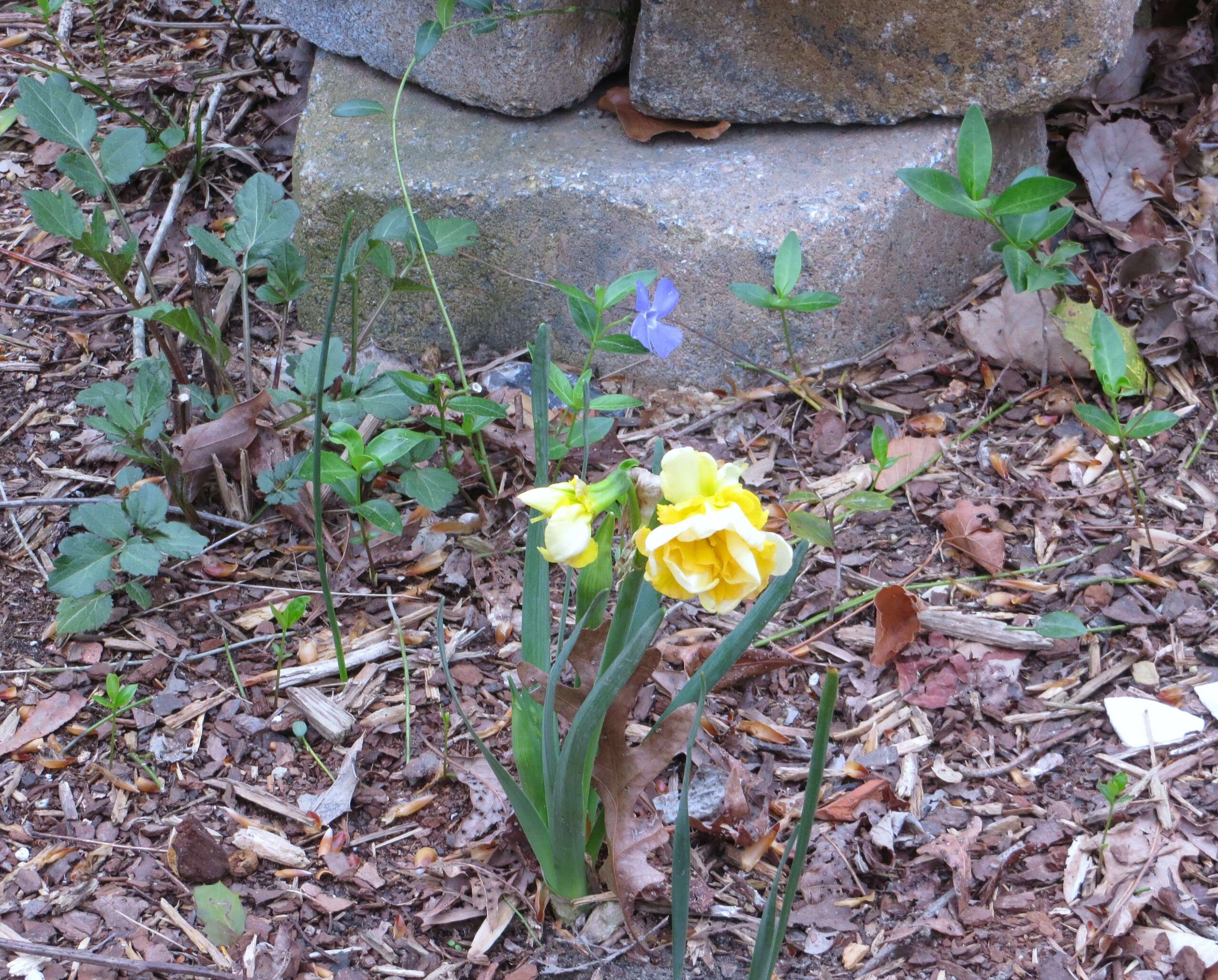
A volunteer Rudbeckia laciniata emerges to the left, alongside blooming Vinca minor. Bees feed on Vinca flowers when they bloom in mid-spring. Daffodils mostly stay where you plant them, expanding over the years into thick clumps. Rudbeckia seed themselves around and Vinca simply runs everywhere!
Perhaps our feelings towards prolific plants, which crop up in unexpected places, are a Rorschach test of our gardening style. Where do we, and our personal wishes, fit into the natural evolution of our garden? How much do we control the space, and how much do we serve as guide and steward of nature’s processes? This is a question I come back to again and again.
The Garden in Motion
As I learn more about the great contemporary French gardener and landscape architect Gilles Clément, who came to see our entire planet as one large garden, I understand more deeply that we, as gardeners, are a part of nature and nature’s processes just as much as the squirrels or blue jays who ‘planted’ those dogwoods and beech trees. Working closely with nature in his own garden, which began as open space, Clément developed the concept of “le jardin en mouvement,” or, “the garden in motion.” He was fascinated by nature’s energy in filling the space with plant life, and his challenge was how and when to insert himself, as the gardener, into nature’s processes.
“To do as much as possible with, as little as possible against.”
Gilles Clément
The Nature We Nurture
Nature includes both the plants that grow naturally in a place and the plants we choose to introduce. It includes the living soil, full of microorganisms, fungi, and invertebrates. It includes both the animals who turn up in our gardens as well as ourselves, the human presence, which transforms a wilderness or a wasteland into a garden. We humans are part of nature, and to assume otherwise is to miss an important concept of garden-making.
Perhaps most importantly, I’ve come to understand that we need some synthesis of the natural flora of a place and the chosen flora the gardener desires- whether that is a tomato, a few herbs, or a peony. We should certainly plant for color and form, food and fragrance, as well as planting a rich tapestry of plants to enrich the ecosystem where we live.
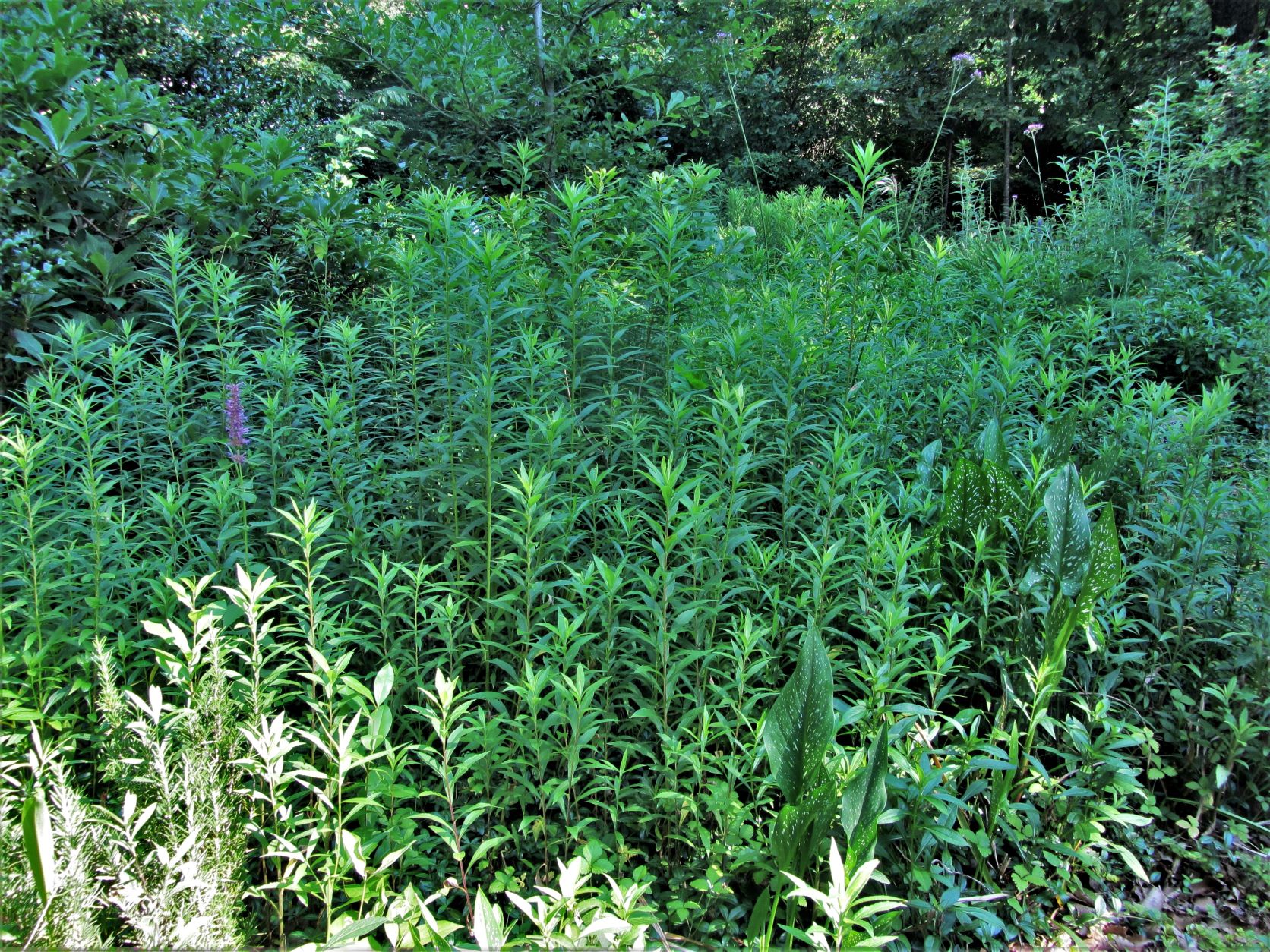
Native goldenrod seeds blew into my yard and took root. They have promiscuously multiplied, crowding out plants I would prefer to grow. These are native Solidago species that are highly desirable for their fall flowers.
Wildflowers or Weeds?
I spent years pulling up ‘weeds’ which I later learned to recognize as desirable wildflowers. “Weed’ is a subjective term, after all. And it applies mainly to plants that we don’t understand, and perhaps to plants we haven’t chosen, and certainly to those growing where we don’t want them to grow. A few of the plants I, or earlier gardeners on this land have introduced or allowed to grow ended up behaving like ‘weeds,’ shading out or pushing out other plants that I want to thrive. Those plants demand our attention to allow other plants the space and resources they require.
Sometimes a little of something seems nice, but at some point, the plant becomes overwhelming. A single volunteer wildflower can colonize a larger and larger space, particularly in a lawn, when left alone. Perhaps that’s why I always carry a pair of secateurs in my pocket! Clément is well known for carefully pruning the ‘volunteer’ trees that cropped up in his own garden into neat hedges and topiary. And yet, Clément reminds us “to do as much as possible with, as little as possible against.” In his own work, this mean avoiding pesticides and chemical fertilizers. He seeks to work with nature and her processes and to avoid further harming the environment.
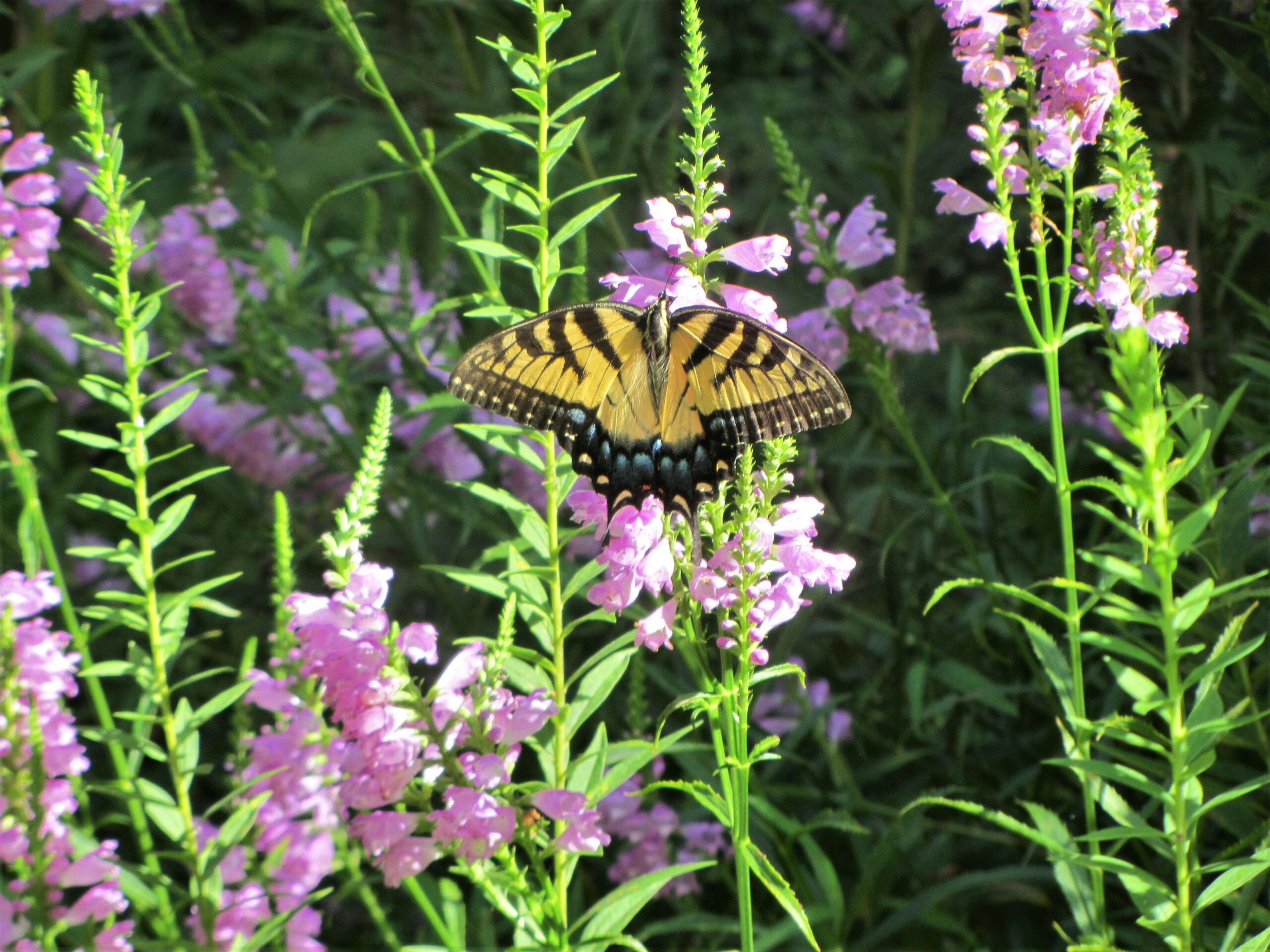
An Eastern Tiger Swallowtail butterfly feeds on obedient plant, Physostegia virginiana.
Walls and Fences Can’t Contain Them
Of course, any chemicals we choose to use won’t stay where we use them and will likely have unintended consequences for life forms we won’t even consider. Wind and rain move these usually toxic substances beyond the boundaries of our own properties. A next door neighbor was once attacking poison ivy in their yard with a popular spray herbicide. They used so much we could smell it inside our home. And the toxic spray was drifting onto our grape arbor and vegetable patch. The spray affected much more plant life than they intended, we all breathed the toxic substance, and apologies were of little use at that point.
We may not think about the pollinating and native insects like butterflies and bees, their larvae, spiders, and even the many birds harmed by the chemicals we sprinkle or spray to target some perceived threat to our lawn or shrubs. We may never see the evidence of their demise. And in coastal Virginia, those chemicals may wash into local waterways and cause additional harm to wetlands creatures and ecosystems. Even too much fertilizer washed into waterways stimulates the growth of algae and upsets the balance of streams and ponds.
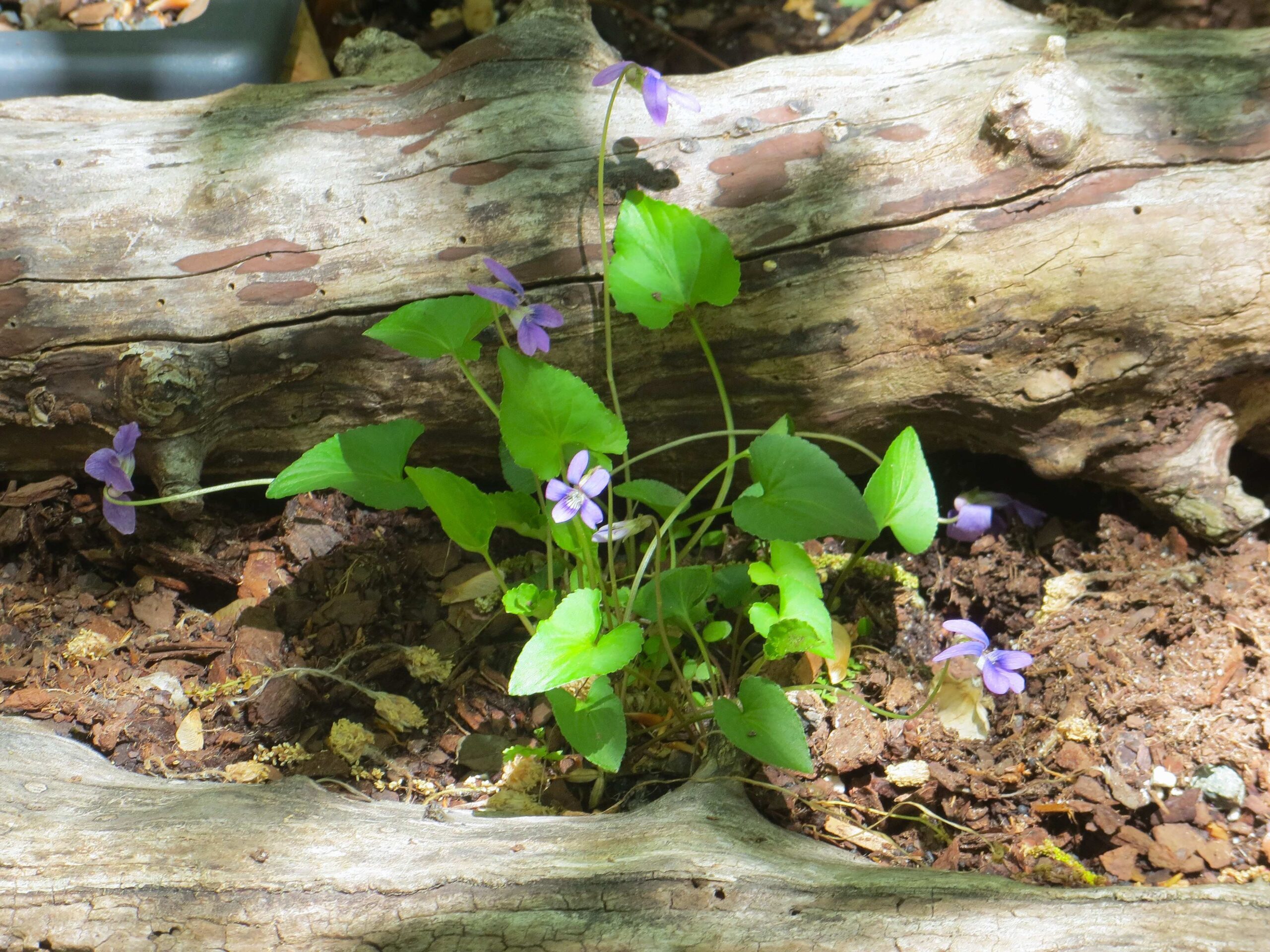
Common native wood violets self-seed throughout our yard. I transplanted this clump into a new ‘stump garden’ bed bordered by pieces of a fallen apple tree. Reusing fallen wood help recycle the nutrients in the wood back into the garden while providing habitat for insects and other small animals.
A Planet in Motion…
As soils, wind, water, seeds, and spores move continuously, so our climate is also in flux. The poles wander, the sun’s energy varies, and humans transform stored carbon into atmospheric gasses, trapping solar heat in land and sea. We are in a warming trend at present, but a massive volcanic eruption or an asteroid strike could fill the sky with ash and debris, initiating another mini-ice age. It has happened before. Plants and animals respond to these climatic shifts by moving, if they can, and dying out if they can’t. Maybe you have lost a few plants in recent summers, as have I, as a result of too much heat and too much, or too little rainfall.
The Asian Origin of Oaks
This is the way of things on Earth. Fossils demonstrate that the earliest ancestors of the beech, or Fagaceae family, emerged in Asia during the Cretaceous period, around 100 million years ago (mya). Many tree families currently considered native to North America originally emerged in Asia, and over long sweeps of history moved into North America over the land bridge under what is now the Bering Strait. The first recognizable oaks, members of the genus Quercus, emerged around 56 mya, when the climate was much warmer than it is today, in what is now Northern Canada.
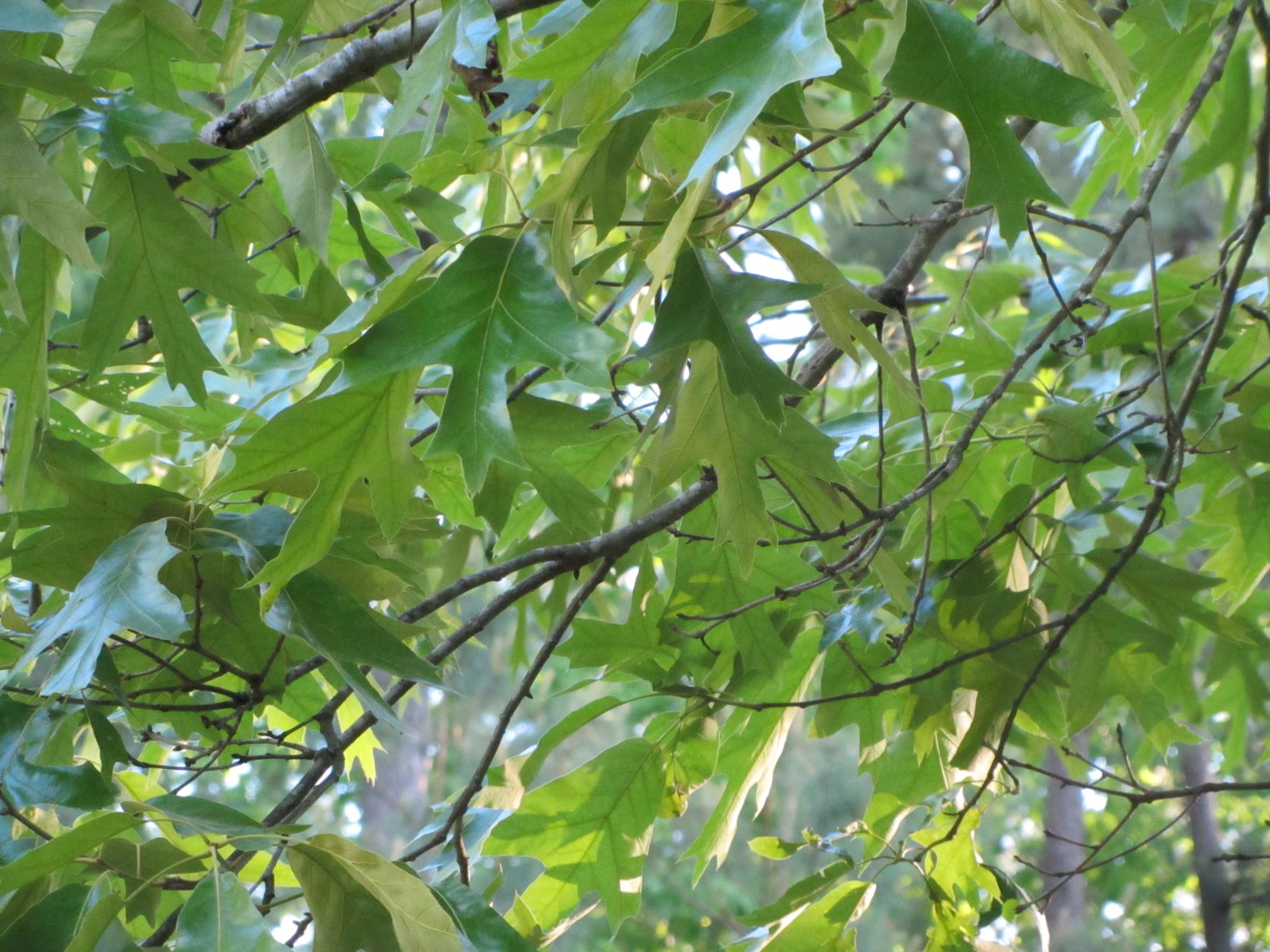
Q. palustris, pin oak, is a member of the red oak group.
As the climate cooled again, descendants of these first oaks moved south and spread across the continent, and, by 30 mya, the various oak groups developed in response to varying environmental conditions. Oaks eventually spread across the North Atlantic land bridge into what is now Europe. The movement and differentiation of tree species continued in response to climatic changes. Quercus species we know today, including southern live oaks, Q. virginiana, grew in southern North America by at least 11 mya. Oaks, like other trees, need a particular combination of minimum winter temperatures and annual rainfall to survive.
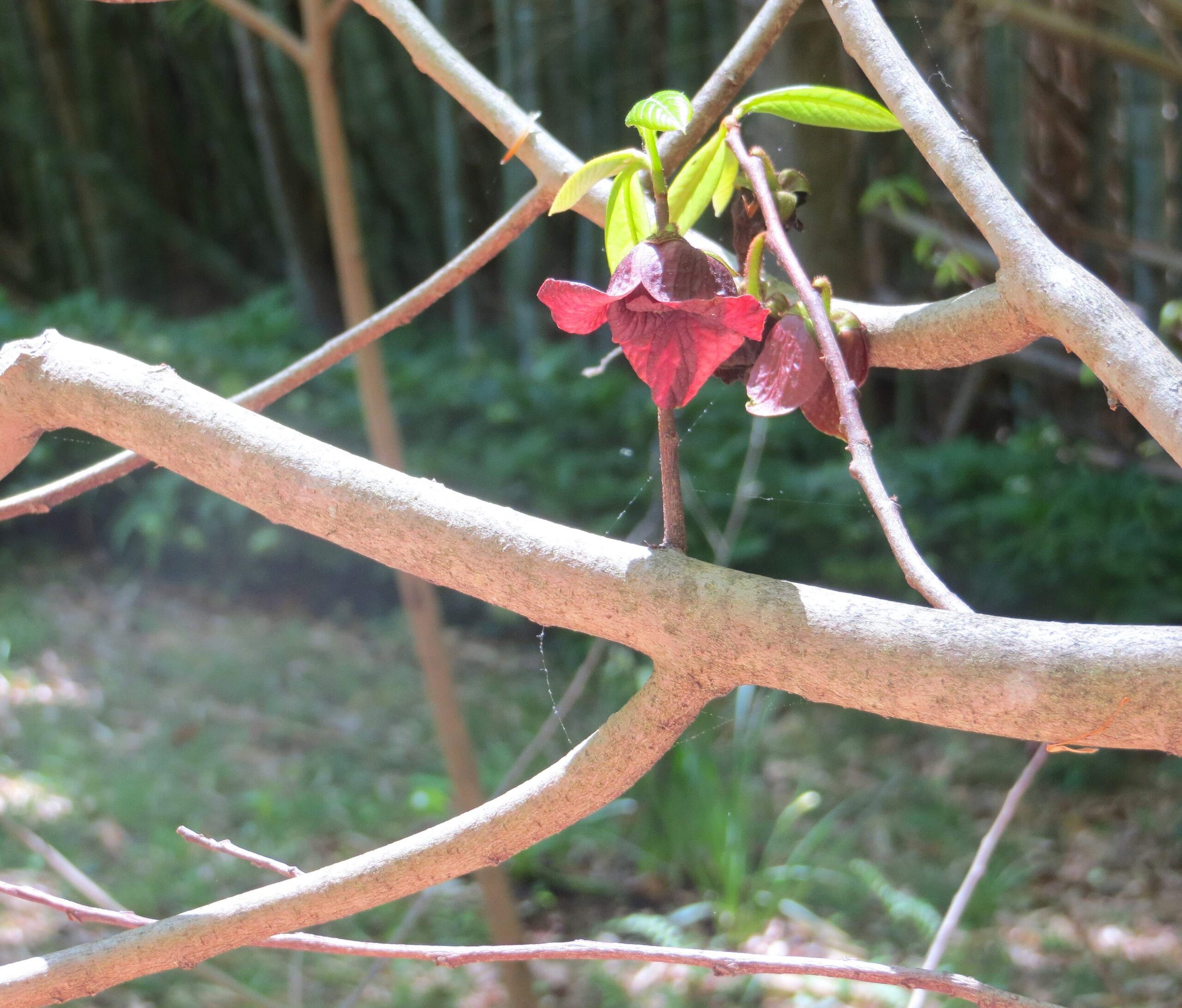
A pawpaw tree in bloom.
…. Leads to Climate Zones in Motion
The comfortable range for certain trees and other plants to grow well is moving northwards and has been for at least two centuries now. That is why scarlet buckeye, Aesculus pavia, and Southern Magnolia have naturalized in our area even though they grew south of Virginia during the Colonial era.
Other trees native to our region, like the beautiful Canadian hemlock, Tsuga canadensis, now struggle in the hot, humid summers of coastal Virginia. It grows in Zones 3-7, and we are now considered Zone 8 due to our warming winters. A local garden center has beautiful lilac shrubs in their displays this month. Yet lilacs, Syringa spp. and hybrids, hardy in Zones 3-7, are one of those beloved flowering shrubs that prefer cooler temperatures. Anyone planting a lilac in our region now will find that it struggles to establish and will likely need afternoon shade and extra care during dry summer weather.
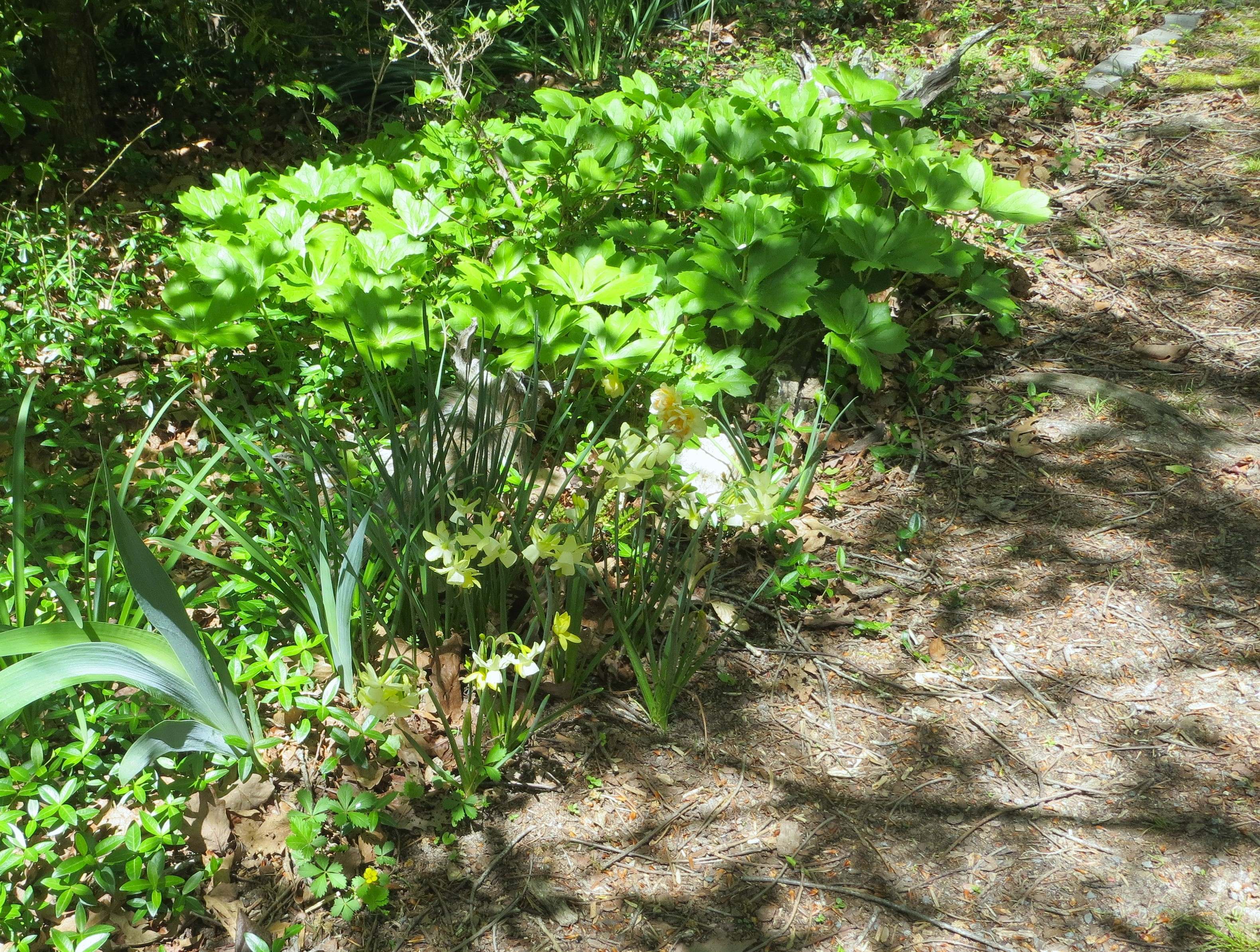
Narcissus bloom alongside a naturalized stand of mayapples, Podophyllum peltatum. Native strawberries, Fragaria virginiana, also bloom yellow and will later feed small animals. Deer have grazed the struggling Azalea to a point where it is barely still alive.
Choosing Plants With Purpose
Sometimes we find that plants native to other continents serve our specific needs even better than plants indigenous to our own. They may have some special qualities that make them useful, or even preferable, for our current conditions. One quality that I prize is resistance to deer grazing. There are many European perennials like Helleborus spp. and hybrids, Narcissus spp., Salvia spp. and other members of the mint, or Lamiaceae family, that grow well in our climate and resist grazing. These imported and hybridized plants still mesh with our local ecosystem, producing nectar and pollen for various pollinators, managing run-off, absorbing carbon, holding the soil against stormwater, and purifying the air. These plants may naturalize without becoming invasive.
Other plants are prized for their drought tolerance, their wood, or their ability to provide nutritious food. Humans have a long history of seeking out useful plants and learning how to grow them in new places, far from their original environments. This history extends well beyond the European ‘Age of Exploration’ which brought Europeans to the Americas in the 16th century, and includes all of the plant seeking travelers, merchants, and wandering groups of early humans well back into our pre-history.
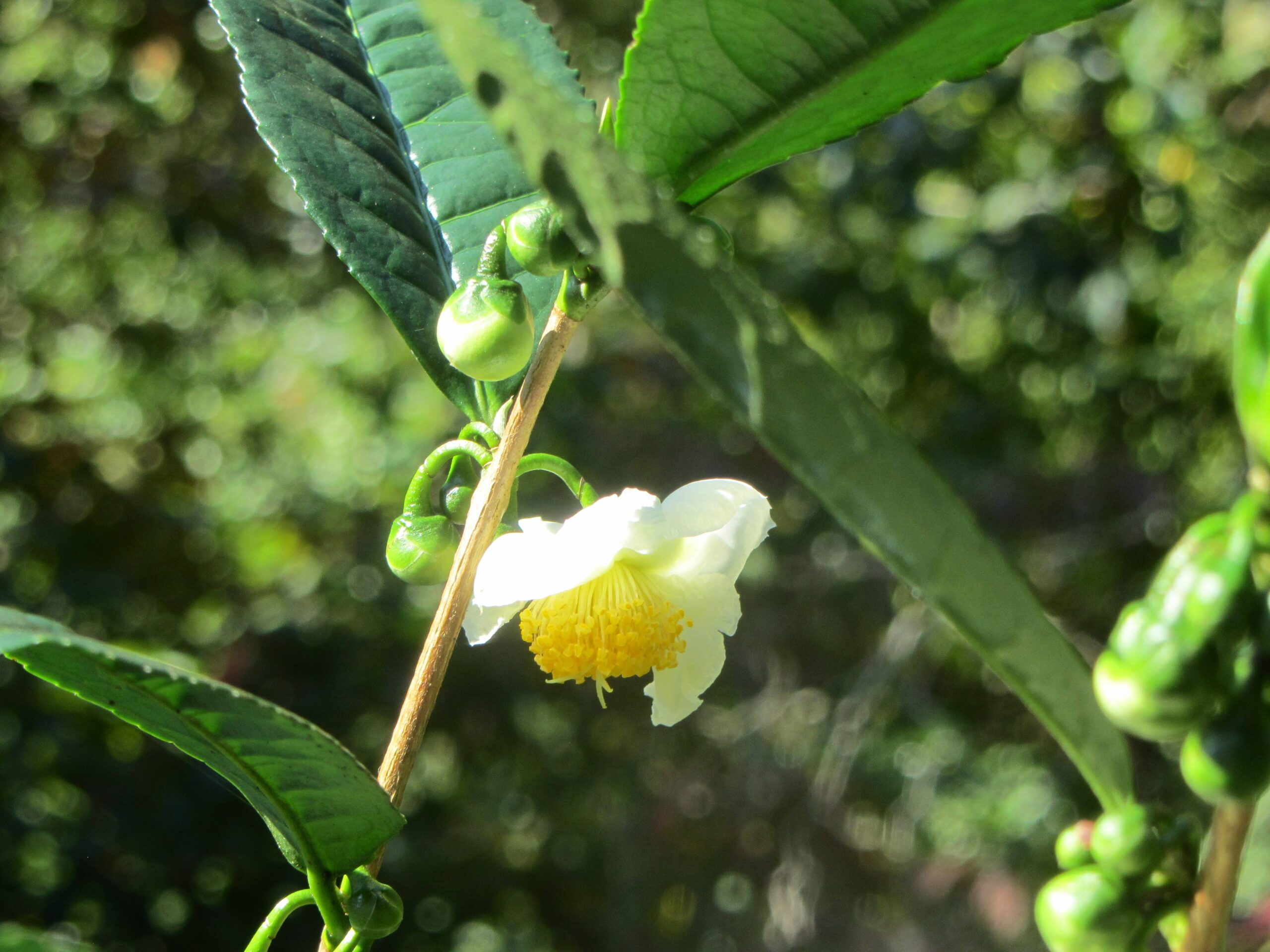
Camellia sinensis, ‘Brew T Full’ blooms in late September and October. It is a hybrid tea Camellia suitable for our climate.
Recent archeology demonstrates that indigenous Americans moved various trees, grasses, crops, and other plants from one region of our continent to another to serve their own needs. The pawpaw tree, Asimina triloba, is just one example. It was carried far west of its native range to establish new orchards by pre-Columbian native Americans. Plants like Ilex vomitoria were traded as valuable commodities between regions and cultural groups in North America. Other ancient people around the planet selected and transported useful and beautiful plants from region to region, too.
Echoing the Planetary Garden at Home
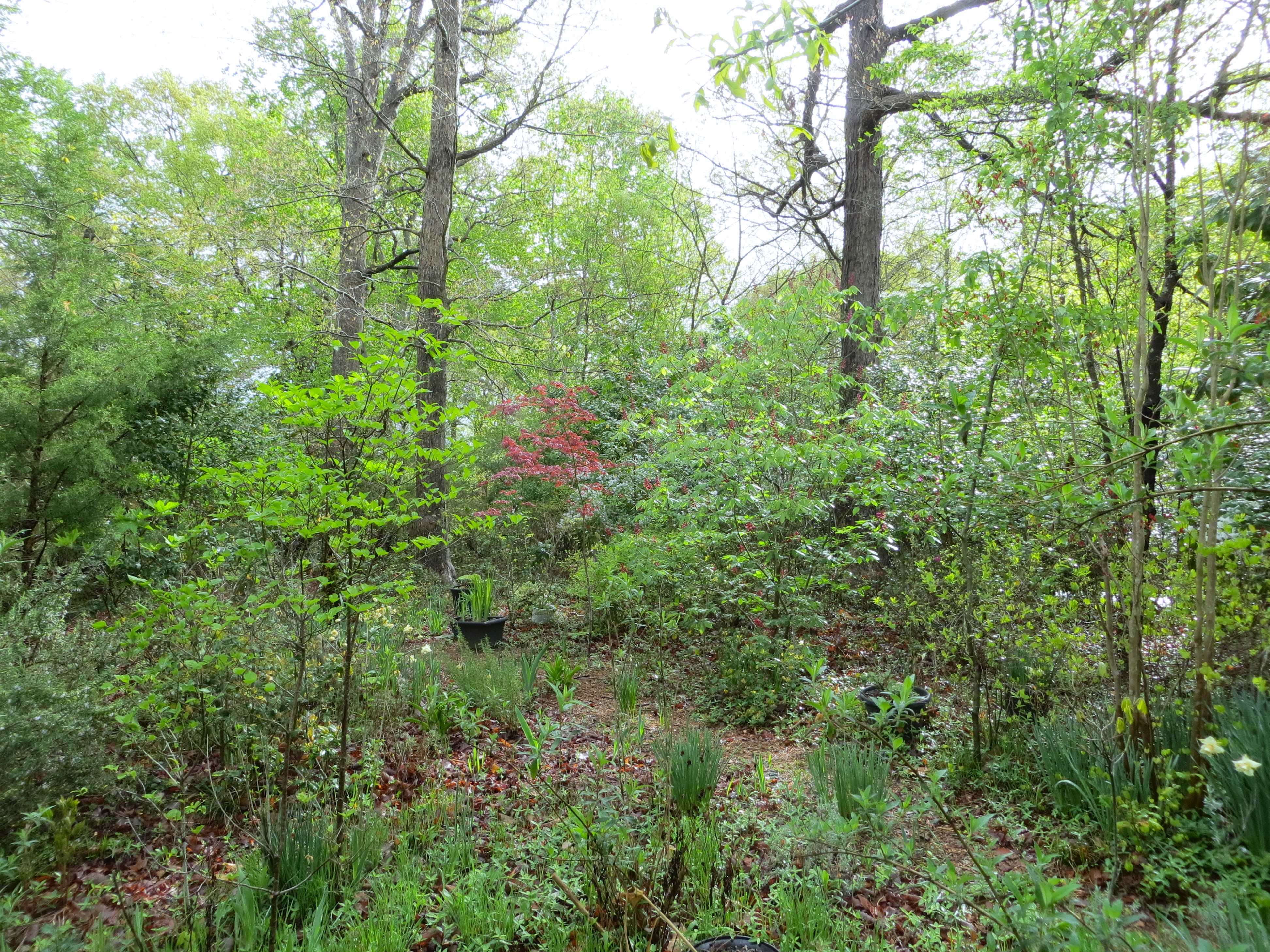
Our own personal gardens simply reflect the greater ‘Planetary Garden’ when we allow plants to come and go, move beyond where we plant them, naturalize, and grow into new configurations over time. Just as nature goes through a series of ‘successions’ of growth from field to forest, so our own gardens will pass through many stages as they mature towards the native climax community of the area. Our climax community is a forest composed primarily of beech, oak, and hickory trees. Regular mowing of lawns and trimming of hedges stops this natural process, freezing the space in an early stage of natural succession, more like a meadow or a savanna. And it also greatly reduces the numbers and types of animals the space can support.
We can encourage nature-sown seedlings to emerge by using ground cover mulches of wood chips or gravel in open, sunny areas of our yard. A variety of seeds will blow in, or will be brought in by small animals. There may also be seeds already ‘banked’ in the soil that will germinate when conditions are favorable for them. We then find an interesting challenge to identify these seedlings and decide whether or not to allow them to weave into our existing plantings.
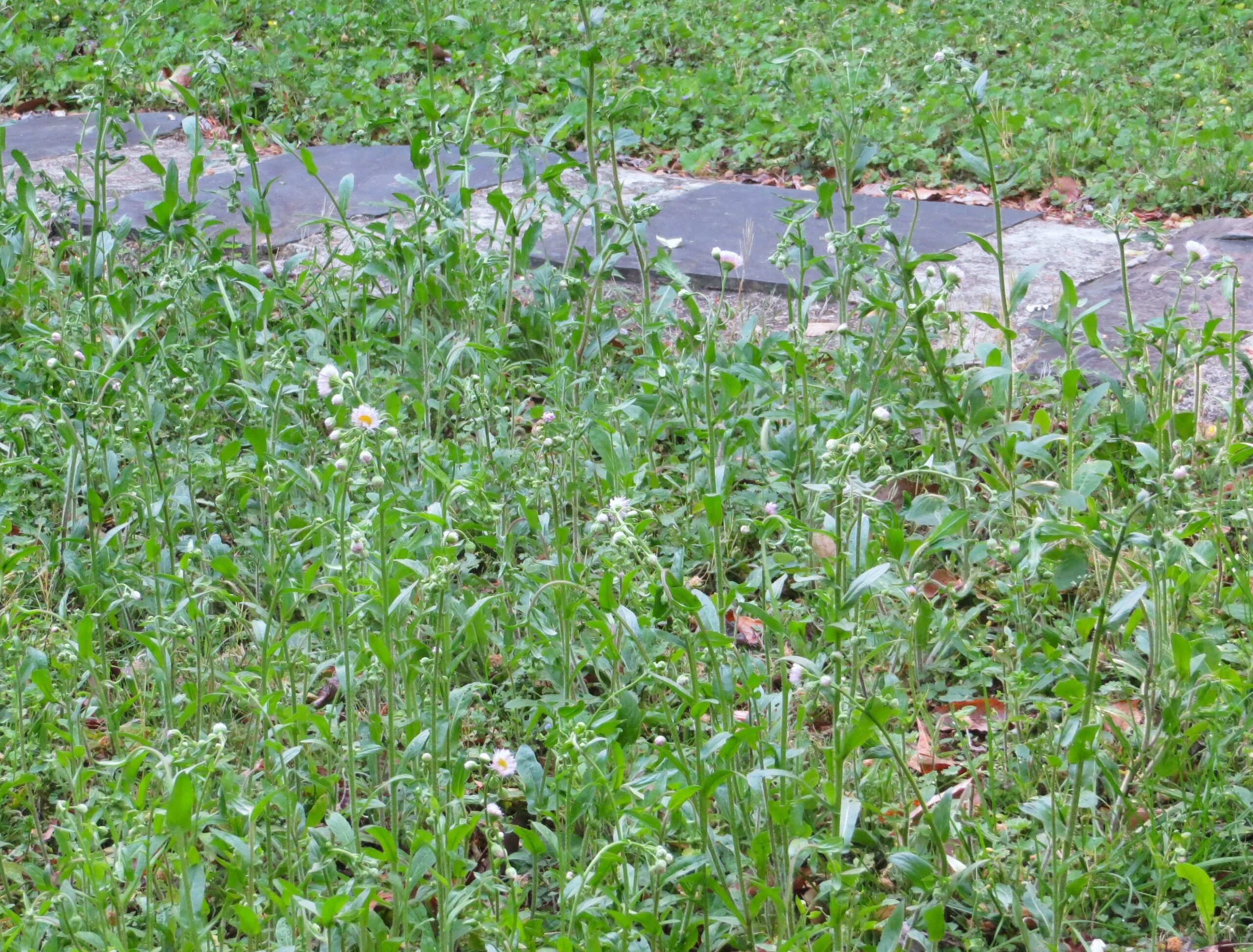
Bees and other insects feed on blooming fleabane, Erigeron pulchelllus, which has overtaken part of our front yard. This native wildflower forms dense stands when left alone to spread. It can be mown down in early summer, once the first round of flowering has finished, without harming the plants.
Biodiversity of plants in a garden supports biodiversity of animals and increases the richness of the web of life exponentially. Biodiversity also provides life insurance, of a sort, so that plant life can adapt and adjust as conditions change. Plants can naturally hybridize, without human intervention, where there is a variety of genetic material available. They can adapt and improve themselves, which is the process that has allowed for the improved ‘selections’ of plants that exhibit desirable characteristics, which we enjoy today.
The indigenous native plants that grew on our land before it was developed may no longer be able to live here because the soil, light, and maybe even the available water have all been transformed during our community’s development. We may need to select different plants that can live in the current conditions our yard provides. Restoring the original conditions, if we want to do so, may take decades of careful planting and enriching the new topsoil with organic matter.
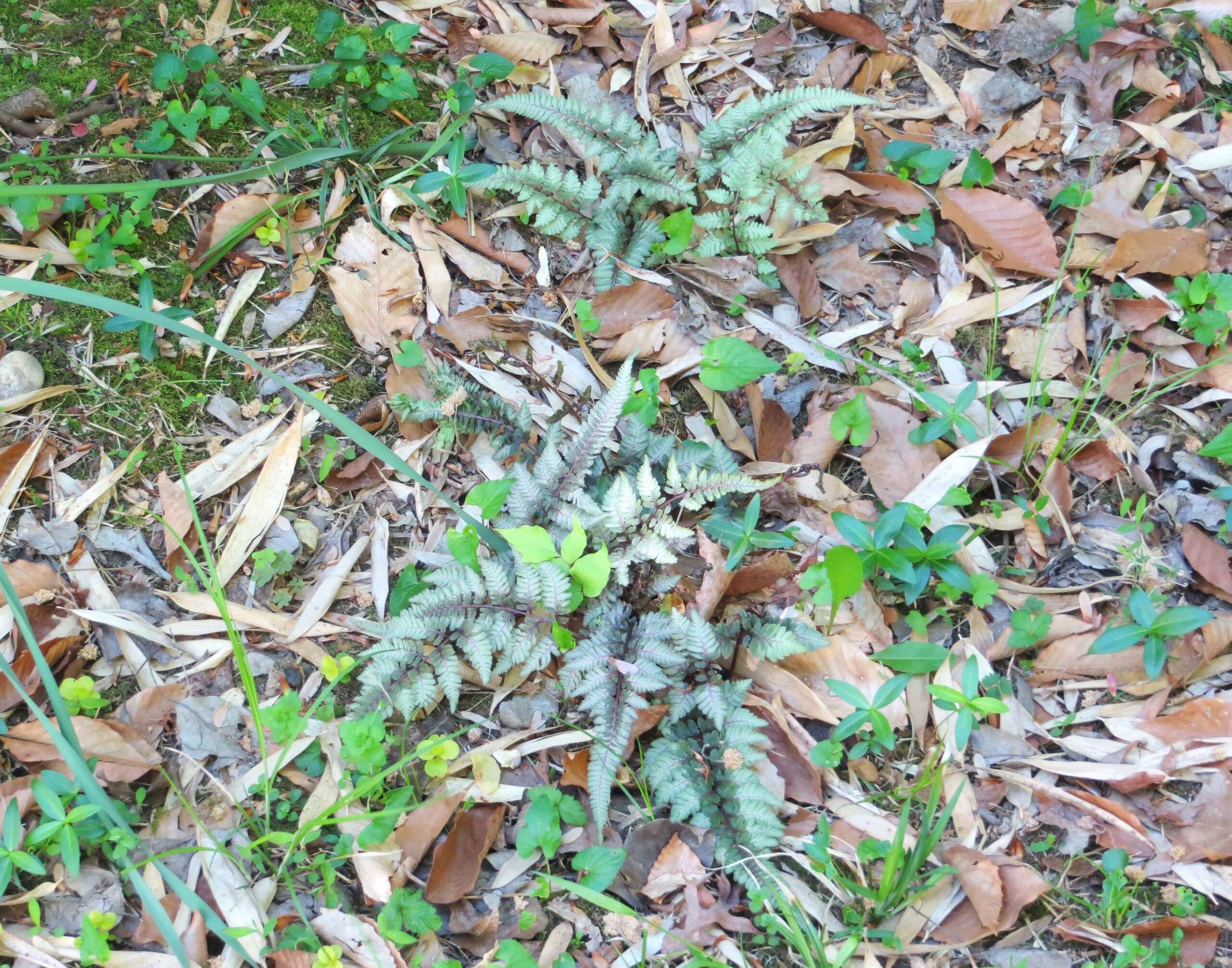
Self-sown sporeling ferns, wildflowers, vines, moss, and grasses appear along the edge of a shady path.
Are We Open to Partnership with Nature?
I am especially happy to discover a plant that I appreciate appearing in an unexpected, yet appropriate place. A new stand of pawpaw trees has taken root and climbed up our ravine to grow where I can easily reach any fruit that develops. And I also found a new pawpaw seedling growing in a sunny spot a distance from that stand to serve as a pollinator. Discovering new plants growing in appropriate places shows me nature’s intelligence at work. Nature is a full partner in this ongoing experiment in making a thriving and prolific garden. Whether nature’s forces provide a new expanse of moss, a baby fern, a seedling tree, or a flowering perennial; it is a gift, and evidence of the power of cooperation with the creative spirit of our shared Earth.
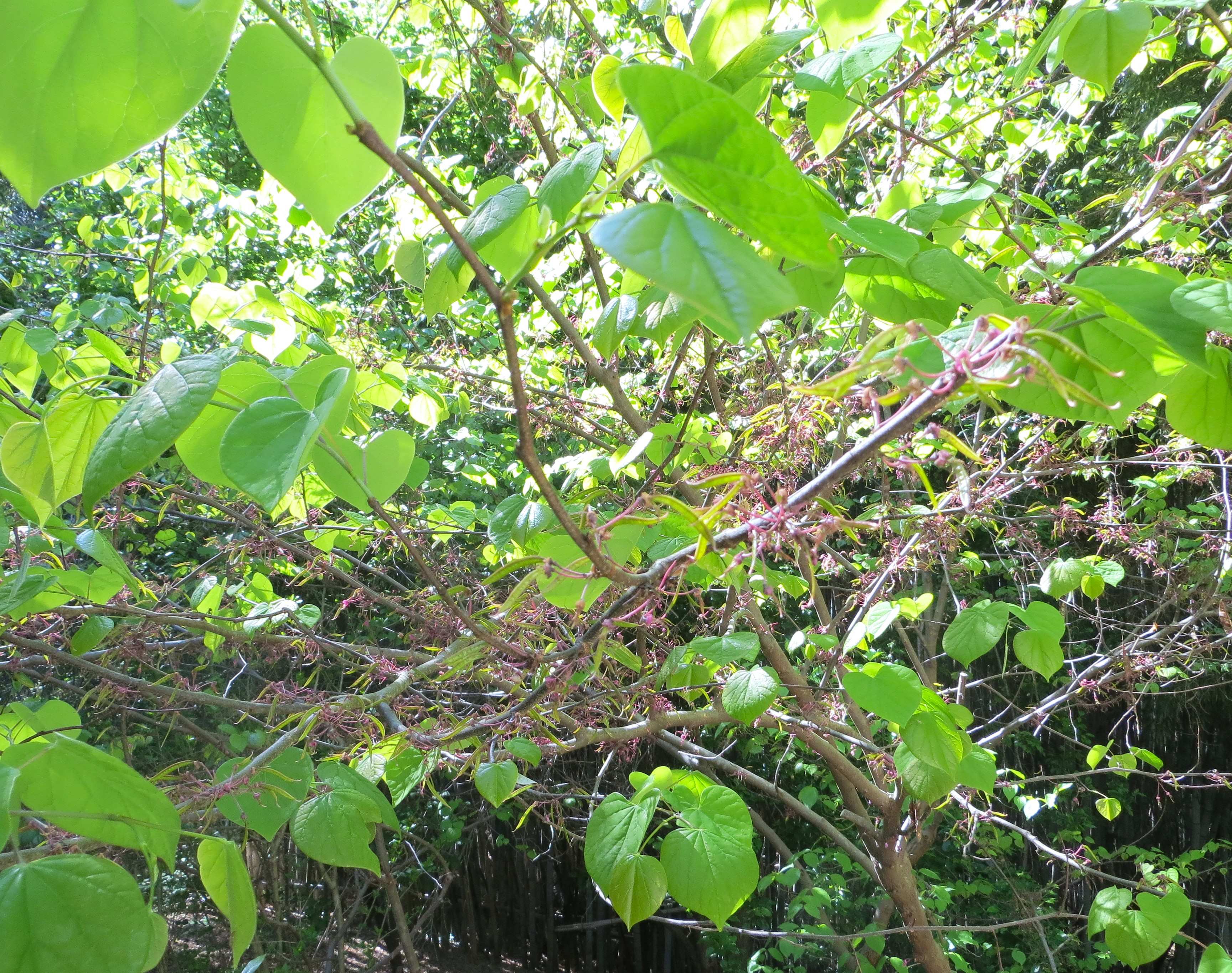
Seedpods form on Eastern redbud as its flowers fade. Each pod may holds several edible seeds. Some may germinate into seedling trees in the coming years, ensuring the next generation of redbuds.
All photos, unless otherwise credited, by E. L. McCoy