The Secret Lives of Roots
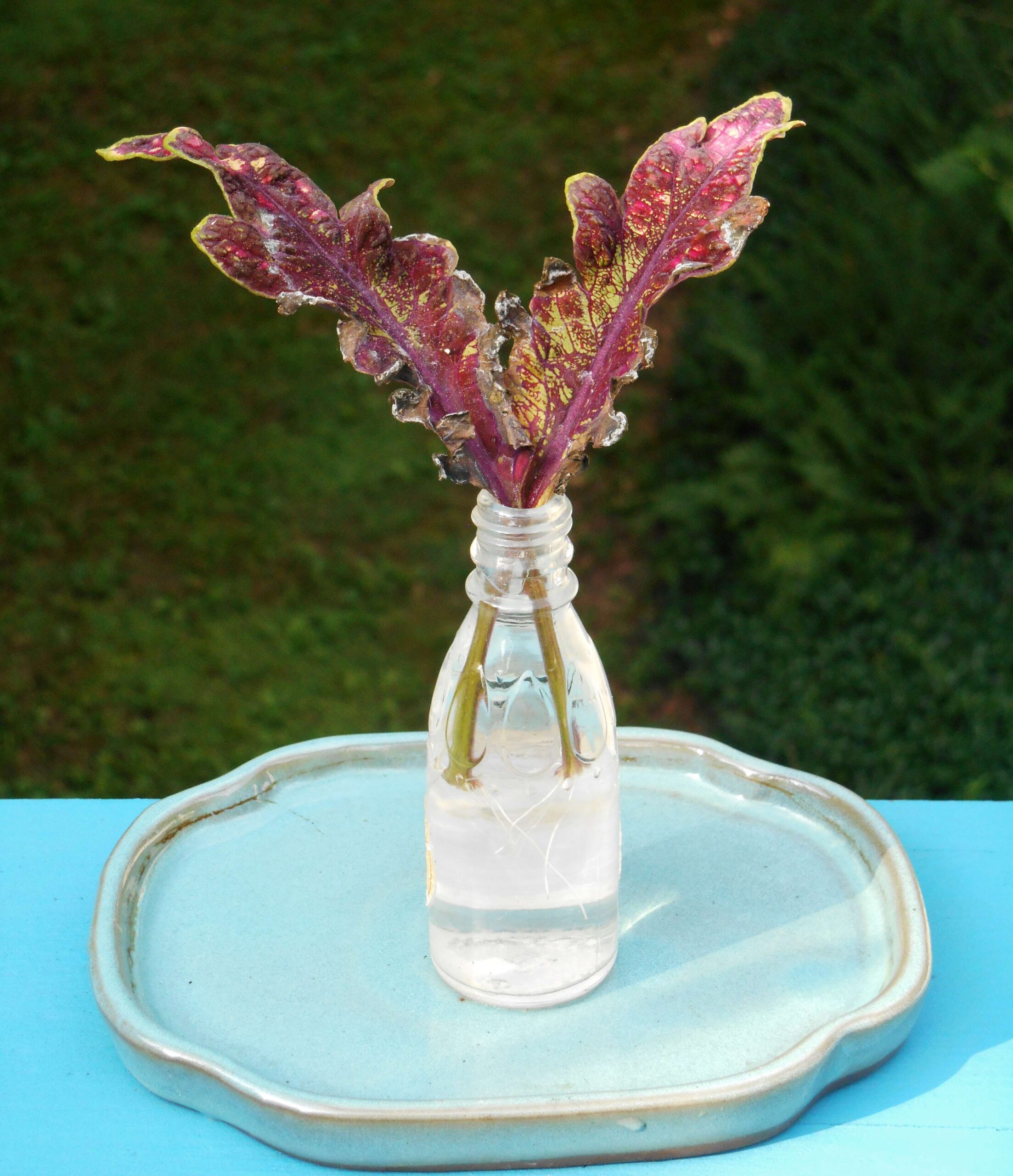
Some leaves, like Coleus, Begonia, and Caladium will grow new roots in water.
A display of striking, contemporary glass vases waited on the counter where I paid for my bulbs in the Heath family’s Bulb Shop in Gloucester last week. A Hyacinth bulb nestled in the curves of one of them; with thick white roots emerging from its base reaching into the water below. These were tall, crystal clear vases designed for forcing bulbs indoors during the winter. Their height allowed room for the bulb’s roots to grow freely, as they do in the earth, without getting cramped and tangled before the flowers bloom. The vase’s design exhibits the beauty of roots, which last for months, in addition to supporting the growing plant and displaying the bulb’s eventual flowers.
Manifesting New Life
All gardeners work with nature and natural processes to manifest something in the world that was previously absent. An empty flowerpot or a vacant plot of land is a challenge, sparking our imagination to dream up how to fill it with productivity and beauty. Some of us dream up tomato vines covered in ripening red orbs. Others dream of apple trees, or peach trees, hanging with juicy fruits. Some bury pieces of brown potato, or scales from a garlic bulb, or tiny seeds, expecting the earth to produce abundant vegetables to feed our families in seasons to come.
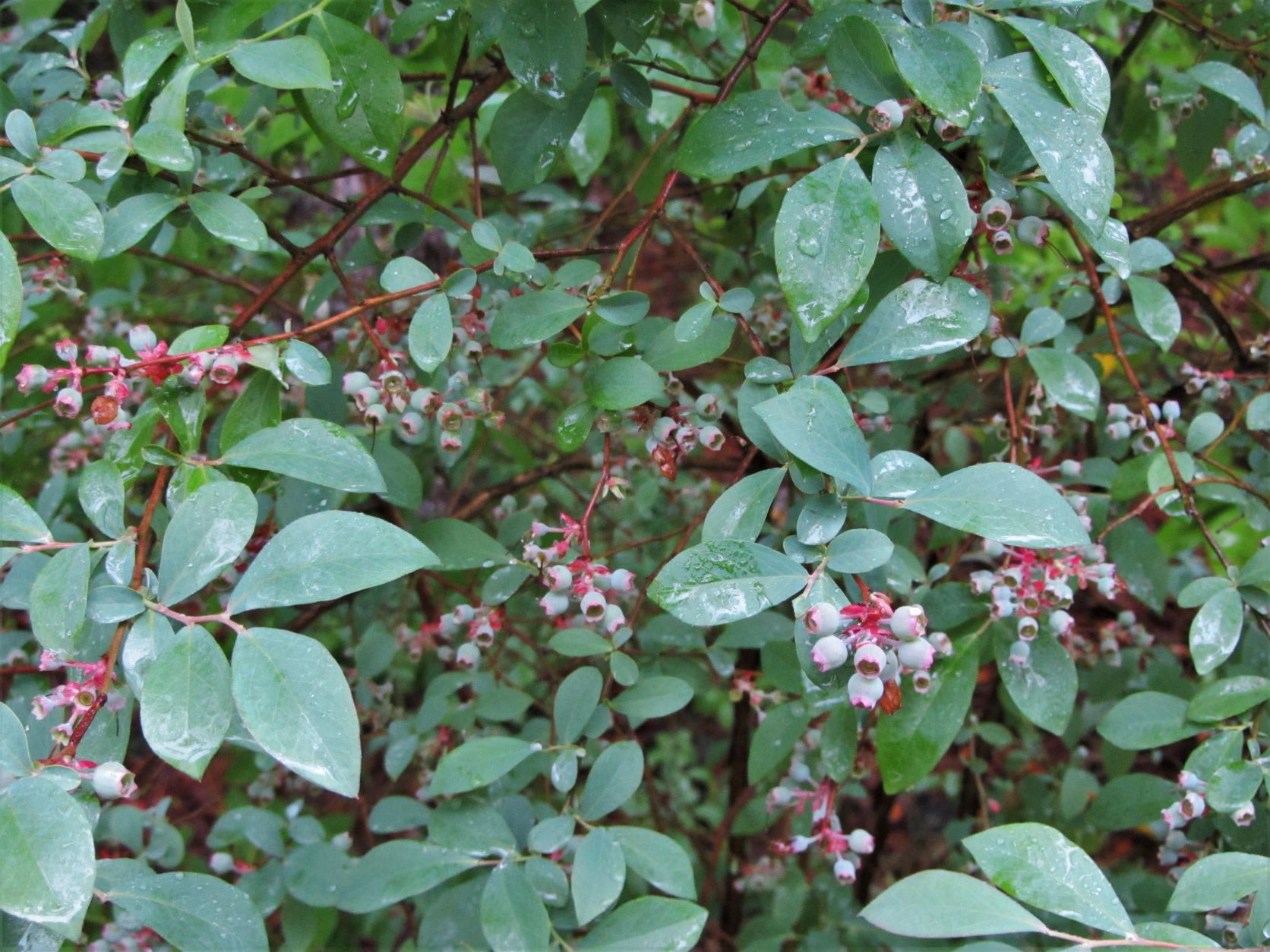
Blueberries, huckleberries, and other Vaccinium species support wildlife as host plants and as fruit bearing shrubs.
Now that most of us have access to good grocery stores, our gardening focus often shifts from planting our own food to planting lush beds of flowers to feed ‘the pollinators.’ We dream of all the flowering plants that draw in butterflies and hummingbirds, bees and wasps, and even tiny beetles and ants. We plant sapling trees to produce drupes and nuts for songbirds. We plant meadows and pots, borders and baskets with the intent of inviting more animal life into our outdoor spaces. Our plantings support the local ecosystem and offer an oasis of life amidst our increasingly paved and developed communities.
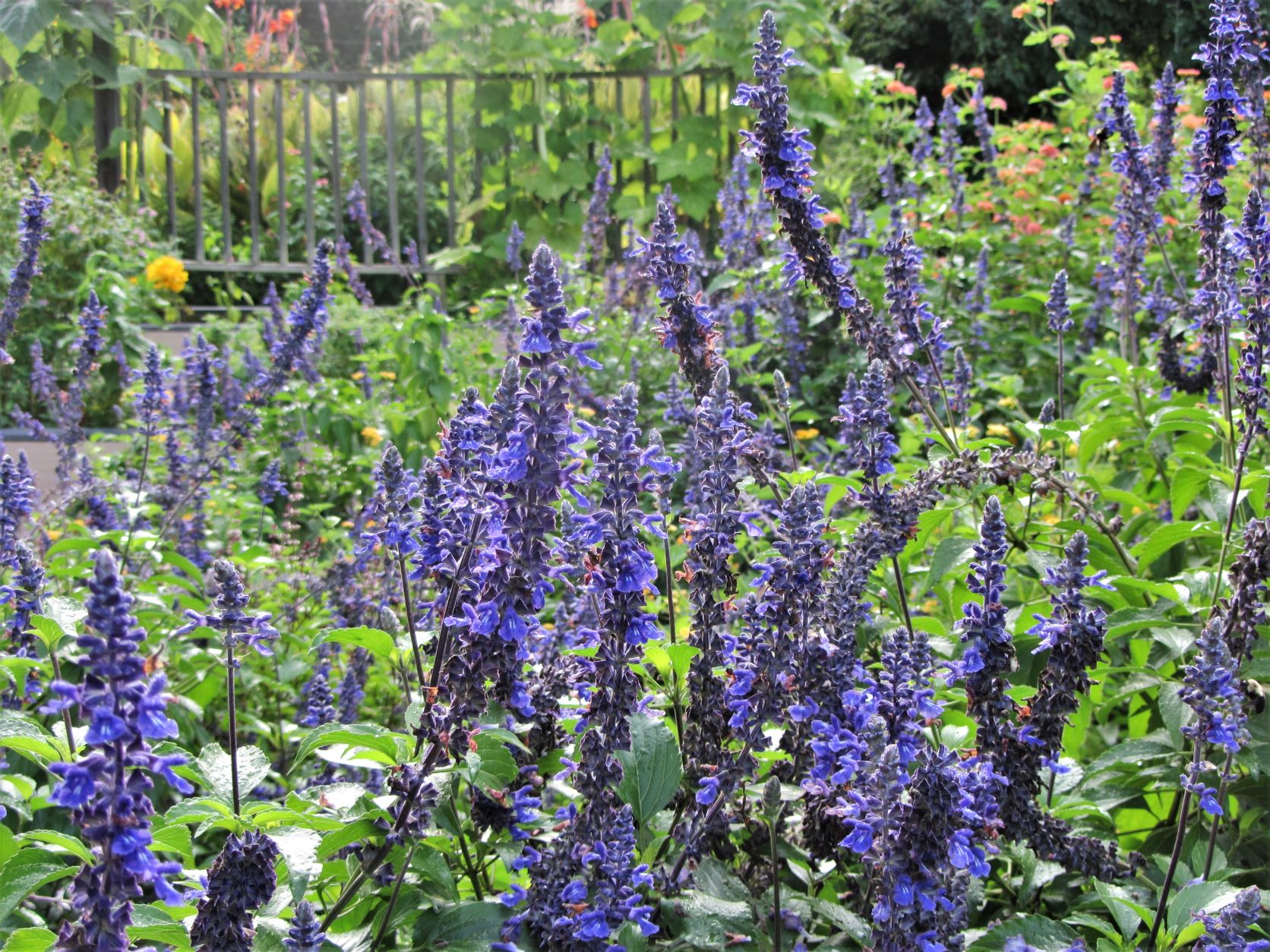
Salvia hybrid ‘Mystic Spires’
Roots Are the Foundation of Plant Life
Many gardeners dream of fruits and flowers, graceful trees and blowing grasses without sparing much thought for the roots that support them all. Roots are rarely visible to us, and then they are caked in mucky soil and perhaps entwined with a wriggling worm or two. We assume the roots without admiring them. The roots are not our goal, not our dream, not our intent. They are an afterthought, like the plumbing in our kitchen or the foundation beneath our home.

Waves and high tides on the James River have eroded the beach to expose the roots of trees growing along its shore. September 2025 along the Colonial Parkway near Jamestown Island.
But roots are the foundation that supports most plant life. They are the vascular system that supports all other plant functions, the structural support anchoring a plant in place, and the key to all plant reproduction. Very few plants, and only tiny, aquatic, or ancient ones, can survive for long without roots. Mosses have anchoring structures called ‘rhizoids’ which aren’t really roots. Mosses absorb moisture directly into their leaves from humidity in the air, from dew, or from rain. Algae, liverworts, and some epiphytes, like Spanish moss, Tillandsia usneoides, can also draw moisture into their cells from their environment, and so have no true roots anchored in the soil to support them.
Adventitious Roots
Roots that emerge from a plant’s stems, leaves, or tubers are called adventitious roots, their name coming from a Latin word for extraordinary. These roots serve many purposes for the plant, including anchoring climbing vines and many epiphytic plants onto the bark of the trees supporting them. They don’t penetrate the bark to take sugars from the tree’s own vascular system, but they cling and absorb water directly from the air. Specialized adventitious roots are covered with their own corky bark to better catch humidity, dew and rain. Others can absorb minerals from the dust blown onto the host plant’s bark, or are green, allowing these specialized adventitious roots to photosynthesize. If you have ever grown a potted orchid, you may have noticed its green, root-like structures supporting it and reaching out into the air in search of humidity. Some trees develop adventitious roots from their branches that extend down to the ground below, helping to support the weight of the tree.
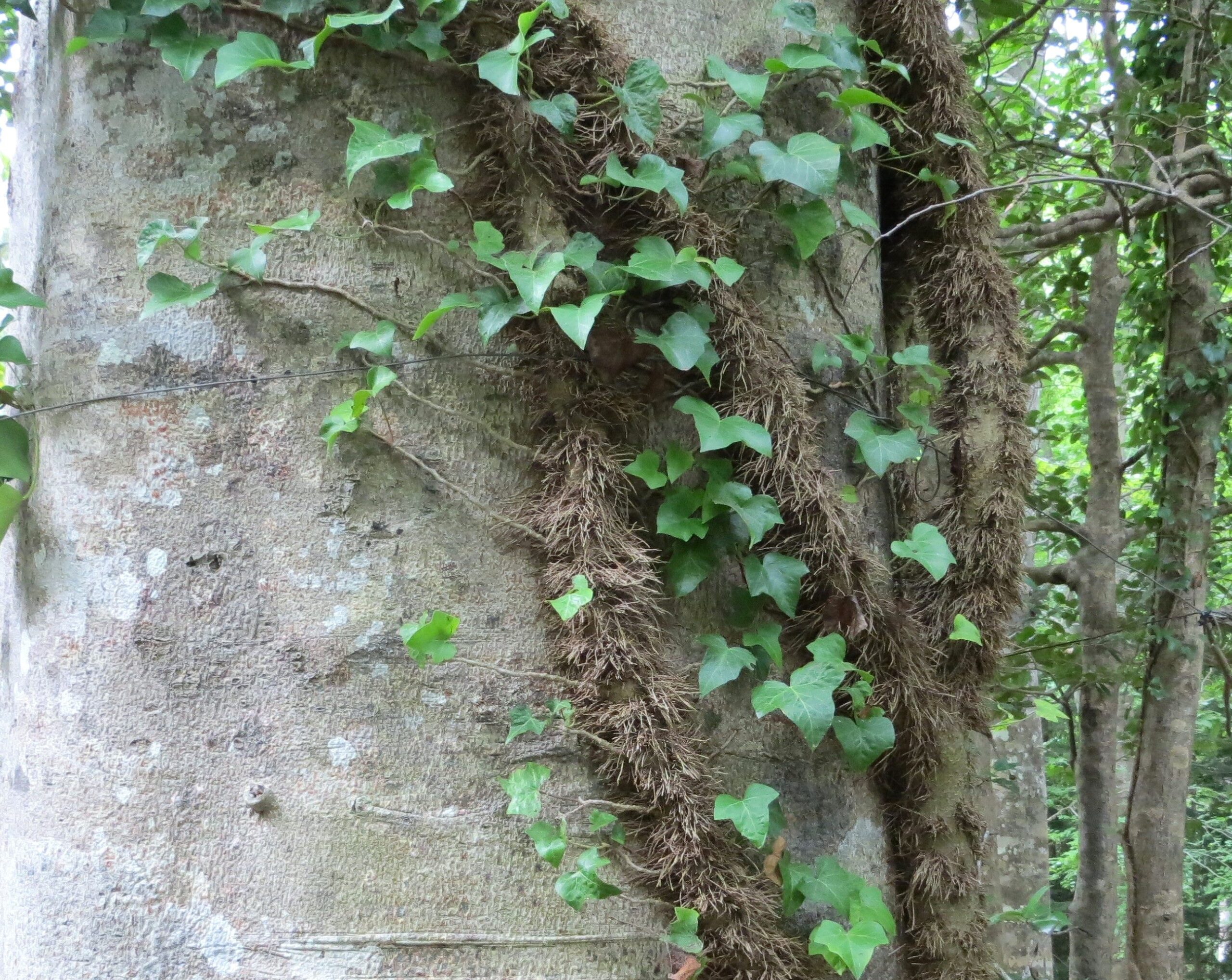
Ivy matures as it climbs, growing woody stems covered in tiny adventitious roots which collect dew and absorb moisture from the air. The roots don’t penetrate the bark to steal food or moisture from the tree, however. Ivy has grown on this beech tree for decades.
We depend on these adventitious roots that grow from stems and leaves when we want to quickly propagate a plant without finding one of its seeds, and then waiting for the seed to sprout and grow. Or maybe we want to grow an exact copy of a favorite plant that is a hybrid, cultivar, or selection of a particular species. Coaxing a small piece of the original plant to grow new roots allows us to make an unlimited number of copies that will have the exact same characteristics as the original plant.
Rootless?
Waxed Amaryllis bulbs, appearing now in catalogs and at some grocery stores and nurseries, appear to grow and bloom without roots. The bulbs are soaked to fill them with moisture before their basal plates are sliced away, just before they are dipped in thick, shiny wax. The wax helps to seal the moisture in the bulb so it can grow and bloom on a counter or table during the holidays.
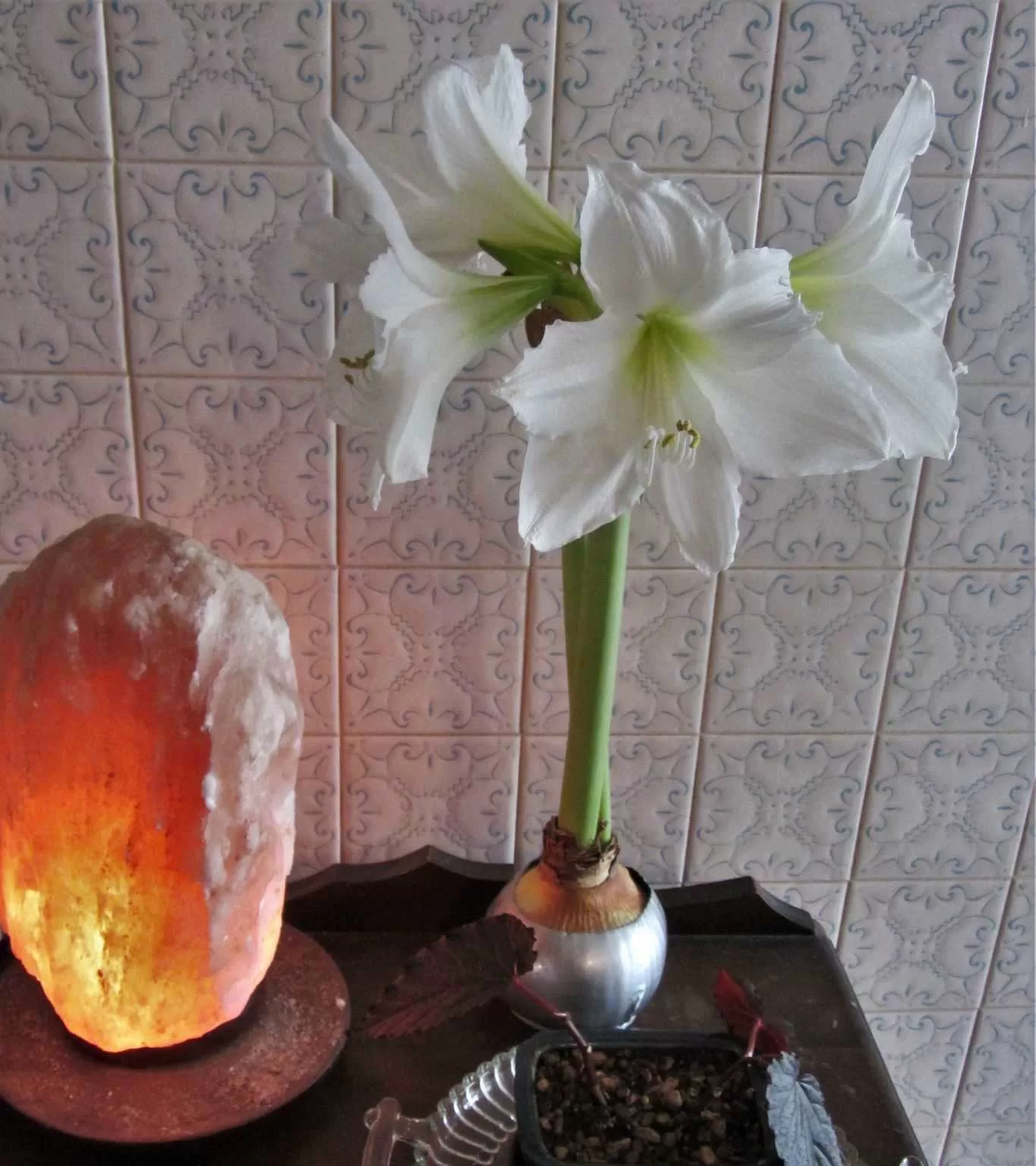
Waxed Amaryllis bulbs can be saved to bloom again after removing the wax and coaxing them to grow new roots. Newly rooted Begonia cuttings begin to grow in a new container.
A plump, well-prepared bulb may re-bloom two or three times during the winter, supporting long leaves and stems holding multiple large lily-shaped flowers. But if you cut the wax away, after the plant has bloomed, and set the bulb in a shallow pan of warm water, you’ll see roots begin to grow around the edges of the bulb within days. They reappear from what is left of the bulb’s basal plate. Once new roots appear, pot the bulb in good potting soil and keep it warm through the winter. The bulb will rejuvenate to bloom for years to come.

Oaks and other trees grow along the rapidly eroding banks of the James River. Roots of different trees entwine to increase stability for them all.
The Secret Lives of Roots
Every productive gardener cultivates an appreciation for the (mostly) secret lives of roots. We need to understand how they grow, what they can do besides just absorbing water, and how to entice them to grow from a bit of plant matter to produce a new plant. We should know that roots of nearby plants not only entwine with one another, but ‘communicate’ vital information through biochemical messages and nurture one another with shared sugars and other nutrients.
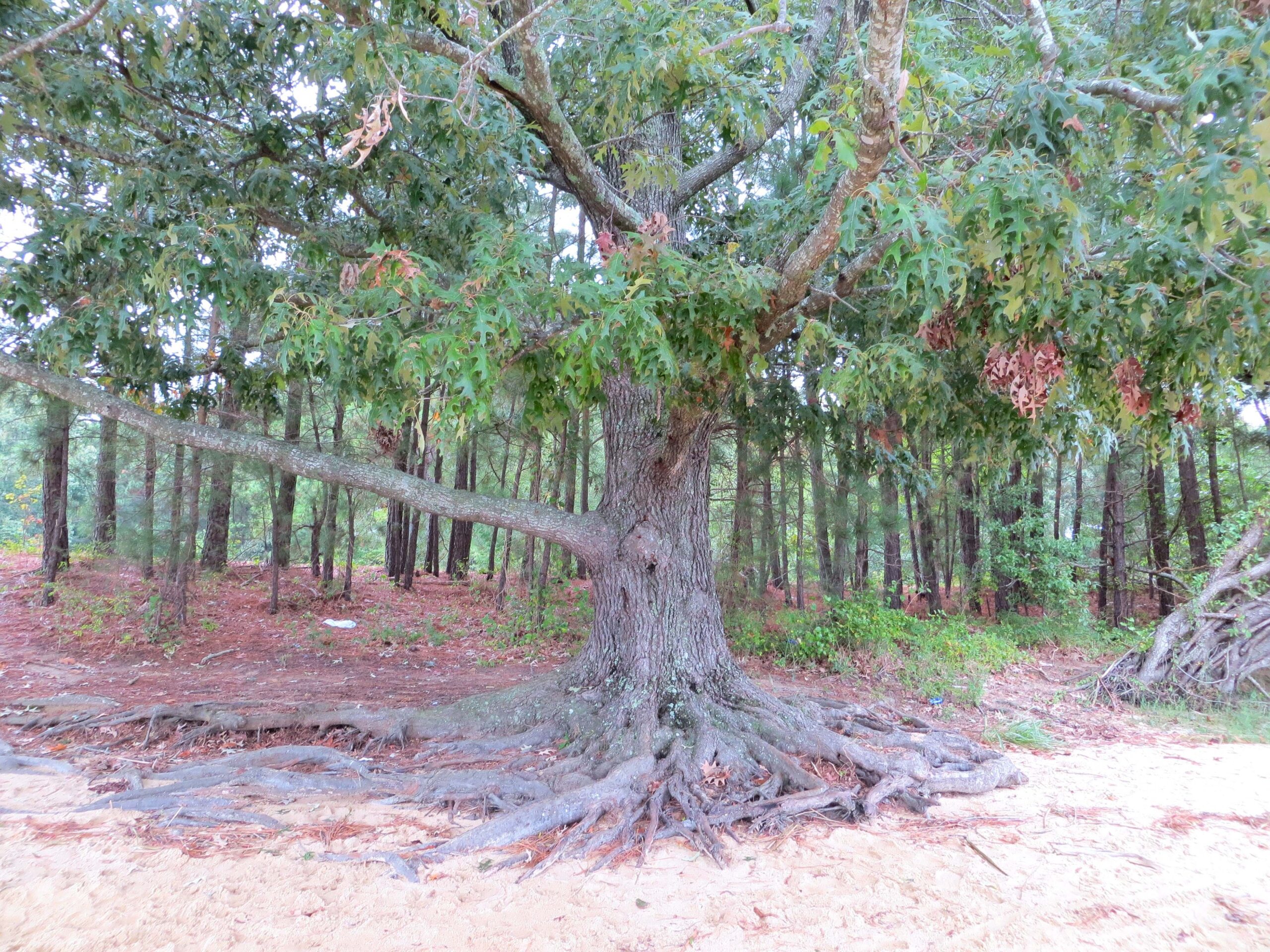
Erosion has exposed the roots of this cherrybark oak, Q. pagoda, that grows on the banks of the James River. September 2025. The roots of all of the trees in an area intertwine and support one another.
Roots Improve the Soil
The roots of a mother tree feed her saplings sugars she has produced while they are still growing under the shade of her canopy. Roots of plants that can ‘fix’ nitrogen drawn from the air, through interactions with bacteria in the soil, grow far and wide to share that nitrogen with other plants that need it for their growth. Roots of a wax myrtle or Eastern redbud tree may be supplying nitrogen through their roots to other plants growing 20’ or more away. Planting peas or beans fixes nitrogen in the soil where they grow. Leave the roots when removing the spent vines after harvest to enrich the soil for the next crop in the rotation.

Southern wax myrtle trees grow enormous root systems which provide nitrogen for neighboring plants. The Williamsburg Botanical Garden and Freedom Park Arboretum.
Roots of plants like comfrey, alfalfa, and kale can grow ten feet or more deep, breaking up compacted soils and absorbing minerals locked in the subsoil. They transport those minerals back to the stems and leaves of the plant they support. All plants filter carbon from the air and store it in the plant tissue, including in their roots. Carbon is the main component in the wall of every plant cell. A tremendous amount of carbon is stored underground in large root systems. Roots condition and feed the soil as they grow to enrich and prepare it for other plants’ growth. When annuals fade after the first frost, cut their stems at the soil level and leave their roots in place. When larger plants like trees or shrubs die, leave their roots in place, too, where they will decompose and feed the many organisms living in the soil.
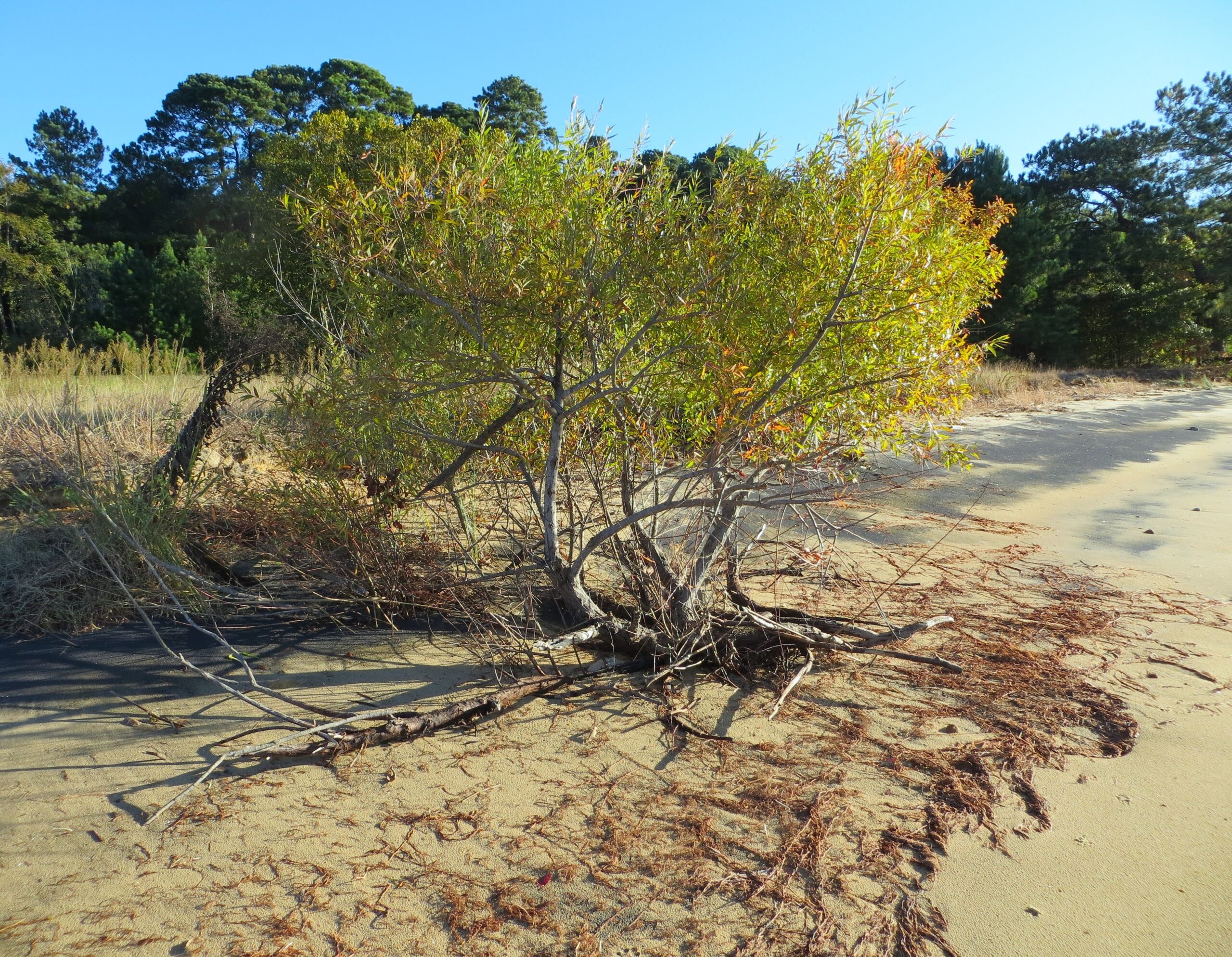
The roots of a black willow, Salix nigra, were exposed after a recent storm. The roots extend far away from the tree’s trunk to absorb water and nutrients and to hold the soil where the tree grows. September 2025
Erosion Control
Trees and shrubs with extensive lateral root systems, like sumac, willow, bald cypress, and Forsythia, hold soil on slopes and shorelines to protect it against erosion from heavy rains, high tides, and wind-driven waves. Even cherrybark oak, Quercus pagoda, can grow on sandy river beaches, holding the soil for 15’ or more around its trunk. Other trees, like some pines, figs, hollies, and oaks grow very long taproots, finding water deep underground during times of drought, and improving the soil with their massive, branching root systems.
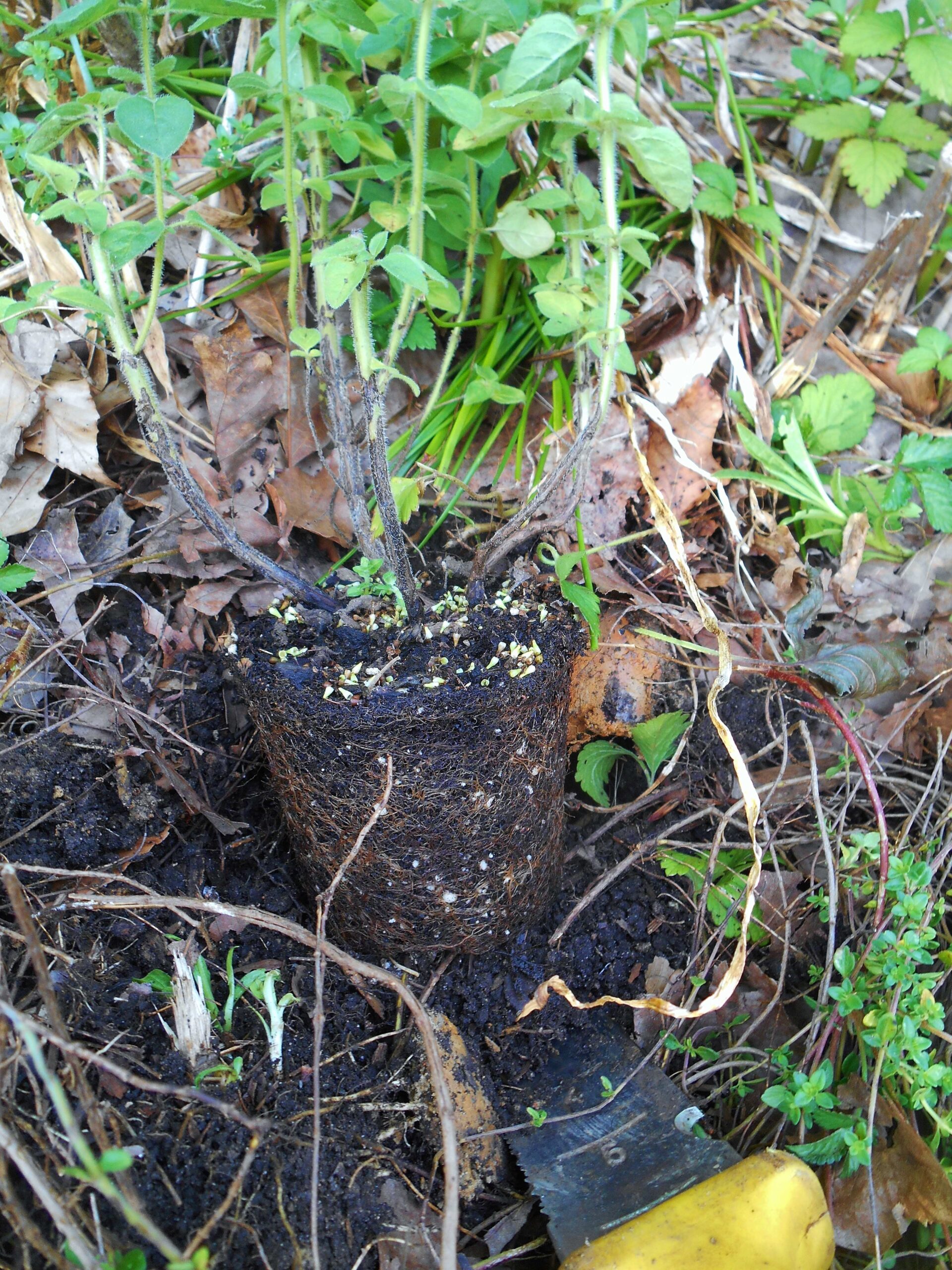
Check the roots of newly purchased transplants to see whether they need to be loosened or trimmed before planting. These roots must grow out into the surrounding soil for the plant to survive. Loosening them from the sides of the plug helps speed that process.
Understanding Root Systems
When we consider growing any new plant, we need to understand its roots and how they will interact with other plants nearby. Do they grow deeply or are they shallow? Will they fix nitrogen? What is their texture? How drought tolerant will they be? What garden ‘challenges’ will they solve? Are they edible or medicinal?

Bald cypress roots develop ‘knees’ which reach above the high tide line to help the tree’s roots breathe. Taxodium distichum on Sandy Bay October 2025
Roots Breathe
The roots of many plants prefer growing in loose, damp, but well-drained soil that contains small pockets of air between the soil particles. This is why our houseplants die if we overwater them and leave them standing in water with over-saturated soil. The root hairs on tiny feeder roots absorb air just as they absorb water. They can suffocate and rot in saturated soil. Some plants grow well in water because their roots can adapt. Bald cypress trees can thive in standing water and along tidal shorelines because their roots grow woody ‘knees’ above the water level to help them breathe.
Stem cuttings taken from some plants will root and grow in water while other plants prefer to root and grow in damp sand or vermiculite. There are herbaceous plants which can grow in water permanently. In a hydroponic growth system, nutrients are added to the water and it is kept aerated, fresh, and free from bacteria. Hydroponic systems allow us to farm foods like tomatoes, lettuce or spinach indoors under grow lights.
Roots Serve Many Purposes
We may grow some plants specifically for their roots. Carrots, turnips, parsnips and beets, for example, are root crops. They store sugars produced by the plant’s leaves and nutrients absorbed by the feeder roots. We may or may not be able to eat their leaves or enjoy their flowers, but these roots nourish us through the winter. Ferns don’t bloom or fruit to feed us, but their extensive roots will hold sloping land to protect it from erosion. The roots of some ground cover plants, like Ajuga, may penetrate the soil by only inches, not feet; and they won’t compete with the shrubs or perennials growing through them. But their low-growing leaves will protect and insulate the soil, while smothering the growth of opportunistic weeds. Taproots quickly lengthen and grow to great depths in search of water and to give a plant stability.
The most interesting way to learn about roots is simply to watch them grow. Water activates the plant’s biochemistry which allows new roots to grow on bits of plant material.
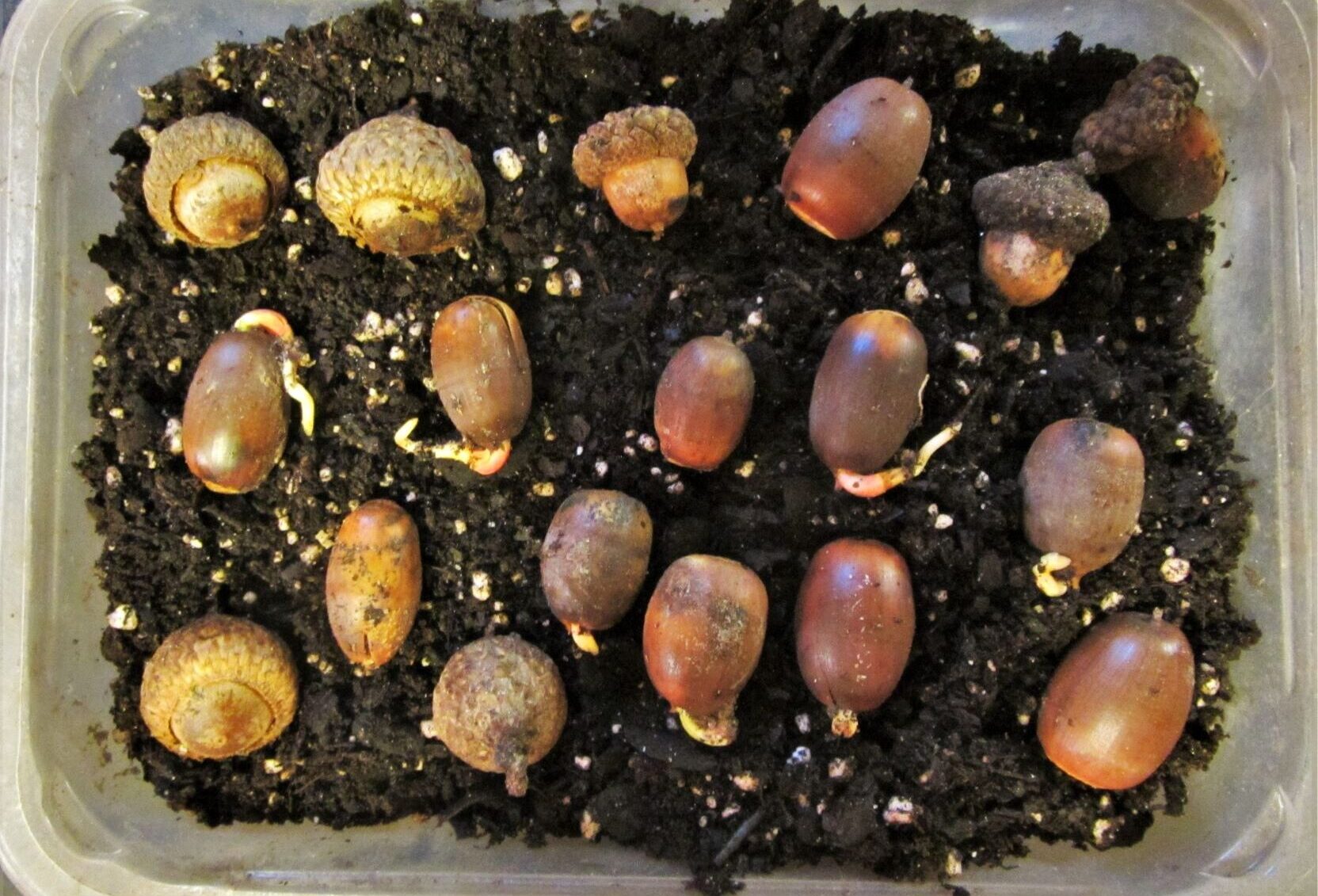
White oak acorns may begin to sprout on the ground after they fall. The radicle, or embryonic root, breaks through the shell of the acorn in search of water and nutrients. These trees develop roots during their first winter, and produce their first leaves the following spring. Acorns from red oaks may not develop any roots until the spring. Pro tip: pour newly gathered acorns into a container of water to determine which are good and which are not. Those that float may be fed to the squirrels. Only those that sink are likely to germinate.
Lima Bean (or Any Seed) Lab
Take three dried beans, like dry lima beans, and soak them in a cup of hot tap water for between four and 12 hours. The hot water at the beginning of the soak helps to permeate the seed coat, which normally prevents the seed from sprouting too soon. Lay the three seeds between layers of damp paper towel, seal into a zip-lock bag or other air-tight container, and leave the seeds resting at room temperature. Check them daily for signs of change. This is the simple, and very inexpensive ‘lab’ we do with elementary and middle school children to help them learn about roots and how plants grow.
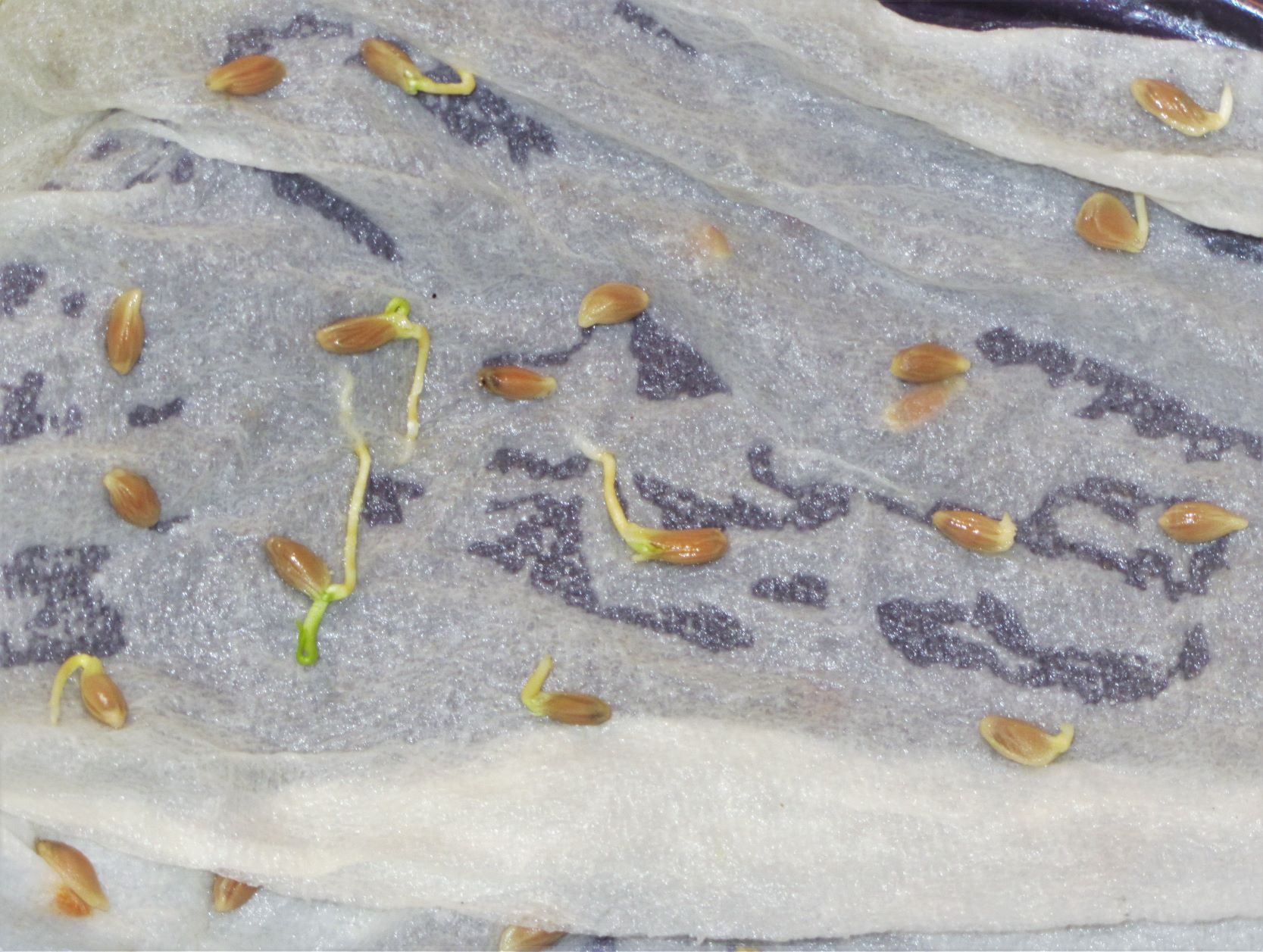
Lemon seeds germinated in damp towels kept near the warmth of the coffee pot. The embryonic tree is already emerging from most of these seeds. The radicles are whitish and the plumules are green.
At first each bean will swell a bit, and then it will crack open at one end as a tiny new embryo plant emerges. The first bit of new plant to appear is the radicle, and it will grow into the root system for a new bean plant. Soon, the new stem and first tiny leaves, the plumule, will follow. Food stored in the two halves of the bean, the cotyledons, power this growth when activated by water. It normally happens underground, in the dark.
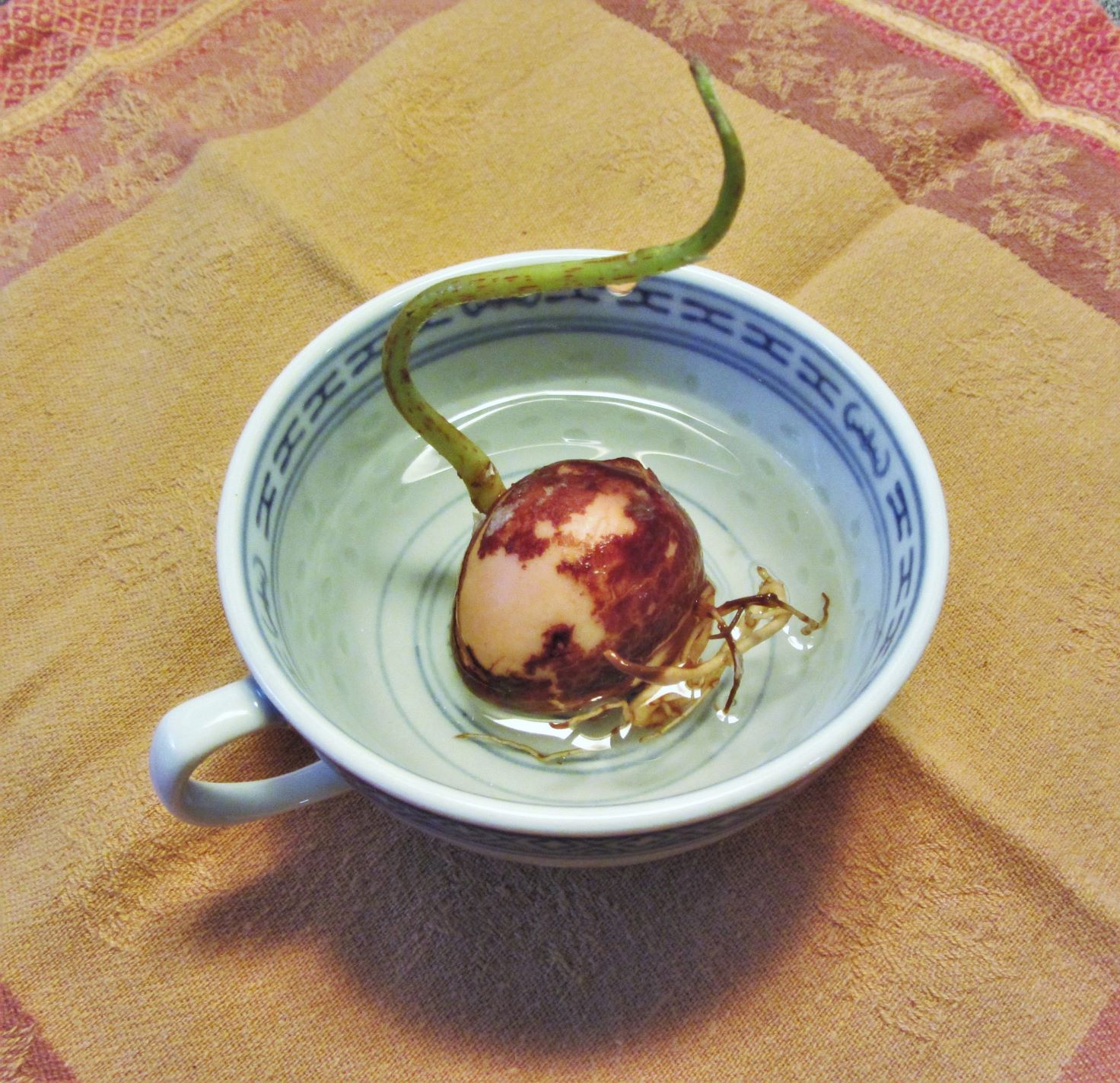
Avocado, Persea americana, is native in Zones 10-12 in North America. Grow trees from seeds found in the fruits. Trees will need winter protection from frost and three or more trees may be needed for pollination. Start seeds harvested from grocery store avacadoes in a cup of water or in damp paper towels in a baggie.
Leave one seed to continue growing on the damp paper towels, but now move the container into bright light. Carefully lay one of the seeds on top of good potting soil in a small 3” or 4” pot, water it, and seal this pot into a plastic bag. Set the bagged pot into bright light so you can continue to watch the seed grow and the radicle burrow into the soil.
Dissect the third seed, if you wish, to see the embryonic plant growing between the cotyledons. Otherwise, you can plant it or continue to allow it to grow in the bag, wrapped in paper towels until it is better developed. Add about ½” of soil on top of the bean seed in the pot after a few days, and it will continue to grow into a new bean plant. Seeds develop within a fertilized flower with the combined genetic material from both (male) pollen and an ovule.
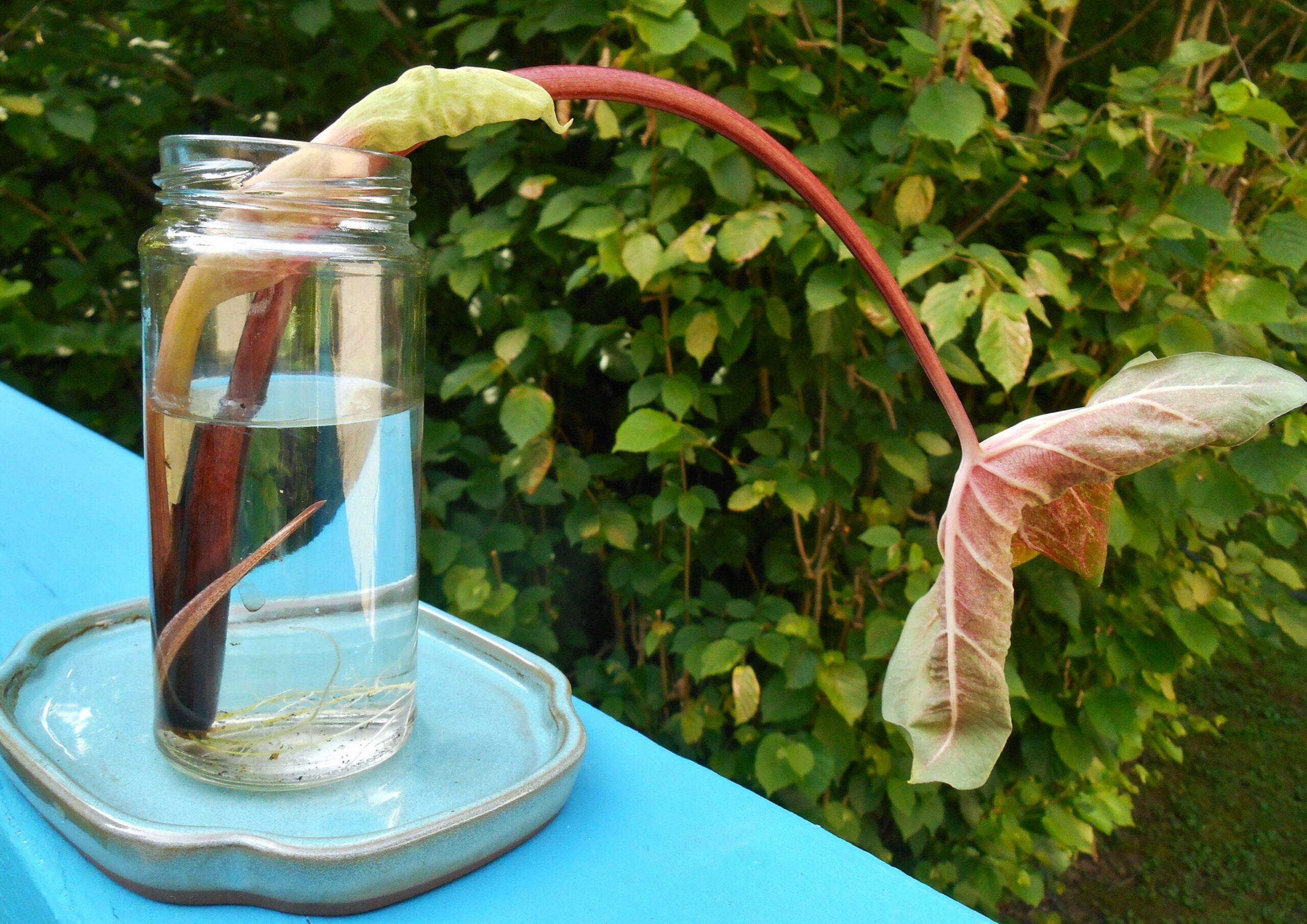
Caladium leaves will root in water so long as a bit of their tuber remains attached to the petiole.
The Magic of Meristem Cells
Meristematic cells are tiny, dense, versatile cells that enable plants to grow, to heal wounds, and to regenerate missing parts. They have very thin cell walls and contain all of the genetic material needed to grow into any type of cell that the plant needs. Meristem cells are concentrated in seeds, at the tips of roots and shoots, in the vascular tissue or ‘veins’, at the base of each leaf, around leaf scars and in buds, and in the stem covering or bark. They allow the plant to grow taller, deeper, thicker, and wider. They are the secret to stimulating new, adventitious roots to grow from leaves and stems, and new stems to grow from a bit of root, tuber, or rhizome.
Rooting Cuttings
Asexual, or vegetative propagation, depends on coaxing roots to grow from a bit of a plant. Some plants root easily in a jar of water while others prefer to root in moist sand, vermiculite, or soil. For example, an African violet leaf will root in a small jar of water, and the leaves of a new plant will emerge at its base once a few roots develop. It is ready to plant into a small container with good quality potting medium once a few roots appear and should grow into a genetic duplicate of the original plant. You can do the same thing with a Caladium leaf, a Rex Begonia leaf, or even a leaf of Peperomia or Coleus. All of these plants will grow new roots and shoots from the tip of the leaf’s petiole.
Rex Begonia leaves are among those that can be sliced (with a sterilized razor blade or knife) into wedges and rooted in moist vermiculite. These root better with bottom heat and the high humidity conditions created in an enclosed environment, like a plastic bag or a propagator unit, to keep the slices of leaf from drying out or wilting before roots form. New roots develop where veins in the mother leaf were sliced.
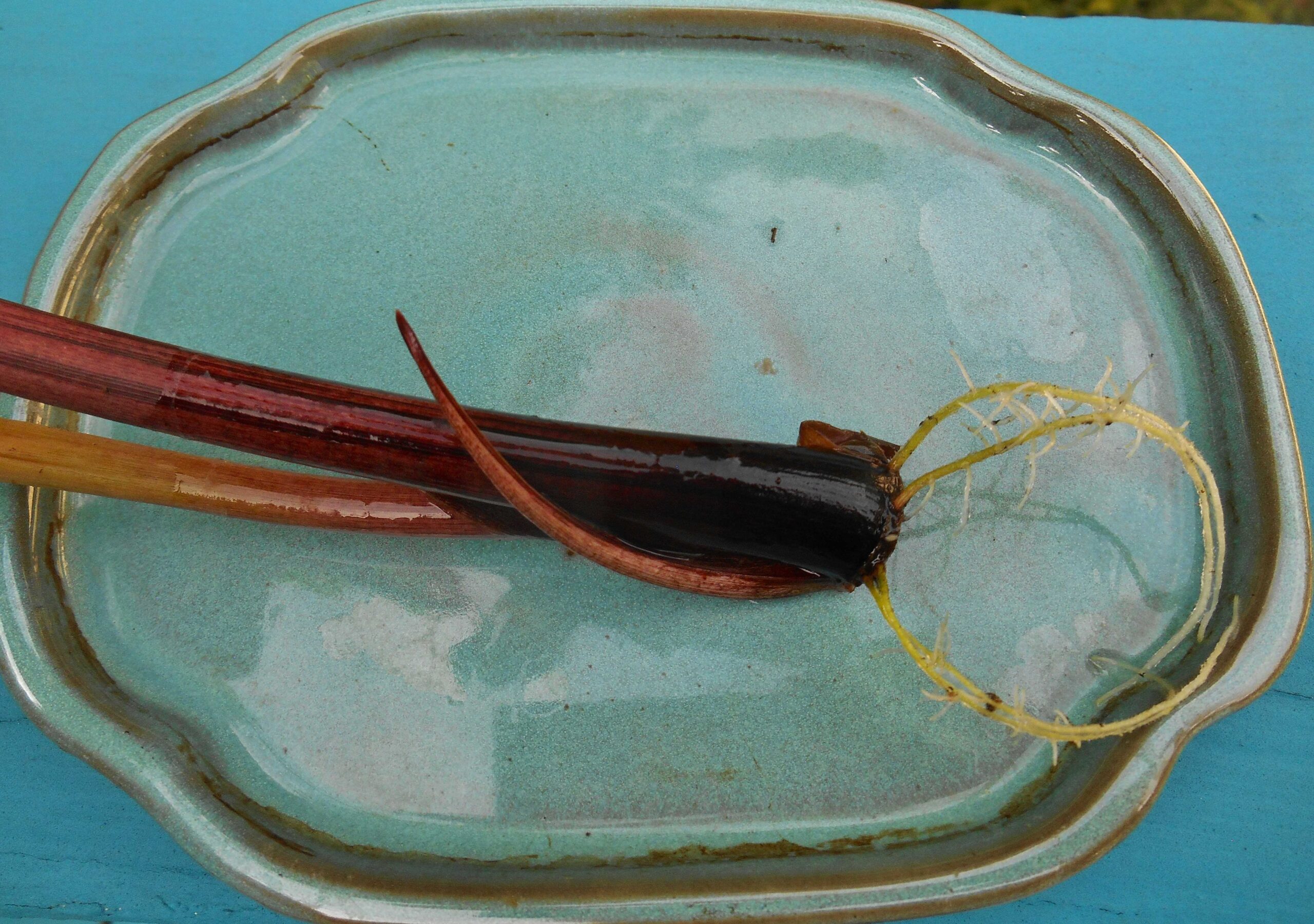
Now that roots are growing from the base of this Caladium leaf, it can be potted up to grow on into a larger plant.
Out of One, Many
Restoration ecologists can generate indigenous, native plants for their projects by using these simple techniques. Native plants, without commercial improvements or hybridization, are often very challenging to source. A single plant can generate many duplicates in the hands of a skilled gardener who understands how to stimulate new roots. Commercial nurseries use these same techniques to generate many duplicates of a single, desirable seedling plant. Each seedling is a unique genetic combination, and those with unusual or desirable traits are selected and propagated under specific commercial names. Tissue culture, a specialized form of propagation carried out in sterile, laboratory-like conditions, can create an even greater number of new plants from a small piece of living plant tissue, like a leaf, root, or stem.
You have probably noticed that growers have patented many named varieties of popular plants. This information is stated on the plant’s label whenever we purchase a patented plant, and they often have a specific ‘brand’ or trade name. Be aware that propagating a patented plant, even for your personal use, is an infringement of that patent. This is a classic case of “Just because you can doesn’t mean you should.”
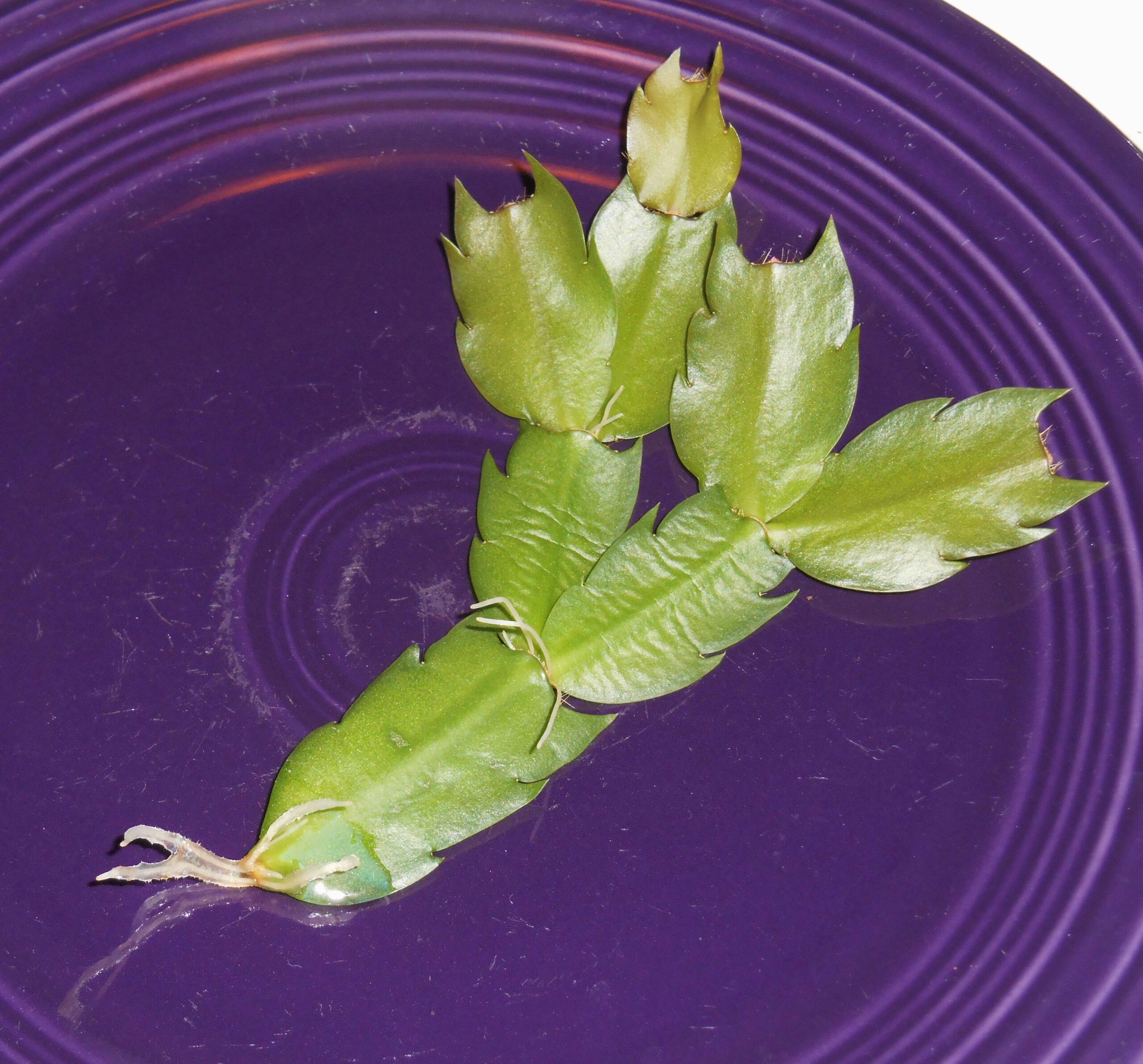
This broken piece of a Christmas cactus rooted in a glass of water. Adventitious roots appeared at nodes even above the water line, reaching for the humidity in the air.
Stem Cuttings
An easier method is to root cut stems of plants. Soft, or herbaceous stems will often root in a jar of water with several leaves still intact on the stem. (Don’t leave leaves attached below the water line as they may decay and contaminate the water with bacteria which will infect the cutting.) As soon as the roots reach a few inches long, plant the rooted cutting into a container of potting mix and move it into a shady spot to establish before moving it into whatever light is appropriate for that plant. Most herbs, like mint or basil, root very quickly. Pelargoniums, geraniums, may root in water, but most gardeners have a higher success rate rooting them in most soil or builder’s sand and covering the cutting to maintain high humidity. Vining houseplants like Tradescantia, ivy, or pothos, and foliage plants like cane Begonias, root quickly and easily in water. Change the water every few days to keep it fresh.

Rooting Woody Cuttings
Some trees and shrubs also root from stem cuttings. In general, the younger the wood the easier it is to stimulate new roots. Softwood cuttings taken in early summer often do best in a high-humidity propagator, or you can remove most of the leaves or cut large leaves in half. Removing or cutting the leaves reduces the amount of moisture the cutting needs to transport to support the living tissue until new roots form. Trial and error will show you which types may root in water, like Hydrangeas, and which prefer to root in moist soil or sand, like azaleas.
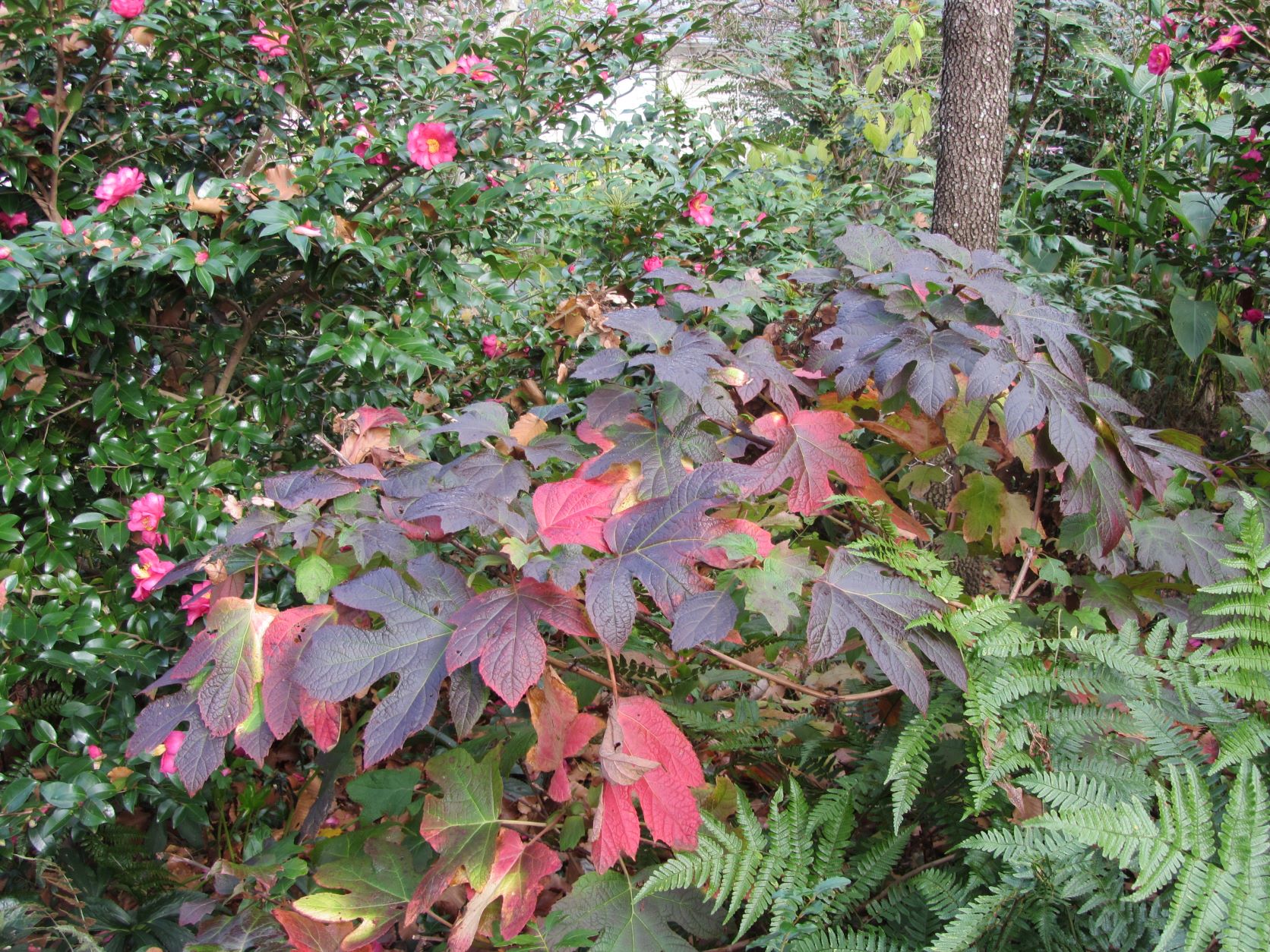
Native oakleaf Hydrangea quercifolia turns scarlet each autumn, and holds its flowers from May through frost. Take hardwood cuttings of Hydrangeas now to produce newly rooted stems by early summer. Look for new growth that didn’t support a flower this year for the most successful cuttings.
The easiest way to start woody plants from cuttings is to use hardened-off wood from the current growing season, harvested in the fall and allowed to root over winter. Hardwood cuttings need to first grow a thick ‘callus’ which seals the pruning wound and prevents pathogens from entering the stem. This happens during cold weather. New roots grow from that callus.
Take hardwood cuttings that have at least 3 levels of leaf scars/buds and are six to ten inches long. To work with a large number of cuttings, layer them horizontally in a box packed into moist sand. Seal the box and leave it in a protected spot outdoors through the winter, or store it in a refrigerator for at least two months. Callus formation and rooting generally occurs faster when each cut stem is first dipped in liquid or powdered ‘rooting hormone.’
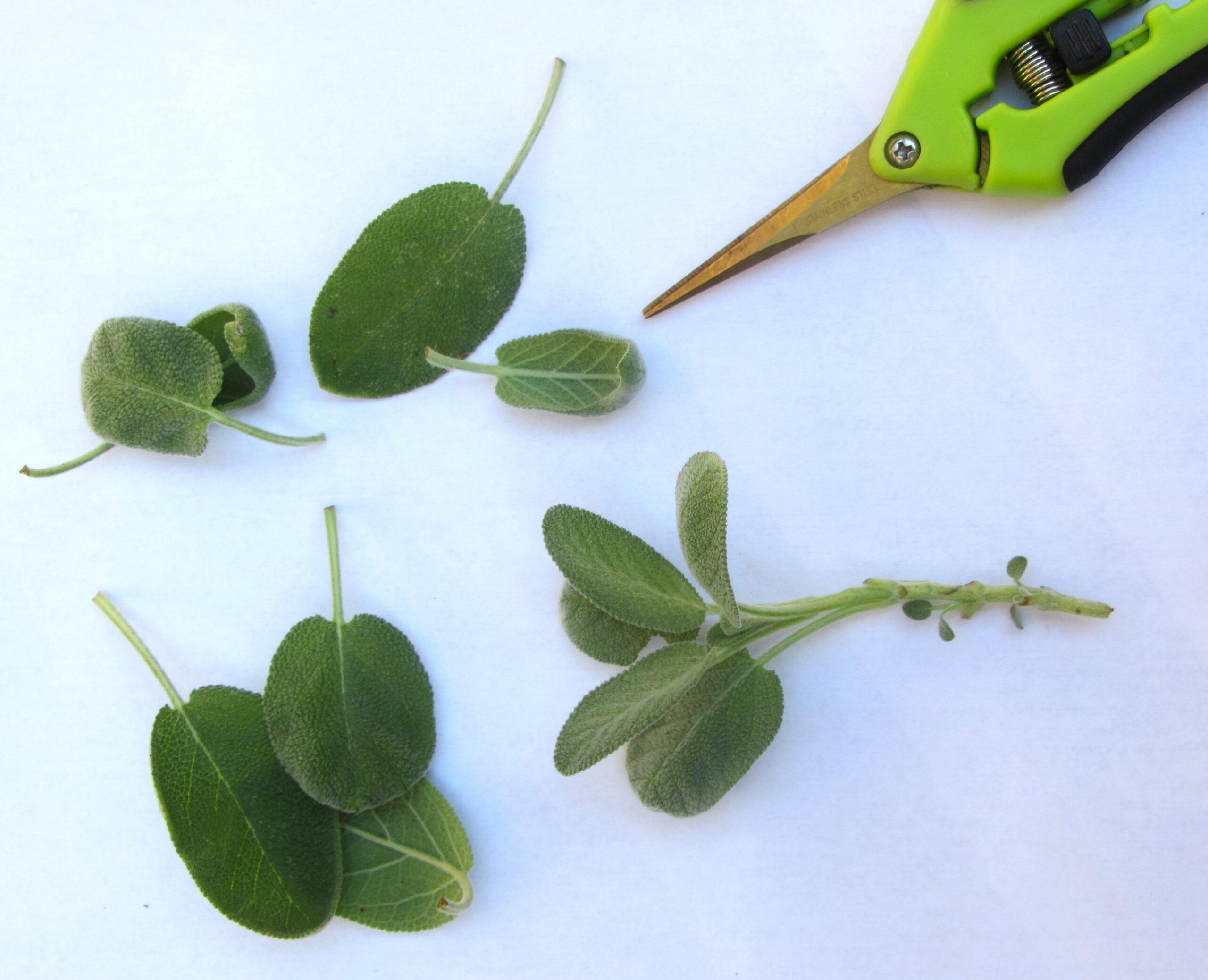
This sage softwood cutting is prepared to stick in moist sand or soil so it can root. Dipping the end in rooting hormone before sticking it into the growing medium helps speed the rooting process.
Woody Cuttings Need to Grow a Callus to Root
Check the stems in late winter for callus material on the cut ends. Once the callus has formed, plant each stem vertically into a container of moist compost or potting soil where it can root. Leave the pots in a protected area outside where they will experience the cold but won’t be in bright sunshine or strong winds. New leaves should appear in the spring once rooting has begun. Let the cuttings continue to grow good root systems before transplanting them to where they will grow.
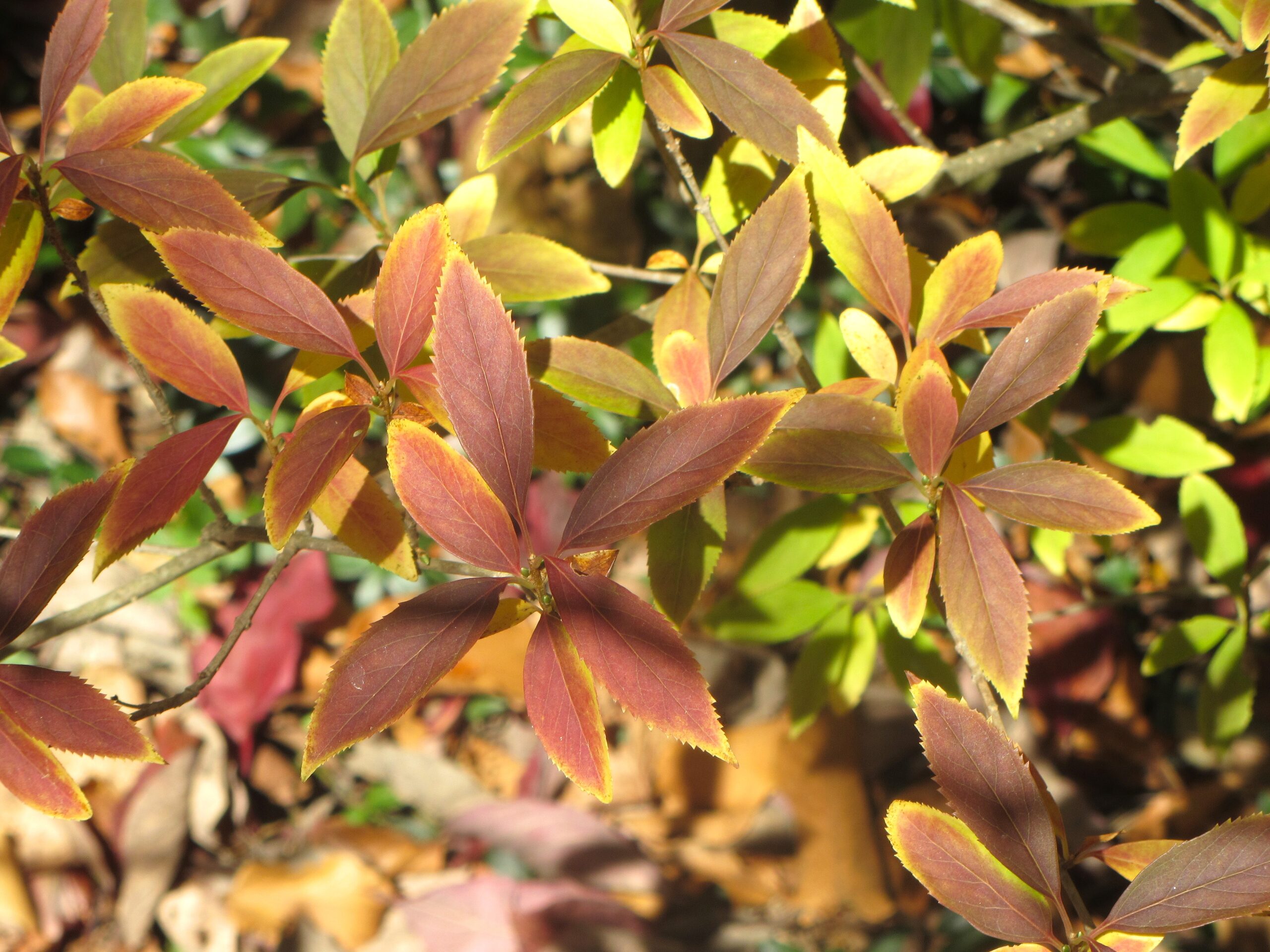
Forsythia is one of the earliest shrubs to bloom each spring and one of the easiest shrubs to root. Take cuttings now, or watch for branches to root in the spring in water when you force them to flower early indoors.
Random Hardwood Cuttings
For just a few cuttings, skip the box of sand and simply stick each cutting into a pot of moist sand or potting soil where it can stay through the winter. Make sure that at least two levels of leaf scars/buds are below soil level and at least one set of buds is above the soil where new stems and leaves will grow. A dozen or more cuttings can be struck in a single large container of soil, then separated and re-planted after growth begins by early summer.
In February, while I’m pruning shrubs, I will often cut a longer stem into shorter cuttings to root. Make sure to keep the stem oriented correctly ‘up and down’ if you cut a single stem into several pieces. Sometimes, I’ll stick a trimmed cutting directly into the ground where I want it to root and permanently grow. This method is ‘hit or miss’ because there are so many unknown variables with the soil quality, the weather, and animals that may attack (graze) the cutting. But it works often enough to try again and again.
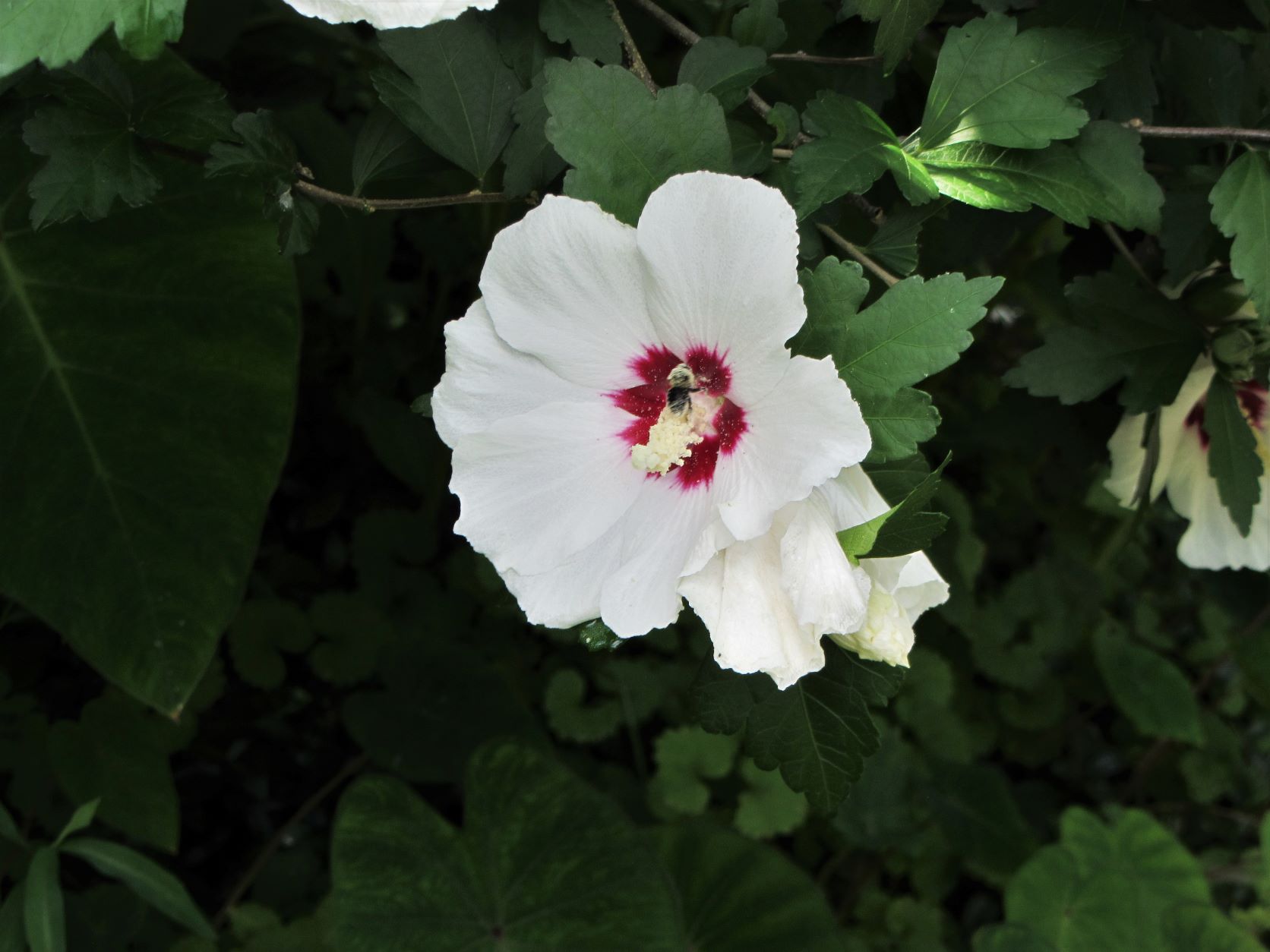
Rose of Sharon is one of the many shrubs and trees that can be used for root cuttings. It supports pollinating insects and hummingbirds from May through September each year, and each flower produces abundant seeds to feed birds through the winter.
Root Cuttings
Small pieces of the roots from many different plants can regenerate the entire plant. Certain herbaceous perennials, herbs, trees and shrubs can be propagated over the winter from a piece of root two to five inches long. Thicker roots, taken near the crown of the plant, may work best because of the stored sugars found in thicker roots. Plants you may be lifting, moving, or dividing are good candidates for this type of propagation since you can simply prune off a root to trim into cuttings. But you can also dig around a plant that you aren’t moving to find a suitable root to clip. When dividing a perennial you normally need a bit of the crown as well as some roots. But plants that can regrow from just a root don’t require a piece of the crown, stems or leaves to survive division.
Prepare a flat of good potting soil with perlite, vermiculite, or sand mixed in. Fill it to within about two inches of the top. Lay out the prepared pieces of root flat on the soil, horizontally, and then cover them with another half-inch to an inch of moist sand or potting soil. Water lightly and cover the flat. Keep the flat outdoors in a protected area through the winter, or in a cold frame or an unheated greenhouse. The roots should remain dormant until spring, when new growth will appear. Once new stems and leaves form, the young plants may be potted up to further develop or can be transplanted to where they will permanently grow.
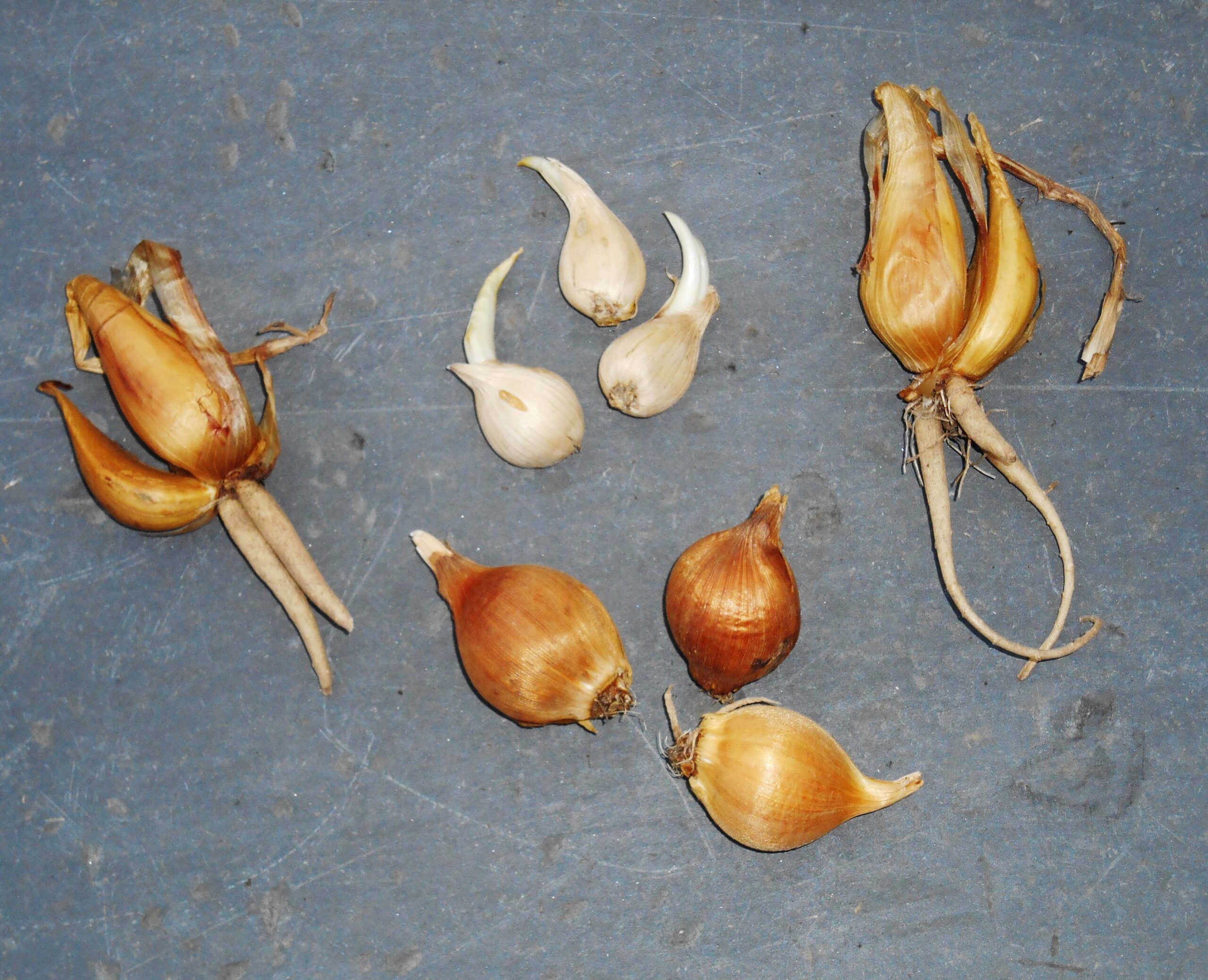
Three different types of Iris bulbs all began to grow before planting. They remain dormant through the summer and begin to grow in the autumn for early spring flowers.
Geophytes Have Superpowers
While most plants require their roots to survive, plants known as ‘geophytes’ can survive months each year as a bulb, a corm, a rhizome, or a tuber without stems, leaves, or roots. Once suspended over water, or planted in moist soil, roots appear followed by new stems, leaves, and eventually flowers. New plants can emerge from the dry, scaly or starchy storage unit that is actually a part of the plants’ stem or root system.
Each tulip or daffodil bulb has an embryonic plant at its heart. Plant the bulb, or set its base in water, and new roots will soon appear as the bulb revives and prepares to grow for another season. Onions, shallots, and garlic bulbs grow in this same way.

Garlic, onions, and shallots are all bulbs. We eat them while they are dormant, but all can quickly grow new roots and send up new stems.
Sweet potatoes are simply tubers, like taro (Colocasia), and Caladiums. They will quickly root when planted in a container of moist soil or are suspended over water. Watch the roots grow from a sweet potato set over a jar of water this winter. Once the eyes develop and stems with tiny leaves emerge, each of those stems can be planted in moist soil or rooted in water to grow a new sweet potato plant.
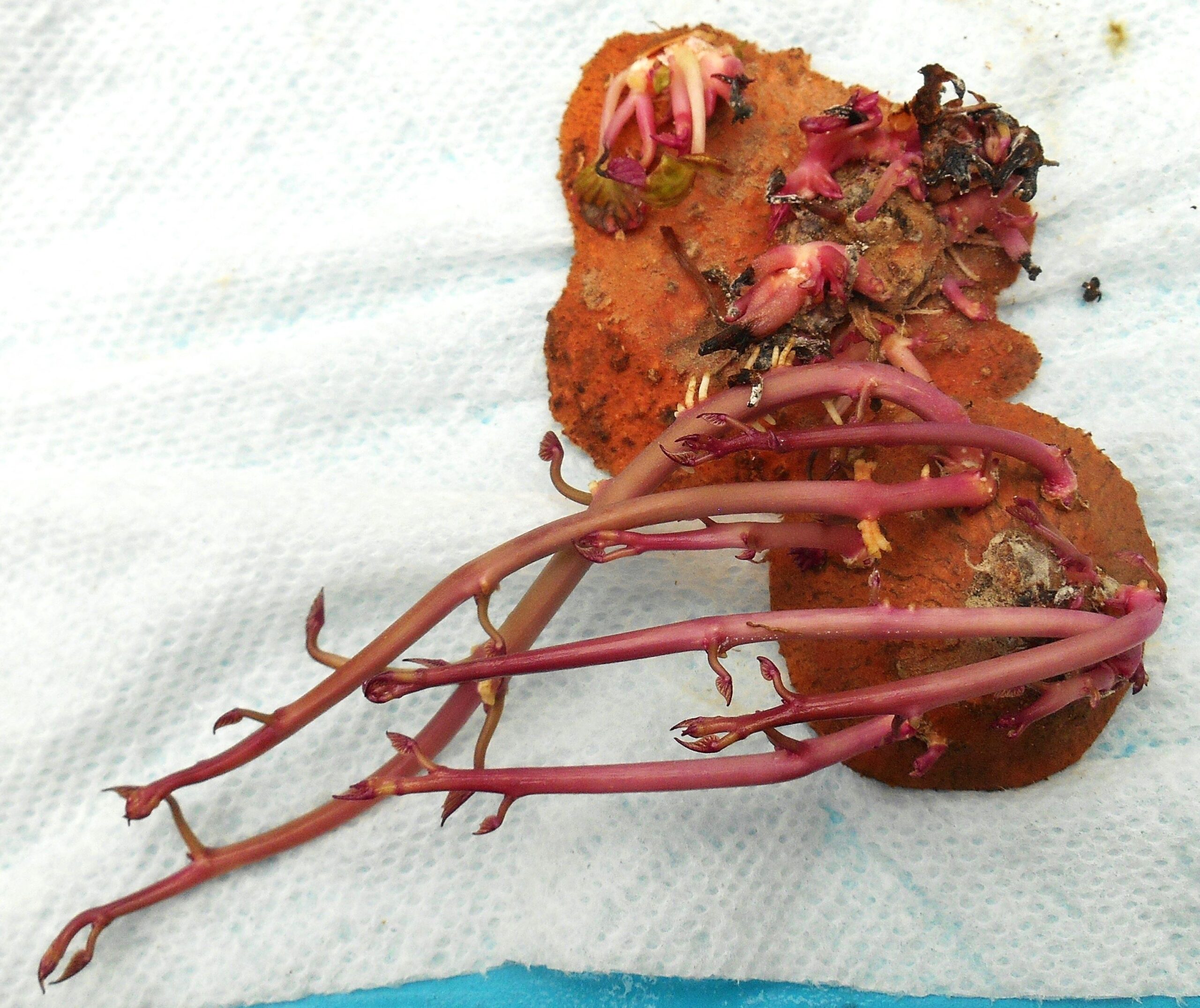
These sweet potatoes began to grow roots and shoots in storage, using the humidity in the air to begin growing again in late winter. Break off each shoot where it emerges from the tuber, then plant it into moist soil or place it in a small glass of water to root first, transplanting the new sweet potato plants outside once the weather has settled in late spring.
Winter ‘Root’ Gardening
Watching roots develop is a fascinating way to learn about roots and to garden through the winter months. When space doesn’t allow you to bring an entire plant indoors, you may be able to root a few pieces of tender plants that you hope to grow again next summer. Take cuttings now, before the first frost, from tender, herbaceous garden plants. Any sort of Begonia, Coleus, mint family herb such as Basil, and many tender vines will root in water over the next few weeks. And they can live in a sunny window until the weather warms enough for you plant the rooted stems next season. Any sort of bottle, jar, vase, or even a test tube will do to hold them through the winter. You can hang the containers or set them on a windowsill to create your own winter garden indoors, filled with life, beauty, mystery, and promise.

Coleus cuttings root in a vase.
All photos by E. L. McCoy 2014-2025
For More Information
Capon, Brian.
Chalker-Scott, Linda. How Plants Work: The Science Behind the Amazing Things Plants Do. Timber Press. 2015.
Kourik, Robert.
Manisha, M. “Adventitious Root System: Definition and Types | Plants.” BiologyDiscussion.com. Accessed November 2025.
Reza, Shamim. “Introducing Nitrogen Fixing Trees: Nature’s Solution to Curing N2 Deficiency.” Permaculture Research Institute. October 2015.
Wohlleben, Peter.