
Category: Gardening on the Wild Side: Working in Harmony with Nature

Prized Plants at the Olympic Games

Prized Plants at the Olympic Games

  The Olympic Games, a symbol of international unity and athletic excellence, incorporate plants and flowers into their ceremonies. These botanical elements enhance the visual appeal of the events and carry cultural and historical significance as well. Laurel and Olive in Ancient Greece In ancient Greece, victors of the Olympic Games were awarded olive wreaths, known as kotinos, made from the branches of the olive tree which is sacred to Zeus. This tradition dates back to 776 BCE and symbolizes...
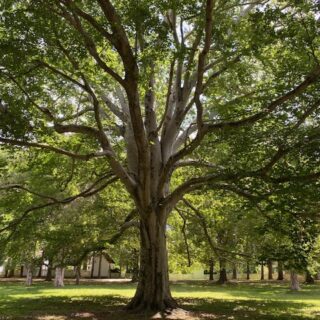
Beech, the Mother Tree, Queen of the Forest

A Mythic Forest The American beech, Fagus grandifolia, once covered most of North America from Canada to Mexico and from the Atlantic to the Pacific coasts.  Before colonists cleared our ancient forests for farmland, large beech groves grew as part of the climax forest community.  A single beech tree can live for centuries, and as it ages it surrounds itself with sapling trees growing as suckers from its relatively shallow root system, forming an expanding grove of graceful beech trees....

Summer Wildflowers on Jamestown Island

 May, 1607 Jamestown Island was uninhabited and covered in native vegetation in May of 1607 when the first English settlers chose to establish their colony on a small peninsula in the Powhatan River, now the James River.  That peninsula, along with most of the shoreline of the lower river, was under the control of the Powhatan Chiefdom, a confederation of thirty tribes by that time, based to the north at Werowocomoco, in what is now Gloucester County.  This chiefdom of...

Quick Notes: Mysteries of the Micorrhizae

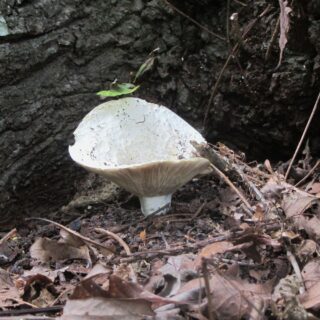
What is a mycorrhiza? (my-kor-rise’-uh) A mycorrhiza is a symbiotic relationship between a plant and a network of mycelium in the soil.  Over 90% of plant species depend on mycorrhizal fungi to assist their roots in accessing water and minerals from the environment.  Mycelium extend the reach of a plants’ roots.   Why are mycorrhizae important? Fungi share in the abundance of sugars and other carbon-based phytochemicals produced by a growing plant each day.  They use carbohydrates absorbed from a...

Mysteries of the Mycorrhizae

  “To use the world well, To be able to stop wasting it and our time in it, we need to relearn our being in it.” Ursula Le Guin   A friend and I were chatting about recipes one afternoon.  She is a talented cook and loves to feed her friends and loved ones.  I asked for the recipe for something delicious she had served, and she avoided disclosing the details.  Finally, she gently explained that among her family, no...

It’s Time to Break up with Peat

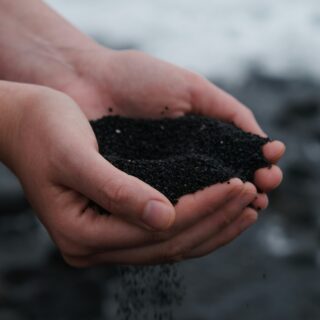
Used as a commercial potting soil since the 1940s, peat is one of the gardeners’ most beloved potting mediums, but is it time to break up with this old standby? Let’s explore peat, its dangers, and some sustainable alternatives. Peat is a type of soil composed primarily of partially decayed organic matter, typically plant material. Found in peatlands, bogs, and swamps, it has been used for centuries as a fuel source and soil amendment. However, the extraction and use of...

Cultivating a Tiny Forest (Part 1)

  Our once shady front yard was left a bright expanse of coarse wood chips and mangled leaves after the arborists pulled out their heavy equipment and left, that hot summer afternoon almost a dozen years ago.  A freak summer thunderstorm had harbored a waterspout or small tornado when it blew in from College Creek a few days before.  Our first clue that something was wrong had been seeing the underside of a muddy root ball rising 8 feet or...

Part 2: PNV: Potential Natural (Native) Vegetation

  Appropriate Species for Tiny Forests in Eastern Virginia Tiny forests designed following the Miyawaki method include a wide variety of native trees, shrubs, and ground covers planted randomly and densely, varying the heights of trees to establish a canopy layer, intermediate layers, and a ground cover layer.  Plant as many as 3 to 5 plants per square meter into the prepared soil.  Plants grow quickly, reaching for the light.  A forest that takes a century or more to develop...

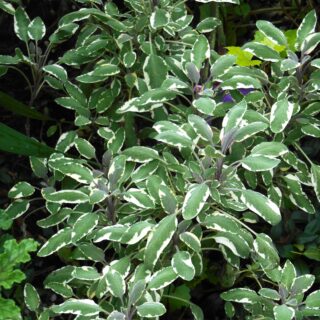
Tricolor culinary sage

Sage ‘The Savior’

  “Why should a man die in whose garden grows sage? Against the power of death there is not medicine in our gardens But Sage calms the nerves, takes away hand Tremors, and helps cure fever. Sage, castoreum, lavender, primrose, Nasturtium, and athanasia cure paralytic parts of the body. O sage the savior, of nature the conciliator!” From the Regimen Sanitatis Salernitanum ca 1100-1200 CE   The name Salvia officinalis, designating our common culinary sage, derives its species name from...

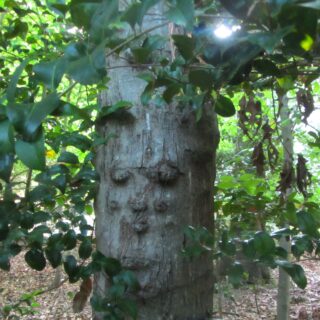
How to Cultivate a Fairy Garden

  “And therefore, as a stranger give it welcome. There are more things in Heaven and Earth, Horatio, than are dreamt of in our philosophy.” William Shakespeare, from Hamlet, First Folio   Perhaps you have already made a fairy garden.  It is an endearing activity for parents and grandparents to enjoy with the children in their lives.  Full of whimsy and fun, we enter the world of ‘make-believe’ once again and see the world from a different perspective.  Everything is...