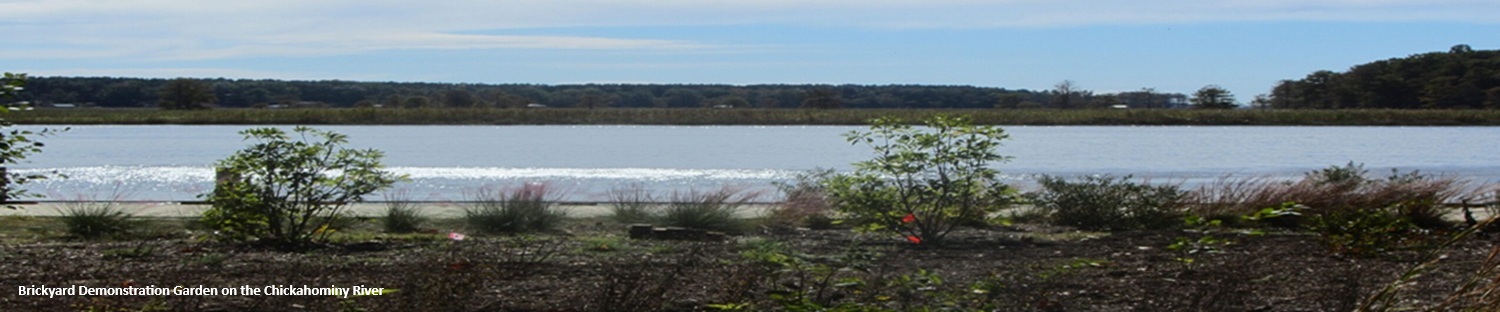
Making a Healing Garden
“The art of healing comes from nature, not from the physician.”
Paracelsus
Creating Sanctuary
Sometimes we all need a place to get away from the noise of our daily lives to find some peace. We want a place to relax, to heal, to reconnect with the natural world, and to dream of a better future for ourselves and our loved ones. Our outdoor spaces can provide us with peace, healing, sanctuary, sustenance, and inspiration when we design them with these intentions.
The Long Tradition of Healing Gardens
Sanctuary gardens, healing gardens, physic gardens, forest bathing, and fairy or elemental gardens follow ancient traditions that have survived the passage of time in diverse cultures from almost every continent. Our ancestors recognized the sacred and healing dimensions of nature and our fundamental connections to plant life, animals, the elements, and to the land where we live.
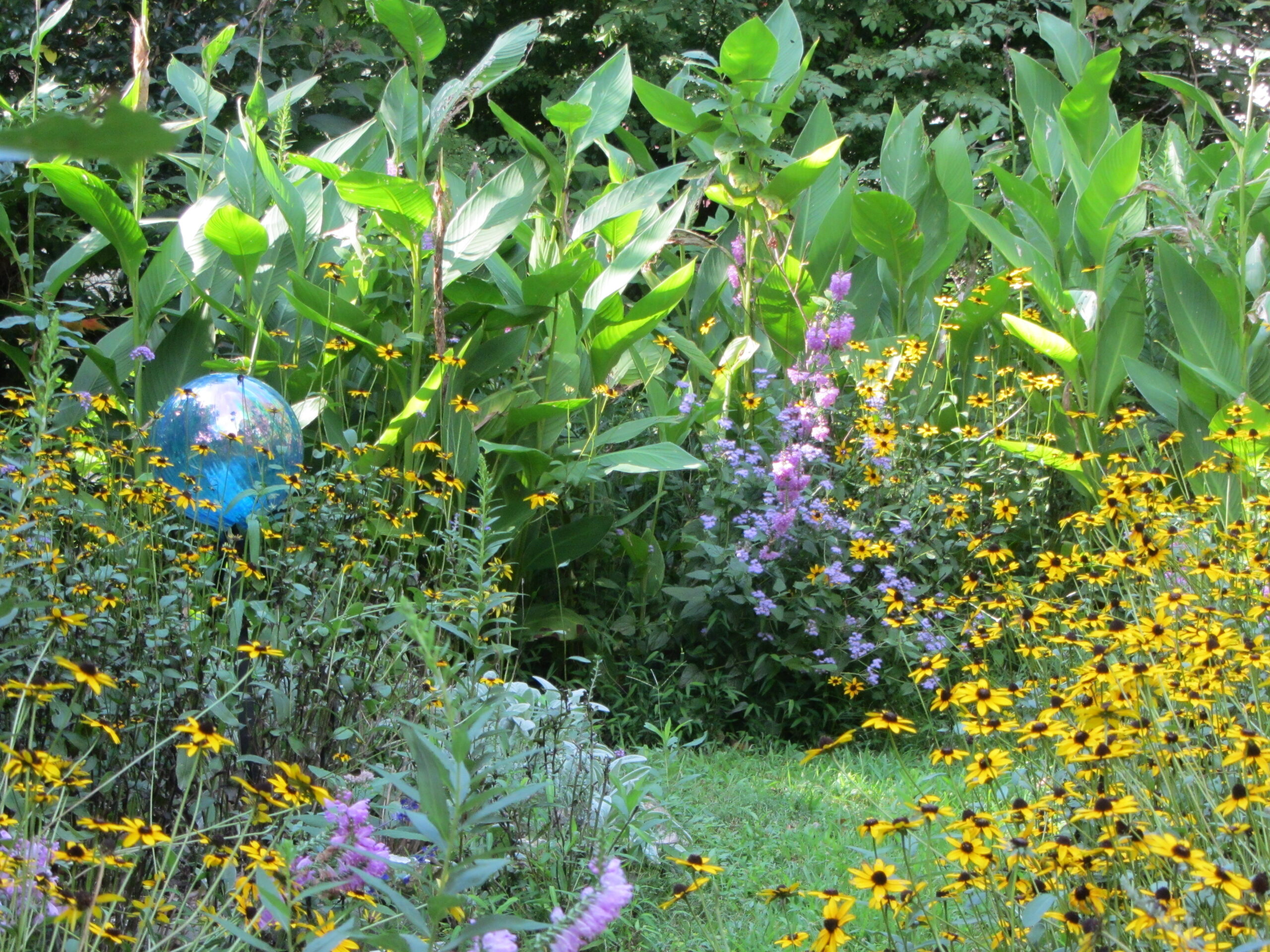
From earliest times, healers worked to reconnect their communities with the natural rhythms and resources that offer healing on all levels, from the physical to the spiritual. Ancient healers understood how using plant medicines and spending quiet time in nature can help us to restore balance and to promote healing, to process grief, free ourselves from addictions, restore our moods, and to find inspiration for new pathways in our lives.
In many classical cultures healers were also priests, and the gardens they created surrounded various temples, monasteries, and sacred shrines. Nearly all included sacred wells, springs, pools, or fountains. Healers within indigenous cultures created sacred groves in the forest, often incorporating flowing water and standing stones for their ability to amplify the Earth’s energetic properties. Trees, herbs and other medicinal plants, flowering plants, and usually edible plants were tended within these sacred spaces.
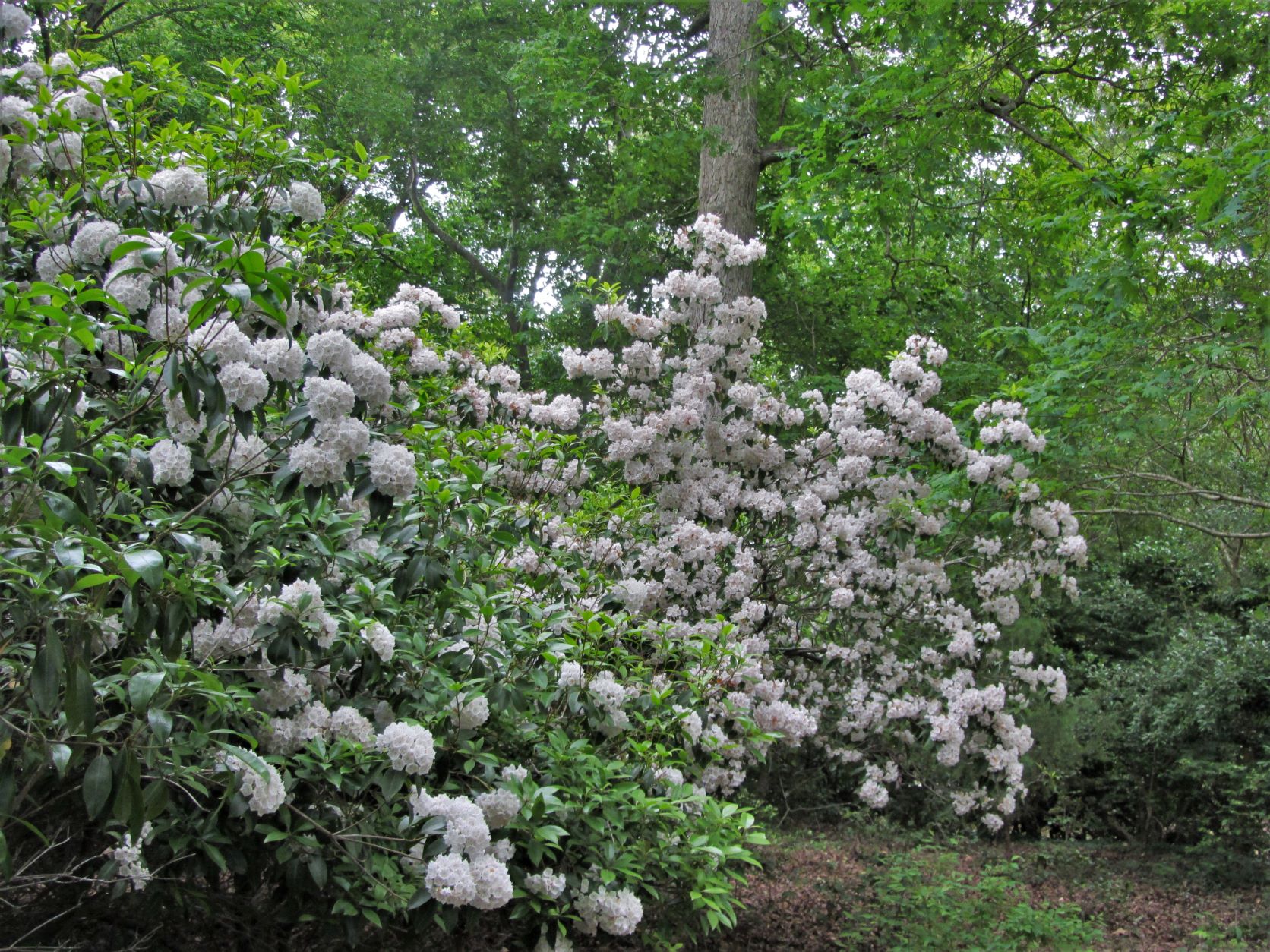
Groves of evergreen mountain laurel, Kalmia latifolia, provide cover and safe nesting sites for wildlife.
Private Healing Gardens
But individuals also created healing gardens around their homes and in the common spaces of their communities. We find archeological and recorded evidence of their garden making as far back into human history as we can explore. And we will enjoy the same healing benefits from gardens we create for ourselves today. We can benefit from a healing garden, however large or small. Even if we can only work with a patio or balcony, or we decide to create our ‘healing garden’ indoors using potted plants, we can still enjoy many of the benefits of a larger garden.
For anyone who has read this far and might be thinking that this is all “woo-woo” without basis in reality, let’s briefly consider phytoncides, those biologically active phytochemicals that most plants produce to protect themselves from bacteria, fungi, and predators. The term was coined by Soviet biochemist Boris P. Tokinin in 1928. He discovered that while some of these chemicals remain within the tissues of a plant, others become aerosolized and so are known as volatile phytoncides. The air within a forest or garden contains these airborne, antimicrobial substances that we consume with every breath.
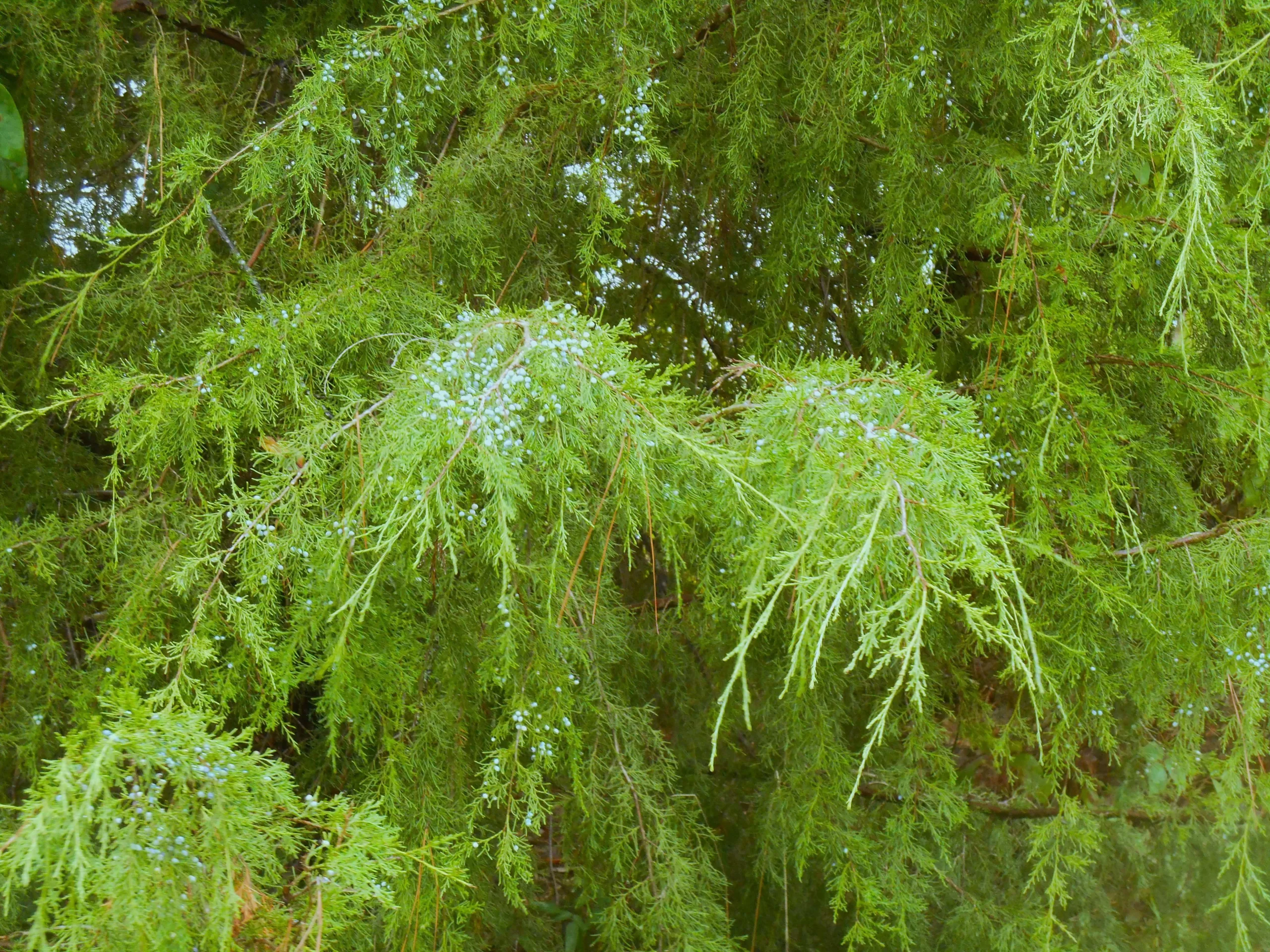
Virginia red cedar, Juniperus virginiana, contains volatile phytoncides which provide many benefits to the tree and to anyone who is near the tree.
Have you ever noticed the distinctive fragrance of pine, cedar, Eucalyptus, juniper, and oak trees? One of the many benefits of spending time around trees is the opportunity to breathe in these fragrant, healing volatile compounds found in the essential oils produced by many trees. Other fragrant plants, like Artemesia, rosemary and lavender also contain similar healing and protective phytoncides. The trees produce these compounds to protect themselves from insect and bacterial attacks. But when we breathe these compounds, they can strengthen our own immune system, even as we relax and enjoy their fragrance. Inhaling healing phytoncides is an additional benefit to inhaling the filtered and cleansed, oxygen-rich air produced by the natural respiration of all plants.
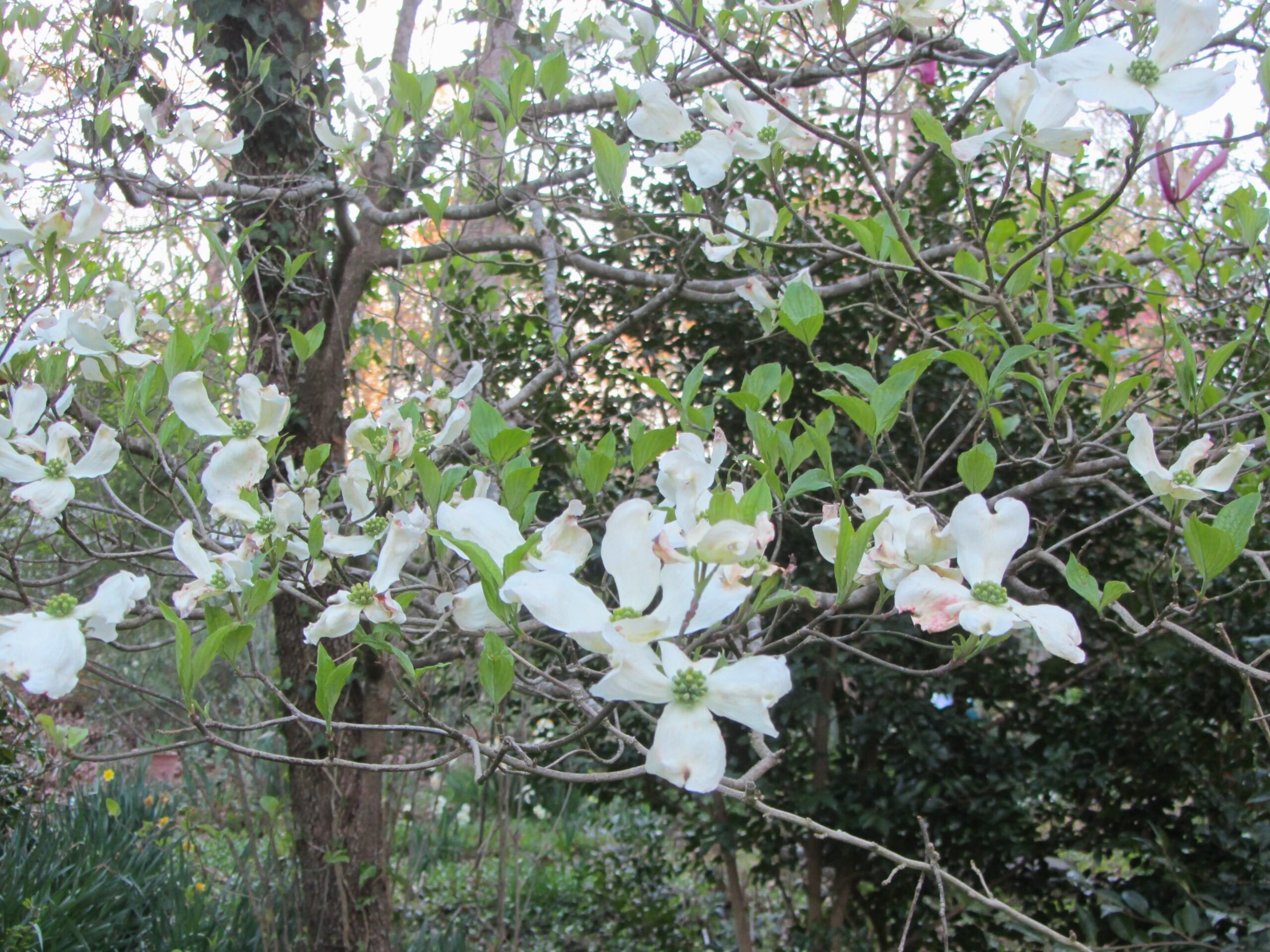
Sanctuary, or healing gardens usually include several of these simple features:
- Full or partial screening from the ‘outside world’
- Trees or large shrubs
- A path to walk contemplatively
- A place to sit and relax
- A variety of flowering, healing, or food bearing plants
- Seasonal Interest
- Plants to attract and shelter birds and other wildlife
- Beautiful views
- Fragrance
- Elemental Features:
- Water
- Earth: stones/sand/gravel
- Fire
- Air
- Spirit: An area for remembrance, memorial, or dedication to a person, an entity or a religious path
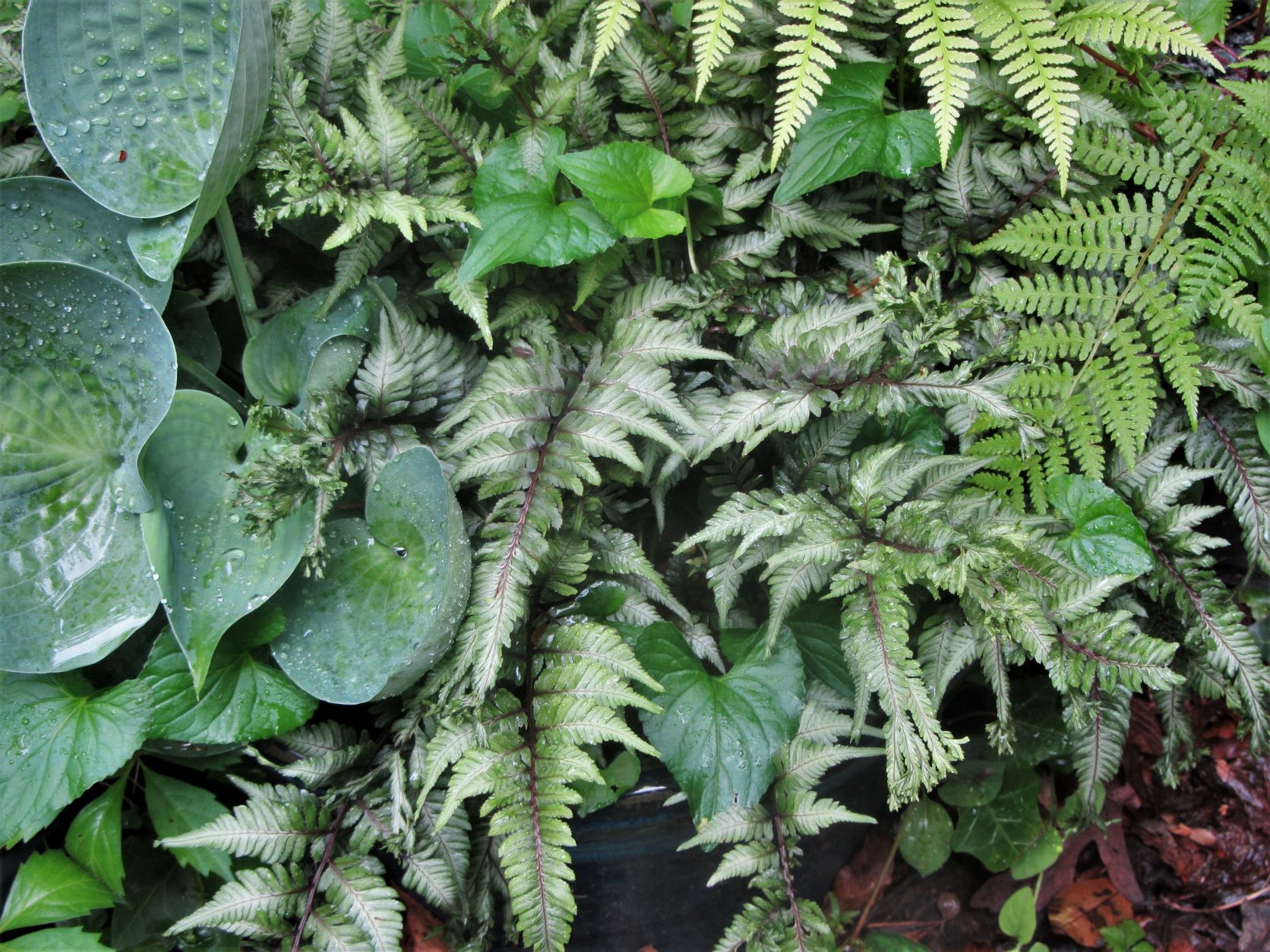
All colors reflect certain wavelengths of light to our eyes. Green is a very healing and relaxing light and is the primary color of many healing gardens.
Maintaining Well-Being
A healing, or sanctuary garden is as much about maintaining good health as it is about healing from an illness. They allow us to slow down, release stress, and clear our minds of upsetting or distracting thoughts. These gardens also help us remain well when we are grieving or experiencing any sort of painful loss, life change, or separation.
Individual gardeners will develop their personal gardens to focus on what is most important to them personally, and what their space and resources allow. Sometimes working on a very small scale, and even in containers, helps us to focus and appreciate tiny details. As with all gardens, these spaces will evolve over time as plants mature and as the gardeners’ needs change. Let’s consider each of these primary features of a sanctuary garden:
Full or partial screening from the ‘outside world’
Most of us want some privacy and seclusion when enjoying our gardens, particularly if we are using the space for contemplation or meditation. We may also need to screen out noise, traffic, destructive wildlife, and other distractions. Fences, walls, hedges, trees, and even vine-covered pergolas can provide some visual screening and sound buffering. Water features with moving water can produce some calming sound to cover other noise.
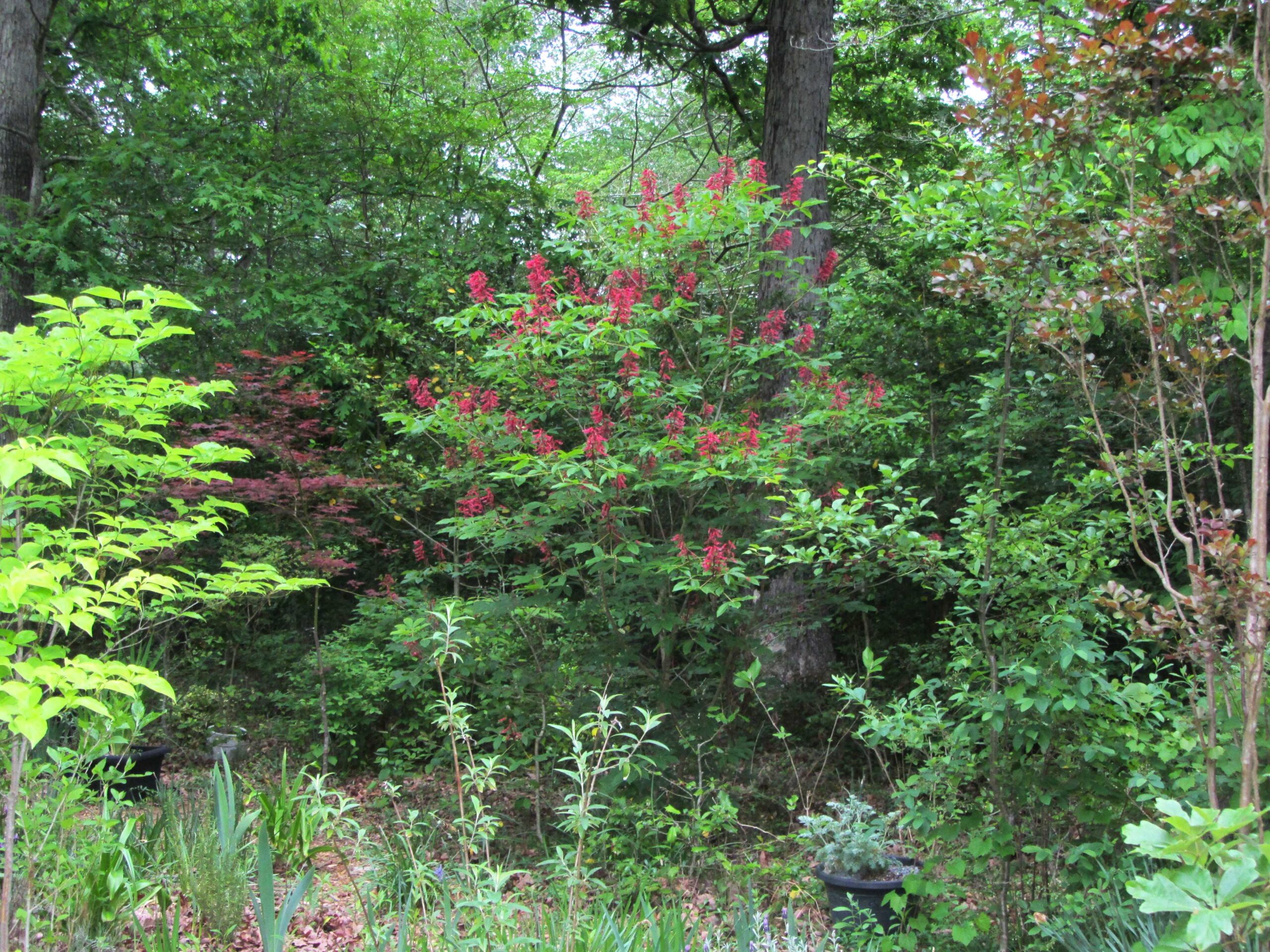
Trees or large shrubs
Well placed trees and large shrubs or tall hedges help give our gardens private spaces, control access, and help buffer noise. But they also offer beauty, fragrance, and filter pollutants from the air while they help manage storm water run-off. Shade is important in sanctuary gardens. Trees and large shrubs cool the space in summer, serve as a windbreak, and provide some protection from direct sun exposure. Trees may be selected for the flowers, fruits or nuts they produce, for fragrance, for wintertime beauty, or for the wildlife they support. “Food Forests” are a specific type of sanctuary garden designed to produce a variety of foods throughout the year.
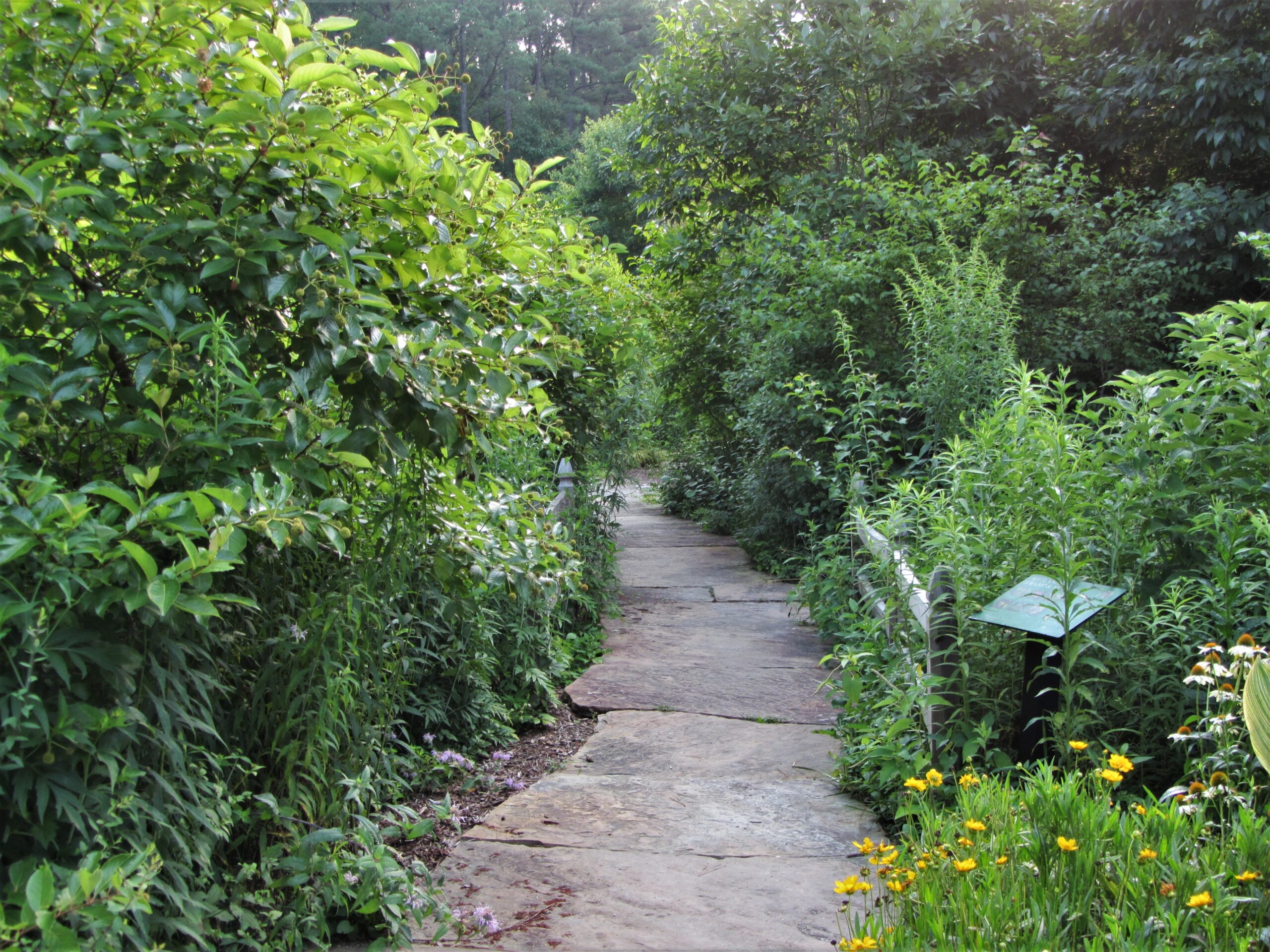
The Williamsburg Botanical Garden and Freedom Park Arboretum summer 2021.
A path to walk contemplatively
Most healing gardens of any size include a circular pathway for contemplative walking. This may be a loop, a series of connected pathways, or even a formal labyrinth laid out somewhere within the space. Create various destinations along the path to draw you from one area of the garden to another and encourage movement. These can include seats, special trees or planting beds to visit, patios, an area with a table and chairs, a fire pit, a hammock, shrines, cairns, artworks, etc. Paths can lead from the front of your home to the back, to a garden shed, to a grove of trees, or even to an opening to access a nearby roadway or forest.
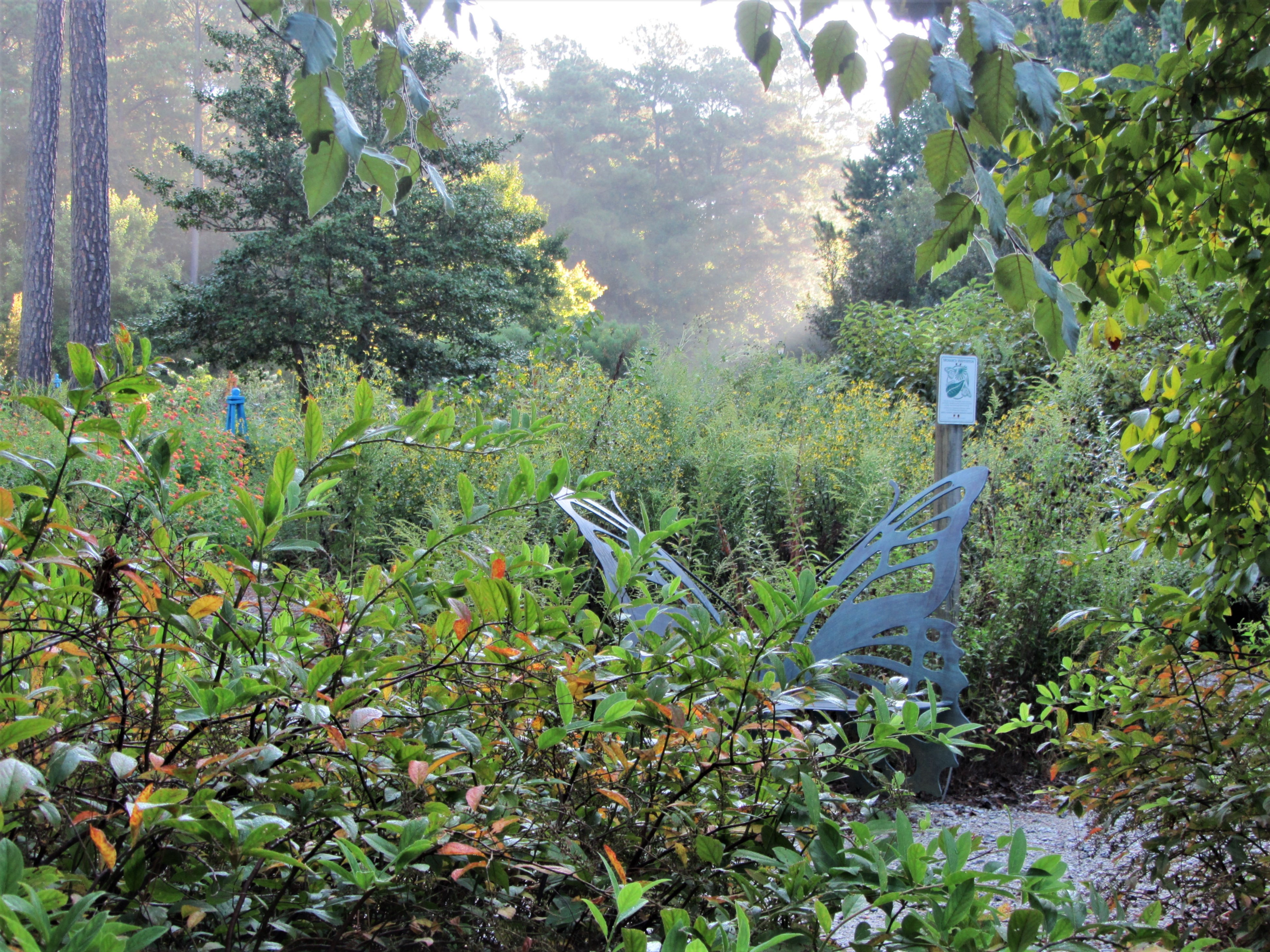
The Williamsburg Botanical Garden and Freedom Park Arboretum summer 2021.
A place to sit and relax
While a healing garden provides many types of benefits, one of the most important is simply a place to sit and relax alone or with loved ones. Comfortable seating is very important. It is good to have isolated spots to sit alone and also places to gather with others. Seating can be as informal as a large rock or stump, or even a grassy spot beneath a large tree. It might also include comfortable chairs on a paved patio and an outdoor dining area that can double as a workspace. Be sure to include chairs near work areas where you can stop and rest in the midst of garden chores.
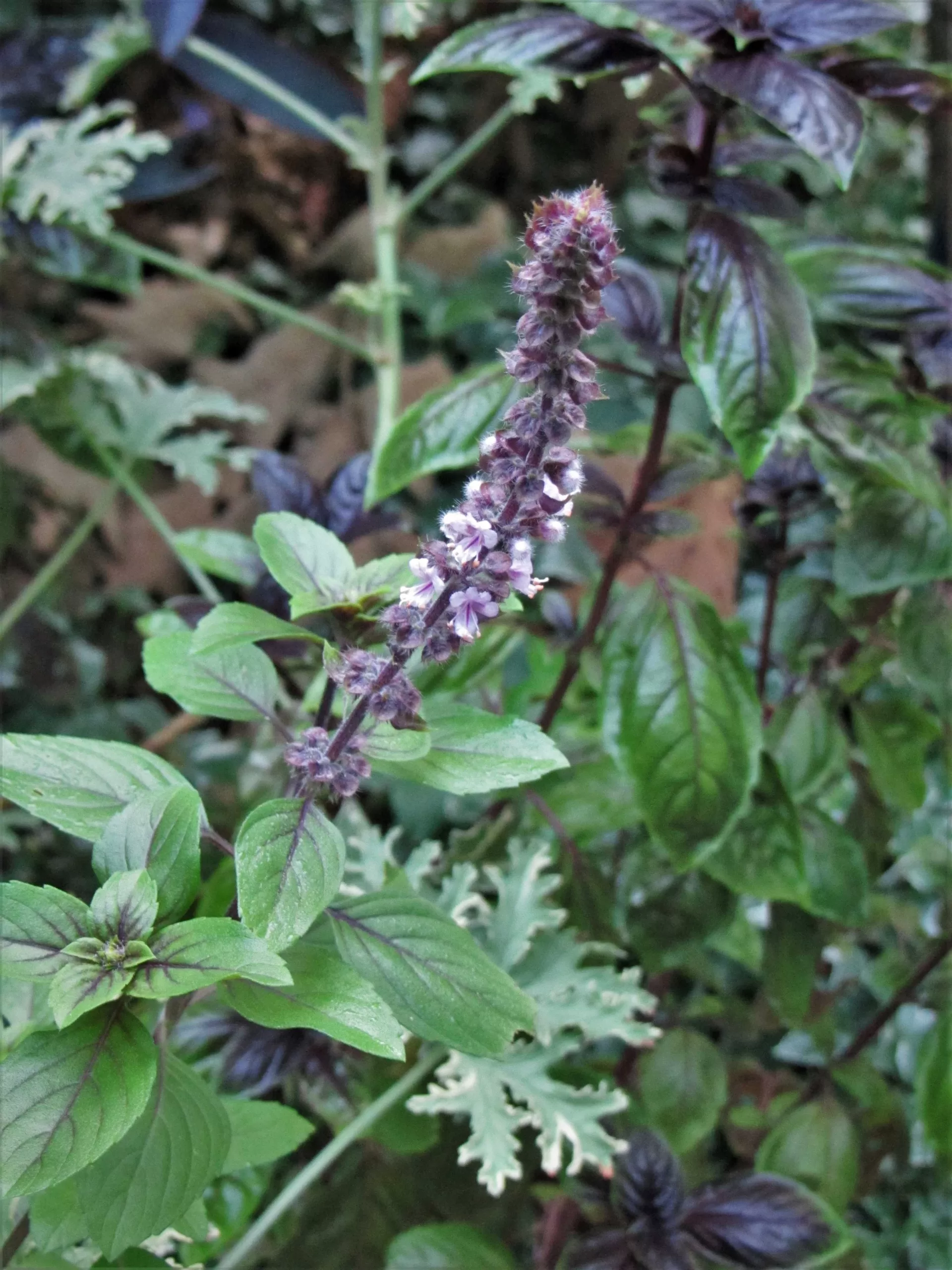
Basil, and other mint-family flowers attract hummingbirds. Use the leaves to make tea or in food preparation.
A variety of flowering, healing, or food bearing plants
Plants serve many different purposes, and we choose them for a variety of reasons, including ease of care and how they interact with our local ecosystem. Consciously include at least some plants that will produce fragrance, phytoncides, food, flowers for cutting, herbal medicine, or other products you can harvest.
Consider when your plants will bloom and bear fruit, and appear at their best, to create interest throughout the year. Anyone who cooks with herbs, makes herbal teas or vinegar, or who makes herbal medicines will want to include a sunny space to grow the plants they need. Certain herbs and vegetables like onions and garlic contain phytoncides that you can ingest rather than breathe, but they have similar healing and disease preventing properties.
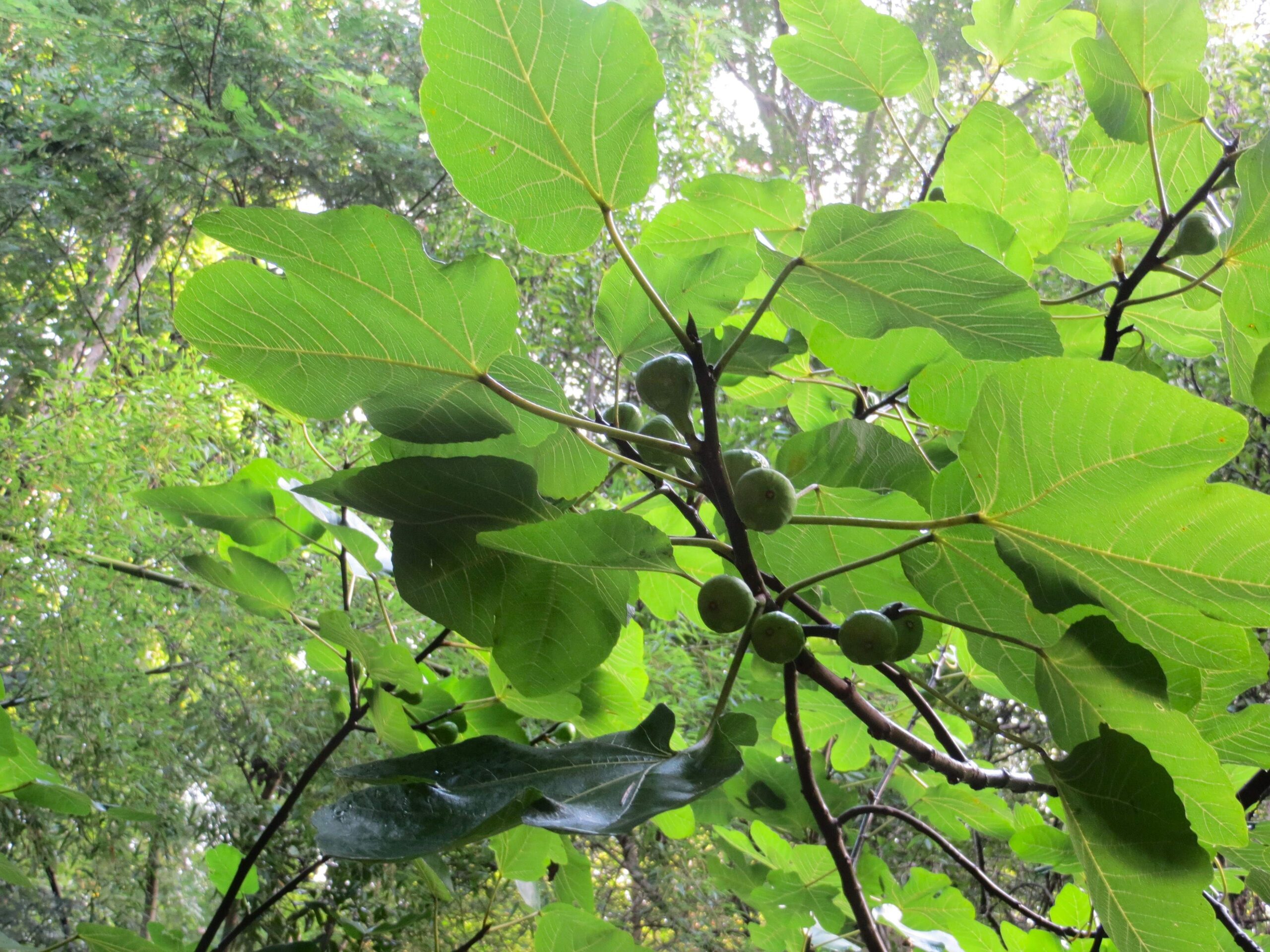
European figs ripen in late summer. This variety remains green as the fruit ripens.
Seasonal Interest
Your garden should include something beautiful to enjoy throughout the year. A mixture of evergreen and deciduous trees and shrubs will help provide structure to your garden through the winter. Even deciduous woody plants can remain beautiful without their leaves and flowers because of their form, interesting bark, or their lingering seeds.
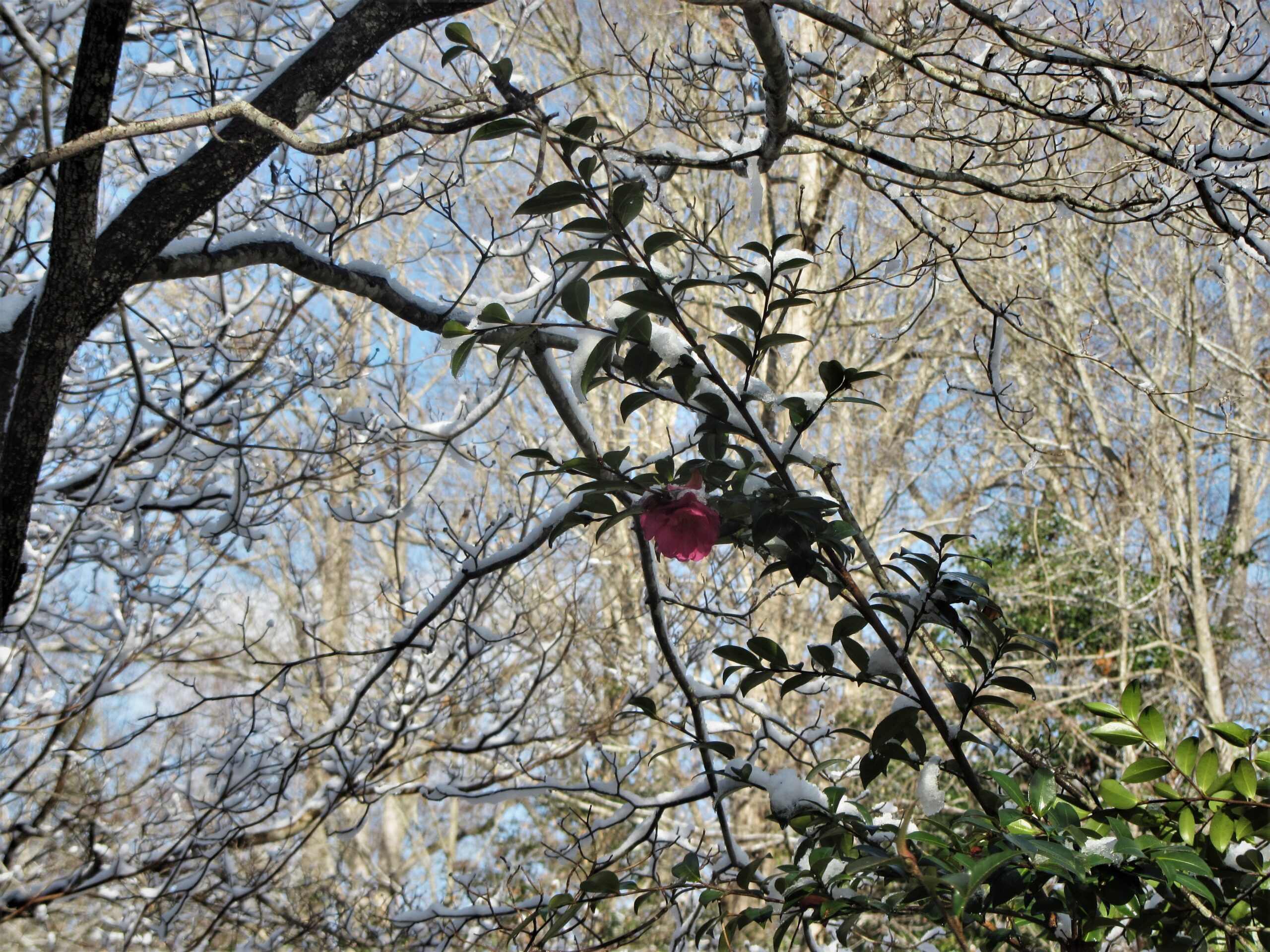
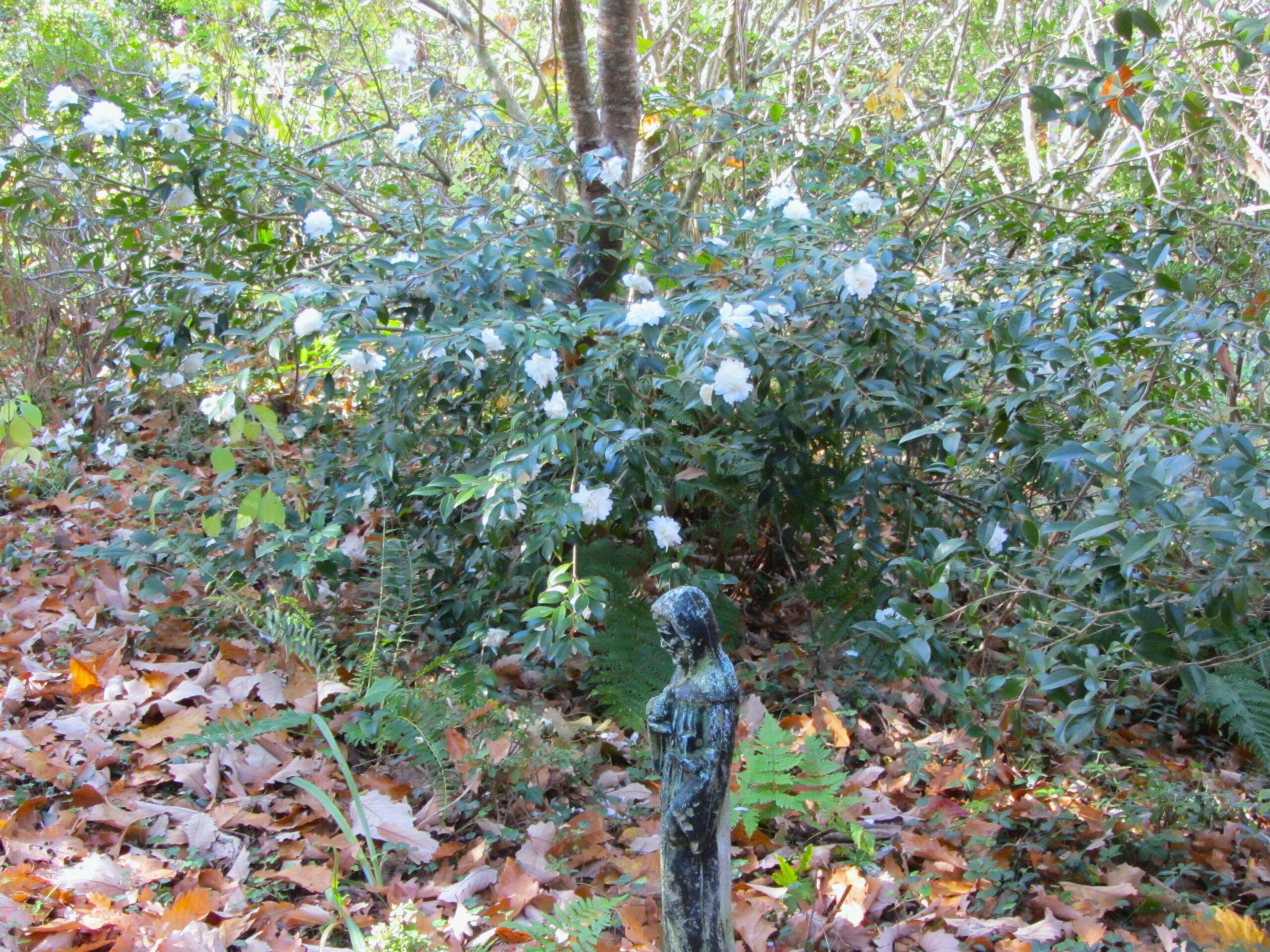
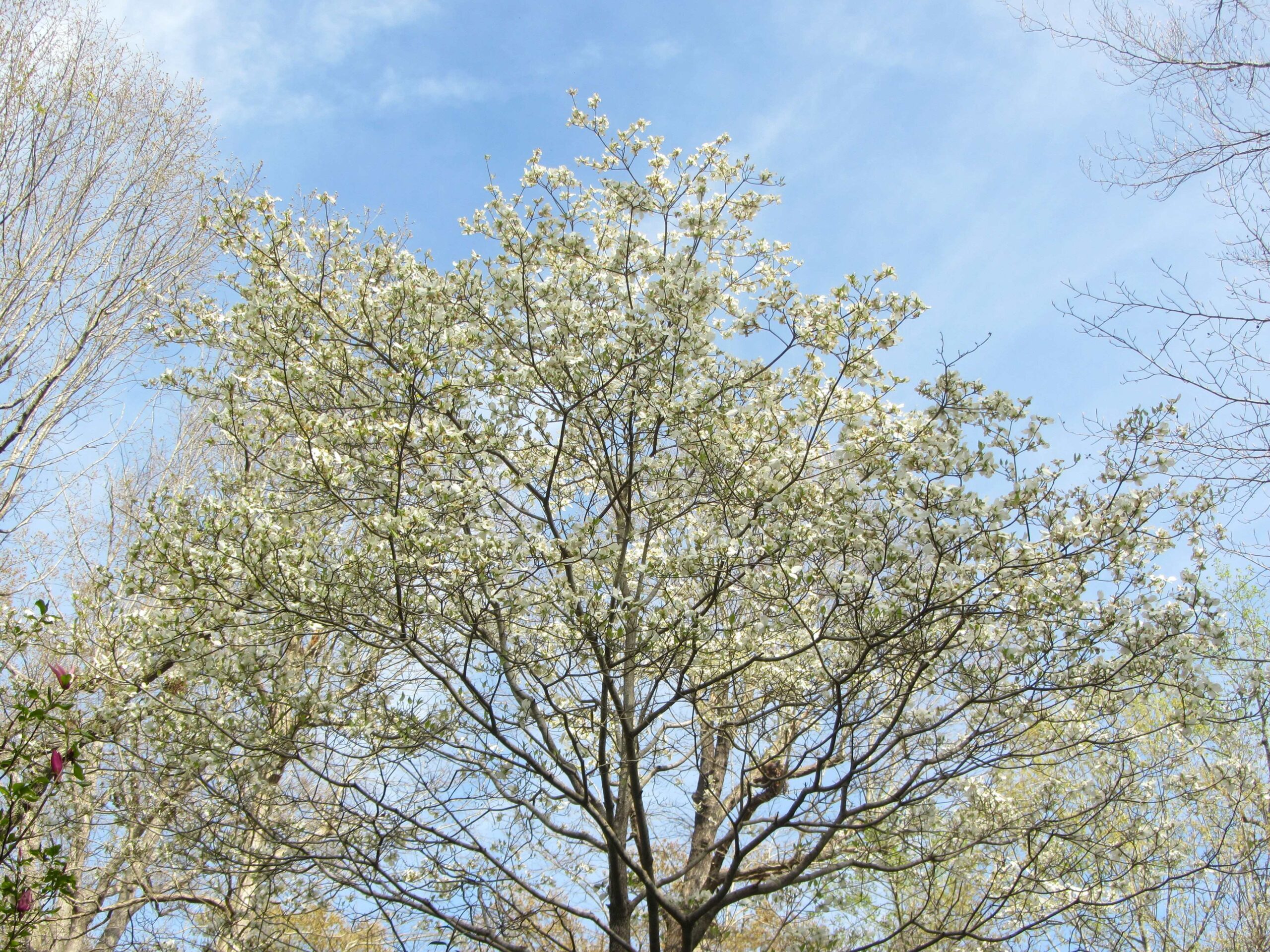
Camellia sasanqua blooms from early autumn until early winter. Dogwood trees hold scarlet drupes into early winter, while next spring’s flower buds have already formed.
In our climate, it is possible to have something blooming every day of the year. Winter blooming flowers like Hellebores, pansies, witch-hazel; early flowering bulbs and trees; and late flowering Camellias provide color from autumn through spring. Colorful drupes on shrubs and evergreen ferns, vines, and other perennials also liven up a wintery landscape. Winter will reveal beauty that is normally hidden by leaves and flowers during the summer months. Allow your garden to change week to week and month to month, reflecting the changing seasons.
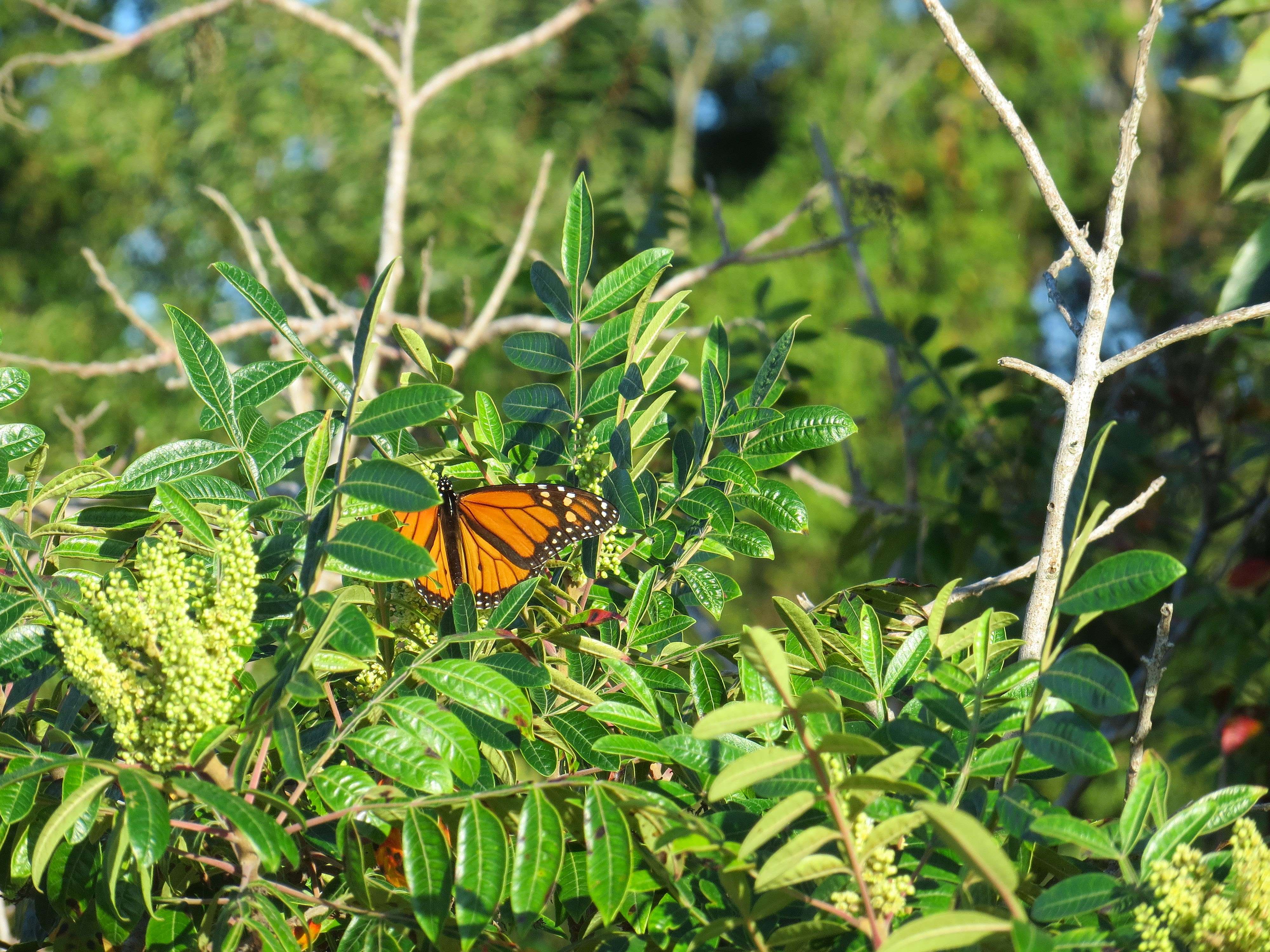
A monarch butterfly nectars on winged sumac, Rhus coppallinum, in early September. The leaves of this native shrub turn bright scarlet each autumn and its ripened drupes feed birds into the winter.
Plants to attract and shelter birds and other wildlife
Birds, butterflies, dragonflies and other insects, lizards, toads, turtles, and squirrels bring our gardens to life. Their beauty and their music relax and uplift us. Their presence allows us to practice generosity by seeing to their needs. All types of wildlife require food, shelter and habitat to raise their young, water, and a non-toxic environment- just as we do.
Refrain from using pesticides so that animals attracted to the flowers and fruits in your garden aren’t poisoned. Provide specific habitats to attract specific types of animals like bluebirds or carpenter bees. Include butterfly host plants as well as nectar plants to increase the number of butterflies in your garden. Put up hummingbird feeders and provide appropriate nectar plants to attract families of hummingbirds. Many types of birds and butterflies prefer living in areas that provide both full sun and shady shrubs or trees, side by side. So leave some areas of the garden open to full sunlight during parts of the day to attract these animals.

Beautiful views
Beautiful views attract and hold our attention both within and outside of our garden. It may be a distant landscape we can see from our seating area, or it may be a tree in our neighbors’ yard. Our beautiful view might be a mirror hung on a garden wall to reflect a planting, or a small pond we have built. What will interest and entertain you as you sit relaxing, and what is beautiful to you?
Anyone working with a small space such as a balcony or patio garden may enjoy the view of a distant river, street trees, or a neighbor’s trees growing nearby. We can all appreciate ‘borrowed landscapes’ visible beyond our own properties.
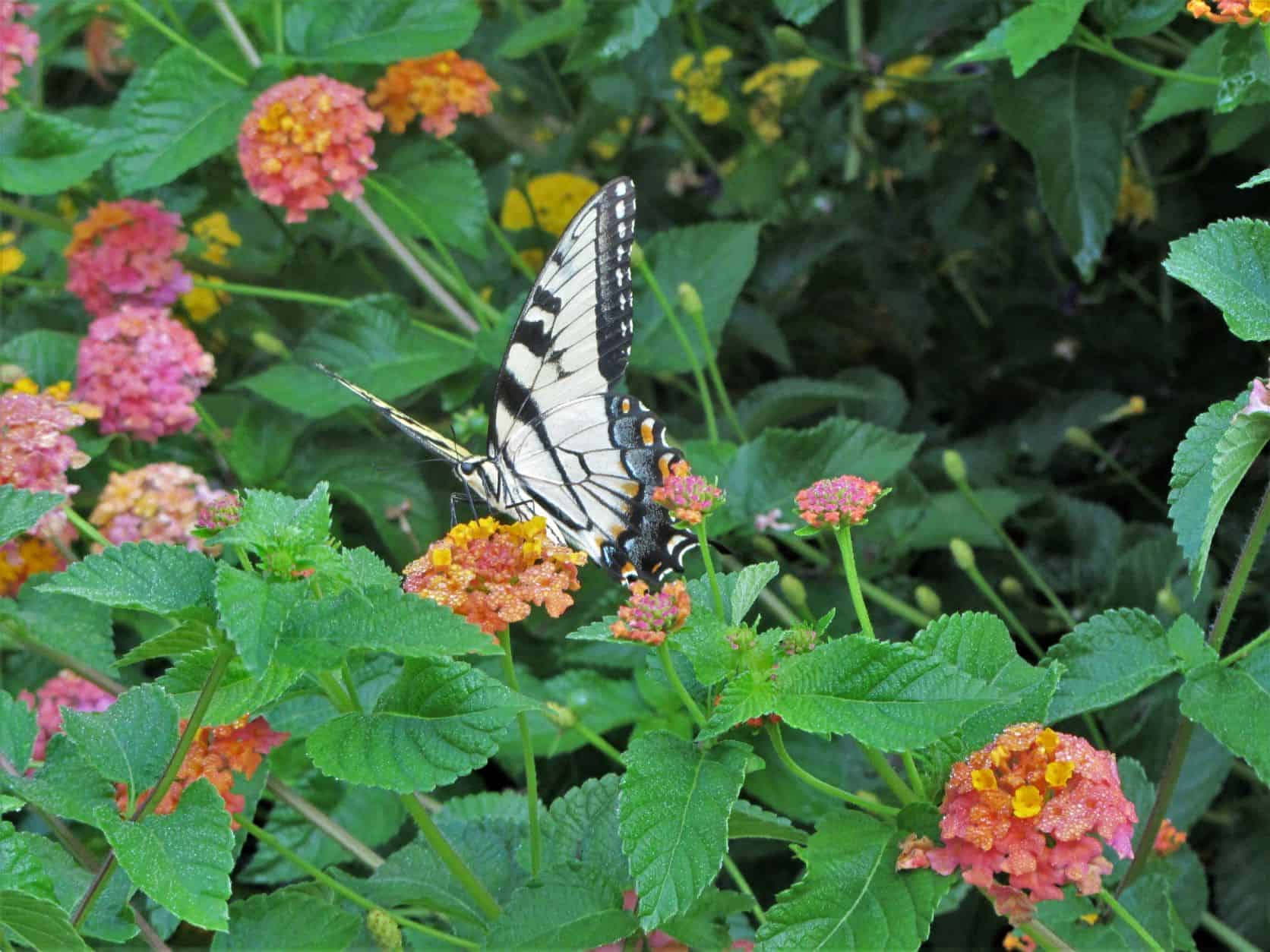
An Eastern Tiger Swallowtail butterfly feeds on Lantana
We have a large patch of mature Lantana plants near the patio that bloom from spring until frost. During the summer, butterflies, hummingbirds, bees, and hummingbird moths visit these flowers all day, every day. Birds frequent the shelter of the large Lantana plants all winter. A beautiful view for you might be a pond, a flowering hedge, or a fence covered with vines.
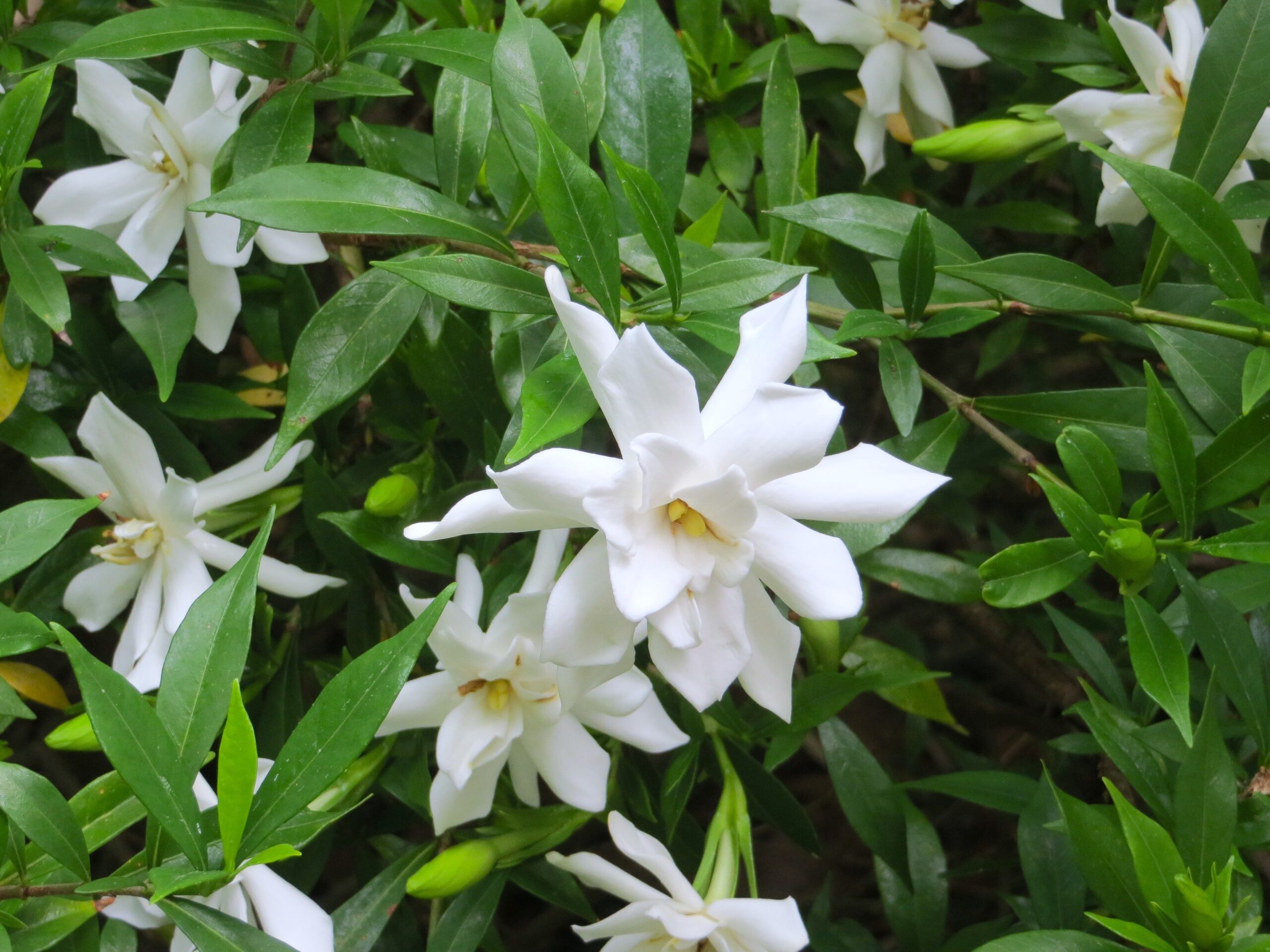
Fragrance
Fragrance relaxes us and helps us cultivate a sense of place. Our garden’s fragrances shift as the seasons change and might include the scent of flowers like ginger lilies or Gardenias, the fragrance of cedar trees, the perfume of basil plants, or the aroma of fallen leaves and moist earth. Choose plants specifically for their fragrance and cluster fragrant plants near the areas where you spend the most time in the garden. Remember to use plants that are most fragrant at night, like moon flowers, if you spend evenings relaxing in your garden.
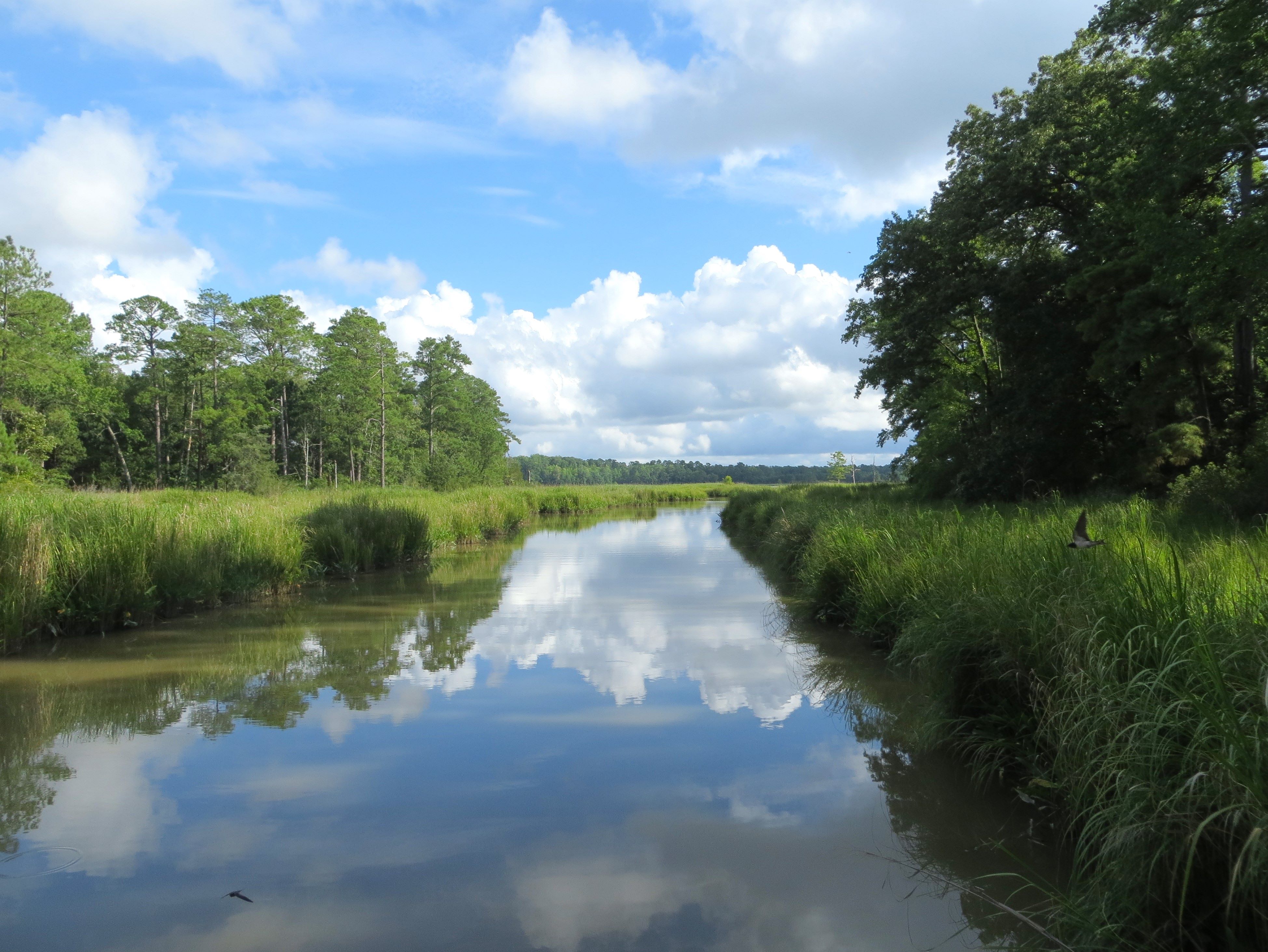
Water, no matter how much or how little, attracts wildlife and reflects the sky. Jamestown Island, Virginia
Elemental Features:
Water
Our bodies are mainly water and crystallized bone. Plants are mostly water and cellulose. All living things require water to live, and bodies of water soothe and inspire us. Find a way to include some amount of water in your garden, even if it is only a bowl of water set out for the birds and small animals to drink. Large bowls of water may be located near seating areas to reflect the sky, and solar powered fountains or larger water features with circulating water add the element of sound. Rain chains gently guide water from the roof to a rain barrel. Rain gardens, creeks, ponds, swimming pools and hot tubs, wells, and natural springs add their own magic to our gardens and attract a wider range of wildlife.
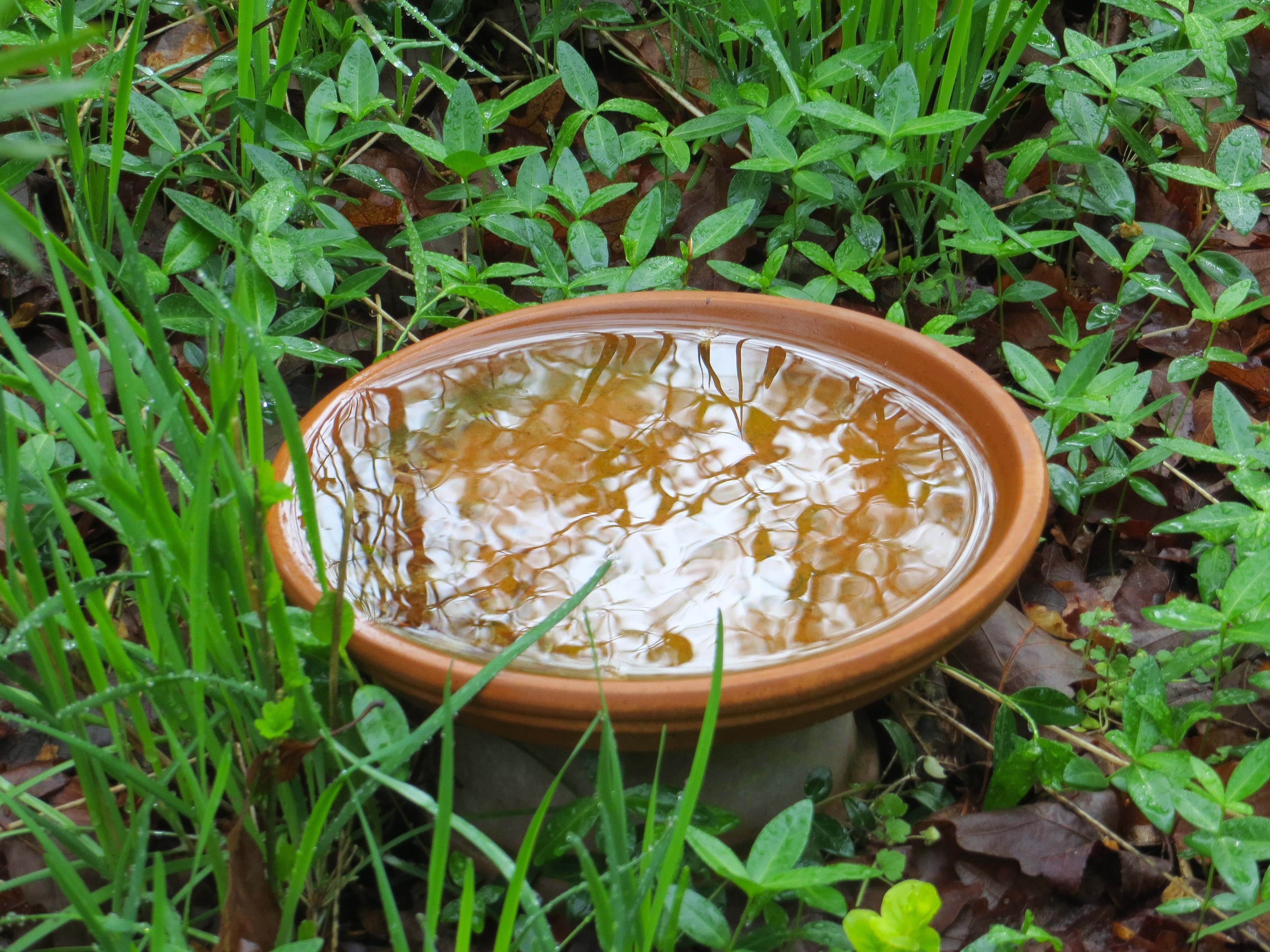
Provide shallow pans of water for wildlife, and to reflect the sky.
Earth: Stones/sand/gravel
Stone is an excellent material for adding stability and permanence to our garden. We use stone for building walls, patios, and walkways. We may locate larger stones throughout the garden as accents or informal seats. Cairns are intentional piles of balanced stones that we build for specific purposes and may be positioned in planting beds or along garden paths. Shallow pans of sand, gravel, and water allow butterflies to ‘puddle’ in summer.
Gravel is available in a variety of colors and textures and serves as an effective mulch for some types of plantings. Gravel insulates the soil, retains moisture, and protects foliage from diseases caused from soil and microbes splashed onto the lower leaves of plants during hard rain and from too much dampness around their crown. It also discourages slugs and some insects. Use gravel mulch around succulents, herbs, and other perennials or subshrubs that will benefit from a drier environment. Combine two or more sizes of stone for a more interesting finish.
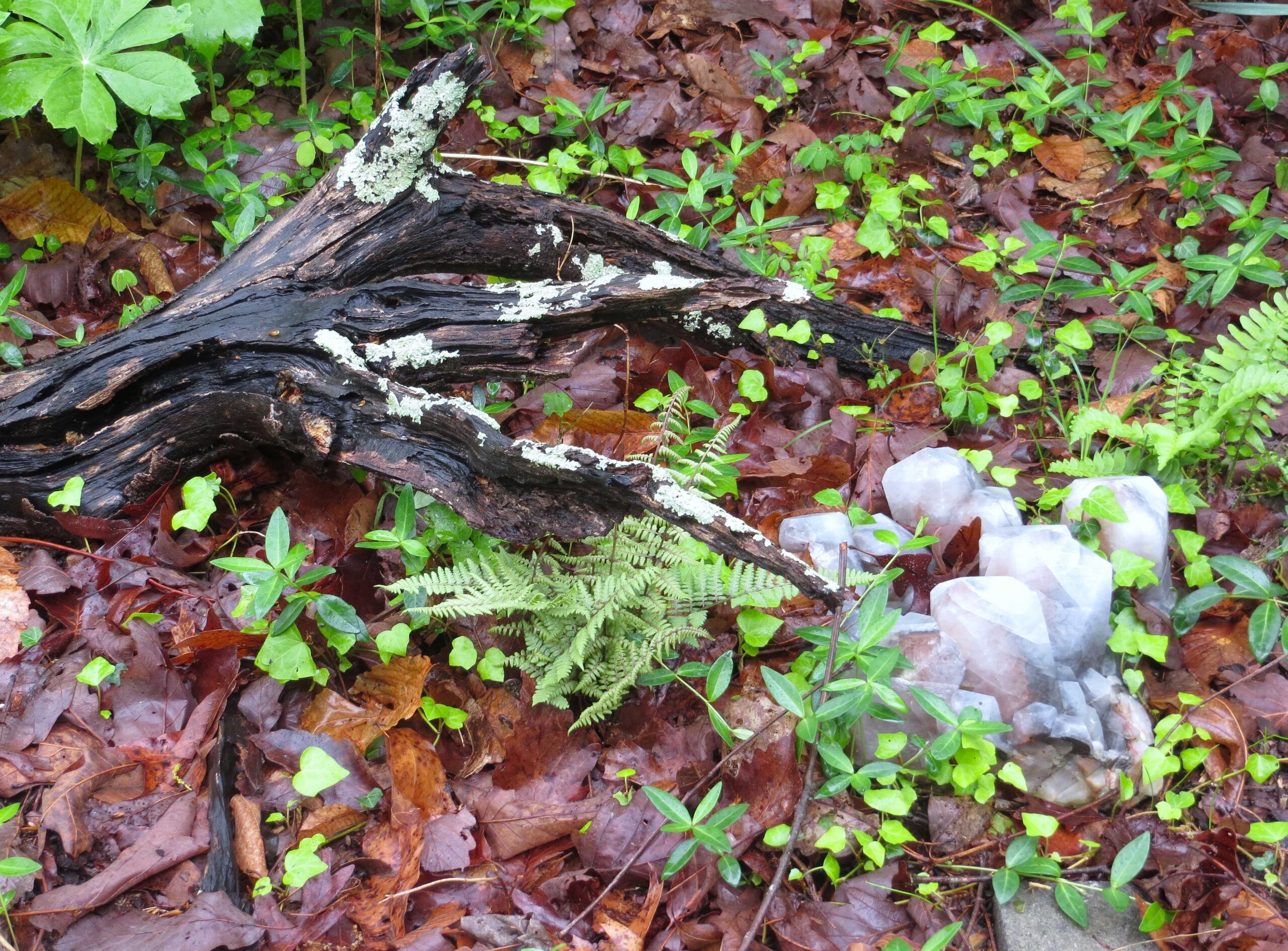
Some types of stone, like granite and sandstone, contain the mineral quartz, which has piezoelectric properties to conduct, hold, and amplify various types of energy. Silica, or silicon dioxide, is a major component of quartz and is found in sand and many other minerals and gemstones. Geologists have discovered that most of the standing stones across Europe, and in other areas of the planet, contain quartz and theorize that our ancestors used these stones intentionally to interact with the magnetic field of the Earth. Quite a few ancient and medieval temples were built with granite and other stones that included quartz.
Fire
Some gardens have space for a fire pit or a chimenea where family members and friends can safely gather around an open fire. Make sure that there is a hose or other water source nearby for safety. Candles, strings of garden lights, and solar powered lanterns can also light the night and bring the element of fire into your garden.
Air
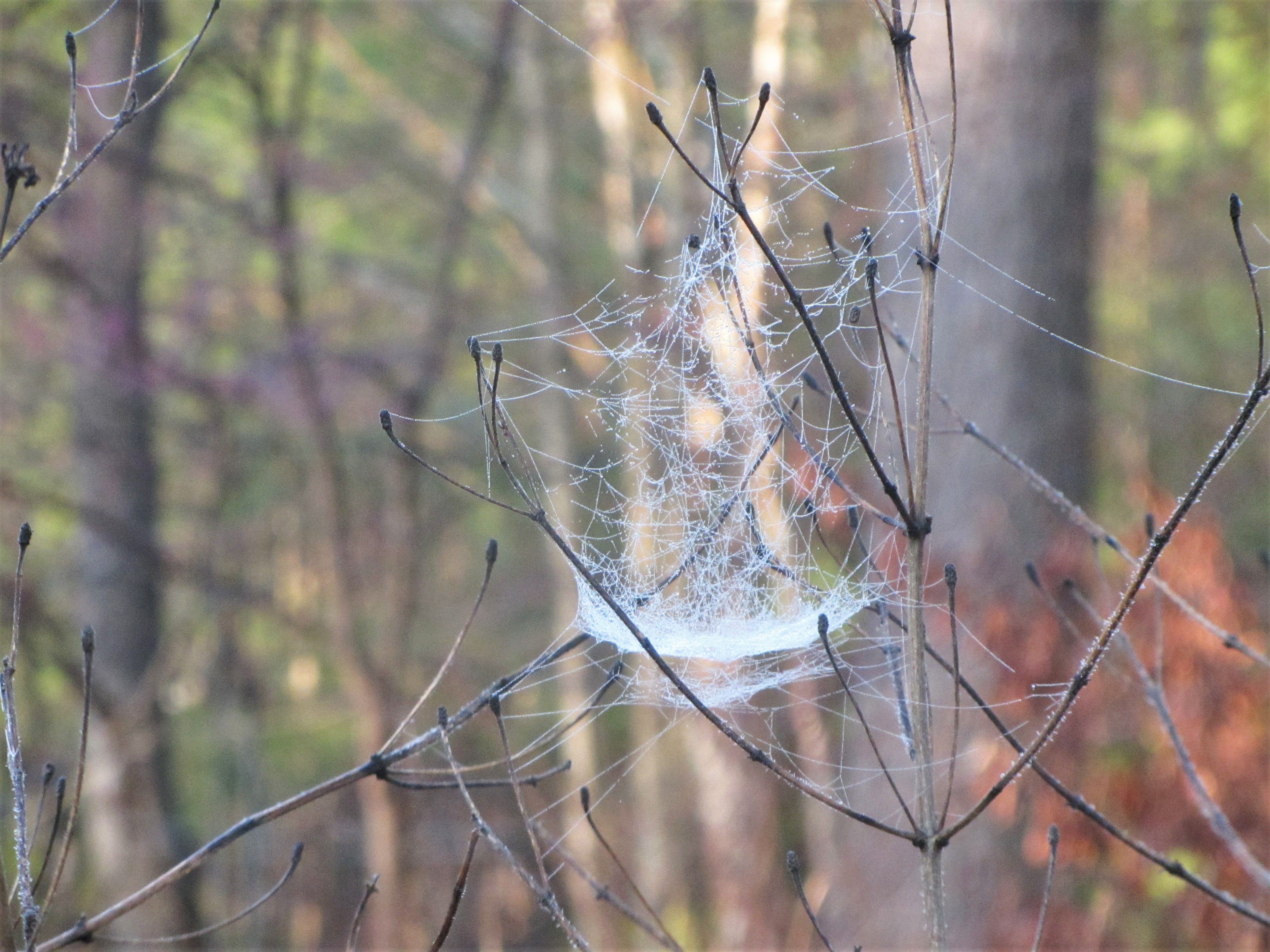
Although air is always around us and within us, mobiles, wind chimes, and kinetic art celebrate the element of air through sound and movement. Trees sway and herbaceous plants shimmy in the wind. Leaves fall on the autumn breeze and spiders’ webs sway, catching the light and dew. Wind chimes can alert us to changes in the weather and approaching storms. Including artistic elements powered by air increases our awareness of this element.
Many traditional healing gardens provide a bell or chime at the entrance gate. Ringing the chime helps focus the attention as we transition from the busyness of our lives to the peace of our sanctuary garden. Some people include a bell or chime, or a set of wind chimes, in a memorial they make within their sanctuary garden to remember loved ones who have passed.
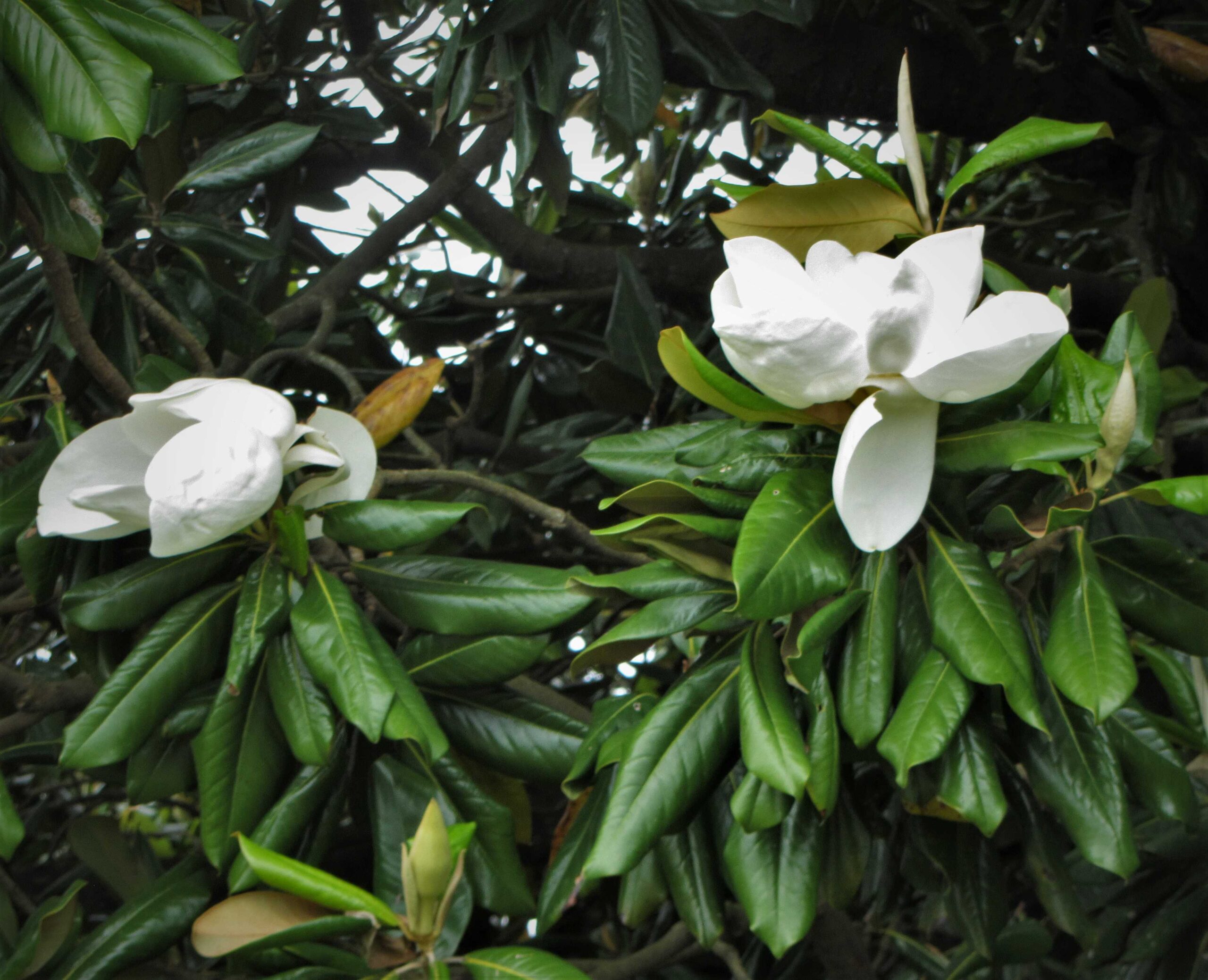
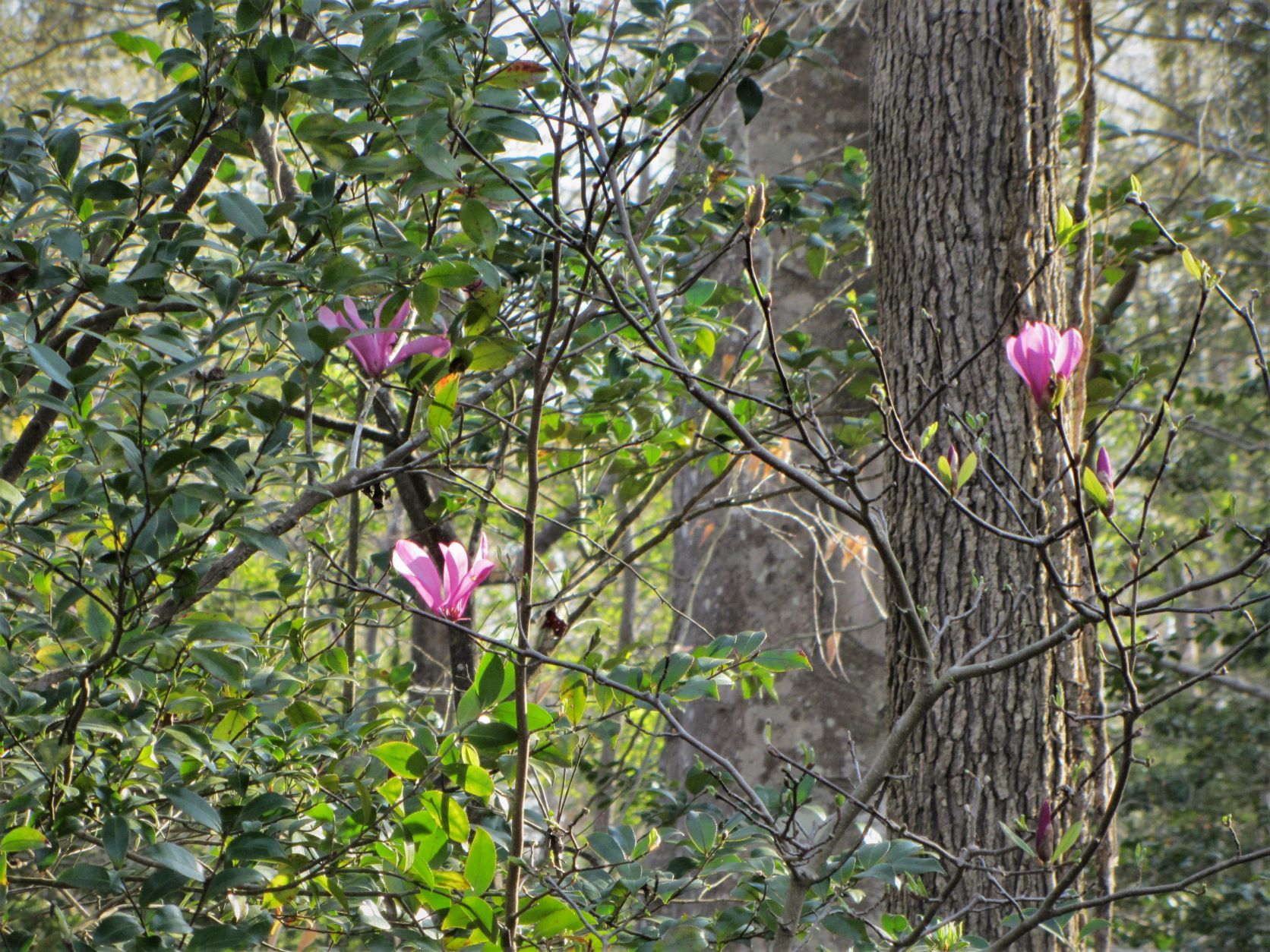
Magnolia trees are a good choice to plant in honor of a departed loved one or to celebrate the birth of a child. Although these are very large trees, smaller cultivars are available for use in smaller gardens. There are also smaller, deciduous, spring blooming Magnolias that produce exquisite flowers.
Spirit: An area for remembrance, memorial, or dedication to a person, an entity or a religious path
Our ancestors sensed that spirit permeates all life and so recognized the spiritual aspects of the physical world with a variety of shrines. Some countries you visit today, particularly in parts of Asia and Europe, are dotted with shrines still in use. It isn’t uncommon to find bright ribbons tied to trees or small offerings left near trees or stone cairns. Prayer flags, coins, tobacco, libations poured on the ground, and even small candies may be left as tributes to the spirits of a place.
Indigenous cultures recognize that wherever we are, we are in the center of the universe. Indigenous healers help their community to orient itself within the larger cosmos with a medicine wheel. A medicine wheel is usually laid out on the ground using stones, but it may also be drawn in the sand or constructed with other materials, like sea shells or small rocks or crystals. It is a circle with two lines made through it marking the north-south axis and the east-west axis. Something of personal significance is placed in the center. This is still an important feature of most Native American spiritual practices. In Europe and western Asia, these circles often included standing stones at the cardinal points for marking the movement of the sun and for finding various astronomical alignments. A medicine wheel, however simple, is included in many modern sanctuary gardens.
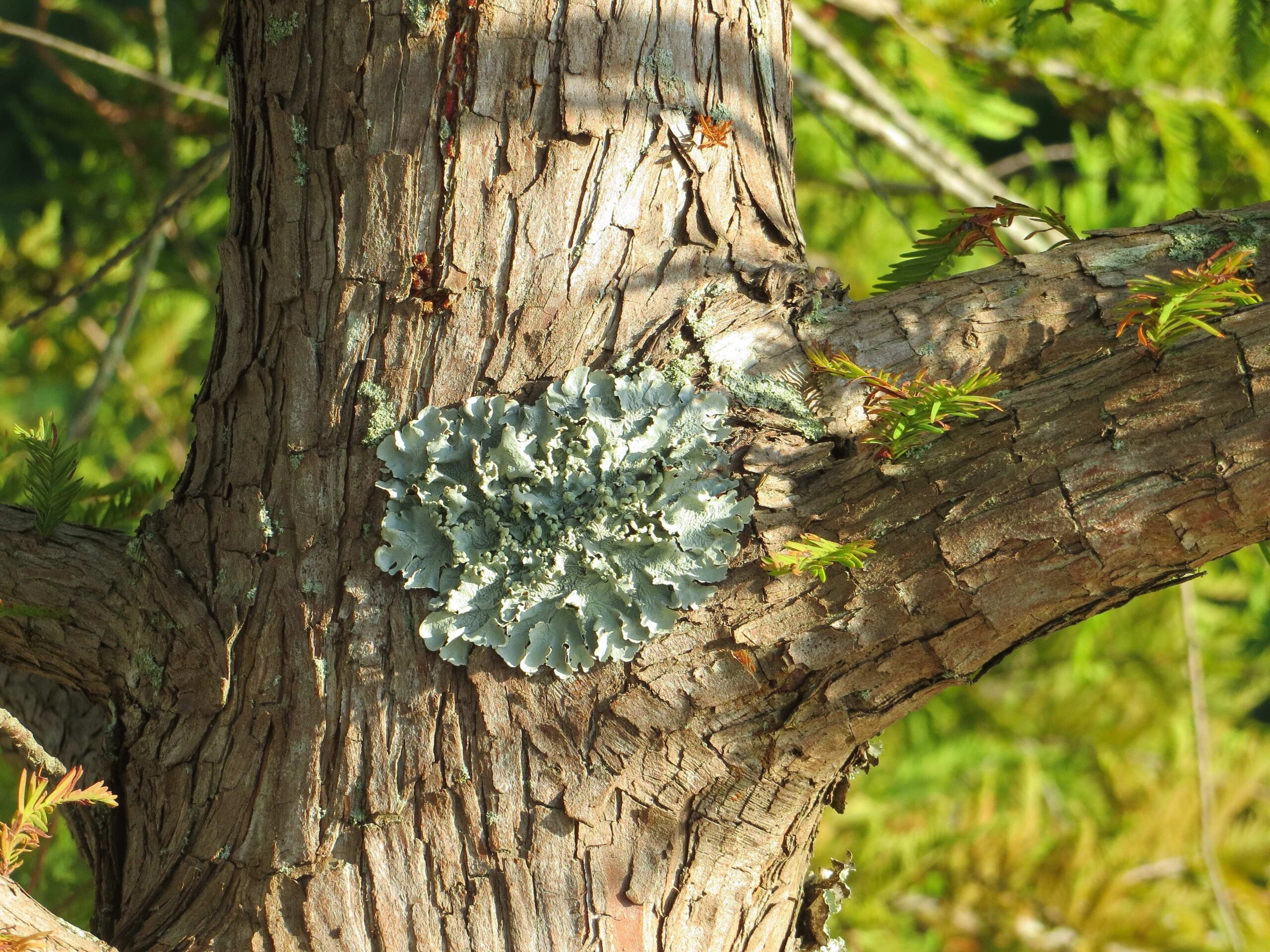
Remember to notice those most humble native plants like mosses and lichens. They demonstrate beautiful geometry and teach us that the Creator takes great care with every detail of life. Lichens grows on a bald cypress tree. September 2025.
While these practices tend to be cultural and are based in various faith systems, we might display a cross or a statue of a saint within our garden. We might also dedicate sculpture to a lost loved one or plant a particular tree or shrub that they enjoyed, in their memory. Some might create a space within the private areas of their sanctuary garden for a small altar or shrine. These features help us to focus our thoughts, express our gratitude, and they support our contemplation and healing.
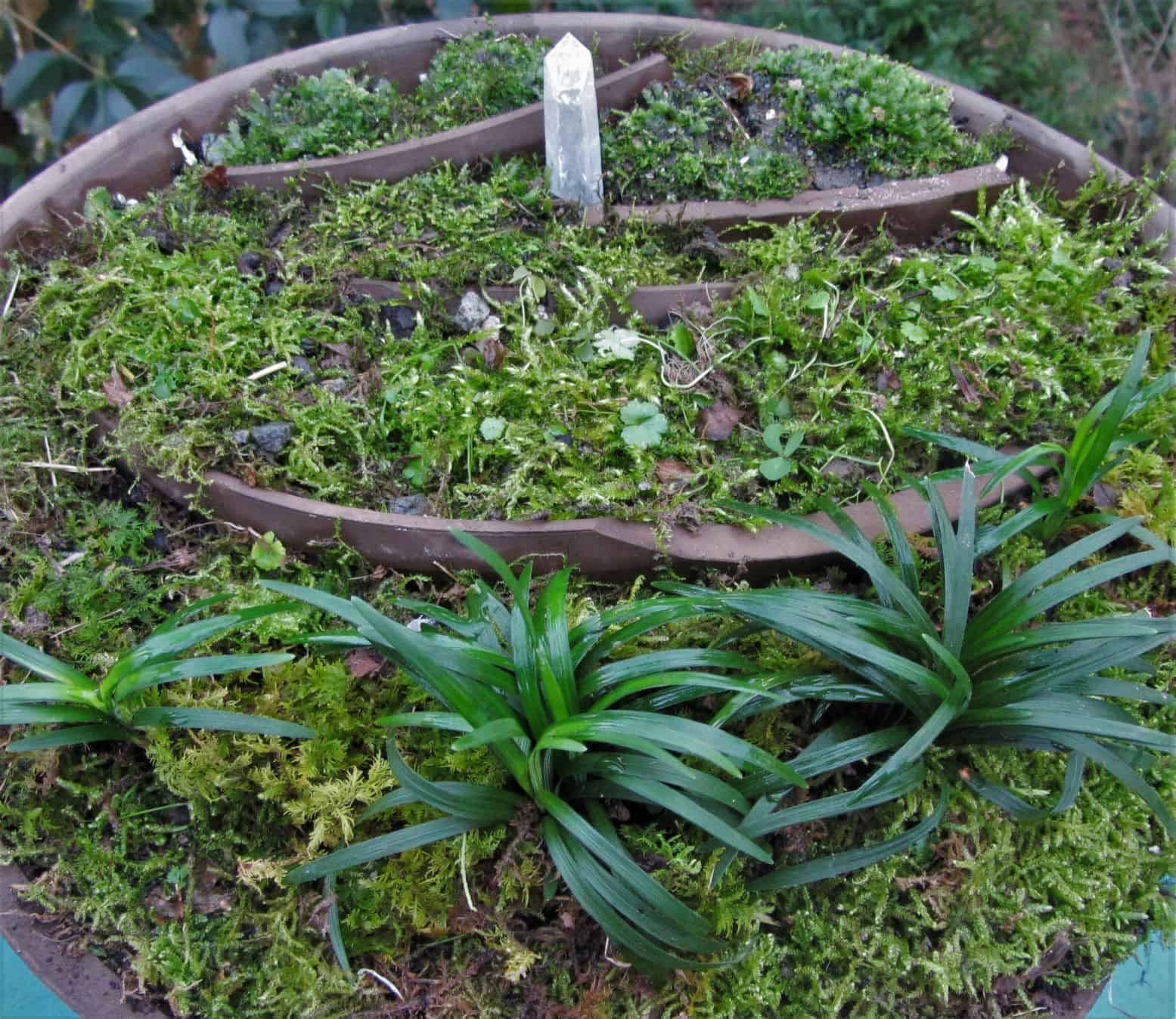
Spring bulbs are planted under this moss in a winter container garden featuring mondo grass. It demonstrates continual change and the possibility that there is beauty even in something that is broken.
Expressing Gratitude and Appreciation
Gratitude and appreciation are an essential part of the ebb and flow of our lives, and the simple practice of ‘counting our blessings’ helps us heal and cheer up when we are feeling dispirited. We learn to say “Thank you!” when we first learn to speak as young children, and those may be the most important words we ever say. A sanctuary garden not only gives us more to be grateful for in our lives, but also provides many opportunities to express that gratitude.
Indigenous people and religious people from all faiths practice gratitude as an essential part of their daily lives and spiritual practice. We can show gratitude towards our gardens and the blessings we receive from the plants and animals growing there through our care for them. Watering, weeding, pruning, feeding wildlife, making and spreading compost and mulch, and planting new plants are all ways to express our gratitude and appreciation for our tiny corner of the larger world.
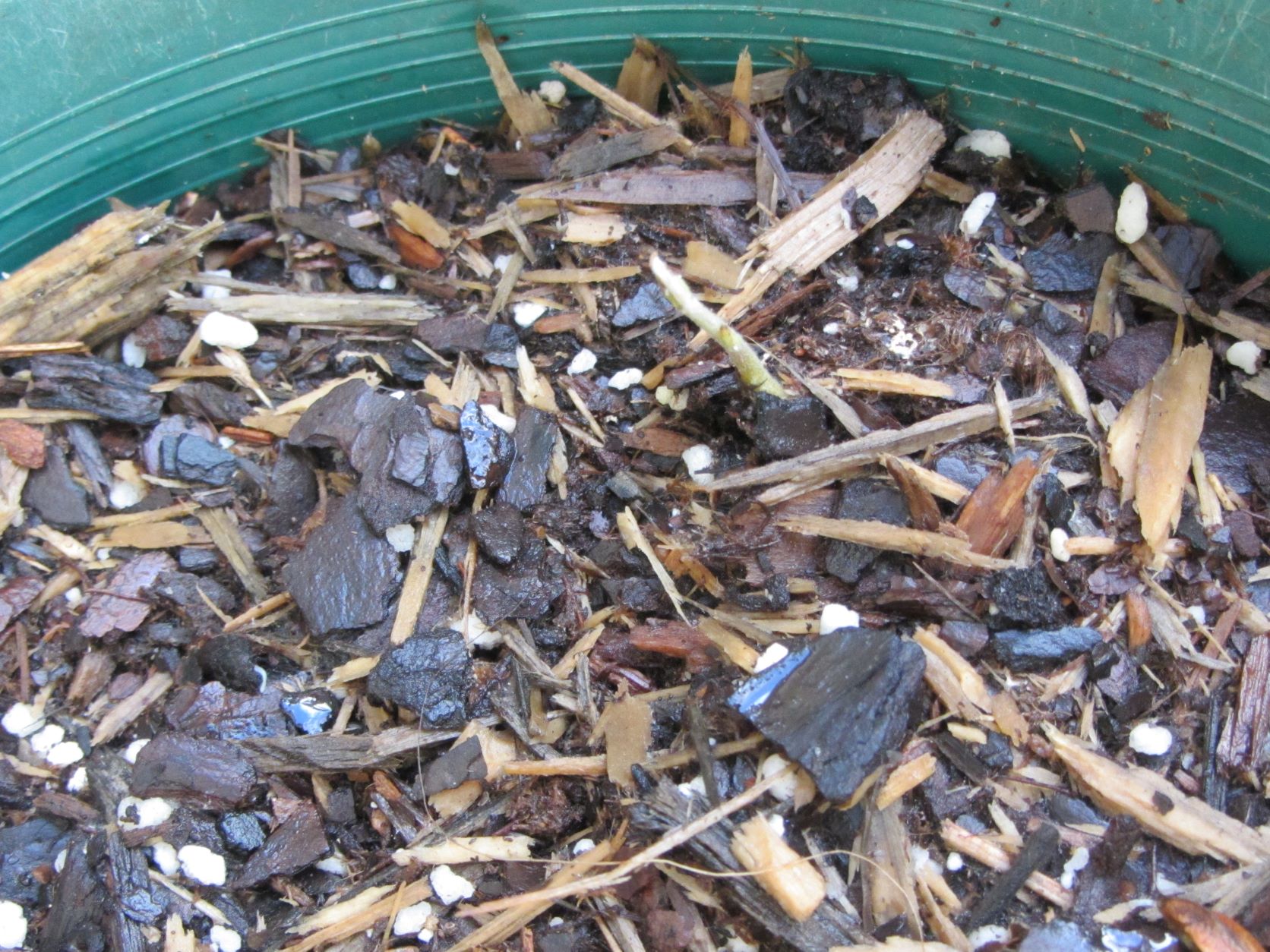
An oak seedling sprouts from a mix of compost and shredded bark.
Planning for Changes
Any garden grows slowly and changes over time. A sanctuary or healing garden also takes time to develop, just as it takes time for us to heal the many injuries we experience throughout our lives. It may be that your present garden already includes many of these elements, and a few tweaks will make it even more suitable for your needs as a place for relaxation and healing. If you are starting over to build a new garden, or renovate one that has become overgrown, then you can plan with these principles in mind. If your land currently has very few trees, you might consider planting your own tiny forest to increase the biodiversity in your yard and to enjoy the many benefits trees offer.
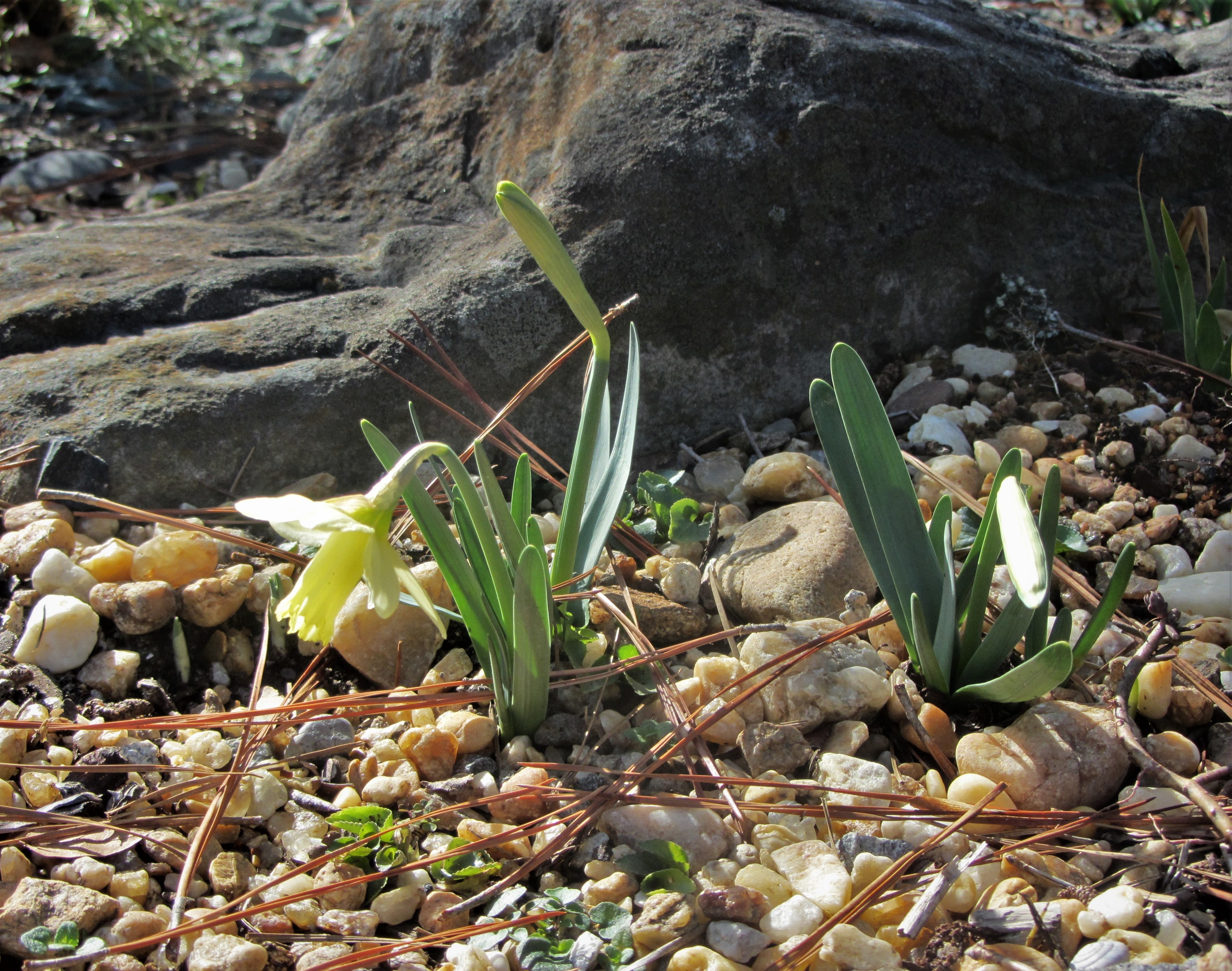
Dwarf Narcissus and native violets emerge from the rock and succulent garden at the Williamsburg Botanic Garden and Freedom Park Arboretum in February 2022.
Planning for Maintenance
One thing to keep in mind, though, is to anticipate how much time and work will be needed to maintain the garden that you create. If every time you sit down, you spot something that needs tending and feel the need to jump up and do something, then there isn’t much relaxation or healing. Or you may be someone who prefers to keep active and busy and inhale your phytoncides while on your feet. Perhaps the trimming, watering, and tending are what bring you outside to begin with. Just keep the maintenance aspect in mind as you plan so the garden remains a joy and never becomes a burden.
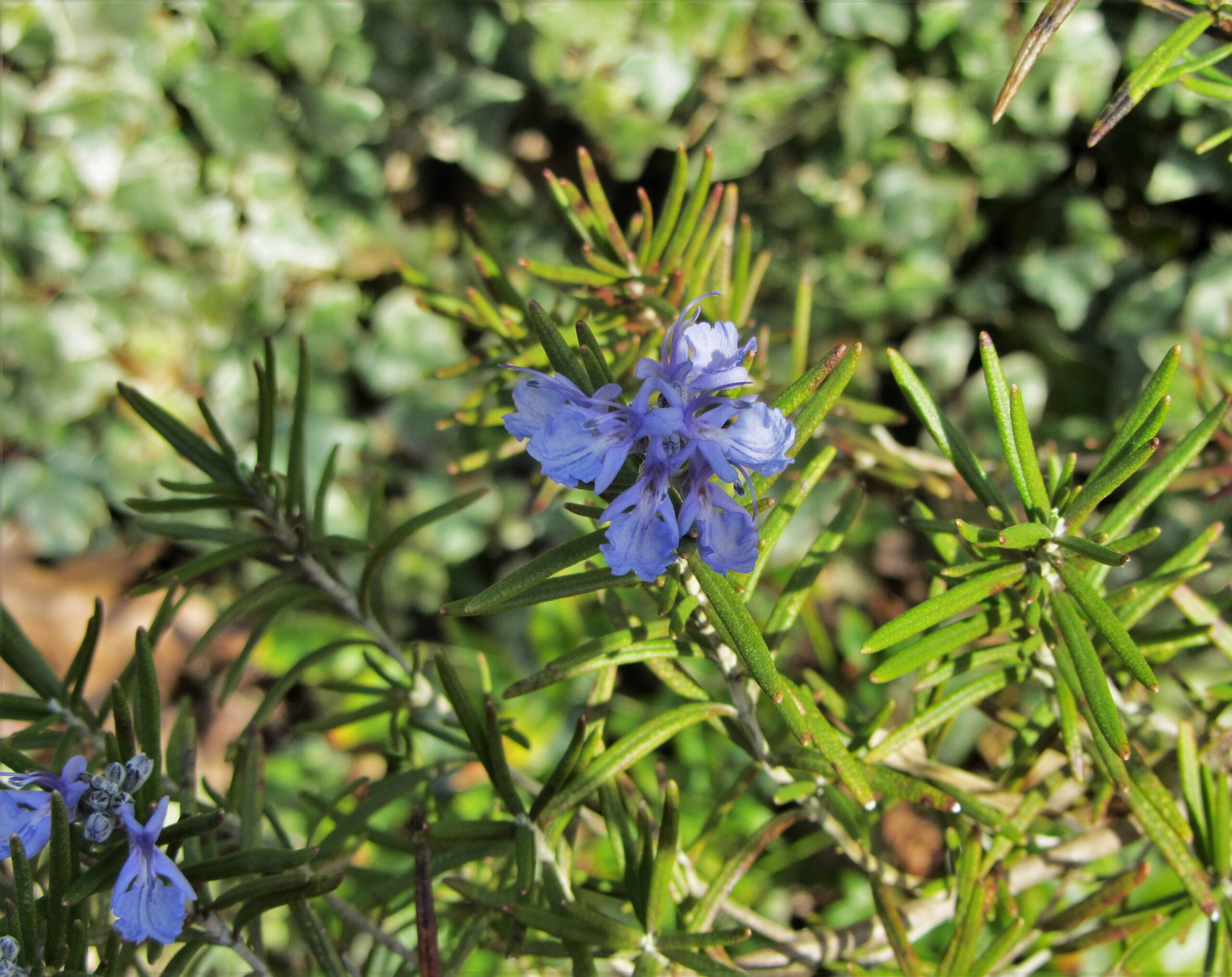
Rosemary, Salvia rosmarinus, is very fragrant and healing whether we inhale its perfume, brew it in tea, or eat it in our food. It was an important plant in many monastery and physic gardens. Plant rosemary for remembrance.
Anyone who is already working to overcome illness, depression, or grief will also want to ‘keep it simple’ and minimize the time to maintain their garden while maximizing the time they can relax and enjoy it. None of us are growing younger, and so we need to consider our future ability to garden and possible physical limitations as we design. Planting primarily woody plants and drought tolerant perennials that largely care for themselves makes our contribution less taxing. Cultivating moss gardens rather than lawns, investing in water permeable hardscaping, and making the space easy to access ensures that we will be able to enjoy our gardens for many years to come.
“Light above, light below, light within.
In the name of Truth, the Supreme Being.
In the name of Love, the manifestation of Spirit that I Am,
and in the name of the purest power of Spirit.
…
Bless all beings asleep and awake,
May their dreams be of great beauty, love, and potency.
Bless the Sky and Earth that they may be filled with light and power.
Bless all the plants, the animals, and the elements
that they may serve Spirit and be completely fulfilled in their mission.
May I be in harmony and resonance with them all.
Bless all aspects of the Great Spirit with freedom and joy.
Make it so.”
Dr. Jose Luis Stevens

All Photos by E. L. McCoy
For More Information:
Arvay, Clemens G., Marc Bekoff Ph.D., Victoria Goodrich Graham (Translator). The Biophilia Effect: A Scientific and Spiritual Exploration of the Healing Bond Between Humans and Nature. Sounds True. February 2018.
Beresford-Kroeger, Diana. The Global Forest: Forty Ways Trees Can Save Us. Penguin Books. May 2010.
Bloom, Jessi and Shawn Lineham. Creating Sanctuary: Sacred Garden Spaces, Plant-Based Medicine, and Daily Practices to Achieve Happiness and Well-Being. Timber Press. November 2018.
Bloom, Jessi, Dave Boehnlein, and Mr. Paul Kearsley. Practical Permaculture: for Home Landscapes, Your Community, and the Whole Earth. Timber Press. February 2015.
Clifford, M. Amos. Your Guide to Forest Bathing (Expanded Edition): Experience the Healing Power of Nature. Red Wheel. August 2021.
Druse, Ken. The Scentual Garden: Exploring the World of Botanical Fragrance. Abrams Books. October 2019.
O’Driscoll, Dana. Land Healing: Physical, Metaphysical, and Ritual Practices for Healing the Earth. RedFeather. March 2024.
Ohlsen, Erik. The Regenerative Landscaper: Design and Build Landscapes That Repair the Environment. Synergetic Press. August 2023.
StarBasil. “Phytoncides: The Science Behind Forest Bathing Benefits.” https://forestbathingcentral.com/phytoncides/. Forest Bathing Central. December 8, 2020, accessed 9.16.2025.
Williams, Florence.
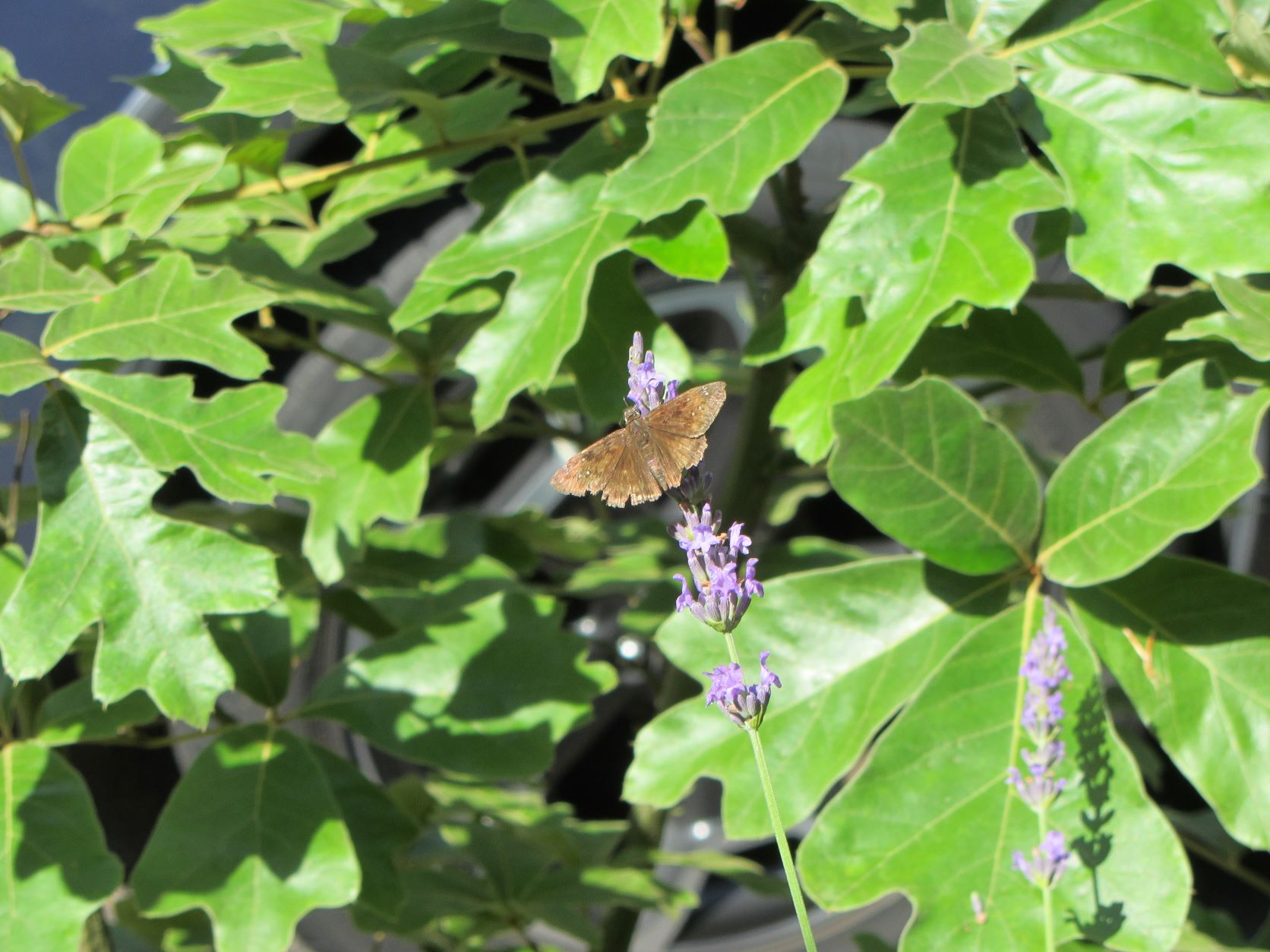
A seedling Southern red oak, Quercus falcatum, grows near lavender.