Opuntia for Sustainable Gardens
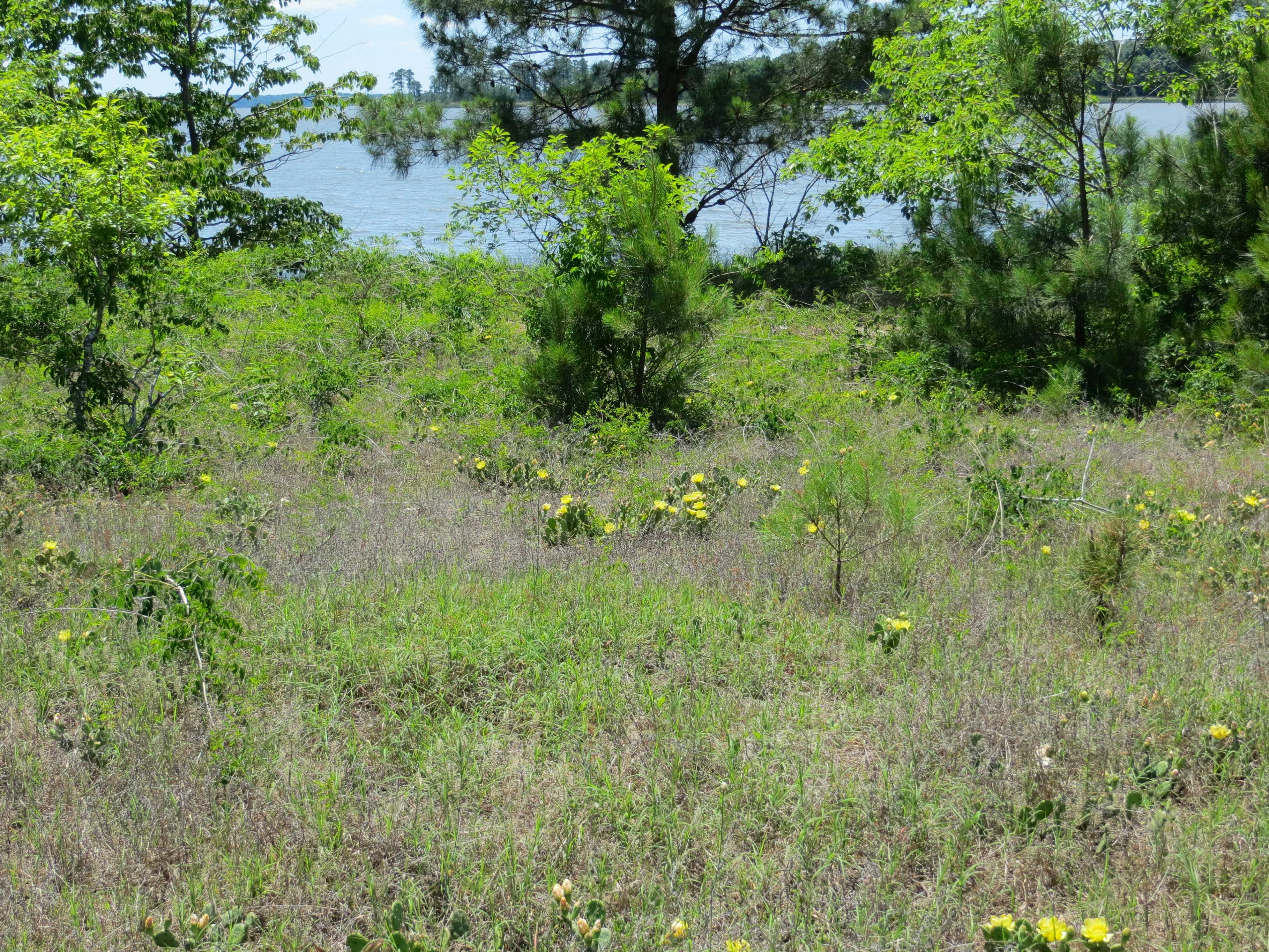
Opuntia drummondii grows on the banks of the James River, along the Colonial Parkway near Glebe’s Gut.
Dangerously Beautiful Opuntia
Opuntia is a dangerous plant. A beautiful plant, perhaps, useful and delicious; but always dangerous to anyone who comes near it. Approach any Opuntia (Oh-POON’-tee-ah) you see with great care. Wear gloves. Wear heavy shoes and long pants. Study it carefully before approaching and consider its mysteries with an open mind. It is rife with contradictions.
Opuntia is a native cactus that looks entirely out of place in most Virginia landscapes, though it grows here easily in home gardens, commercial landscapes. and in the wild. It is a leafless shrub, although it sometimes looks like a perennial wildflower. It grows happily on lean, sandy soil in full sun, shrugging off extreme heat and drought. You may find it hiding amidst wildflowers and tall grasses in wild open spaces, lurking at soil level, ready to attack any tender and unprotected shin or foot that wanders nearby.
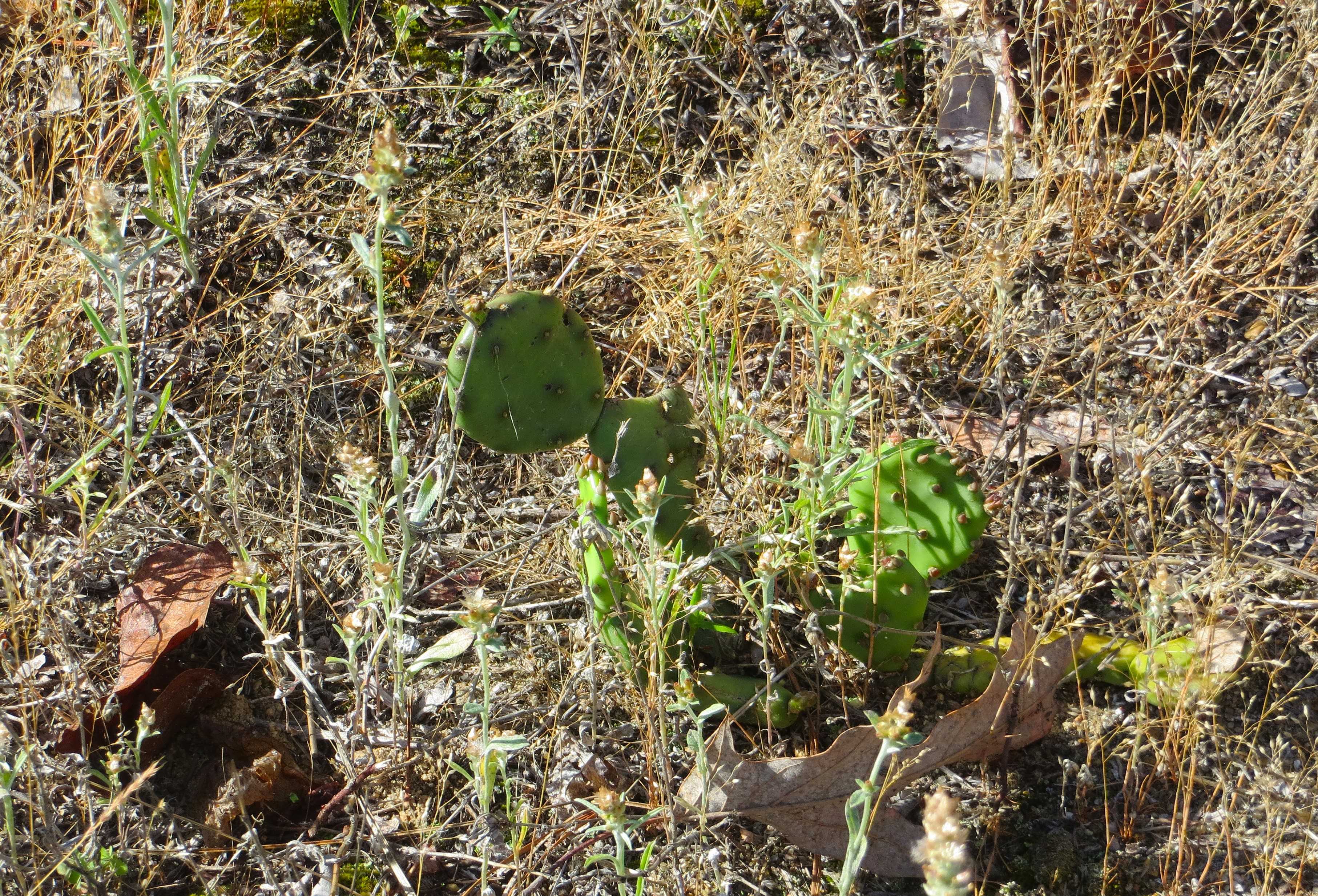
O. drummondii, along with most other Opuntia species native to the Southeastern US, is a low-growing shrub that may not be easily recognized in a naturalized planting.
Beware of Spines
Although it may look smooth and harmless at first glance, Opuntia pads are covered in countless tiny, nearly invisible, barbed spines, properly called glochids, which will instantly stick in unprotected skin at even the lightest touch. These spines are so small and so lightly colored you may not even be able to see them or grasp them with tweezers to pull them out of your flesh. If you ever come too near to an Opuntia and feel a sharp burning in your skin, use bright sunlight to reflect off of the shiny glochids so you can see them. Try using duct tape to remove them if you can’t grasp them with tweezers or pliers. Most species also have longer, more visible spines like sewing needles sticking out of their pads; fine protection to keep grazing animals and careless people away.
Native Americans Cultivated Opuntia
Native Americans learned to use Opuntia, also known as the prickly pear cactus for its edible fruits, as a reliable food source and for its medicinal properties. They learned to harvest its long spines to use as needles, toothpicks, awls, and pins. Native cooks discovered that the tiny glochids could be burned or scraped away to render the pads good for eating raw or cooked. Native healers learned to use the sap within the pads for treating skin irritations, abrasions, and sunburn. They used the gelatinous sap for other purposes, too, even as a mosquito repellent. Should you ever suffer injury from Opuntia spines in the wild, remember that the same pad that injured you also holds a cure for the sting if you can safely slice it open to reach its juice.
Opuntia is a large genus distributed across North, Central, and South America. It includes 145 different species, ranging from less than a foot to over 20’ tall and to 15’ wide. Opuntia grow in irregular clumps formed from thin, oval green pads which grow one from another in precarious looking towers. The pads are easily knocked free from the plant, allowing it to spread as the succulent pads root wherever they land. Larger species of Opuntia provide nesting sites for birds and a source of moisture for those thirsty animals that can get past its spines. All species bloom over a long season in shades of yellow, gold, orange, burgundy or red, providing abundant nectar and pollen for native bees and other pollinating insects.
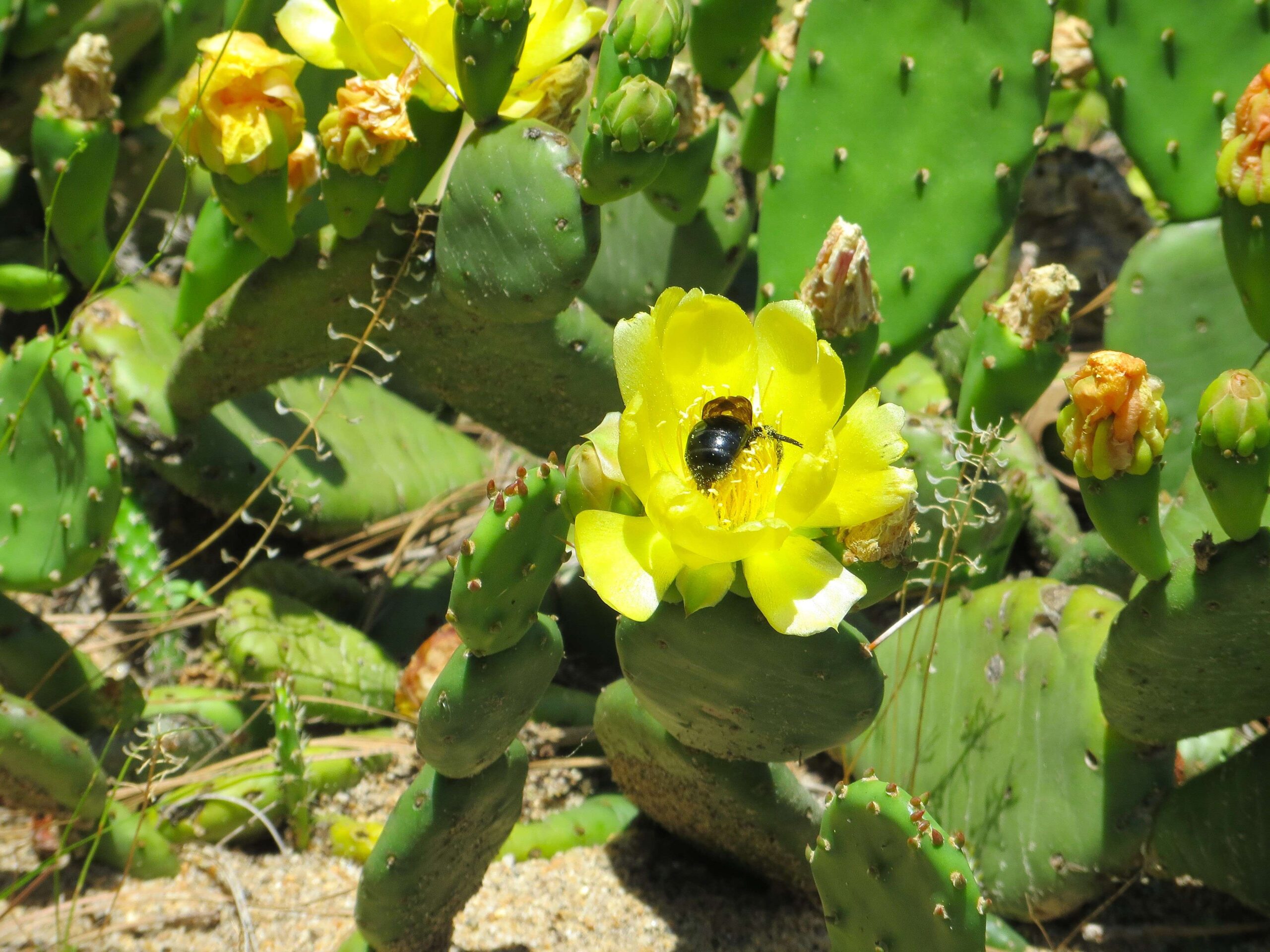
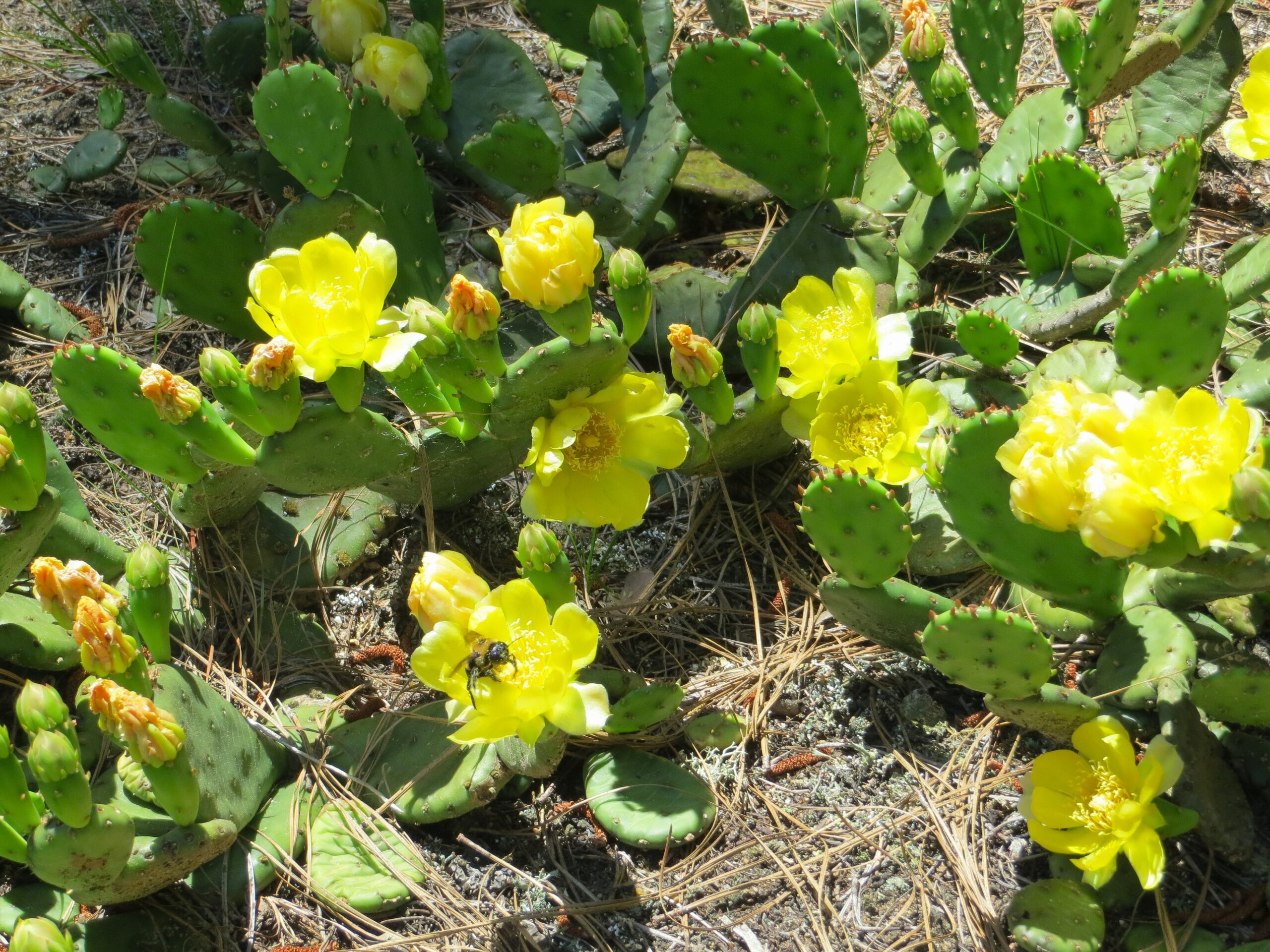
Cactus flowers, which bloom for only a day, attract bees and other pollinators.
Many Prickly Pear Species Thrive in Our Region
Species that grow well in our area include O. drummondii (Zones 8-12, to 1′ tall), dune prickly pear which grows on the banks of the James River; O. aurea (Zones 5-9 to 2′ tall), golden prickly pear; O. humifusa (Zones 7-10 to 1′ tall), Eastern prickly pear cactus; and O. mesacantha (Zones 7-10 to 1′ tall), Southeastern prickly pear cactus. Ellisiana Spineless Prickly Pear, O. cacanapa ‘Ellisiana,’ is a spineless US native hardy in zones 7a to 10b, which grows to around 3’ tall and 6’ wide. It blooms in August and produces its fruit later in the fall. The only Opuntia species native to James City County is O. humifusa.
Another spineless form of prickly pear cactus frequently found for sale as ‘Burbank Spineless’ is a variety of O. ficus-indica which originated in central Mexico around 9000 years ago as a staple food plant and animal fodder for native Americans living in that region. Native Americans selected and cultivated the best varieties, traded this edible crop, and it spread to any region that could sustain its growth. Now there are many hybrids of the original species, with differing color flowers and different degrees of winter hardiness. While generally considered hardy in Zones 9-12, some varieties will thrive and survive winters in our region. These long-lived plants can grow to 10’-16’ tall and wide.
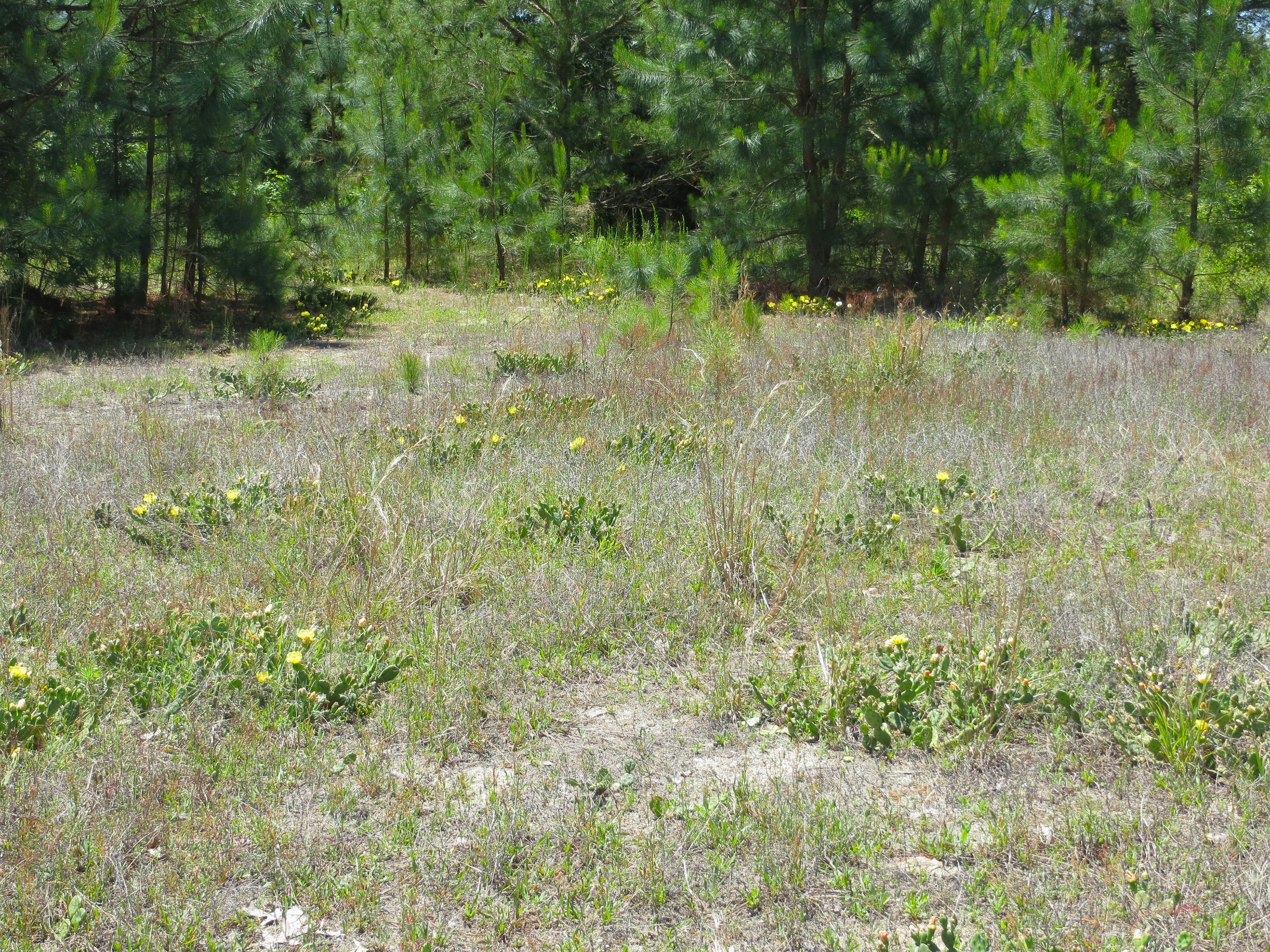
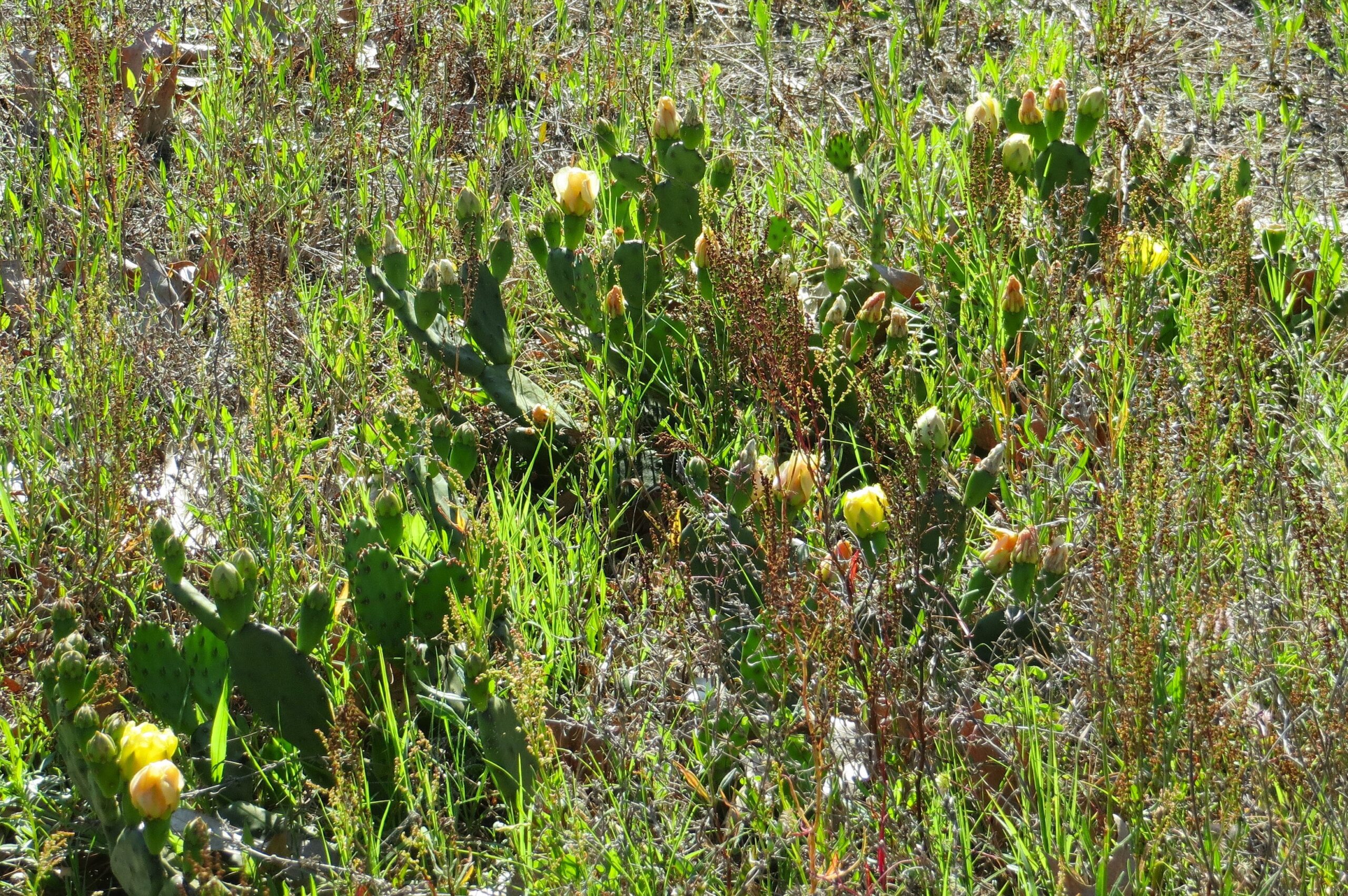
Prickly pear cactus have naturalized this sandy patch along a path to the James River beach.
A Sustainable Crop for Arid Environments
Early Spanish explorers carried prickly pear cactus, also known as Barbary fig, to many other parts of the world because it is a valuable crop and landscape plant for many harsh, arid environments. Today it enjoys distribution across many temperate dry areas, including the Mediterranean regions of Europe and North Africa and the Middle East. Prickly pear cactus escaped cultivation in Australia and now is considered an invasive weed in some parts of the continent.
The edible young pads of prickly pear cacti, known as nopales when whole and nopalitos when diced, must be cleaned of spines and peeled before consumption. They may be eaten raw in salads or as toppings on other food; or they may be fried, pickled, boiled, or stewed with meat. The prickly pear fruit, or tuna, must also be cleaned and peeled before it is eaten raw or made into jams or jellies. The raw fruit is a favorite snack for many people. Older, tougher pads from spineless Opuntia varieties, penca, are fed to cattle or used to propagate new plants.
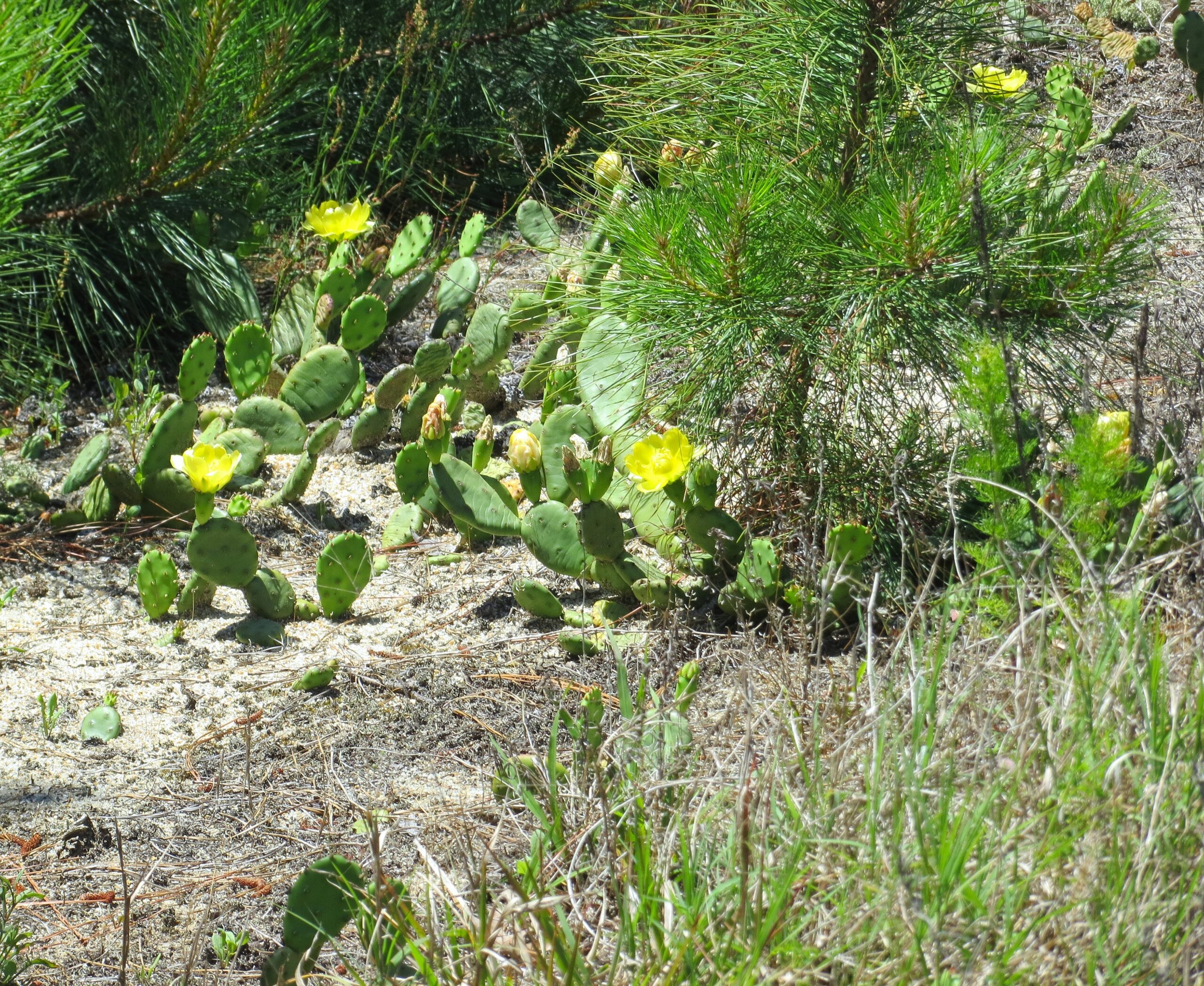
Cactus pads will take root wherever they make contact with the soil. There is no special planting technique required for rooting the pads.
Environmental Benefits of Growing Cactus
Evergreen Opuntia have extensive fibrous root systems which make them excellent for holding soil and sand against both wind and water erosion. Planted in hedges, they enrich and protect the soil, with the taller varieties often forming a windbreak. Cactus continuously improve planting conditions for other crops planted nearby. Their succulent nature and high-water content make them an effective planting for a firebreak around buildings. Deer, rabbits, and other grazing animals leave Opuntia strictly alone, which makes them useful for protecting other plants from foraging. Perennial, hardy prickly pear is an excellent choice for permaculture and sustainable gardens because so little maintenance and care are required to produce an edible crop.
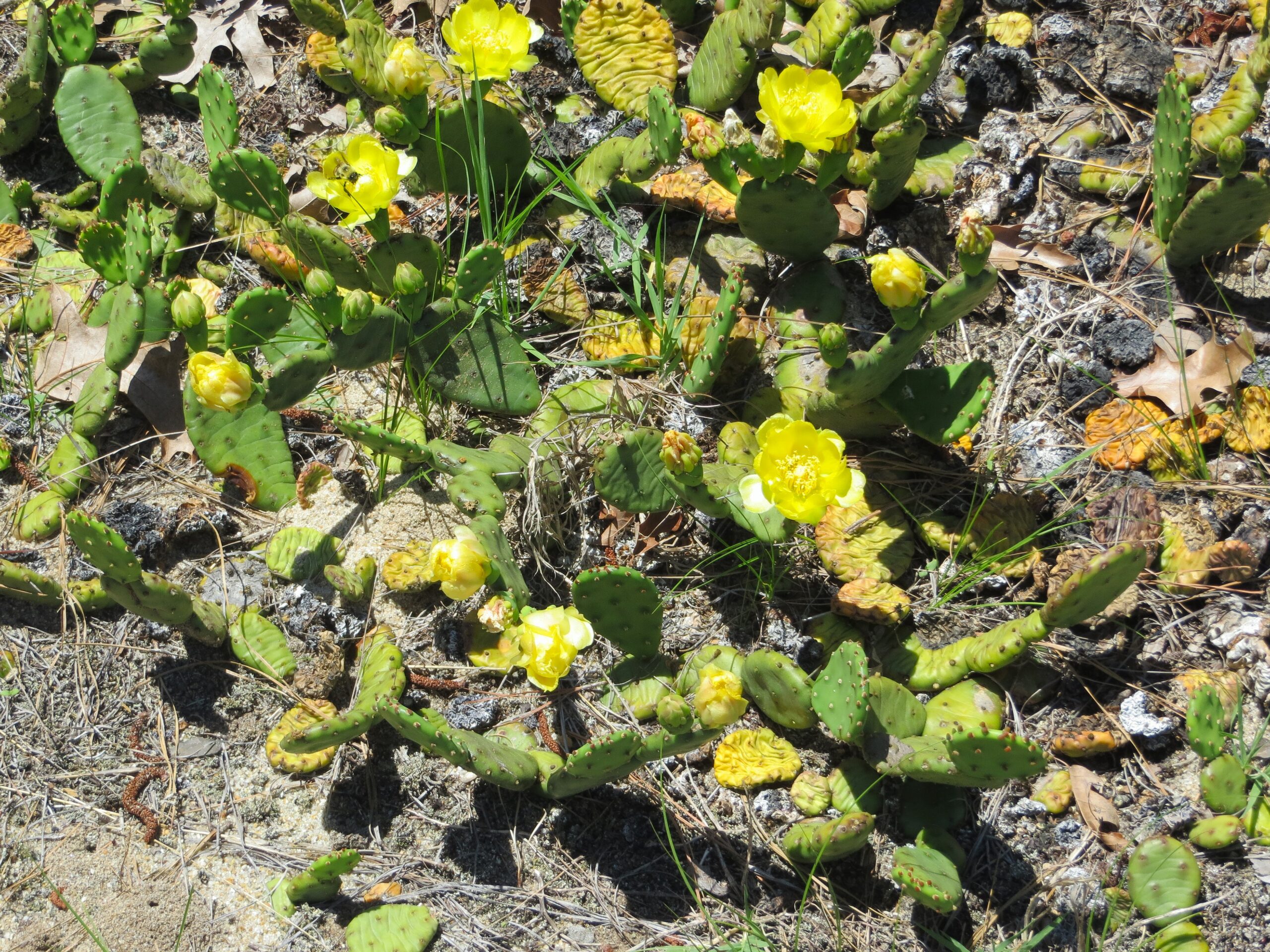
Cultivating Prickly Pear Cactus
Opuntia will grow on many types of soil, preferring a slightly acidic to neutral pH, but will likely struggle on clay soil due to its density. Prepare a growing area for Opuntia by digging sand, compost, and gravel into heavier soils to a depth of 12″-18″ and mulching the area with an inch or two of pea gravel after planting. They require little nutrition from fertilizer. Opuntia cacti mainly require a very freely draining bed as their roots need air pockets in the soil. Too much water in the soil can quickly rot this plant so it is best to propagate and grow them in a raised bed or a freely draining container in areas that have standing water during and after heavy rains. Plants prefer full sun but will flower and fruit with 6-8 hours of sun a day. Plants growing in partial shade will not be as productive, if they flower at all.
Where to Find Opuntia Plants
Prickly pear cactus, like most succulents, is a ‘pass along plant’ since it roots very easily from a pad and grows quickly once rooted. If you buy a plant, you can start new plants from the pads of that mother plant. If you know someone who already grows Opuntia cactus, they may bless you with a pad or two to start your own patch. You might even try to root a pad purchased at a grocery store, though it may not be of a variety hardy in our climate. Cacti plants growing in National Parks are protected and should not be harvested, even for propagation. Pads will root easily when set on shallow pots or trays of potting soil mixed with sand and gravel. Plants grown from seeds, harvested from the fruit, require three to five years to reach maturity and flower.
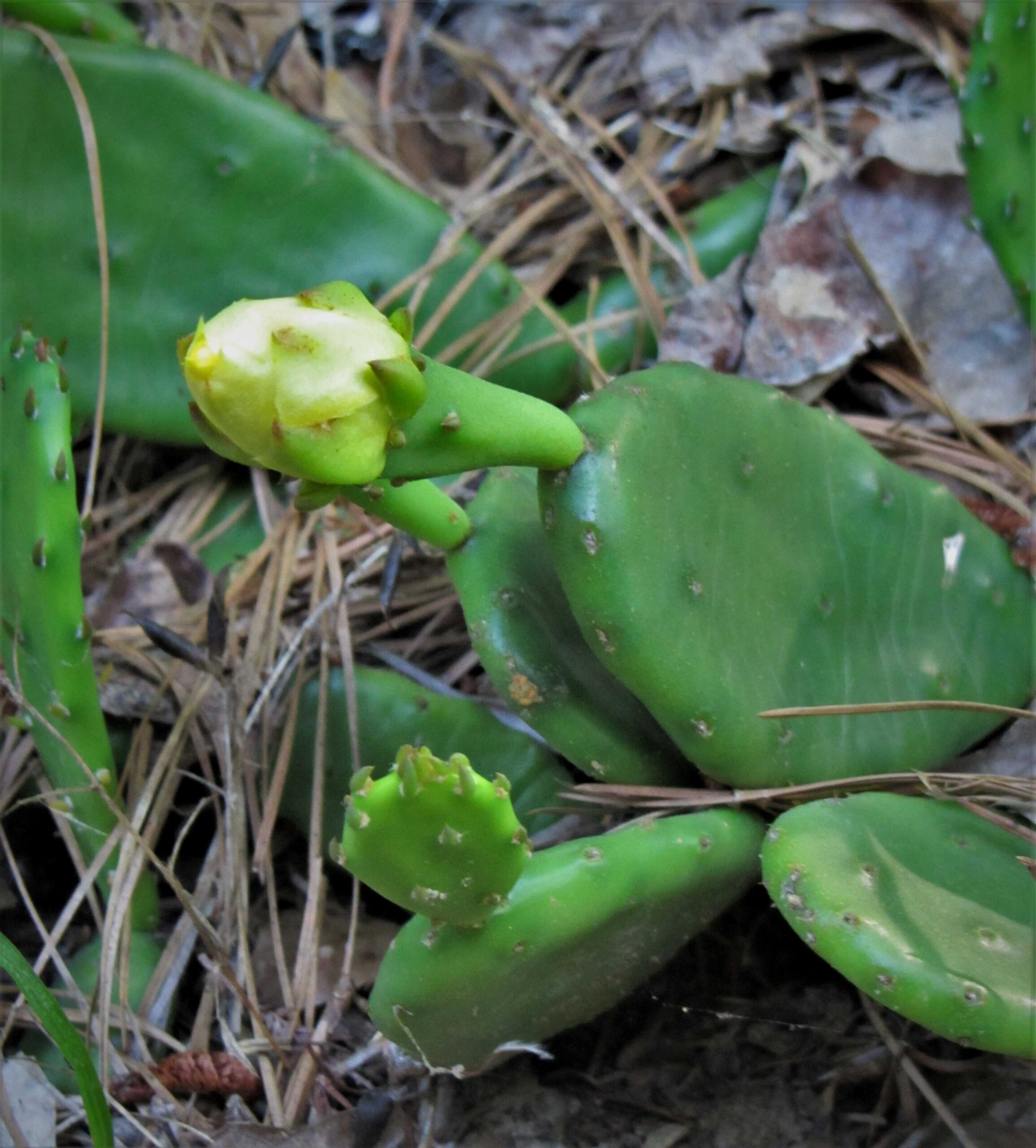
A hardy spineless Opuntia is cultivated at the Williamsburg Botanical Garden and Freedom Park Arboretum. It was collected in the wild and identified as O. humifusa var. humifusa by botanist Dr. Donna Ware, a garden steward and member of the garden’s Board of Directors. Spineless varieties can sometimes be found in local garden centers and many online nurseries carry them.
Use Caution and Enjoy This Plant
If you choose to cultivate prickly pear cacti then protect your skin with gloves when you work with them. Consider using tongs to handle pads during grooming and when harvesting them. Ensure that pets and children won’t run into areas where cacti grow as injuries from the spines are quite painful. Some homeowners may grow a patch behind a fence near the edge of their property to discourage intruders.
Most Williamsburg gardeners have little or no experience in cultivating edible cacti but will discover they are easy to grow. Prickly pear cacti species offer many benefits so long as we handle them with caution and respect. This is yet another native food that sustained Native Americans for millennia, long before European settlers arrived in North America.
All photos by E. L. McCoy