
The Many Uses of Sumac
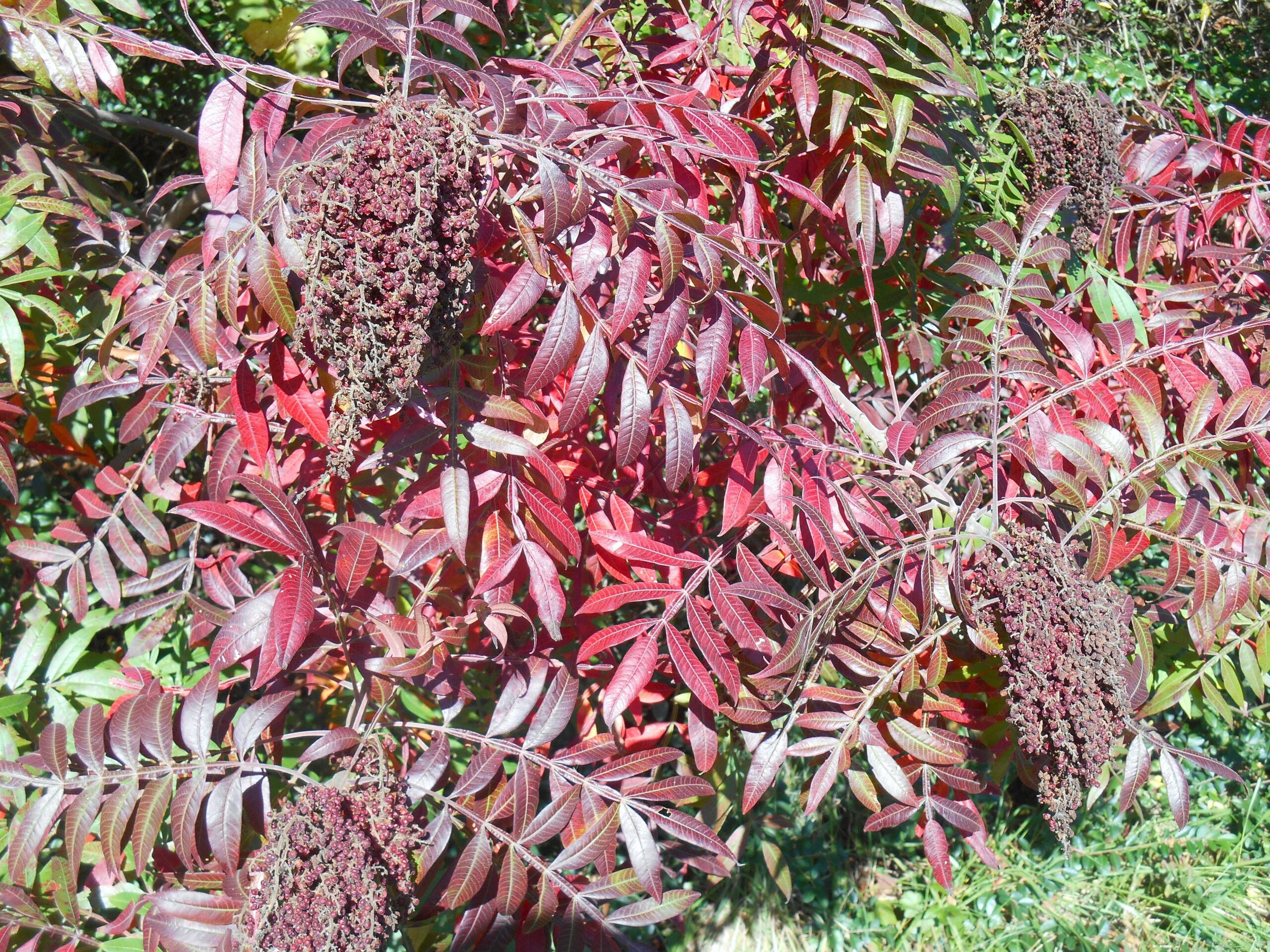
Winged sumac, Rhus copallinum with ripened berries shines on a roadside in mid-October 2014. Photo by E L. McCoy
Vibrant Fall Foliage
Are you drawn to bright scarlet leaves in autumn? You have probably admired sumac shrubs growing along the roadsides even if you didn’t know their name. Sumac’s huge, compound leaves can grow to two feet long, made up of as many as 31 leaflets arranged along its colorful central stem. They are deep green and glossy through much of the year, until they turn golden, orange, scarlet, or even deep purple from September until the leaves finally fall in early winter.
Pioneer Species
Most of the sumac shrubs you’ll find growing wild in our area are winged sumac, Rhus copallinum, also known as flameleaf, or shining sumac. These shrubs, sometimes as tall as small trees, grow in an ever-expanding, clonal community. They expand as new stems emerge from their roots and rhizomes, and they colonize new areas when animals spread their seeds. Native sumac shrubs steadily reclaim disturbed or neglected land. It is a pioneer species that will quickly transform a grassy field or even bare soil into the first stage of a woodland.
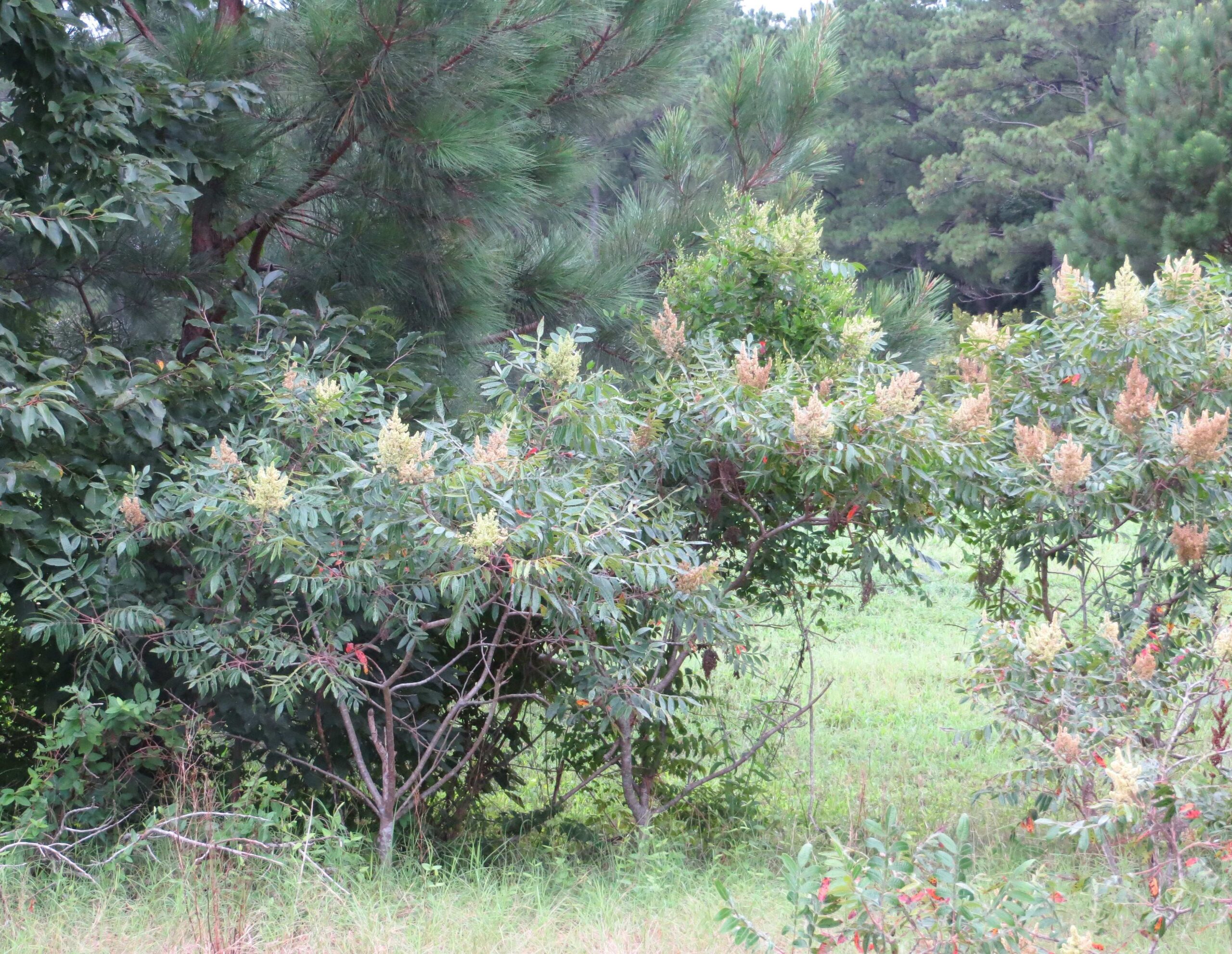
Winged sumac colonizes a field between the Colonial Parkway and the James River in August 2025. Photo by E. L. McCoy
There is little agreement about how many species of Rhus there are in total, and there isn’t even agreement on how many species are native in North America. This is a large genus within the Anacardiaceae family, which includes important commercial food sources such as mango and cashew trees. This family also includes a variety of poisonous plants in the genus Toxicodendron, which includes poison ivy, poison oak, and poison sumac. (Quickly identify poison sumac by its white drupes.) There are 83 genera within the cashew or sumac family, and between 100 and 250 recognized species within the genus Rhus.

Drupes ripen on winged sumac at the Williamsburg Botanical Garden and Freedom Park Arboretum in October 2020. Notice the leafy ‘wing’ on either side of the stem of this compound leaf, filling the spaces between the leaflets. Look for this bit of leaf tissue along the stem to identify this species of sumac. Photo by E. L. McCoy
A Culinary Staple
Sumac drupes, called berries, are an important source of seasoning in Southern Europe and west through the Middle East and Western Asia. Harvested from R. coriaria, known as Sicilian sumac or elm-leaved sumac, the dried berries are ground into a tart, lemony spice. Ground sumac is an important component of the spice blend za’atar, along with thyme, oregano, salt, sesame seeds, and sometimes ground cumin. This spice blend is a staple of Middle Eastern and Southern European cuisine.
Sicilian sumac trees grow from 10’ to 16’ in USDA Zones 8-11. They are well-suited to a dry, rocky climate because they are very drought tolerant, tough trees that thrive in poor soils. Like most sumac species, they prefer full sun but will fruit with as little as two to six hours of full sunlight each day.
Anyone who wishes to grow Sicilian sumac in our area will want to grow it in a large container that can come inside during winter, or in a sheltered area of their yard with southern exposure and amended soil, because our Zone 8a climate is the northern reach of its hardiness zone. It will want excellent drainage and won’t grow well in our moist, clay soils.
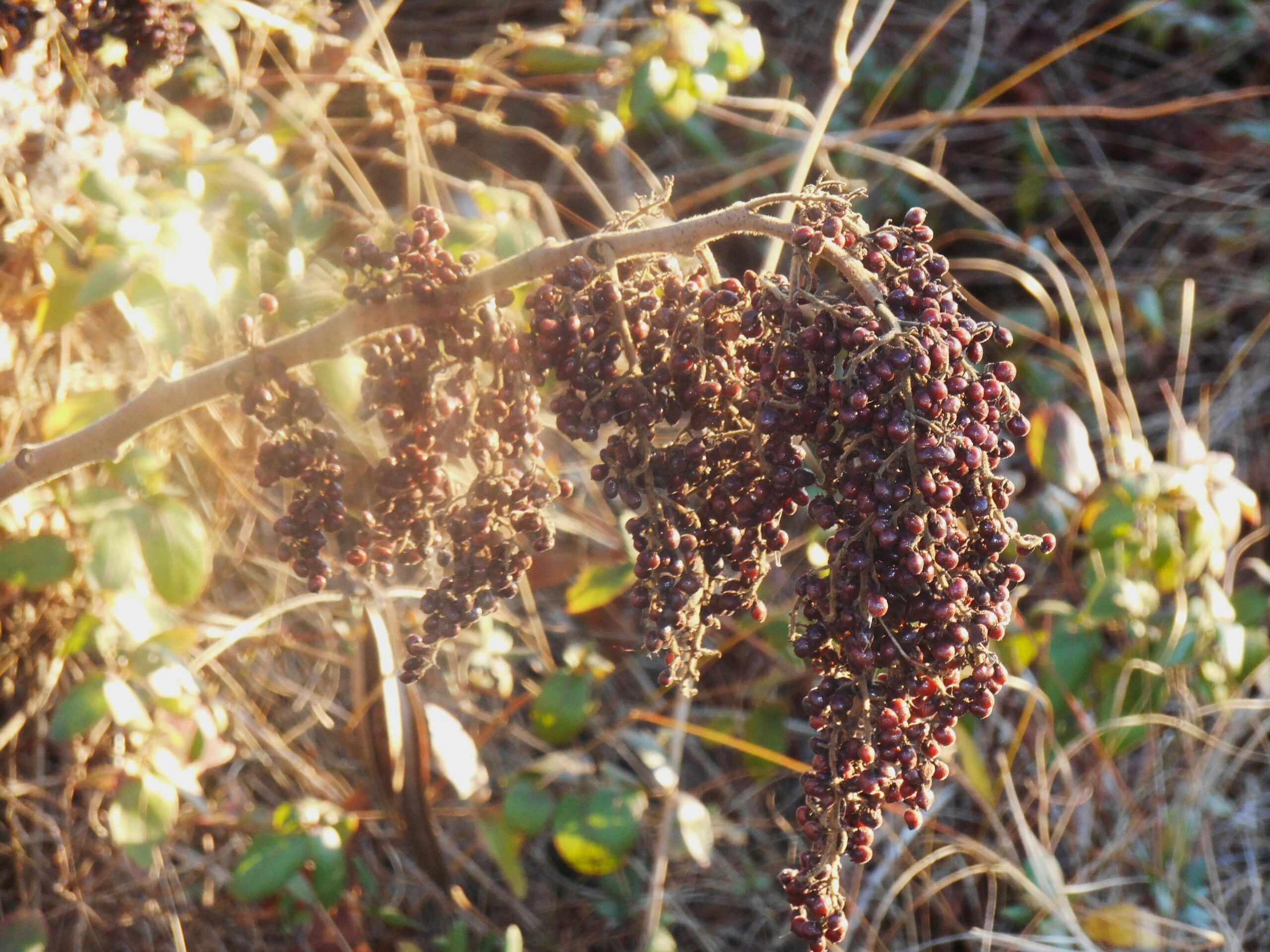
Drupes turn dark brown as fall fades into winter. Notice the round ‘leaf scars’ where leaves have already dropped for the year. The slight fuzz or furriness, known as pubescence, indicates this may be a stem of staghorn sumac, R. typhina. Late December, 2013, on the bank of College Creek. Photo by E. L. McCoy
Tangy and Nutritious Native Berries
The reddish-brown fruits (drupes) of many native sumac species are edible, high in vitamin C, and also have a tangy, lemony flavor. American Indians harvested fruits from R. typhina (hirta), the staghorn sumac, from smooth sumac, R. glabra, and from winged sumac, R.copallinum. These fruits form in tight clusters held on the tips of the sumac’s branches.
These native sumac berries may be dried and ground into powder to use as a spice. Whole fresh or dried sumac berries are soaked in cold water to make an infusion to drink like lemonade, sweetened with honey, sugar, or maple syrup. This ‘Indian lemonade’ or ‘Rhus-juice’ beverage should be strained before serving to remove the seeds. Sumac’s lemony drupes are also used as flavoring for cooking roasts, soups and meat stews.
Other Uses for Sumac
American Indians blended dried and powdered sumac fruits, leaves, and roots with tobacco, and other botanicals, for their ceremonial smoking mixtures. Tannins from sumac leaves and roots were used to tan hides and to dye fabric. The berries, bark, and leaves of some species may be boiled down to produce ink.
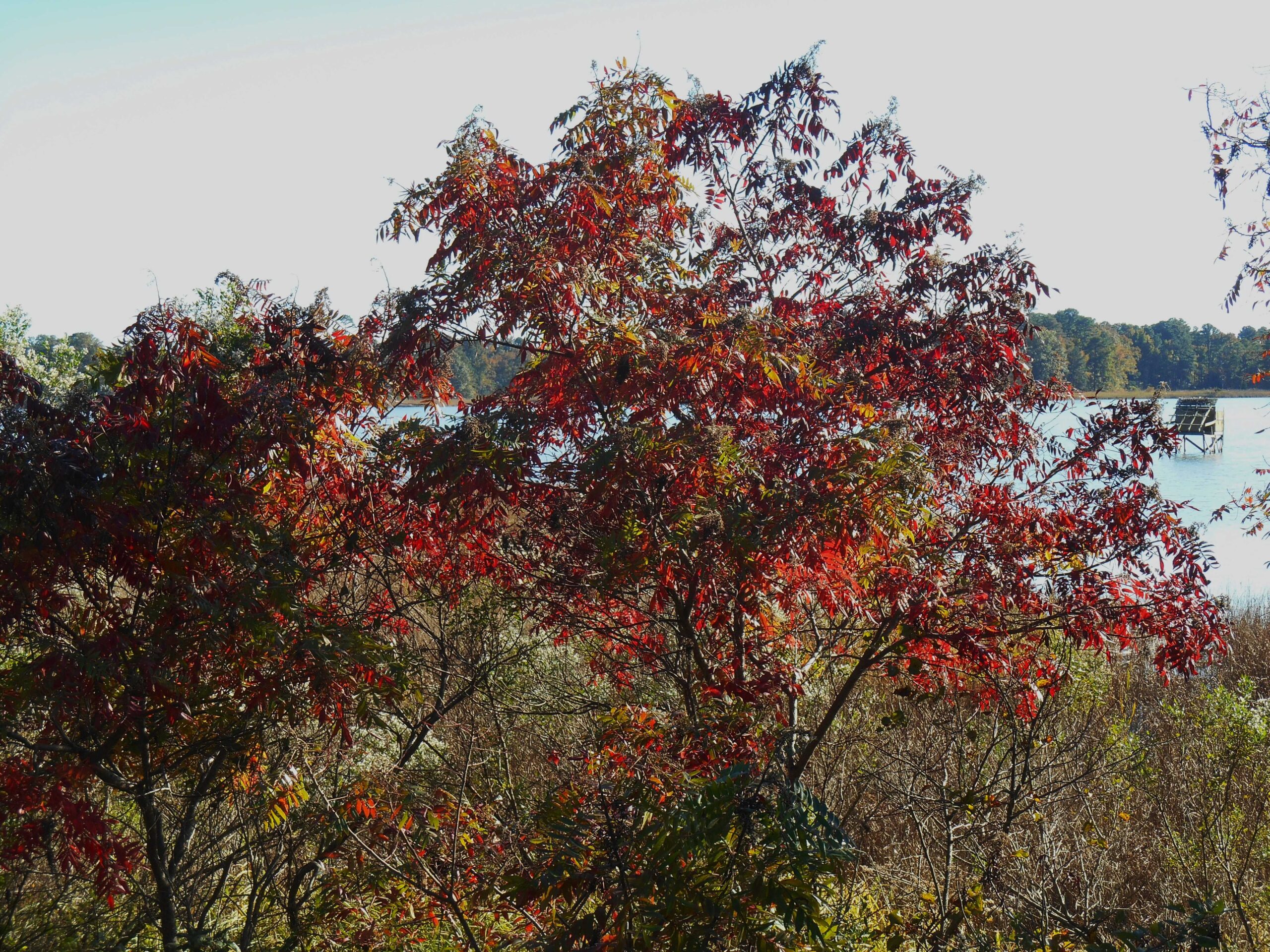
Winged sumac grows on the bank of the James River across from Jamestown Island in late October 2014. Photo by E. L. McCoy
The Healing Properties of Sumac
All species of Rhus contain healing terpenes released into the air as volatile compounds. The more fragrant the foliage of a Rhus species, the more healing terpenes it emits. This means that sitting near sumac shrubs and simply breathing allows one to inhale healing, immune system enhancing phytoncides. Sumac is astringent, antimicrobial and an antioxidant. It has a variety of medicinal properties, particularly concentrated in the berries. Various parts of the tree can be made into preparations to treat several different health conditions including sunburn and blisters.
Sumac Wood
Sumac wood is also beautiful and useful. Most stems are filled with soft pith. Remove the pith and the stem is hollow. Native Americans used lengths of sumac stems to make pipes, useful tools, and other items. Slices of stem are useful for craft projects.
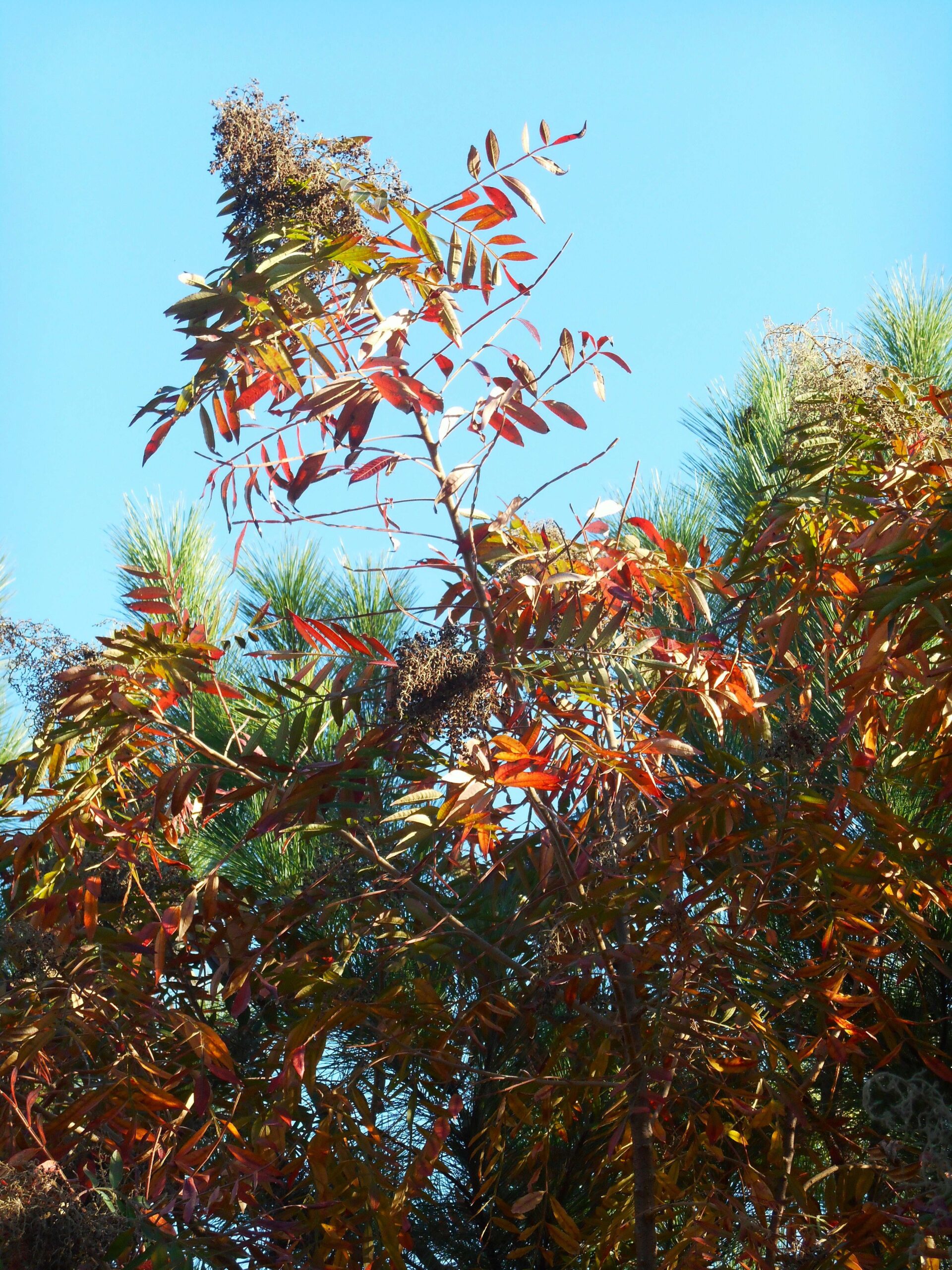
Winged Sumac in late October, 2014. Photo by E. L. McCoy
Sumac in Indigenous Spirituality
Sumac is an important plant ally to the indigenous cultures in areas where it is common. It is associated with the life-giving sun, with purifying and warming fire, with healing and vitality, hope, resilience, hospitality, and generosity. Contemporary North American Druids include R. typhina, staghorn sumac, among their list of the sacred trees of North America.
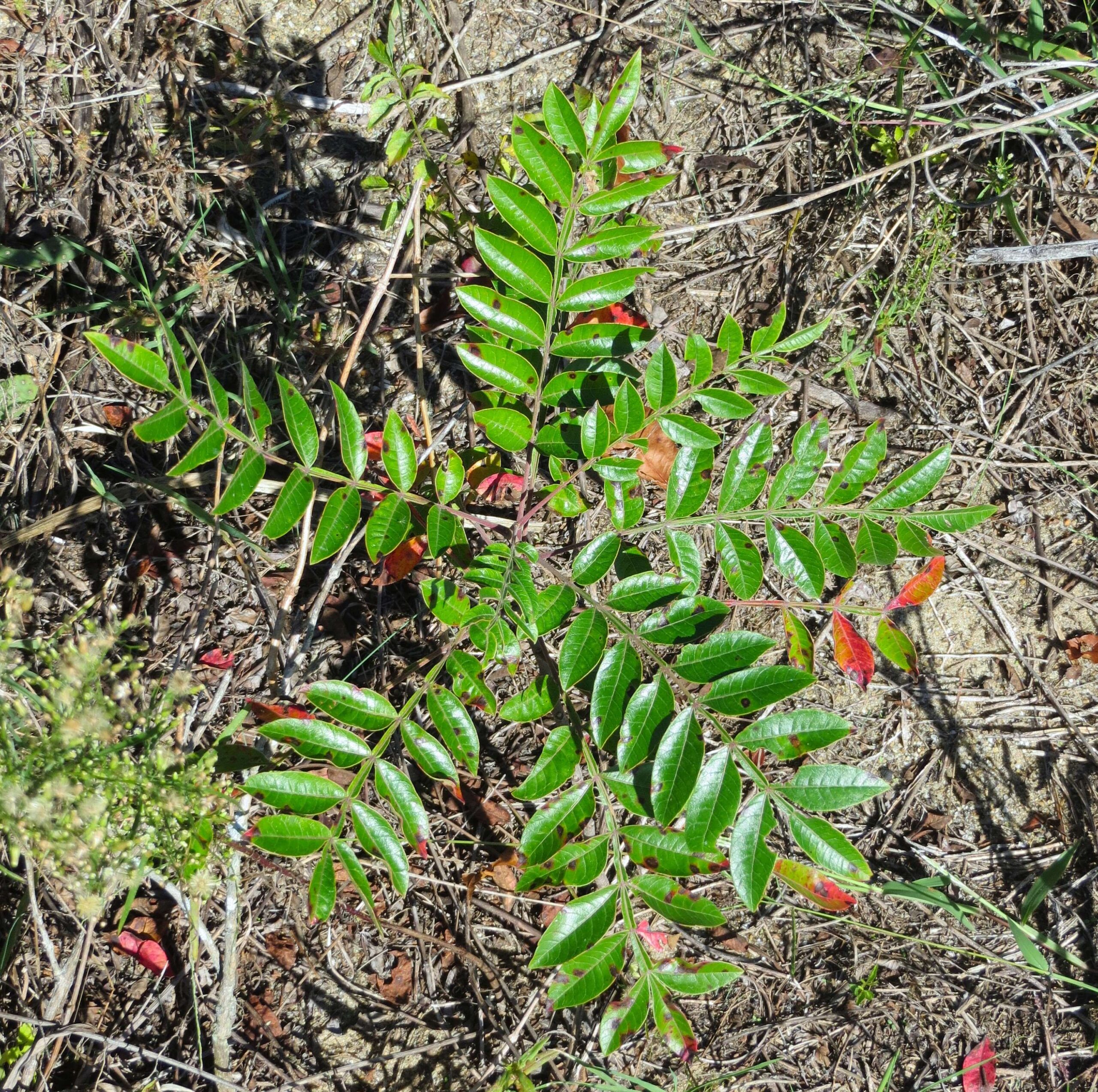
This young winged sumac grows from the sandy bank of the James River, along the Colonial Parkway, in September 2025. Photo by E. L. McCoy
Planting Sumac in a Garden
Stands of sumac shrubs are rather wild looking. This is not a tree to trim into a neat hedge or topiary, as one may with native hollies. Think twice and then again before inviting them into your residential yard unless you are willing to keep them pruned. Taller varieties of sumac may be limbed up to form interestingly gnarled, colorful, single or multi-trunk trees. Removing suckering stems as they appear can control the spread of a single plant into a colony of shrubs.
The main requirement for growing sumac is having sufficient space and sunlight. These are tough and versatile plants, rarely grazed by deer or rabbits, and accustomed to fending for themselves and thriving with whatever light, water, and nutrients find them. They resist drought, fire, and grow on the poorest neutral to acidic soils in full sun to part shade. You will find them growing in sand on local river beaches. Cut them down, and they soon return from their abundant roots.
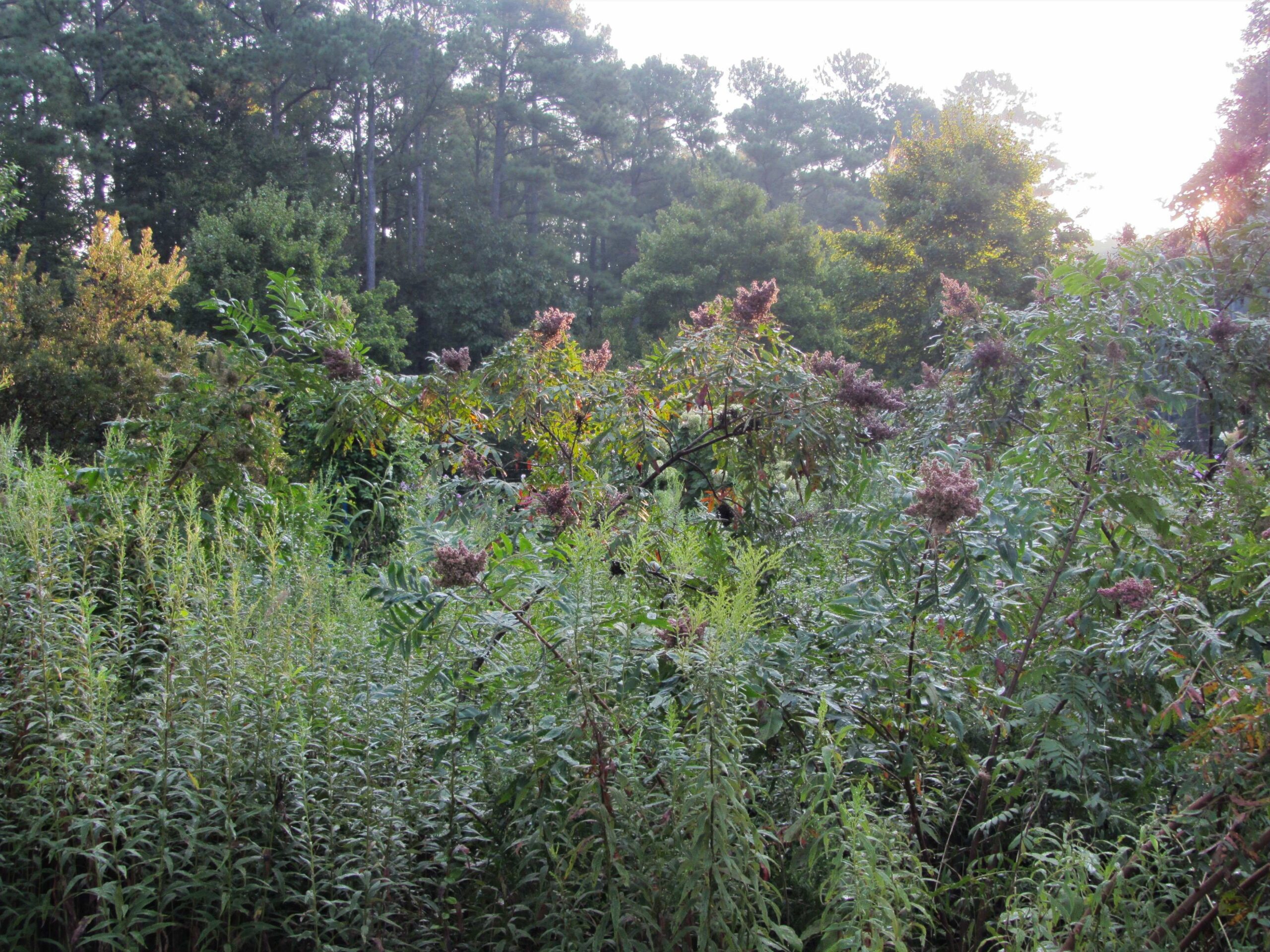
Winged Sumac grows freely in the wildflower meadow at the Williamsburg Botanical Garden and Freedom Park Arboretum, which it is allowed to spread and colonize the surrounding areas. Here it competes with Solidago, goldenrod species, and other native wildflowers. Late Summer, 2020, Photo by E. L. McCoy
How to Use Sumac in a Landscape
But if you have a large yard, need a screen from the road or from nearby properties, and want vivid autumn color, sumac is an excellent choice. Although all sumac species are deciduous, and their leaves will fall by early January, their woody stems and branches, topped by clusters of fruit, remain elegant and interesting through the winter. Consider sumac, particularly dwarf cultivars, as a native substitute for Asian Nandina. It will reward you with stunning fall color and a similar texture.
Sumac is particularly useful to hold slopes against erosion, and for steep, rocky land whether little else will grow. It is an excellent woody plant to reclaim and rehabilitate damaged, disturbed, and polluted land. Your stand of sumac will become a haven for many different types of birds, insects, and other small animals. Planting sumac is an excellent way to introduce more wildness and vitality into your property.
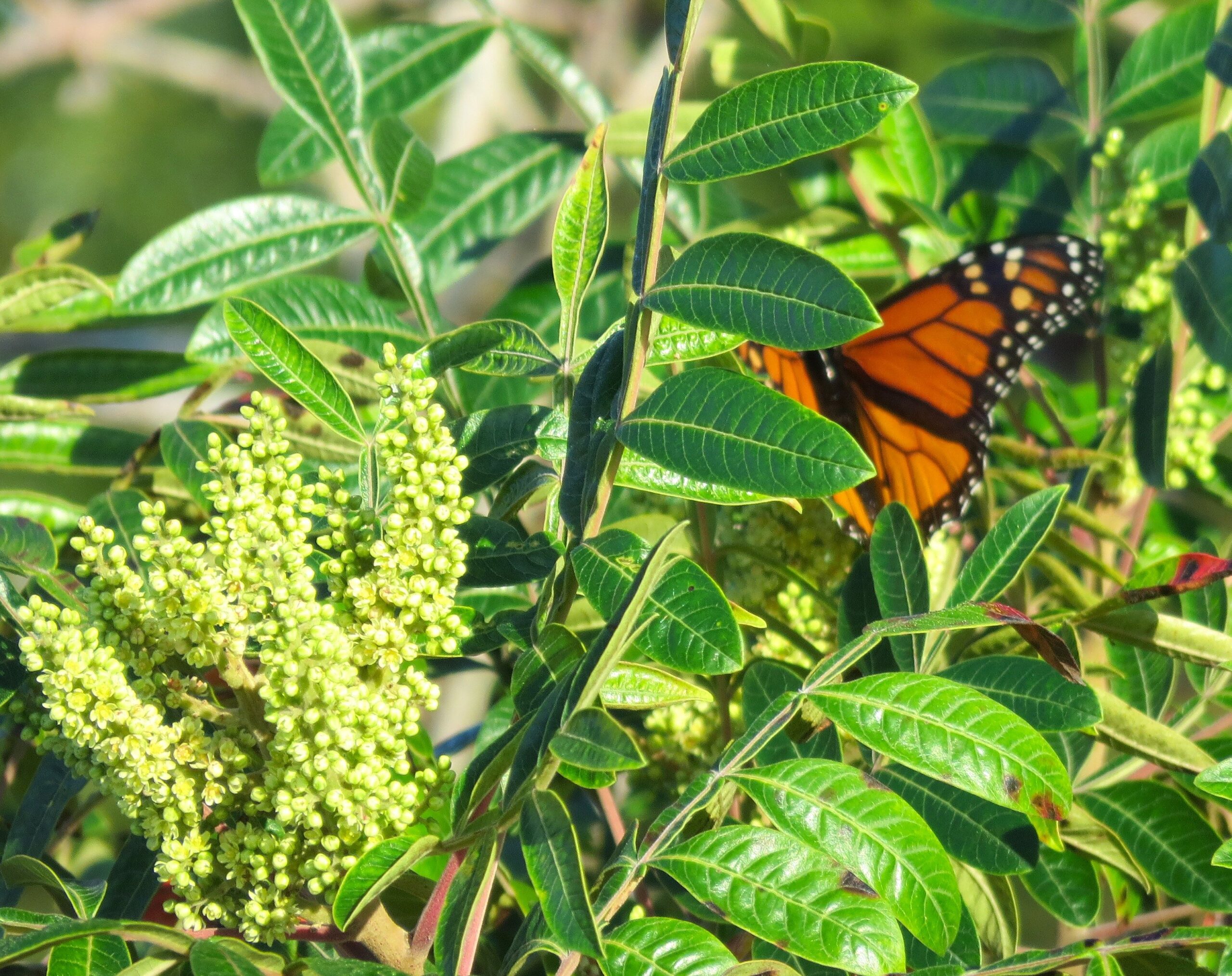
Sumac attracts pollinating insects, particularly native bees and butterflies, to its abundant flowers. A Monarch nectars here in early August 2025. Notice the delicate structure of each five-petaled flower. Photo by E. L. McCoy
Sumac’s Importance for Wildlife
In addition to birds and small animals that feast on sumac fruits deep into the winter, a wide variety of pollinators, including butterflies and moths, flock to sumac flowers in the summer. Several different butterflies and the Luna moth use sumac leaves as a host plant. Stands of sumac provide nesting sites and shelter for a variety of animals.
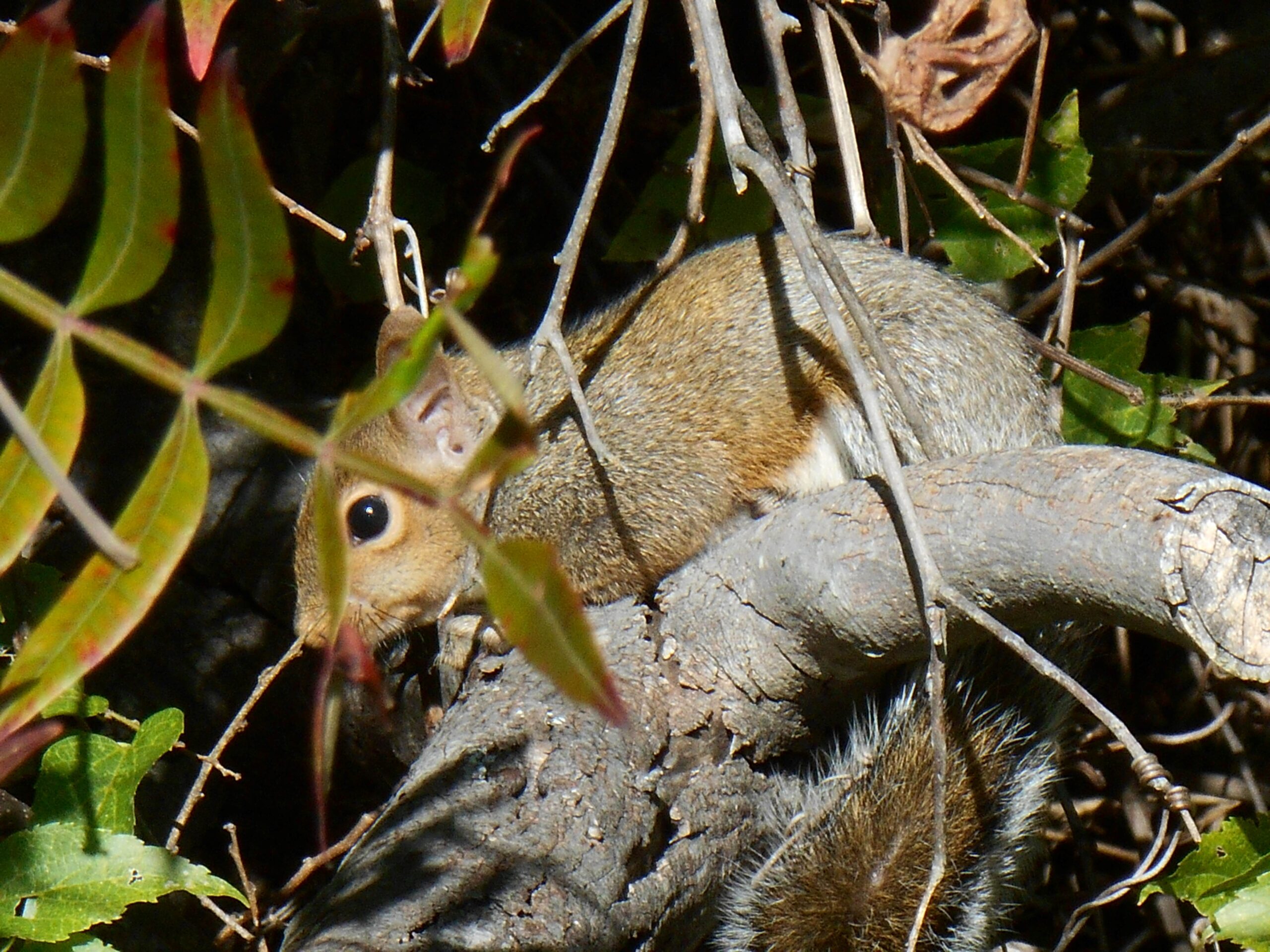
A squirrel scampers through a sumac tree in search of food. Mid-October 2014 Photo by E. L. McCoy
Poison Sumac
Some naturalists and gardeners may be aware of poison sumac and so avoid all sumac trees out of fear of not properly identifying which are harmful. Poison sumac, Toxicodendron vernix, belongs to the same family but to a different genus than the useful sumac species discussed in this article. It also has compound leaves, 8”-13” long with 7-13 dark green leaflets, but it can be recognized by its smooth, round white berries which dangle in clusters.
Poison sumac prefers wet, acidic, coastal soils in Zones 3a-8b. It is indigenous to the Eastern half of Virginia and also grows in some western counties. Normally found in marshes, swamps and along riverbanks, its trunk can grow to 6” across and the tree may grow to 25’ tall, with suckers ringing its base. This is a different growth habit than is found in trees of the Rhus genus, which have narrower trunks and aren’t found growing in wet, marshy soil.
All parts of the poison sumac plant are poisonous and should not be touched, ingested, smoked, or used for crafts. This plant contains the same toxic substance as poison oak and poison ivy, urishiol, which becomes volatile when burned. Breathing the smoke can cause blisters in the respiratory system and can become a serious health concern. Wear gloves and protective clothing to remove them from your property should you find them.
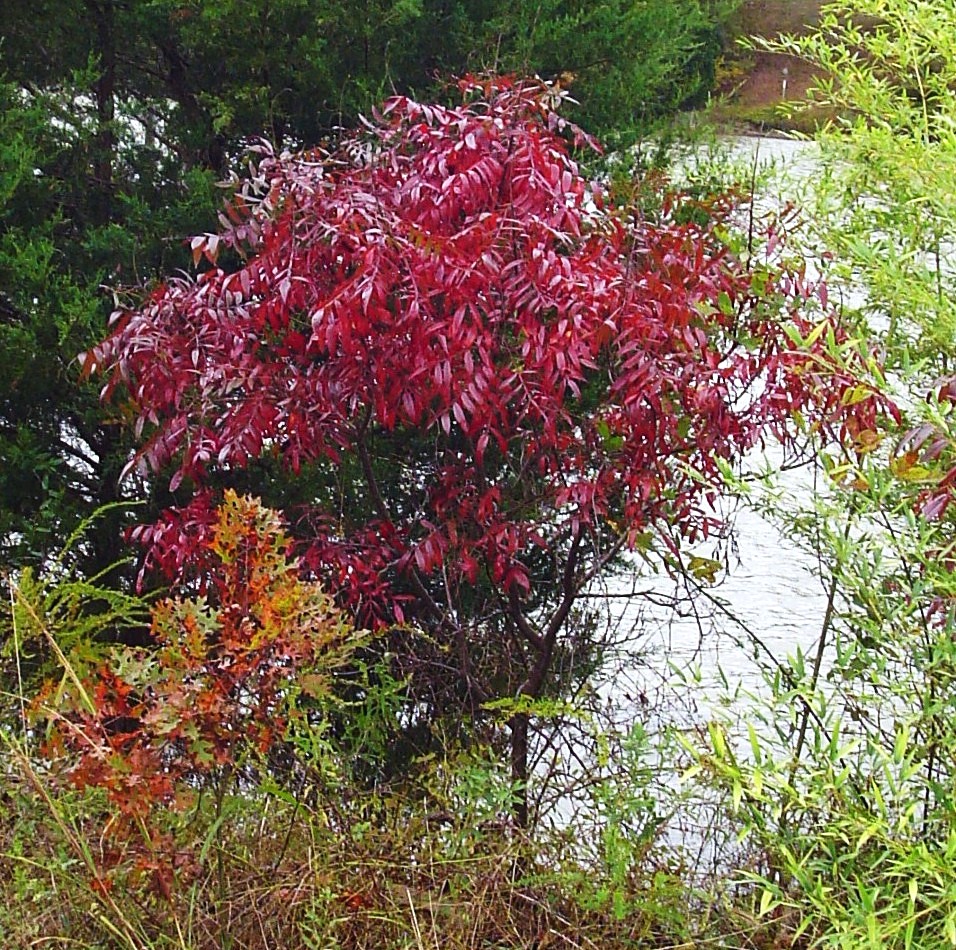
Winged sumac grows on the bank of College Creek, its roots holding the bank against erosion and sheltering other young trees. November 1, 2014 Photo by E. L. McCoy
Locally Useful and Native Rhus Species
There are several Rhus species native to Eastern North America. These range from Canada to Mexico, depending on their degree of cold tolerance. Only two of these are considered indigenous to the greater Williamsburg area, north of the James River: winged sumac and smooth sumac. Others will grow here under cultivation, particularly if one orders named cultivars from reliable nursery supply vendors.
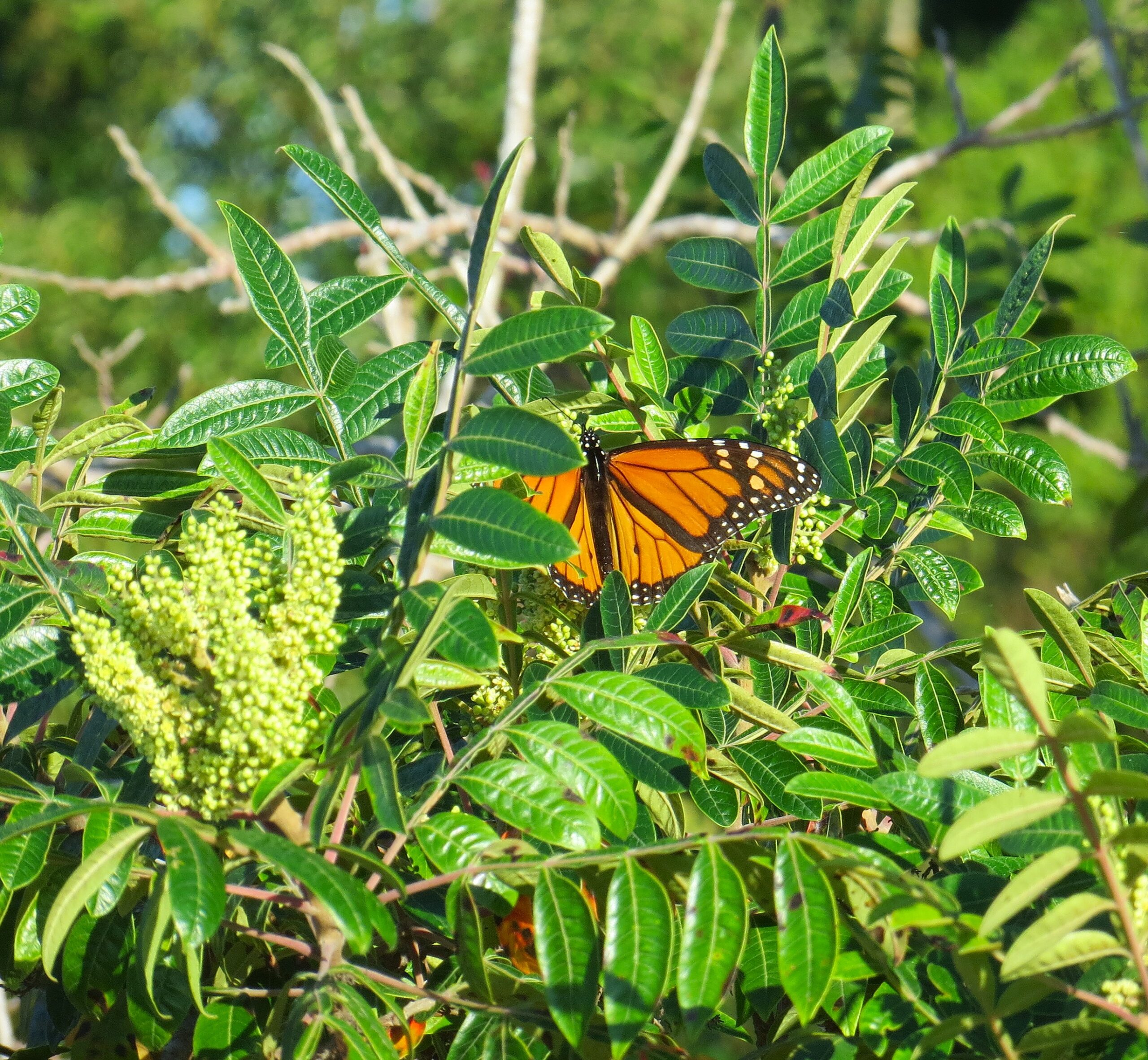
Monarch butterfly on winged sumac, early August 2025. Photo by E. L. McCoy 2025
Rhus copallinum
Dwarf sumac, winged sumac, shining sumac, flameleaf sumac
Dimensions: Height: 7‘- 15‘ Width: 10‘- 20‘ Zones 4a-9b
Native throughout Va, though R. copallinum var. Copallinum is native only in Eastern VA
Flowers: 1/8” greenish-yellow flowers, each with 5 petals, bloom in dense 3”-6” panicles from July to September. Plants may be dioecious, producing only male or only female flowers. Only female flowers form drupes.
Leaves: Large deciduous, compound, pinnate leaves to 12 ” long with 9-21 shiny dark green leaflets. Each leaflet may be up to 4” long. The base of each leaflet is rounded, and its tip is sharply pointed. The central stem of the compound leaves has a wing-like, very narrow leaf between the main leaflets.
Fruits: Burgundy drupes form as the flowers fade, ripening in autumn, turning brown, and persisting into the winter.
Wildlife Value: Nectar for pollinators (native bees and butterflies); a larval host plant for the Red-Banded Hairstreak butterfly and for the Luna moth; fruits feed songbirds, wild turkeys, quail, deer, and opossums; rabbits eat the bark.
Recommended cultivars / varieties:
- ‘Prairie Flame’ compact, 4’-6- tall
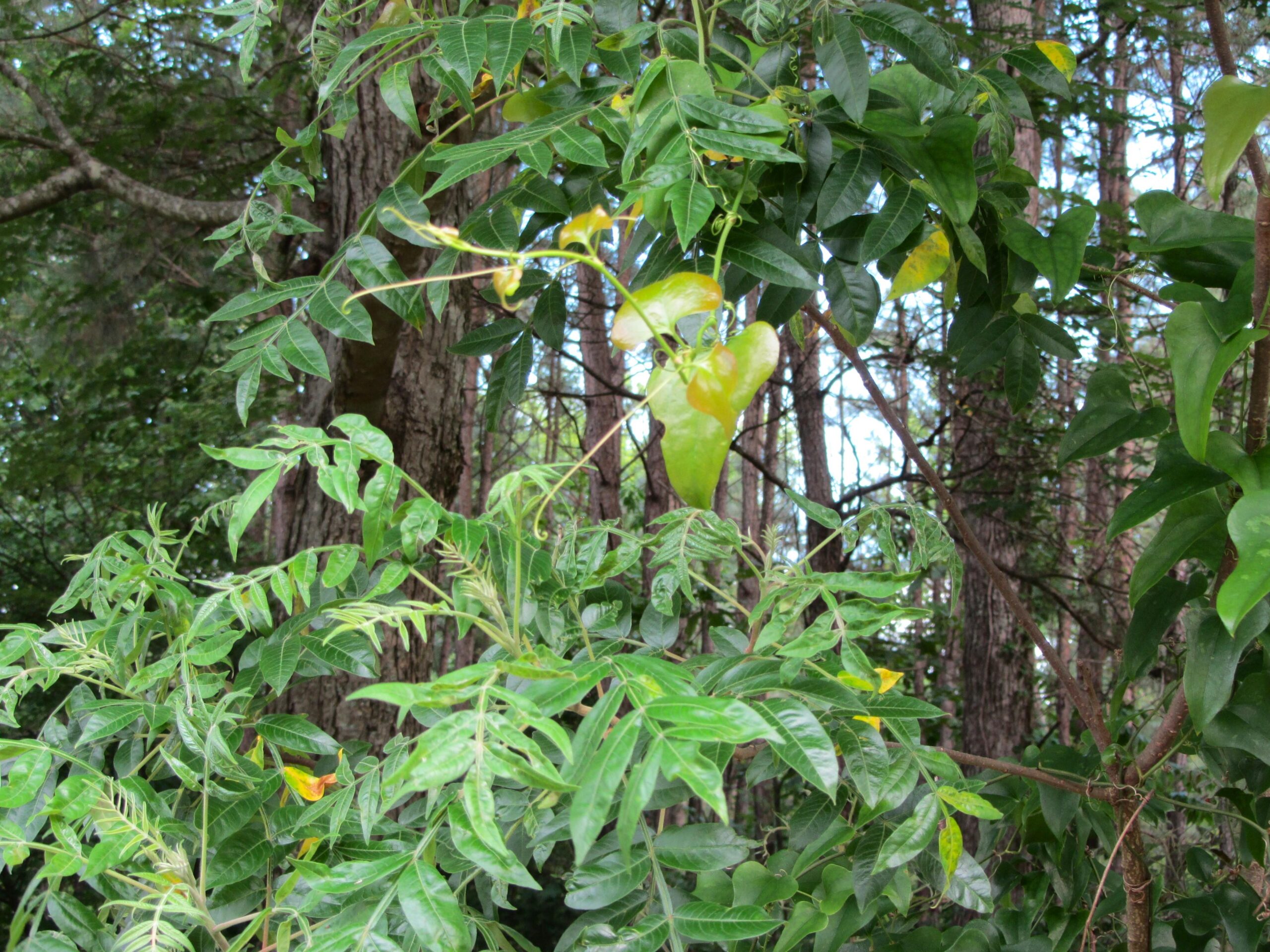
New leaves emerge on winged sumac growing at the Williamsburg Botanical Garden and Freedom Park Arboretum in May of 2020. Photo by E. L. McCoy
Rhus glabra
Smooth sumac- the species name, glabra, means that stems are smooth and not covered with hairs USDA factsheet
Dimensions: Height: 9’ – 15‘ Width: 9’ – 15‘ Zones 2-9b Native throughout VA
Flowers: 1/4” greenish-yellow flowers, each with 5 petals, bloom in dense 5”-10” panicles from May to July. Plants are dioecious, producing only male or only female flowers. Only female flowers form drupes from August to October.
Leaves: Alternate, deciduous, compound pinnate leaves to 24” with 11-31 tooth-edged dark green leaflets to 4” long and 1” wide. Each leaflet may be narrowed and rounded at the base and sharply pointed at the tip. Leaflets have a waxy coating and are paler on their undersides.
Fruits: Burgundy/red ¼” edible drupes, covered in red sticky hairs, form as the flowers fade, ripening in autumn, and persisting into the winter.
Wildlife Value: Nectar for pollinators (native bees and butterflies); a larval host plant for the Red-Banded Hairstreak butterfly; fruits feed songbirds, wild turkeys, quail, deer, and opossums.
Uses (Ethnobotany): The leaves can be boiled down into black ink. Dyes can be made from its wood and have been used for coloring textiles, toys, and paper.
Recommended cultivars / varieties:
- ‘Laciniata’ is a female cultivar that has deeply cut leaflets that resemble the fronds of a fern
- Rhus x pulvinate ‘Red Autumn Lace’ is an attractive hybrid between R. glabra and R. typhina
Rhus typhina (formerly R. hirta)
Staghorn sumac -This common name comes from the reddish-brown hairs which appear on young branches and that cover this sumac’s mature fruit. They resemble the velvet hairs that cover a stag’s (male deer’s) horns.
Dimensions: Height: 8‘- 25’ Width: 8’- 25’ Zones 3a-9b
Native mostly to western and northern VA. This sumac can be found in some counties south of the James River in eastern VA.
Flowers: 1/4” greenish-white flowers, each with 5 petals, bloom in dense 4”-8” panicles from July to September. Plants are dioecious, producing only male or only female flowers. Only female flowers form drupes.
Leaves: Alternate, deciduous, compound pinnate leaves to 24” with 11-31 serrate-edged dark green leaflets to 5” long. Leaflets have a waxy coating.
Fruits: Hairy, bright red ¼” edible drupes form as the flowers fade, ripening in autumn, they darken to burgundy and persist into the winter. Those hairs on the fruits contain ascorbic acid (Vitamin C) and impart a tarty, lemony flavor to foods or beverages made from the drupes.
Wildlife Value: Nectar for pollinators (native bees and butterflies); a larval host plant for the Spring Azure butterfly; fruits feed songbirds, wild turkeys, quail, ring-necked pheasant, and deer.
Recommended cultivars / varieties:
- ‘Dissecta’ Has deeply dissected leaves and spreads aggressively
- ‘Laciniata’ A female cultivar that grows to 10’-20’ and has fine textured, with fern-like foliage
- ‘Tiger Eyes’ has bronze to yellow new growth, changing as the season progresses. 5’-10’ high
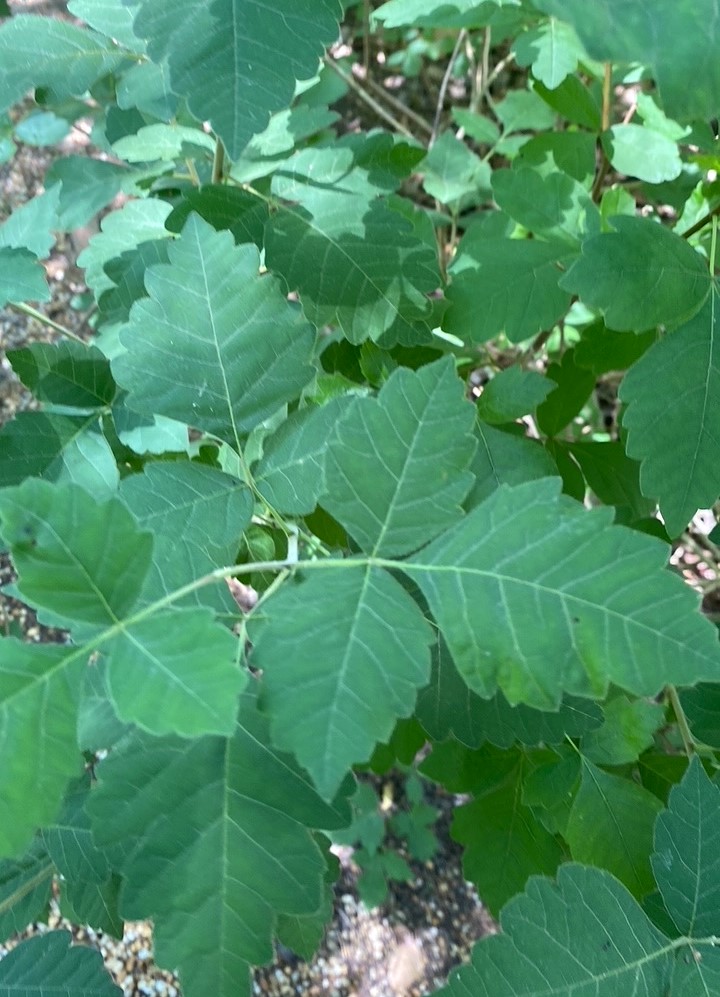
Fragrant Sumac, R. Aromatica, grows as a hedge located at Christiana Campbell’s Tavern, part of the Colonial Williamsburg Arboretum. Notice the leaf shape and structure is different from many other sumac species. Photo courtesy of Rick Brown
Rhus aromatica
Fragrant sumac, aromatic sumac, lemon sumac, polecat sumac
Dimensions: Height: 2‘- 6‘ Width: 6’- 10’ Zones 3a-9b Native in central and western VA
This fragrant and aromatic sumac grows as a multi-stemmed, spreading groundcover or mounding deciduous shrub. It thrives in hot, dry conditions and will not tolerate heavy, moist soils.
Flowers: Female bell-shaped greenish- yellow flowers, each with 5 petals, bloom in March and April in small, 1” panicles on the branch tips. Male flowers are catkins and bloom in early spring on naked branches. Only female flowers form drupes.
Leaves: Deciduous compound leaves have three coarsely toothed leaflets, with the terminal leaflet larger than the two side leaflets. The leaves are bluish green, glossy, and have a lemony fragrance.
Fruits: Hairy, bright red ¼” drupes form as the flowers fade, ripening in June to August, they darken to burgundy. Fruits are edible.
Stems: Zigzag form, pubescent and brown or reddish brown when young, aging to grey. Leaves and bark contain tannin and can be used to tan leather.
Wildlife Value: Nectar for pollinators (native bees and butterflies; fruits feed songbirds, wild turkeys, ruffed grouse, deer, raccoons, chipmunks, and opossums. This shrub provides excellent cover for birds and other small animals.
Recommended cultivars / varieties:
- ‘Grow-low’ (female) to 2’ tall and 6’-8’ wide
Rhus michauxii
Dwarf Sumac, false poison sumac, Michaux’s sumac
Michaux’s sumac historically grew only in the Coastal Plain and southern Piedmont of North Carolina, South Carolina, and Georgia. Now it can be found in coastal Virginia south to Florida, though it is not considered native to Virginia. This plant has become rare in the wild and is now considered endangered.
The species name honors the great French botanist, André Michaux, who came to New York in 1785 leading a scientific mission for the King of France to study North American forests and introduce useful trees to France. He explored, identifying many species, corresponding and working with other botanists, and sending shipments of botanical specimens back to France until 1796.
Dimensions: Height: 1‘- 3’ Width: 1’- 3’, its long suckers may grow to 20’ long Zones 5-7
Flowers: 1/4” greenish-yellow flowers, each with 5 petals, bloom in dense 6”-8” panicles in summer. Plants are dioecious, producing only male or only female flowers. Only female flowers form drupes by late summer.
Leaves: Alternate, deciduous, compound pinnate leaves to 18” with 9-15 serrate-edged medium green leaflets to 4” long. Leaflets are very hairy. Fall color is an intense reddish-purple.
Fruits: Burgundy/red ¼” edible drupes form as the flowers fade, ripening in late summer and persisting into the winter.
Wildlife Value: Nectar for pollinators (native bees and butterflies); fruits feed songbirds, wild turkeys, quail, deer, and other animals.
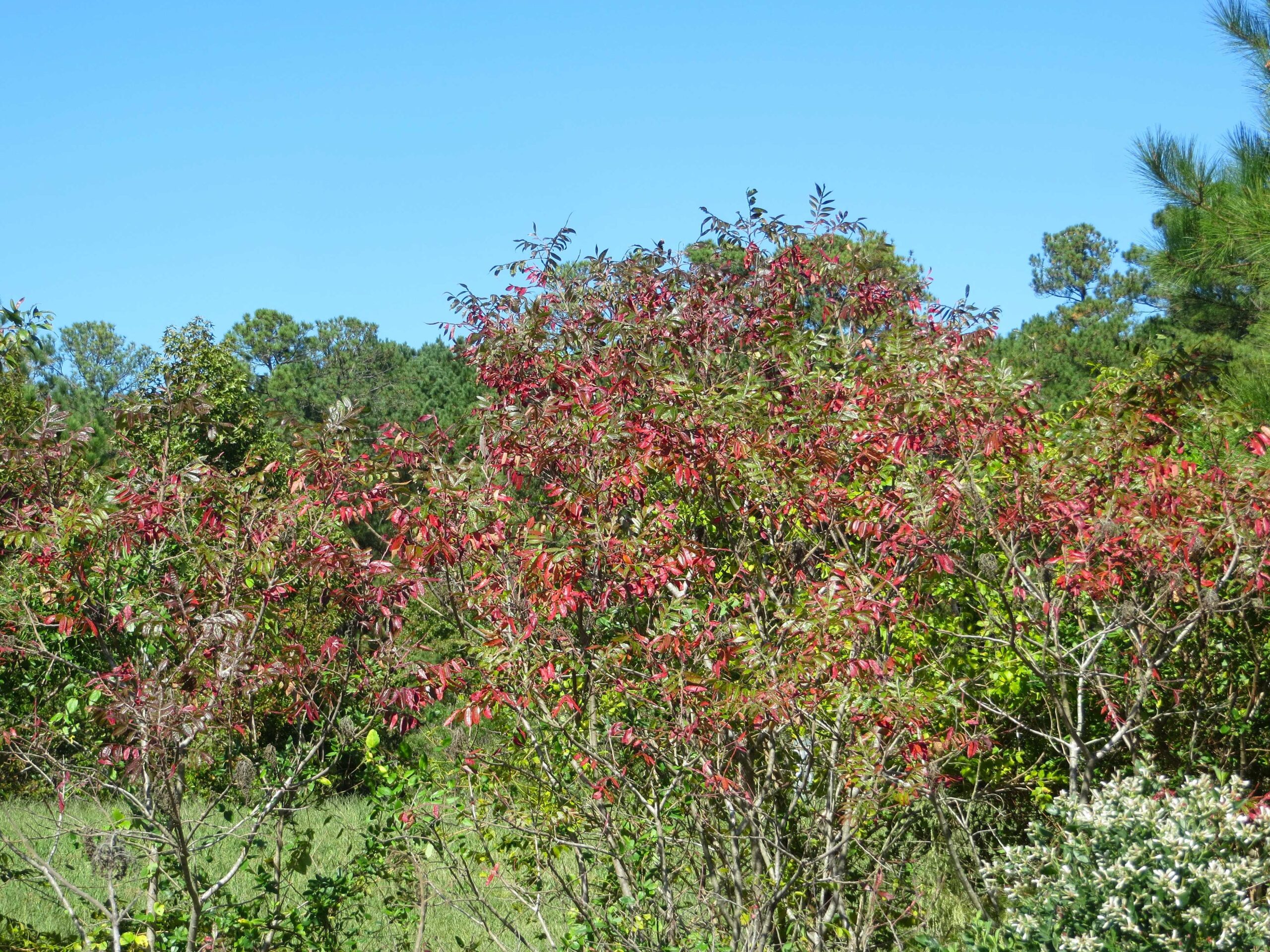
A patch of winged sumac shrubs spread in a field on the bank of the James River near the Colonial Parkway. By mid-October they are turning scarlet. Photo by E. L. McCoy 2025
How to Start a Sumac Patch
To plant a sumac tree in your own yard, you can look for specific varieties in online nurseries, or you might gather seeds or take a cutting from a plant in the wild. The seeds germinate easily. Soak gathered seeds for a few hours in hot tap water, then sow them shallowly in a container holding 4″-6″ of a mix of sand and compost. A clean plastic milk jug, with its top partially removed but left attached at a ‘hinge’ on the side, is useful for starting tree seeds. Provide 1-3 drainage holes poked into the bottom of the jug and leave the top screwed on.
Water the seeds in, tape the jug shut with clear packing tape, and set it in a sheltered place on a porch or near your home’s foundation while the seeds germinate over winter. Wait until seedling trees have two pairs of leaves before carefully transplanting them into quart sized pots to grow on. Plant the seedlings where they will grow once they have established a good root system.
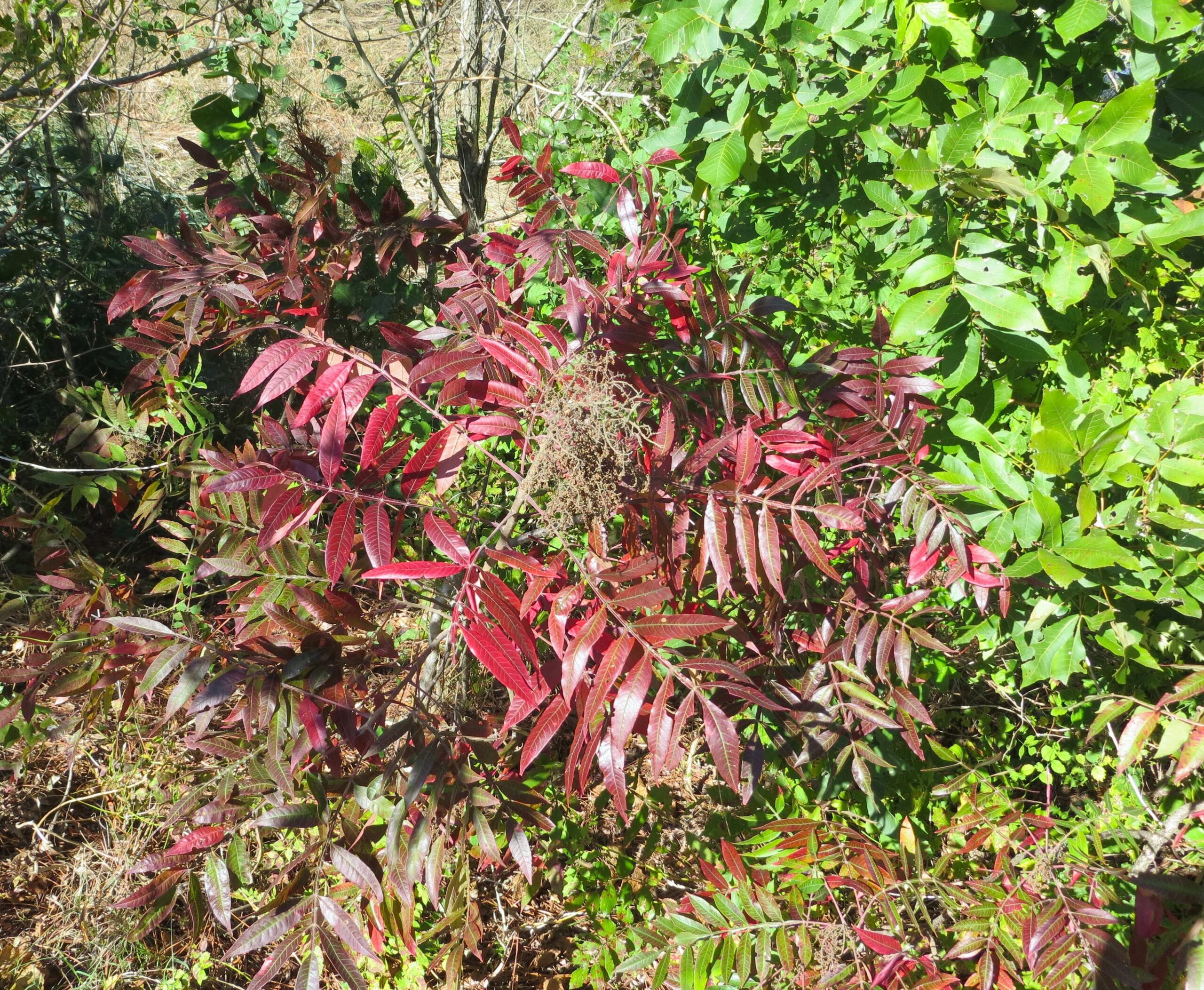
Young winged sumac shrubs take root beside the Colonial Parkway. They may be suckering off the roots of larger shrubs nearby, or may have germinated from seeds dropped by animals who ate sumac berries in earlier years. October 2025. Photo by E. L. McCoy
Grow a Tree from a Cutting
Prepare hardwood cuttings of sumac in fall or early winter by removing any remaining leaves from a branch tip that has at least three leaf scars where new buds will form. Plant the branch into a mix of compost and sand in a gallon pot so that the two lower leaf scars and new buds are below soil and the top leaf scar and bud is above the soil. Water in the cuttings. Set the containers in a protected spot outdoors for the winter and check them every week, watering if the soil is dry. Protect the pots and cuttings from curious squirrels that might want to dig in the pots. New growth should appear in the spring. Transplant the tree where it will grow permanently once a good root system has formed.
Some sumac species will also grow from root cuttings, or you might dig up a sucker, with its roots, after cutting it from the parent plant. An advantage of starting a new sumac shrub from a cutting or a sucker is the opportunity to select one from a particularly handsome, healthy plant. Since slight variations develop from seed sown plants, starting from a cutting is both faster and gives you more predictable results.
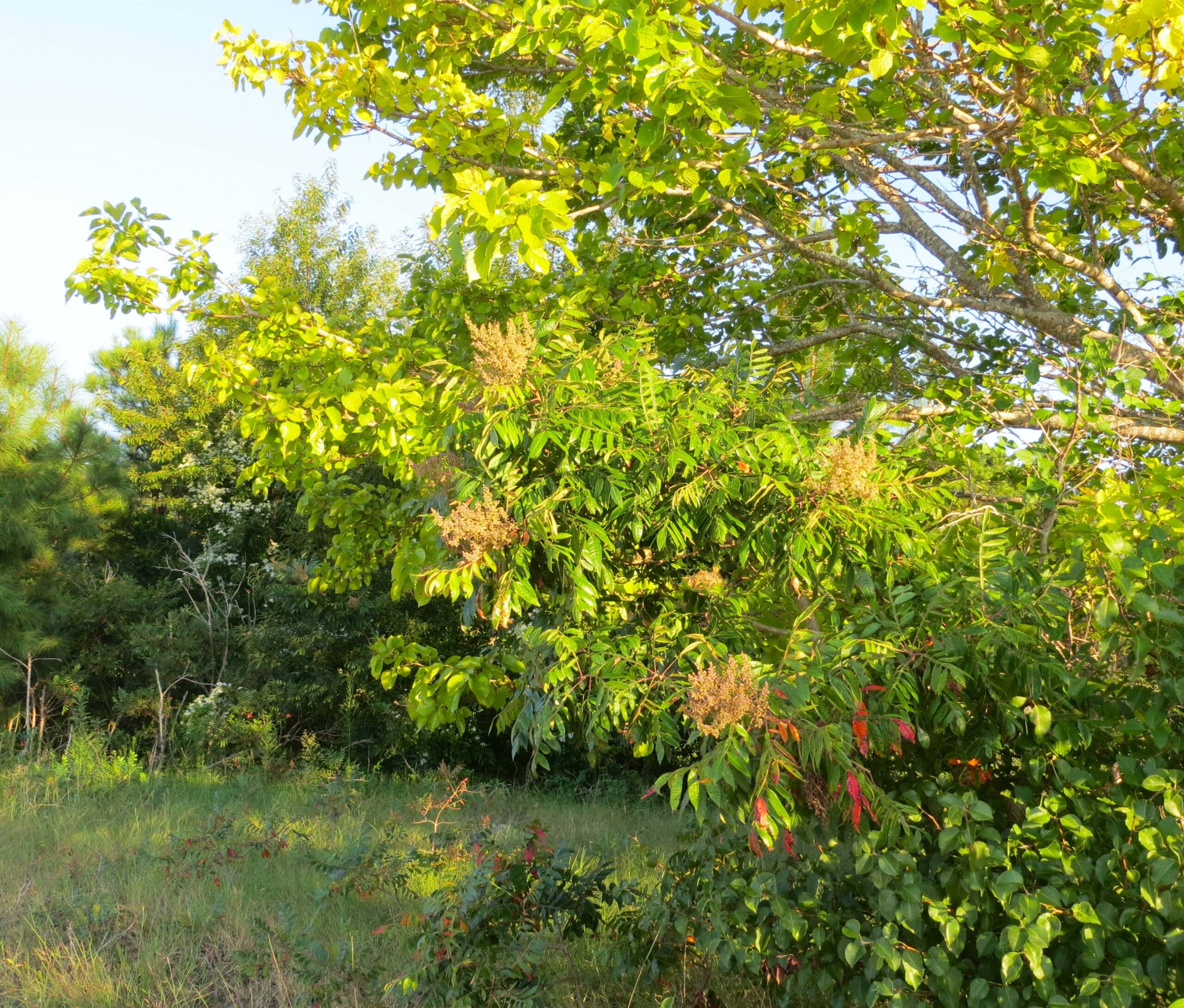
Young sumac trees grow among the grasses of this unmown field along the Colonial Parkway in August 2025. Within another year or two, they will dominate this area, supporting more wildlife as they grow. Remember it is unlawful to dig up plants from national, state, private, or local parks. Get permission from the landowner before digging up plants from private properties. Photo by E. L. McCoy
A Choice and an Opportunity
Anyone who is interested in restoring the indigenous ecosystem on their own land will find Sumac a useful plant to use for restoration. It will grow in inhospitable, damaged areas where few other woody plants can survive. It holds and builds the soil with its enormous root system, protecting it from further erosion while moving carbon from the air into its roots, stems, leaves, and fruit. The organic materials dropped by this deciduous tree improve the soil where it is growing over time. These trees create an environment that allows other tree species to take root and grow, protecting those seedlings until they eventually grow past the sumac to mature.
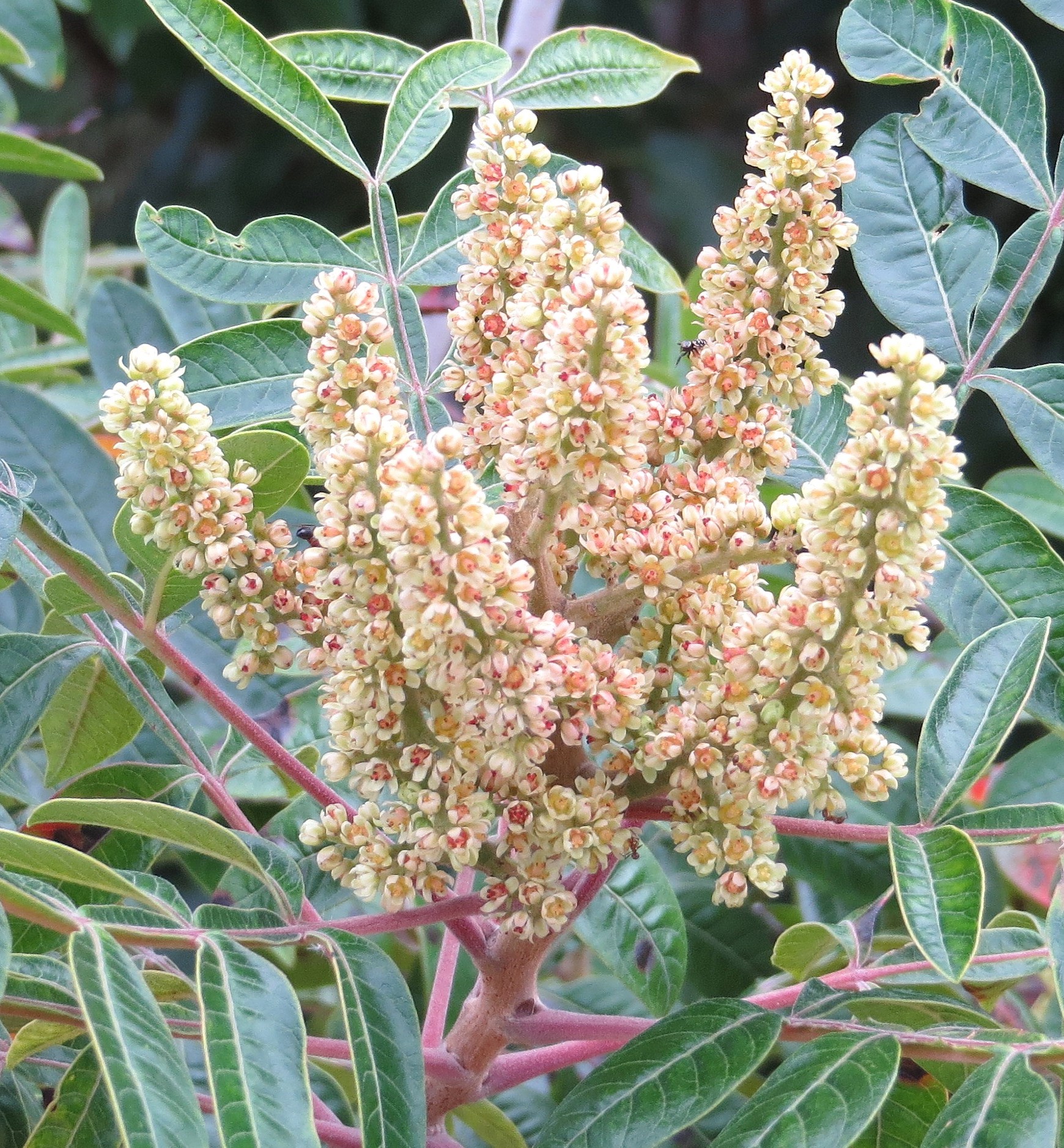
Winged sumac flowers have been pollinated, and the season’s fruits are already swelling between their petals in mid-August 2025. Photo by E. L. McCoy
Sumac also attracts a wide variety of wildlife to feed and shelter within its expanding canopy. It attracts and sustains numerous native insect, bird, reptile, and mammal species. Sumac enriches and expands the local ecosystem without requiring any special care. It grows without additional fertilizer, supplemental watering, or pesticide treatments. Sumac is a striking and beautiful plant, with excellent fall color, and interest in every season of the year. Gardeners who have the space to let sumac grow into its potential, or the time and dedication to keep it pruned into the available space, will find this tree an excellent choice for enriching their personal ecosystem.
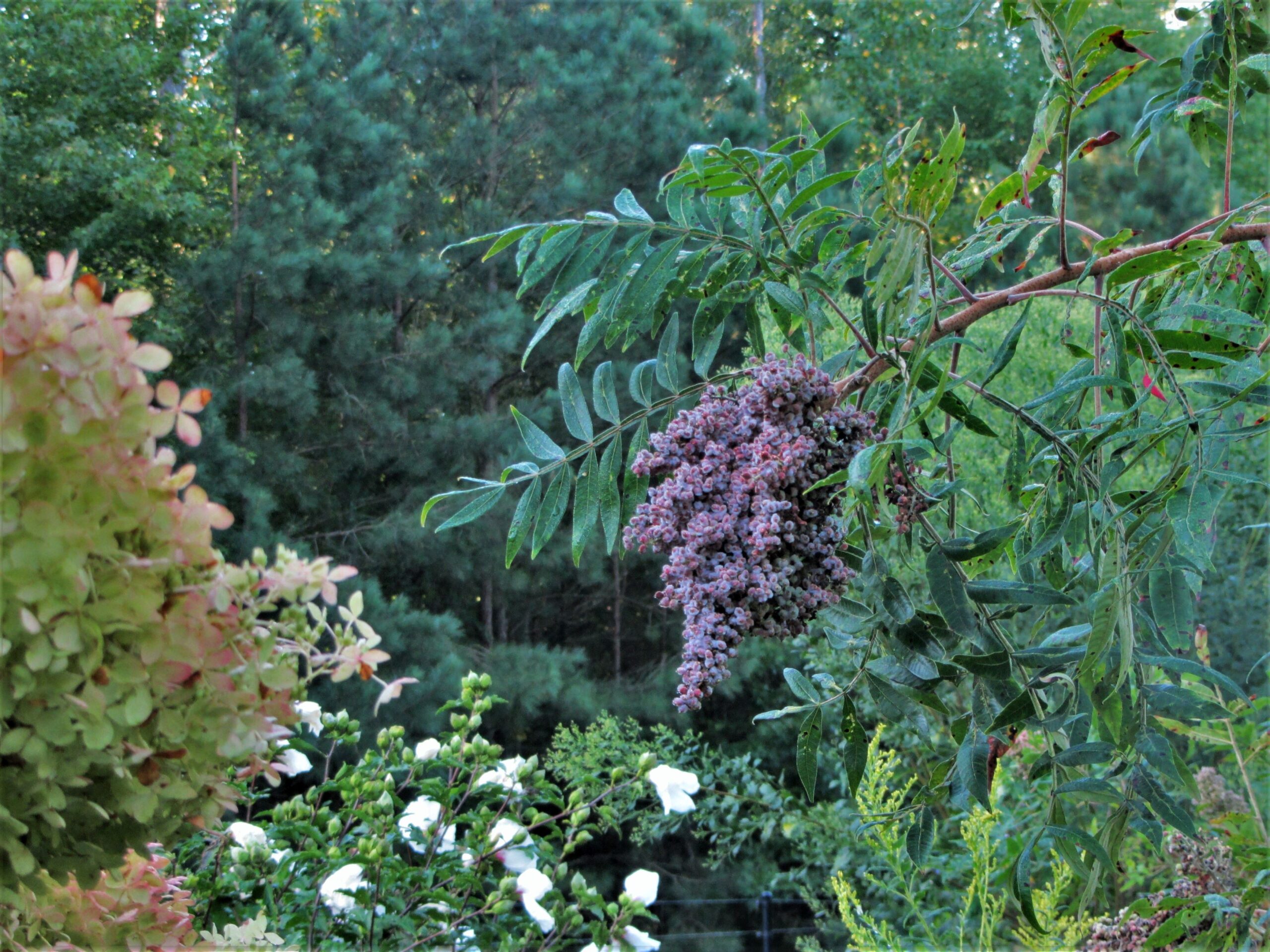
Sumac berries ripen at the Williamsburg Botanical Garden and Freedom Park Arboretum in September 2020. Photo by E. L. McCoy
Resources
Bloom, Jessi, Dave Boehnlein, and Mr. Paul Kearsley. Practical Permaculture: for Home Landscapes, Your Community, and the Whole Earth. Timber Press. February 2015.
Clifton, Margaret, editor for The Virginia Master Naturalist Program and Alfred Goossens, Project Leader. The Socrates Project – Poisonous Plants in Virginia, Second ed., revised and expanded. The University of Virginia. 2020.
Darke, Rick and Douglas Tallamy. The Living Landscape: Designing for Beauty and Biodiversity in the Home Garden. 2014.
Dirr, Michael A. Dirr’s Encyclopedia of Trees and Shrubs. 2016.
Lambe, Dan. Now Is the Time for Trees: Make an Impact by Planting the Earth’s Most Valuable Resource. 2022.
Ohlsen, Erik. The Regenerative Landscaper: Design and Build Landscapes That Repair the Environment. Synergetic Press. August 2023.
Tallamy, Douglas. Bringing Nature Home: How Native Plants Sustain Wildlife in Our Gardens. 2007.
Tree, Isabella. Wilding: Returning Nature to Our Farm. New York Review Books. 2019.
Tree, Isabella. The Book of Wilding: A Practical Guide to Rewilding Big and Small. Bloomsbury Publishing. 2023.
Virginia Botanical Associates. 2024. Digital Atlas of the Virginia Flora (http://www.vaplantatlas.org). c/o Virginia Botanical Associates, Blacksburg, VA.
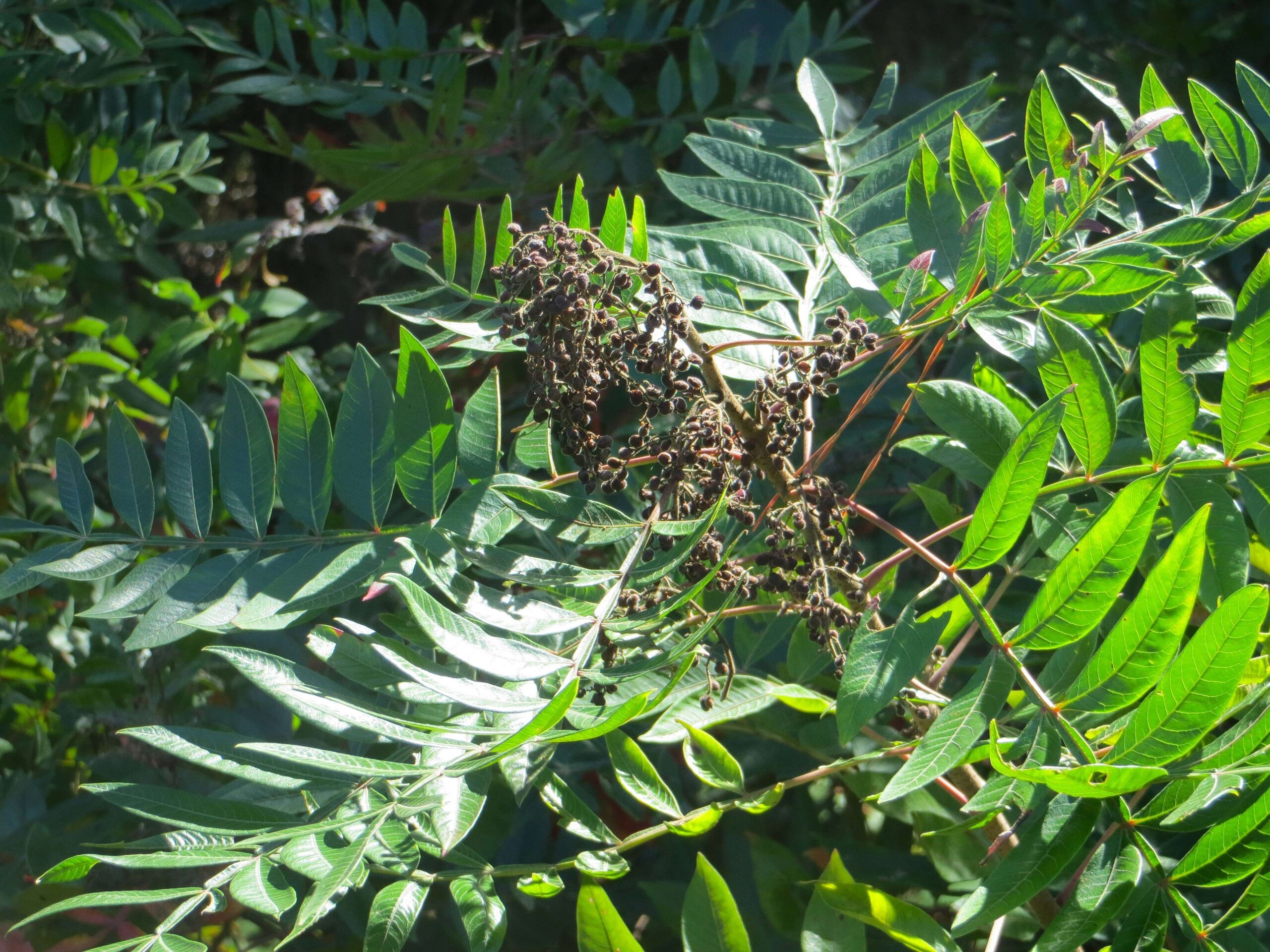
Photo by E. L. McCoy October 2025
Related Posts on This Website
Planting a Food Forest at Home
Growing Indigenous Trees from Seeds