Category: Edible Plants

Part 2: PNV: Potential Natural (Native) Vegetation

  Appropriate Species for Tiny Forests in Eastern Virginia Tiny forests designed following the Miyawaki method include a wide variety of native trees, shrubs, and ground covers planted randomly and densely, varying the heights of trees to establish a canopy layer, intermediate layers, and a ground cover layer.  Plant as many as 3 to 5 plants per square meter into the prepared soil.  Plants grow quickly, reaching for the light.  A forest that takes a century or more to develop...
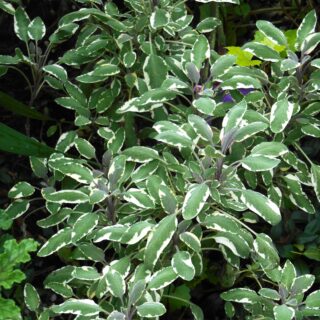
Tricolor culinary sage

Sage ‘The Savior’

  “Why should a man die in whose garden grows sage? Against the power of death there is not medicine in our gardens But Sage calms the nerves, takes away hand Tremors, and helps cure fever. Sage, castoreum, lavender, primrose, Nasturtium, and athanasia cure paralytic parts of the body. O sage the savior, of nature the conciliator!” From the Regimen Sanitatis Salernitanum ca 1100-1200 CE   The name Salvia officinalis, designating our common culinary sage, derives its species name from...

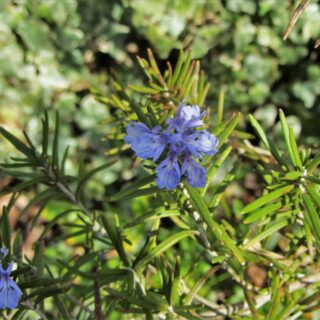
Mythical Rosemary

  Mythical Rosemary The woody, green fragrance of rosemary brings happiness.  Rosemary has served as food, fragrance, medicine, as a religious tool, and as a favorite garden plant for millennia. It is considered a sacred and magical herb, associated both with Aphrodite and with Mother Mary.  Rosemary has been planted in monastery, temple, medicinal and royal gardens over many centuries. Known now as Salvia rosmarinus, rather than the Rosmarinus officinalis we all learned, rosemary has one of the longest cultural...

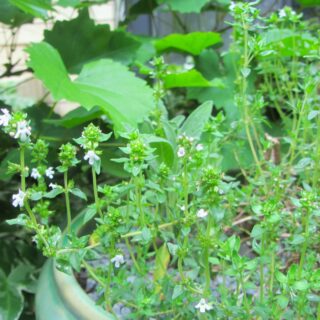
Magical Thyme

  “I know a bank where the wild thyme blows, Where oxlips and the nodding violet grows, Quite over-canopied with luscious woodbine, With sweet musk-roses and with eglantine: There sleeps Titania sometime of the night, Lull’d in these flowers with dances and delight; And there the snake throws her enamell’d skin,  Weed wide enough to wrap a fairy in:” William Shakespeare, from A Midsummer Night’s Dream Magical Thyme If you are wanting to conjure a bit of magic in your...

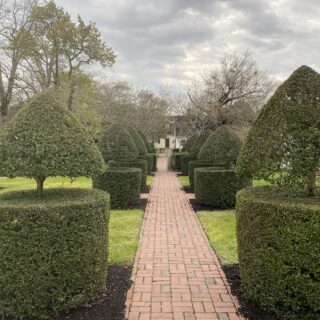
 Hedges and Hedgerows for a Healthier and More Peaceful Life, Part 1

  The Living Fence Gardening is the art of domesticating the wild, of creating living geometry within our landscapes.  Order, symmetry, lines, and boundaries please the eye and soothe the spirit.  We are inclined to organize and define our spaces by dividing them up into smaller pieces we can manage, to protect them within walls and behind gates.  We contain what is ours, setting aside sacred space, our own ‘paradise,’ from the wider world.  We exclude the unwanted wildness living...

A History of Our War With Plants

  “I use only native plants, native to the planet Earth.  I am using indigenous plants; they are indigenous to this part of the universe.” Bill Mollison, Founder and Director of The Permaculture Institute     In the Beginning… Let’s begin with the obvious:  we live within an ever-changing ecosystem.  Europeans came to North America more than four centuries ago, cutting trees, planting fields, building homes and roads.  Native Americans also cut trees, built homes, planted fields, hunted, and lived...

A Tea Story: Past and Future

The Long Story of Tea in America Have you ever wondered where your tea comes from?  Tea is one of those everyday things that we can always find at the grocery or convenience store.  You may remember that tea was imported to Boston in the Colonial era.  Maybe you also remember the story of how colonists, dressed as Native Americans, dumped the British East India Company’s cargo of tea into the Boston Harbor in December 1773 to protest unfairly high...

Can I Nibble the Fiddleheads?

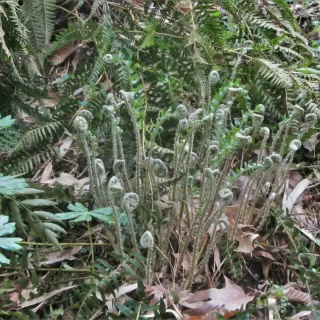
Fiddleheads Perfect little green, tightly curled fiddleheads will soon push through the damp earth and begin to unfurl themselves into delicate fern fronds. They might look tasty, and you might wonder whether you can pluck one to nibble as you hike through the woods. Coastal Virginia hosts almost 30 native fern species, and fern-loving gardeners plant dozens more introduced species.  Quite honestly, unless you are a Pteridophile, or fern-o-phile, they probably look much the same.  You will find fiddleheads in...

Plant Knowledge

  “Power rests on the kind of knowledge one holds. What is the sense of knowing things that are useless?”  Dr. Carlos Castaneda     When a young graduate student in anthropology wanted to learn more about the medicinal uses of plants for his academic research in the early 1960s, so the legend goes, he sought out an old Mexican native, a brujero, known simply as don Juan, who lived in the Sonoran Desert.  Carlos asked to interview him about...

Eastern Red Cedar: An Uncommonly Useful Tree

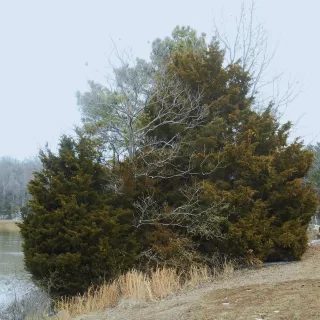
  If fragrance is the gate of memory, the spicy aroma of Eastern red cedar takes me back to childhood holidays.  My parents would load us in the car, about a week before Christmas, for a drive out to a friend’s farm where we could walk through the meadows in search of our Christmas tree.  After a lively debate about the trees we found, Dad would pull out an old handsaw and begin cutting the tree.  We would all help...