Category: Permaculture

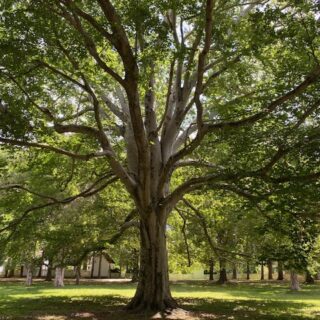
Beech, the Mother Tree, Queen of the Forest

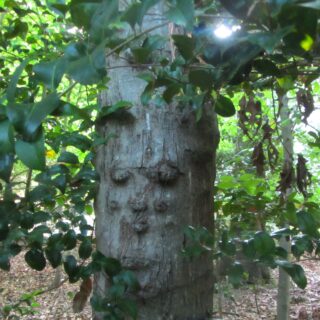
A Mythic Forest The American beech, Fagus grandifolia, once covered most of North America from Canada to Mexico and from the Atlantic to the Pacific coasts.  Before colonists cleared our ancient forests for farmland, large beech groves grew as part of the climax forest community.  A single beech tree can live for centuries, and as it ages it surrounds itself with sapling trees growing as suckers from its relatively shallow root system, forming an expanding grove of graceful beech trees....
Mysteries of the Mycorrhizae

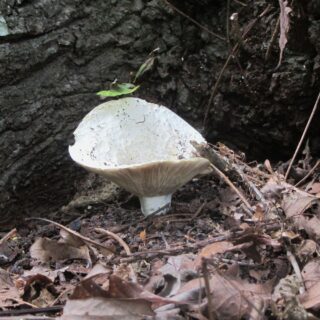
  “To use the world well, To be able to stop wasting it and our time in it, we need to relearn our being in it.” Ursula Le Guin   A friend and I were chatting about recipes one afternoon.  She is a talented cook and loves to feed her friends and loved ones.  I asked for the recipe for something delicious she had served, and she avoided disclosing the details.  Finally, she gently explained that among her family, no...

Cultivating a Tiny Forest (Part 1)

  Our once shady front yard was left a bright expanse of coarse wood chips and mangled leaves after the arborists pulled out their heavy equipment and left, that hot summer afternoon almost a dozen years ago.  A freak summer thunderstorm had harbored a waterspout or small tornado when it blew in from College Creek a few days before.  Our first clue that something was wrong had been seeing the underside of a muddy root ball rising 8 feet or...

Part 2: PNV: Potential Natural (Native) Vegetation

  Appropriate Species for Tiny Forests in Eastern Virginia Tiny forests designed following the Miyawaki method include a wide variety of native trees, shrubs, and ground covers planted randomly and densely, varying the heights of trees to establish a canopy layer, intermediate layers, and a ground cover layer.  Plant as many as 3 to 5 plants per square meter into the prepared soil.  Plants grow quickly, reaching for the light.  A forest that takes a century or more to develop...

How to Cultivate a Fairy Garden

  “And therefore, as a stranger give it welcome. There are more things in Heaven and Earth, Horatio, than are dreamt of in our philosophy.” William Shakespeare, from Hamlet, First Folio   Perhaps you have already made a fairy garden.  It is an endearing activity for parents and grandparents to enjoy with the children in their lives.  Full of whimsy and fun, we enter the world of ‘make-believe’ once again and see the world from a different perspective.  Everything is...

Evergreen Camellias for Winter Flowers

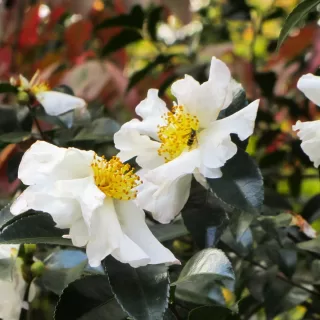
    The first Camellia shrub usually chooses a stretch of damp, cool October days to burst into bloom.  I am always taken by surprise when its luminous white, spring-like blossoms unfold, because they look rather out of place beside the colorful leaves falling from nearby trees. Bright flowers in shades of white, pink, and red open on our evergreen Camellia shrubs each October and November while the rest of the garden fades, and as we begin preparing for winter’s...

Climbing Vines in Coastal Virginia

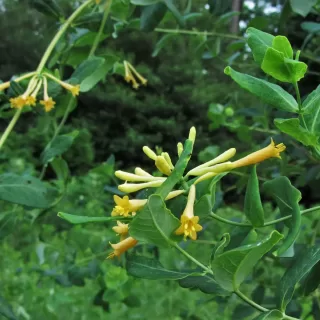
  Vines of all types love our Coastal Virginia climate.  Many different species thrive in summer’s heat and humidity, growing by inches each day.  They creep across the ground until they encounter something to climb.  Their tender, flexible tips reach up and out in search of a support, and then they climb. Benefits of Vines All vines in our area produce flowers and seeds.  While some flowers are bright and showy, like the bright orange trumpet creeper, others are nearly...

Life Giving Seeds

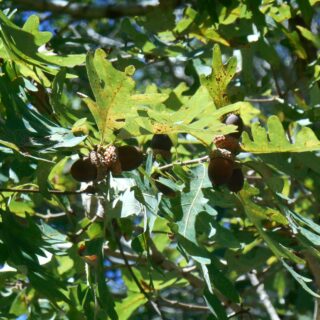
  Every tiny seed holds a bit of life, stored efficiently enough that it can spring into growth in some future time when conditions permit. The saying goes that every acorn holds the potential for a future forest of oaks. Although that acorn will grow into only a single tree, each tree can produce millions of acorns during its lifespan. A ripened seed, the DNA for a new plant, contains stored proteins, carbohydrates and minerals in its cotyledon, and a...

Making a Resilient Drought-Tolerant Garden Part I: Right Plant, Right Place

  Maybe it will rain, and maybe it won’t.  It has been unusually dry in our area for the past several months.  Some of the little starts I planted with high hopes in March and April have been struggling to take hold.  I need to water large areas of our garden several times a week, as though it were July already.   And regular irrigation just isn’t an option for many gardeners. We are relatively fortunate in coastal Virginia because we...

Landscaping With Herbs Part II:  Deciduous Perennial Herbs

What is an Herb? Why is mint an herb, but clover isn’t?  Have you ever given it much thought?  Botanically, any plant with a soft stem, that dies back in winter, is ‘herbaceous.’  Were you give a stack of a dozen cards, each with the name and picture of a plant, could you sort them into ‘herbs’ and ‘not herbs’? If asked, most of us could probably name at least five herbs.  Those used in cooking, like basil and thyme...